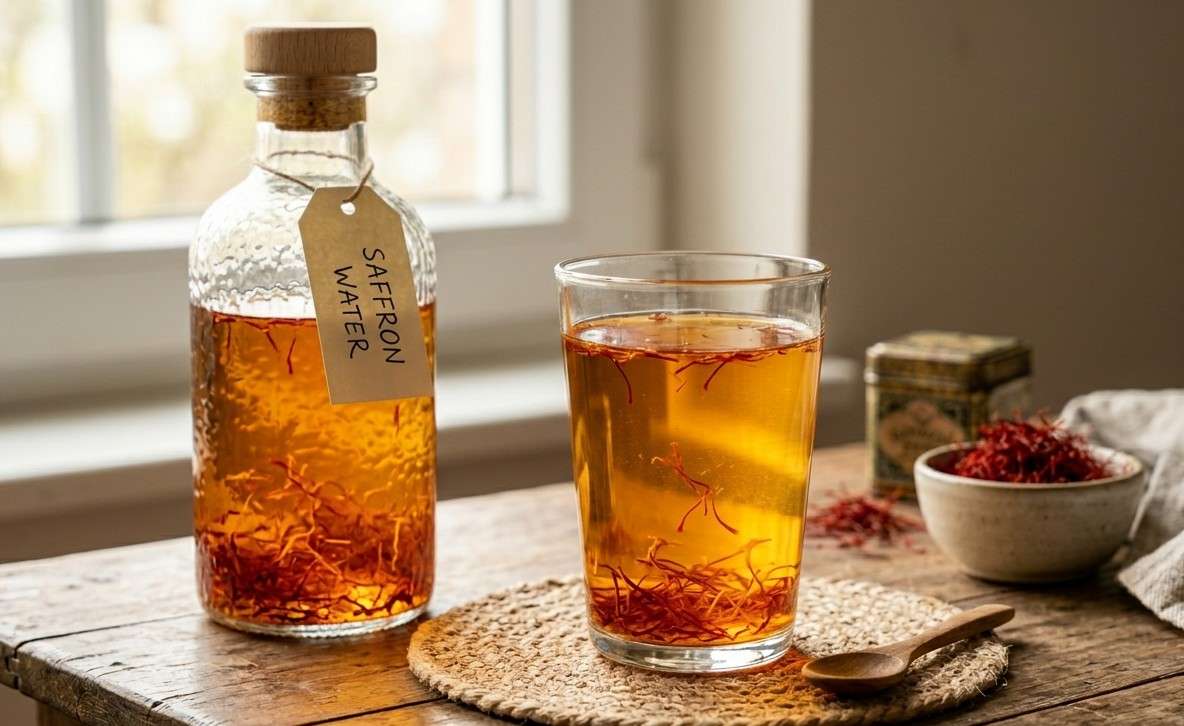
Saffron water is one of the most luxurious and therapeutic herbal drinks you can add to your daily routine. Made by soaking delicate saffron strands in warm water, this golden infusion has been treasured for centuries in Ayurveda, Persian medicine, and traditional wellness systems.
Known as the “red gold” spice, saffron is prized not only for its vibrant color and rich aroma but also for its powerful health-promoting properties. When infused in water, it becomes a gentle yet potent wellness tonic that may support mood, digestion, skin health, heart function, and more.
In this guide, you will learn everything about saffron water — from its science-backed health benefits to side effects, preparation methods, and who should or should not drink it.
What is Saffron Water?
Saffron water is a herbal infusion made by soaking a few strands of saffron (derived from the flower Crocus sativus) in warm or room-temperature water. Over time, the water turns golden-yellow as active compounds such as crocin, crocetin, safranal, and picrocrocin are released.
Unlike saffron milk, which is heavier and often consumed at night, saffron water is light, easy to digest, and typically consumed in the morning or between meals.
Because saffron is highly concentrated in bioactive compounds, even a small quantity infused in water can provide measurable health benefits.
Components of Saffron Water
Saffron water contains trace amounts of nutrients since only a small number of strands are used. However, it is rich in powerful antioxidants and bioactive plant compounds. Below is an approximate nutritional profile per 1 cup (250 ml) saffron water made using 4–5 strands:
| Nutrient/Compound | Approximate Amount |
|---|---|
| Calories | 1–3 kcal |
| Carbohydrates | <1 g |
| Protein | Trace |
| Fat | 0 g |
| Fiber | 0 g |
| Vitamin C | Trace |
| Vitamin B6 | Trace |
| Iron | Small amount |
| Potassium | Small amount |
| Manganese | Small amount |
| Crocin | Present |
| Crocetin | Present |
| Safranal | Present |
| Picrocrocin | Present |
The real strength of saffron water lies in its antioxidant compounds rather than macronutrients.
20 Proven Benefits of Saffron Water
- Powerful Antioxidant Protection – Saffron water is rich in crocin and safranal, which help neutralize harmful free radicals and reduce oxidative stress in the body.
- Supports Mood and Reduces Depression – Studies suggest saffron may improve symptoms of mild to moderate depression by influencing serotonin levels.
- Helps Reduce Anxiety – The calming properties of saffron compounds may help regulate stress hormones and promote emotional balance.
- Improves Sleep Quality – Drinking saffron water may support relaxation and help individuals fall asleep more easily.
- Enhances Brain Function – Crocin and crocetin may support memory, learning ability, and cognitive clarity.
- May Help Prevent Alzheimer’s Disease – Research indicates saffron compounds may reduce plaque buildup associated with cognitive decline.
- Supports Heart Health – Antioxidants in saffron water may help lower blood pressure and improve overall cardiovascular function.
- Helps Lower Cholesterol – Saffron may reduce LDL (bad cholesterol) oxidation and support healthier lipid levels.
- Regulates Blood Sugar Levels – Some studies show saffron may improve insulin sensitivity and help manage blood glucose.
- Improves Digestive Health – Saffron water may stimulate digestive enzymes and reduce bloating or indigestion.
- Boosts Immunity – Its antioxidant and anti-inflammatory properties support the body’s immune defenses.
- Promotes Glowing Skin – By reducing oxidative stress, saffron water may improve skin tone and reduce dullness.
- Supports Eye Health – Crocin may protect retinal cells and support visual health.
- May Reduce PMS Symptoms – Saffron has shown potential in easing mood swings, cramps, and irritability during menstruation.
- Acts as a Natural Anti-Inflammatory – Bioactive compounds in saffron may reduce inflammation in tissues.
- Supports Weight Management – Saffron may help reduce appetite and emotional eating behaviors.
- Improves Liver Function – Antioxidants may support detoxification processes in the liver.
- May Enhance Libido – Some research suggests saffron may improve sexual function and satisfaction.
- Supports Respiratory Health – Traditional medicine uses saffron to ease mild respiratory discomfort.
- May Help Reduce Cancer Risk – Laboratory studies indicate saffron compounds may inhibit abnormal cell growth, though more human studies are needed.
10 Side Effects of Saffron Water
When consumed in moderation, saffron water is generally safe. However, excessive intake can cause side effects.
- Nausea and Vomiting – High doses of saffron may irritate the digestive tract and cause nausea.
- Dizziness – Overconsumption may lead to lightheadedness or dizziness.
- Low Blood Pressure – Saffron may lower blood pressure, which could be risky for individuals already on antihypertensive medications.
- Allergic Reactions – Some individuals may experience itching, rash, or breathing difficulty.
- Dry Mouth – Excess saffron intake may cause dryness in the mouth.
- Headache – Large quantities may trigger headaches in sensitive individuals.
- Uterine Stimulation – High doses may stimulate uterine contractions and are not recommended during pregnancy.
- Mood Changes – Very high doses may cause mood instability.
- Drug Interactions – Saffron may interact with antidepressants, blood pressure medications, or blood thinners.
- Toxicity at Very High Doses – Extremely high intake (above 5 grams) can be toxic and dangerous.
How to Make Saffron Water?
Making saffron water is simple and requires only two ingredients.
Ingredients:
- 4–5 saffron strands
- 1 cup warm water
Steps:
- Slightly crush the saffron strands between your fingers.
- Add them to a cup of warm (not boiling) water.
- Let it steep for 10–15 minutes.
- Drink on an empty stomach or between meals.
Overnight Method:
- Soak 4–5 strands in room-temperature water overnight.
- Drink it first thing in the morning.
Tips for Consuming Saffron Water
- Use only high-quality, pure saffron.
- Do not exceed 5–6 strands per cup.
- Avoid boiling saffron directly as it may reduce potency.
- Drink consistently for at least 2–4 weeks for noticeable benefits.
- Combine with lemon or honey if desired, but keep it simple for therapeutic use.
Other Uses of Saffron Water
Water is not just for drinking; it has multiple uses.
- As a natural skin toner when applied with cotton.
- As a face mist for glow enhancement.
- In cooking to add color and aroma to rice dishes.
- In herbal teas and detox blends.
- As a natural hair rinse for shine.
How Much Saffron Water Can You Drink in a Day?
For most healthy adults:
- 1 cup per day is ideal.
- Maximum safe daily saffron intake is about 30 mg.
- 4–6 strands are usually sufficient.
Avoid high doses unless prescribed by a healthcare professional.
Best Time to Drink Saffron Water
The timing depends on your goal:
- Morning (empty stomach): For skin glow, metabolism, and detox support.
- Before bed: For sleep and relaxation.
- Midday: For mood and energy balance.
Morning consumption is generally considered most effective.
Who Should Drink Saffron Water?
- Individuals dealing with stress or low mood.
- People looking to improve skin radiance.
- Those with mild digestive issues.
- Women experiencing PMS symptoms.
- Adults aiming to support heart and brain health.
Who Should Avoid Saffron Water?
It may not be suitable for:
- Pregnant women (especially in high doses).
- Individuals with low blood pressure.
- People on antidepressants or blood thinners.
- Those allergic to saffron or related plants.
- Children unless supervised by a healthcare provider.
How to Store Saffron Water?
- Fresh water should ideally be consumed within 24 hours.
- Store in a glass container with a lid.
- Refrigerate if keeping overnight.
- Avoid exposure to direct sunlight.
- Do not store for more than 48 hours.
For best potency, prepare fresh daily.
Precautions and Interactions
While water is natural, it is still biologically active.
Medication Interactions:
- May enhance effects of antidepressants.
- May lower blood pressure when combined with antihypertensives.
- May increase bleeding risk with anticoagulants.
General Precautions:
- Stick to recommended doses.
- Consult a doctor if pregnant or breastfeeding.
- Stop immediately if you notice allergic symptoms.
- Do not use as a replacement for prescribed medications.
Final Thoughts
Saffron water is a simple yet powerful herbal infusion that blends tradition with science. With just a few strands of saffron, you can unlock antioxidant support, improved mood, better digestion, enhanced skin glow, and more.
However, moderation is key. Because saffron is potent, small amounts are sufficient. When used mindfully and consistently, water can become a luxurious and effective addition to your daily wellness routine.
FAQ’s
What does saffron water taste like?
Water has a mild, slightly earthy, subtly sweet, and floral taste with a gentle bitterness that is not overpowering when used in small amounts.
Can I drink saffron water every day?
Yes, most healthy adults can safely drink one cup of water daily using 4–6 strands, as long as it is consumed in moderation.
How long does it take to see benefits from saffron water?
Some people may notice mood or digestion improvements within a few days, while skin and hormonal benefits typically require 2–4 weeks of consistent use.
Is saffron water good for skin glow?
Yes, saffron’s antioxidant properties may help reduce oxidative stress, improve circulation, and support brighter, healthier-looking skin over time.
Can saffron water help with weight loss?
Saffron may help reduce appetite and emotional eating, which can support weight management when combined with a healthy diet and exercise.
Is saffron water safe during pregnancy?
Small culinary amounts are generally considered safe, but higher doses may stimulate uterine contractions, so pregnant women should consult a doctor before consuming it regularly.
Can men drink saffron water?
Yes, water can be beneficial for men as it may support mood balance, heart health, and sexual wellness.
Does saffron water help with periods?
Saffron may help reduce PMS symptoms such as mood swings, cramps, and irritability when consumed in moderate amounts.
Can I drink saffron water at night?
Yes, drinking water before bed may help promote relaxation and improve sleep quality.
Should saffron water be taken on an empty stomach?
Drinking it on an empty stomach in the morning may enhance absorption and provide better digestive and metabolic benefits.
Can I add honey or lemon to saffron water?
Yes, you can add a small amount of honey or lemon for taste, but keep it simple to maintain its therapeutic potency.
Is saffron water good for anxiety?
Some studies suggest saffron may help reduce anxiety symptoms by influencing neurotransmitter balance.
Can children drink saffron water?
Small amounts may be safe for older children, but it is best to consult a pediatrician before giving saffron regularly.
Does saffron water increase body heat?
Saffron is considered warming in traditional medicine, so excessive intake may cause a feeling of heat in some individuals.
Can saffron water lower blood pressure?
Yes, saffron may have mild blood pressure-lowering effects, which can be beneficial but may require caution for people already on medication.
Is saffron water good for hair?
While drinking water may support overall health, it can also be used topically in diluted form to promote shine and scalp health.
What does Saffron Water smell like?
Water has a mild, warm, slightly sweet floral aroma with subtle earthy notes.
What is Saffron Water good for?
Water may support mood, reduce stress, improve digestion, promote glowing skin, support heart health, ease PMS symptoms, and enhance sleep when consumed in moderation.
Also Read: