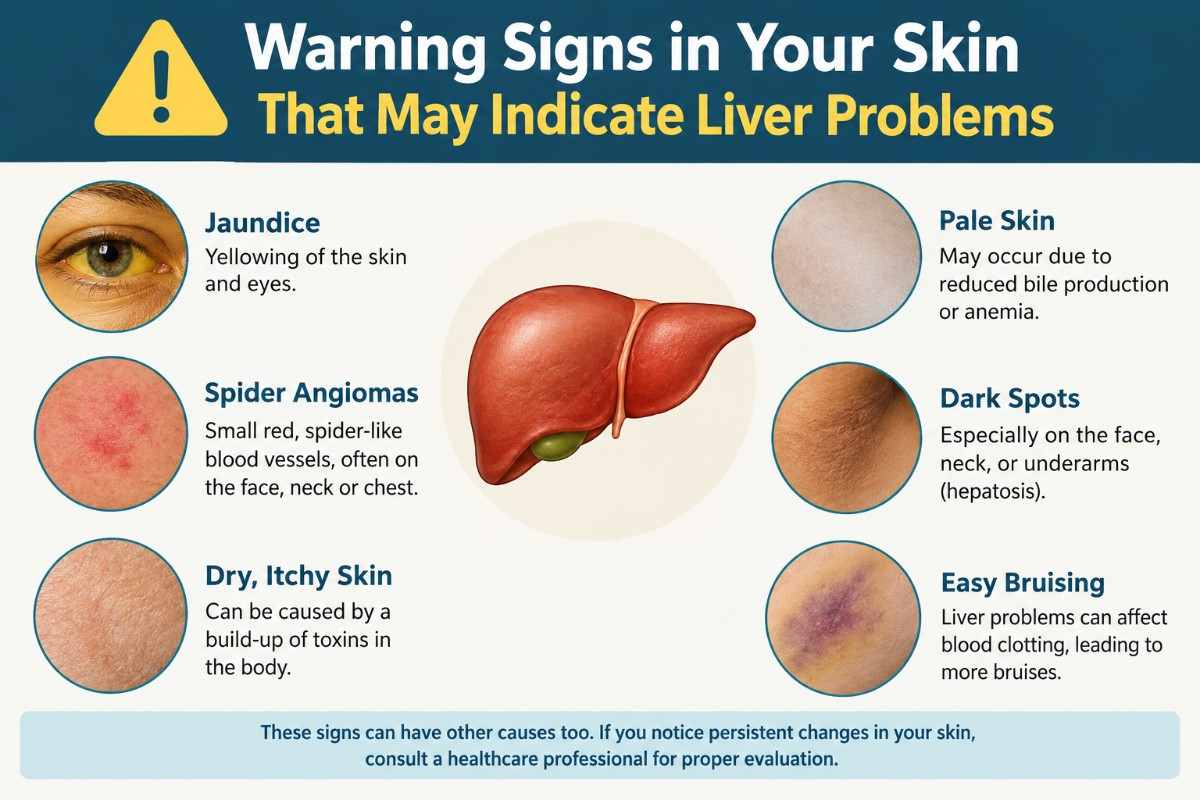
Your skin can sometimes reveal changes happening deeper inside the body. Because the liver plays an important role in processing bilirubin, regulating bile, making proteins involved in blood clotting, and handling many substances in the bloodstream, certain liver conditions can cause noticeable changes in the skin.
Some of these changes may be easy to overlook. Persistent itching, yellowing of the skin or eyes, unusual bruising, spider-like blood vessels, or redness of the palms can sometimes occur with liver disease, particularly when liver damage becomes more advanced.
However, having one of these skin changes does not automatically mean you have liver disease. Many skin symptoms have several possible causes. A healthcare professional may need blood tests, imaging, or other examinations to determine what is actually causing the change.
10 Skin Warning Signs That May Indicate Liver Problems
Here are some skin warning signs worth knowing about.
1. Yellow Skin or Eyes
One of the best-known skin-related signs of liver problems is jaundice, which causes the skin and the whites of the eyes to appear yellow.
Jaundice can occur when bilirubin, a yellow substance produced when red blood cells break down, builds up in the bloodstream. A healthy liver normally processes bilirubin and helps remove it from the body. When liver function is impaired or bile flow is blocked, bilirubin can accumulate.
The whites of the eyes may make the color change easier to notice, particularly in people with darker skin tones.
Important: New jaundice should always be medically evaluated because it can have several causes and may indicate a significant underlying problem.
2. Persistent Itchy Skin
Unexplained itching, particularly when it affects large areas of the body, can sometimes be associated with liver or bile duct problems.
This type of itching may occur without an obvious rash. Conditions that interfere with bile flow, including certain cholestatic liver diseases, can cause significant itching. Primary biliary cholangitis, for example, commonly causes itchy skin.
If itching is persistent, severe, widespread, or difficult to explain, it is worth discussing with a healthcare professional rather than assuming it is simply dry skin.
3. Spider-Like Blood Vessels
Small, visible blood vessels that look like a spider, with a central red spot and tiny vessels radiating outward, are known as spider angiomas or spider nevi.
They can occur in healthy people and can have causes unrelated to liver disease. However, multiple spider-like blood vessels can be seen in people with cirrhosis and other chronic liver conditions.
They are often noticed on areas such as the face, neck, upper chest, arms, or hands.
A single spider angioma does not mean that the liver is damaged. The overall pattern and other symptoms are more important.
4. Red Palms
Another skin change associated with some forms of chronic liver disease is palmar erythema, or unusual redness of the palms.
The redness may be particularly noticeable around the base of the thumb and little finger. It can occur with cirrhosis and other conditions, but it is not specific enough to diagnose liver disease by itself.
Hormonal changes, pregnancy, autoimmune conditions, and other factors can also cause changes in the palms.
5. Easy Bruising
If you suddenly begin noticing bruises from very minor bumps, it is worth paying attention to the pattern.
Advanced liver disease can affect the body’s ability to make proteins needed for normal blood clotting. As a result, some people with significant liver damage may bruise or bleed more easily.
However, easy bruising can also be caused by medications, nutritional deficiencies, blood disorders, aging skin, and other medical conditions.
Frequent unexplained bruising should therefore be evaluated rather than automatically attributed to the liver.
6. Yellowish Bumps Around the Eyes
Yellowish or fatty deposits beneath or around the skin can sometimes be associated with problems involving cholesterol and bile metabolism.
For example, people with primary biliary cholangitis (PBC) may develop xanthomas, which are yellowish fatty deposits that can appear around the eyes or near certain joints.
These deposits are not a typical sign of every type of liver disease. They may also be related to lipid disorders, so medical evaluation is important.
7. Darkening of the Skin
Some liver conditions can be associated with changes in skin pigmentation.
For example, darkening of the skin can occur in primary biliary cholangitis.
Skin darkening has many possible causes, including hormonal changes, sun exposure, medications, nutritional issues, and endocrine disorders. A new or unexplained change should therefore be assessed in context.
8. Pale or Unusually White Nails
Changes in the nails can sometimes accompany advanced liver disease.
People with cirrhosis may develop unusually pale fingernails, particularly involving the thumb and index finger.
Because nail appearance can also change due to anemia, nutritional deficiencies, trauma, fungal infections, and other conditions, nail changes alone cannot diagnose liver disease.
9. Changes Around Existing Skin Symptoms
Sometimes the important clue is not one dramatic skin change but a combination of symptoms.
For example, persistent itching together with yellowing of the skin or eyes, dark urine, unusual bruising, swelling, or significant fatigue deserves medical attention. Liver disease may remain relatively silent in its early stages, so several subtle symptoms appearing together can be more meaningful than one isolated change.
10. Skin Changes Along With Swelling
Swelling is not technically a skin condition, but visible swelling in the legs, ankles, feet, or abdomen can accompany advanced liver disease.
When liver function becomes significantly impaired, changes in fluid balance can contribute to edema or fluid accumulation in the abdomen, known as ascites.
If swelling occurs alongside jaundice, severe itching, easy bruising, or other liver-related symptoms, it should not be ignored.
Why Can Liver Problems Affect the Skin?
The liver performs hundreds of important functions. Among them are processing substances in the blood, helping with digestion and bile production, and producing proteins involved in normal blood clotting.
When liver function becomes impaired, changes in bilirubin processing, bile flow, blood vessels, clotting, and fluid balance can contribute to visible symptoms.
This is why the skin can sometimes provide clues about an underlying liver or bile-related problem.
However, the relationship is not always straightforward. Many skin conditions have nothing to do with the liver, and some people with liver disease have no visible skin symptoms at all.
Other Symptoms That May Occur With Skin Changes
Skin changes become more concerning when they occur together with other possible signs of liver dysfunction, such as:
- Persistent fatigue or weakness
- Loss of appetite
- Unexplained weight loss
- Nausea or vomiting
- Pain or discomfort in the upper-right abdomen
- Dark urine
- Pale-colored stools
- Swelling of the legs or ankles
- Abdominal swelling
- Easy bleeding or bruising
- Persistent or severe itching
- Yellowing of the skin or eyes
- Confusion or difficulty concentrating in advanced disease
Not everyone with liver disease develops all of these symptoms.
When Should You See a Doctor?
You should consider making a medical appointment if you develop persistent, unexplained skin changes, especially if they occur together with fatigue, abdominal symptoms, dark urine, pale stools, swelling, or changes in appetite.
A new yellow discoloration of the skin or eyes should be evaluated promptly because jaundice can have potentially serious causes.
Seek urgent medical attention if jaundice is accompanied by severe abdominal pain, confusion, vomiting blood, significant bleeding, or other severe symptoms.
How Are Liver Problems Diagnosed?
A doctor does not diagnose liver disease simply by looking at the skin. Depending on your symptoms and medical history, evaluation may include:
1. Liver Blood Tests
Blood tests can measure enzymes and substances associated with liver function and bile flow. Bilirubin levels may also be checked when jaundice is present.
2. Medical History and Physical Examination
Your healthcare professional may ask about alcohol use, medications, supplements, previous infections, weight changes, family history, and other health conditions.
3. Imaging Tests
Ultrasound or other imaging may be recommended to examine the liver, gallbladder, bile ducts, or surrounding structures.
4. Additional Testing
If a particular liver condition is suspected, additional blood tests or other investigations may be needed.
The exact tests depend on the symptoms and suspected cause.
Can You Prevent Liver Problems?
Not every liver disease can be prevented, but several habits can help protect liver health.
- Maintain a healthy weight: Excess body weight and metabolic problems are important risk factors for metabolic dysfunction-associated steatotic liver disease (MASLD).
- Limit alcohol: Excessive alcohol consumption can contribute to liver injury and cirrhosis.
- Be careful with medications and supplements: Some medicines and herbal products can cause liver injury. Tell your healthcare professional about everything you take, including supplements.
- Protect yourself from viral hepatitis: Hepatitis B and C can cause long-term liver damage.
- Eat a balanced diet: A nutrient-rich diet and regular physical activity can support overall metabolic health.
- Keep regular medical appointments: People with risk factors for liver disease may benefit from appropriate screening and monitoring.
Final Takeaway
Your skin can sometimes provide clues that something is happening inside your body. Yellow skin or eyes, persistent unexplained itching, spider-like blood vessels, red palms, easy bruising, certain yellowish skin deposits, and changes in pigmentation or nails can occur with some liver conditions.
But these signs are not proof of liver disease. Many have other possible explanations, and early liver disease may cause no obvious symptoms at all.
If you notice a persistent or unusual skin change, particularly when it occurs alongside jaundice, dark urine, abdominal swelling, unexplained bruising, or severe itching, speak with a healthcare professional. Early evaluation can help identify the underlying cause and, when possible, address liver problems before they become more serious.
FAQ’s
What skin sign is most strongly associated with liver disease?
Jaundice is one of the most recognizable signs, but it does not identify a specific liver disease by itself. Other findings such as spider angiomas and palmar erythema may occur particularly with chronic or advanced liver disease.
What does liver damage look like on the skin?
Liver damage may be associated with yellow skin, spider angiomas, palmar redness, unusual bruising, itching, or changes in skin pigmentation.
Can liver problems cause itchy skin without a rash?
Yes, some liver and bile-flow disorders can cause persistent itching without an obvious skin rash.
Can liver problems cause red spots on the skin?
Some liver conditions can be associated with spider angiomas, which appear as small red spots with tiny blood vessels radiating outward.
Can liver problems cause dry skin?
Liver disease may be associated with itching and skin changes, but dry skin itself is not a specific sign of liver disease.
Can liver problems cause dark skin?
Certain liver conditions can be associated with increased skin pigmentation, although darkening of the skin has many other possible causes.
Can liver disease cause yellow patches on the skin?
Some liver and bile-related conditions can be associated with yellowish fatty deposits called xanthomas, particularly when cholesterol levels are elevated.
Can fatty liver cause skin changes?
Early fatty liver often causes no noticeable symptoms, but more advanced liver disease may be associated with jaundice, itching, spider angiomas, or other skin changes.
Can liver problems cause easy bruising?
Yes, advanced liver disease can interfere with the production of proteins involved in blood clotting, potentially making bruising or bleeding easier.
What skin color indicates liver problems?
A yellow or yellowish appearance of the skin or whites of the eyes can indicate jaundice, which may occur with liver or bile-duct problems.
Can liver problems cause skin rashes?
Some liver-related conditions may cause itching or other skin manifestations, but most skin rashes are not specifically caused by liver disease.
Should I see a doctor for skin changes that may be related to my liver?
Yes, persistent or unexplained skin changes, especially yellowing, severe itching, unusual bruising, or swelling, should be discussed with a healthcare professional.
Is yellow skin always a sign of liver disease?
No. Yellowing can have several causes, so new jaundice should be medically evaluated rather than assumed to be liver disease.
Can liver problems cause changes around the eyes?
Yes, some liver and bile-related disorders can cause yellowing of the whites of the eyes or, in certain conditions, yellowish fatty deposits around the eyes.
What is the most noticeable skin sign of liver disease?
Jaundice, which causes yellowing of the skin and eyes, is one of the most recognizable signs associated with liver problems.
Sources / References
About the Author
Written by: Kirti Solanki (Health Content Researcher): Kirti Solanki creates reader-friendly health content based on reliable medical references and evidence-based health information, with a focus on making complex health topics easier to understand.
Disclaimer
This guide is for general educational purposes only and does not replace professional medical advice, diagnosis, or treatment. Persistent, severe, or concerning symptoms should be evaluated by a qualified healthcare professional.
Also Read:
1 thought on “10 Skin Warning Signs That May Indicate Liver Problems”