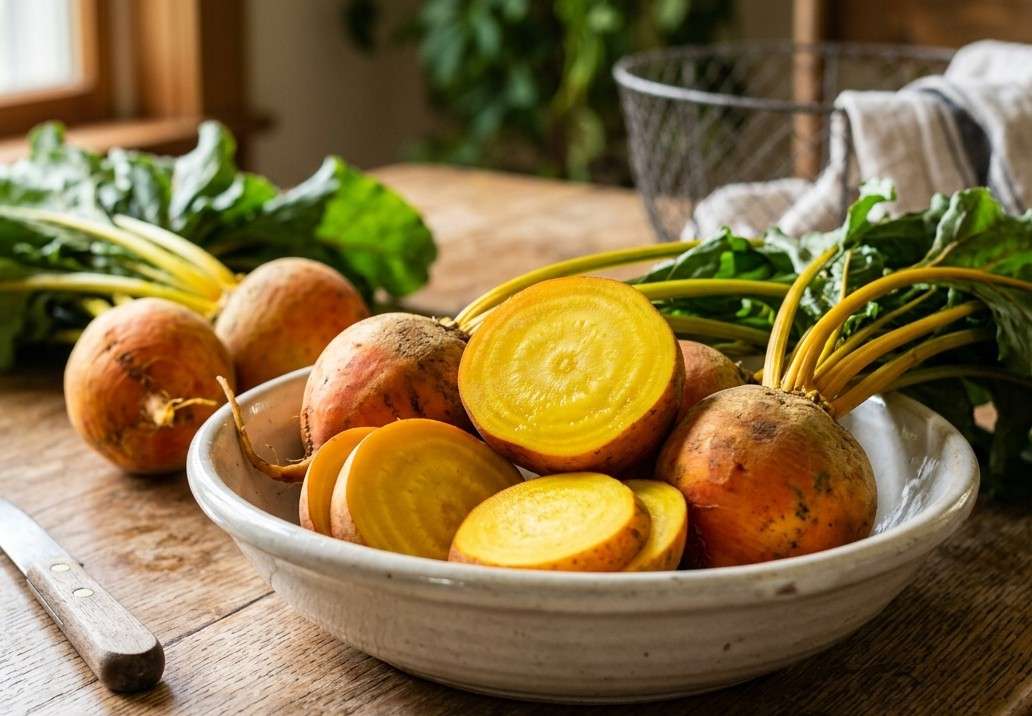
Golden beets are a colorful and nutritious root vegetable known for their bright yellow-orange flesh, sweet earthy flavor, and impressive health benefits. They belong to the same family as red beets but have a milder taste and do not stain as heavily, making them popular in salads, soups, juices, and roasted vegetable dishes.
Rich in vitamins, minerals, antioxidants, and dietary nitrates, golden beets may support heart health, digestion, energy levels, immunity, and overall wellness. Their vibrant color also comes from beneficial plant compounds that help protect the body from oxidative stress.
In this guide, you will learn everything about golden beets (also known as yellow beets or gold beets), including their nutrition facts, science-backed health benefits, side effects, uses, storage tips, dosage, and the best ways to eat them.
What is Golden Beets?
Golden beets are a variety of beetroot with golden-yellow flesh and skin. They are scientifically classified as Beta vulgaris and are closely related to red beets, Swiss chard, and sugar beets.
Unlike traditional red beets, golden beets have a sweeter, less earthy flavor and a softer texture when cooked. They are commonly used in roasting, steaming, juicing, pickling, and salads.
Golden beets are loaded with essential nutrients such as folate, potassium, manganese, vitamin C, fiber, and natural nitrates. These nutrients may help improve blood circulation, support healthy digestion, and maintain healthy blood pressure levels. They can be eaten both raw and cooked, while their leafy green tops are also edible and nutritious.
Nutrition Facts of Golden Beets
Below is the approximate nutritional value of 100 grams of raw golden beets.
| Nutrient | Amount |
|---|---|
| Calories | 43 kcal |
| Carbohydrates | 9.6 g |
| Protein | 1.6 g |
| Fat | 0.2 g |
| Dietary Fiber | 2.8 g |
| Natural Sugars | 6.8 g |
| Vitamin C | 4.9 mg |
| Folate | 109 mcg |
| Potassium | 325 mg |
| Magnesium | 23 mg |
| Iron | 0.8 mg |
| Calcium | 16 mg |
| Phosphorus | 40 mg |
| Manganese | 0.3 mg |
| Sodium | 78 mg |
| Water Content | 87% |
20 Proven Health Benefits of Golden Beets
- Supports Heart Health Gold beets contain nitrates that may help improve blood circulation and support healthy blood pressure levels.
- Boosts Energy Naturally The natural nitrates in yellow beets may increase oxygen flow in the body and improve stamina.
- Improves Digestion Golden beets are rich in fiber, which helps support healthy digestion and regular bowel movements.
- Supports Liver Function Antioxidants and plant compounds in golden beets may help the liver remove toxins from the body.
- Promotes Healthy Blood Pressure Potassium and dietary nitrates in yellow beets may help relax blood vessels and improve circulation.
- Strengthens Immunity Vitamin C and antioxidants in golden beets help support the immune system and protect against infections.
- May Improve Athletic Performance Gold beets are often consumed by athletes because nitrates may improve endurance and exercise performance.
- Supports Brain Health Better blood flow from nitrates may help improve oxygen delivery to the brain and support mental function.
- Helps Prevent Constipation The fiber content in yellow beets supports smoother digestion and healthier bowel movements.
- Supports Healthy Skin Antioxidants and vitamin C may help maintain glowing and healthy skin.
- May Reduce Inflammation Golden beets contain plant compounds that may help reduce inflammation in the body.
- Supports Healthy Weight Management Gold beets are low in calories and high in fiber, helping you stay full longer.
- Promotes Eye Health Golden pigments and antioxidants may help protect the eyes from oxidative damage.
- Supports Healthy Pregnancy Folate in golden beets is important for fetal growth and development during pregnancy.
- Helps Maintain Healthy Blood Flow Natural nitrates may improve circulation and oxygen transport throughout the body.
- Supports Bone Health Minerals like magnesium and calcium contribute to stronger bones and teeth.
- May Help Reduce Fatigue Iron and nitrates in yellow beets may help reduce tiredness and improve energy levels.
- Supports Healthy Cholesterol Levels Fiber in golden beets may help support balanced cholesterol levels.
- May Support Detoxification Natural antioxidants may help the body remove harmful compounds more effectively.
- Supports Overall Wellness Gold beets provide a wide variety of nutrients that contribute to daily health and vitality.
10 Side Effects of Golden Beets
- Kidney Stone Risk Gold beets contain oxalates that may increase the risk of kidney stones in sensitive individuals.
- Digestive Discomfort Eating too many yellow beets may cause bloating, gas, or stomach discomfort.
- Low Blood Pressure Excessive intake may lower blood pressure too much in some people.
- Allergic Reactions Some individuals may experience itching, swelling, or allergic reactions after eating beets.
- Blood Sugar Concerns Golden beets contain natural sugars that may affect blood sugar levels when consumed excessively.
- Beeturia Gold beets may occasionally cause unusual urine or stool color changes in some individuals.
- Stomach Cramps Large amounts of beet fiber may trigger stomach cramps or digestive upset.
- Interaction with Medications Golden beets may interact with blood pressure or nitrate-related medications.
- Oxalate Sensitivity People sensitive to oxalates may experience complications from high beet consumption.
- Nitrate Overconsumption Excessive intake of nitrate-rich foods may not be suitable for everyone.
How to Eat Golden Beets?
Gold beets are versatile and can be enjoyed in many delicious ways.
Raw
Raw yellow beets can be grated into salads, slaws, or wraps for extra crunch and nutrition.
Roasted
Roasting enhances their sweetness and creates a soft, caramelized texture.
Steamed
Steamed golden beets remain tender and retain many nutrients.
Juiced
Golden beet juice can be mixed with carrots, apples, lemon, or ginger.
Pickled
Pickled yellow beets make a flavorful side dish or sandwich topping.
Soups
Golden beets can be blended into creamy soups and vegetable stews.
Smoothies
Small amounts of cooked yellow beets can be added to smoothies for nutrition and color.
Beet Greens
The leafy tops can be sautéed like spinach or added to soups.
Tips for Consuming Golden Beets
- Choose firm and smooth beets without soft spots.
- Wash thoroughly before cooking or eating.
- Peel only after cooking to preserve nutrients.
- Pair with citrus fruits to improve iron absorption.
- Roast with olive oil and herbs for better flavor.
- Consume in moderation if you are sensitive to oxalates.
- Start with small servings if eating raw beets for the first time.
- Store beet greens separately to maintain freshness.
- Combine with other vegetables for balanced nutrition.
- Drink plenty of water when increasing fiber intake.
Other Uses of Golden Beets
- Natural Food Coloring Gold beets can be used as a natural yellow-orange coloring ingredient in recipes.
- Juice Blends Golden beets are commonly added to detox and energy juices.
- Healthy Chips Thinly sliced yellow beets can be baked into crunchy vegetable chips.
- Salad Ingredient Roasted yellow beets add sweetness and color to salads.
- Soup Base Gold beets can be blended into creamy soups and purees.
- Pickling Ingredient Gold beets are widely used in homemade pickles.
- Smoothie Booster Cooked yellow beets can enhance the nutrition of smoothies.
- Vegetable Side Dish Roasted or steamed golden beets make a healthy side dish.
- Plant-Based Recipes Gold beets are often used in vegan and vegetarian meals.
- Fermented Foods Gold beets can be fermented into probiotic-rich foods.
How Much Golden Beets Can You Eat in a Day?
Most healthy adults can safely eat about 1 to 2 medium-sized golden beets per day as part of a balanced diet.
This amount generally provides beneficial nutrients without excessive oxalate or nitrate intake. People with kidney stones, low blood pressure, or certain medical conditions should consume golden beets in moderation and consult a healthcare professional if needed.
The appropriate amount of yellow beets depends on age, health condition, and dietary needs.
- Raw golden beets: 1 small to medium beet daily
- Cooked golden beets: 1 to 2 medium beets daily
- Golden beet juice: About 120–250 ml per day
- Beet powder supplements: Follow product instructions or medical advice
Moderation is important because excessive intake may cause digestive discomfort or oxalate-related issues.
Best Time to Eat Golden Beets
Morning
Eating yellow beets in the morning may help support energy and circulation throughout the day.
Before Exercise
Golden beet juice is commonly consumed 1–3 hours before workouts for endurance support.
Lunch
Golden beets can be included in salads or meals for sustained energy and digestion support.
Evening
Cooked yellow beets can be eaten at dinner as a nutritious vegetable side dish.
Who Should Eat Golden Beets?
- Athletes Golden beets may help improve stamina and exercise performance due to their nitrate content.
- People with Digestive Issues The fiber in yellow beets may help support healthy digestion and bowel regularity.
- Pregnant Women Folate in yellow beets supports fetal growth and development during pregnancy.
- People with High Blood Pressure Natural nitrates may help support healthy blood pressure levels.
- Vegetarians and Vegans Golden beet provide important minerals and antioxidants in plant-based diets.
- People Seeking Weight Management Low calories and high fiber may help support healthy weight goals.
- Older Adults Nutrients in yellow beets may support circulation and overall wellness.
- People with Active Lifestyles Golden beet may help improve energy and recovery.
- Individuals with Nutrient Deficiencies Gold beets provide folate, potassium, magnesium, and iron.
- Health-Conscious Individuals Gold beets are nutrient-dense and fit well into balanced diets.
Who Should Not Eat Golden Beets?
- People with Kidney Stones High oxalate content may increase the risk of stone formation.
- Individuals with Low Blood Pressure Gold beets may further lower blood pressure in sensitive people.
- People with Oxalate Sensitivity Oxalates in beets may trigger discomfort or health concerns.
- Individuals with Beet Allergies Some people may experience allergic reactions after consuming beets.
- People Taking Blood Pressure Medications Gold beets may interact with medications that lower blood pressure.
- Individuals with Digestive Sensitivity Excessive beet intake may cause bloating or stomach discomfort.
- People with Certain Metabolic Disorders Those with rare conditions affecting oxalate metabolism should limit beet intake.
- People on Restricted Diets Individuals following low-potassium diets may need moderation.
How to Store Golden Beets?
- Refrigerate Immediately Store yellow beets in the refrigerator to maintain freshness longer.
- Remove the Greens Separate the greens from the roots to prevent moisture loss.
- Use Airtight Bags Store beets in perforated or airtight bags in the crisper drawer.
- Keep Dry Avoid washing before storage because moisture can speed spoilage.
- Store Beet Greens Separately Greens should be refrigerated and consumed within a few days.
- Freeze Cooked Beets Cooked gold beets can be frozen for future use.
- Check for Soft Spots Discard beets that become mushy or develop mold.
- Avoid Sunlight Exposure Keep gold beets away from heat and direct sunlight.
Precautions and Interactions
- Medication Interaction Gold beets may interact with blood pressure medications and nitrate-based drugs.
- Kidney Stone Precaution Individuals prone to kidney stones should limit high-oxalate foods like beets.
- Moderate Consumption Excessive intake may cause digestive discomfort or blood pressure changes.
- Monitor Blood Sugar People with diabetes should monitor portion sizes due to natural sugars.
- Hydration Importance Drinking enough water may help reduce oxalate concentration in the body.
- Allergy Awareness Stop consumption if allergic symptoms appear after eating yellow beets.
- Pregnancy Consideration Gold beets are generally safe during pregnancy when eaten in moderation.
- Balanced Diet Reminder Gold beets should be part of a varied and balanced diet.
- Juice Intake Caution Concentrated beet juice may provide very high nitrate levels.
- Consult Healthcare Providers People with medical conditions should seek professional advice before major dietary changes.
Conclusion
Golden beets are a flavorful and nutrient-rich root vegetable that can support heart health, digestion, energy, immunity, and overall wellness. Their naturally sweet taste and vibrant color make them an excellent addition to salads, soups, juices, and roasted vegetable dishes.
While gold beets offer many health benefits, they should still be consumed in moderation, especially by individuals sensitive to oxalates or blood pressure changes. Including yellow beets as part of a balanced diet may help improve nutrition and add variety to everyday meals.
FAQ’s
Are golden beets healthier than red beets?
Golden beets and red beets have very similar nutritional value, but golden beets usually have a milder, sweeter taste and contain slightly different antioxidants.
Can you eat golden beets raw?
Yes, yellow beets can be eaten raw in salads, slaws, wraps, or juices.
What do golden beets taste like?
Gold beets have a sweet, mild, and less earthy flavor compared to red beets.
Are golden beets good for weight loss?
Yes, yellow beets are low in calories and rich in fiber, which may help support healthy weight management.
Can diabetics eat golden beets?
People with diabetes can usually eat yellow beets in moderation as part of a balanced diet, but portion control is important due to their natural sugar content.
Do golden beets lower blood pressure?
Gold beets contain natural nitrates that may help support healthy blood pressure and circulation.
Are golden beets good for the liver?
Gold beets contain antioxidants and plant compounds that may help support healthy liver function.
Are golden beet greens edible?
Yes, the leafy tops of yellow beets are edible and highly nutritious.
Do golden beets stain like red beets?
Gold beets stain much less than red beets, making them easier to handle during cooking.
How long do golden beets last in the refrigerator?
Fresh yellow beets can usually last 2–4 weeks in the refrigerator when stored properly.
Are golden beets safe during pregnancy?
Gold beets are generally safe during pregnancy and provide folate, which supports fetal development.
Can golden beets cause kidney stones?
Gold beets contain oxalates, which may increase the risk of kidney stones in sensitive individuals.
What is the best way to cook golden beets?
Roasting is one of the most popular methods because it enhances their natural sweetness and texture.
Can children eat golden beets?
Yes, children can eat yellow beets in moderate amounts as part of a healthy diet.
Are golden beets high in iron?
Gold beets contain a moderate amount of iron along with other important minerals.
Can golden beets improve exercise performance?
The nitrates in yellow beets may help improve oxygen flow and exercise endurance.
Are golden beets good for digestion?
Yes, their fiber content may help support healthy digestion and regular bowel movements.
Can you freeze golden beets?
Yes, cooked yellow beets can be frozen and stored for later use.
Can I eat Golden Beets every day?
Yes, yellow beets can be eaten daily in moderation. Most people can safely enjoy 1–2 medium beets per day.
What are golden beets good for?
Gold beets may support heart health, digestion, energy, circulation, immunity, and overall wellness.
Also Read: