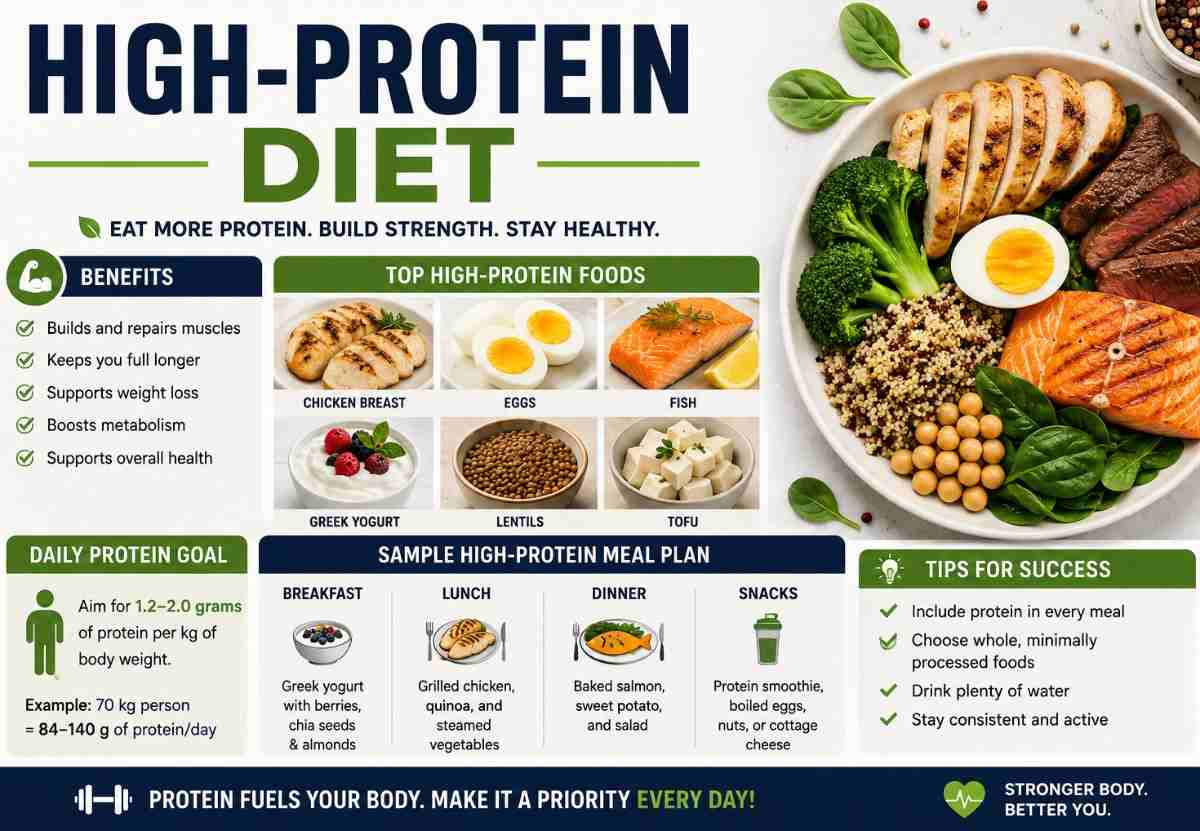
Protein has become one of the most talked-about nutrients in nutrition, fitness, and weight management. From protein-rich breakfasts and snacks to protein shakes and high-protein diets, many people are trying to increase their daily intake.
A high-protein diet can be useful for supporting muscle maintenance, improving fullness after meals, and making it easier to meet protein needs. However, more protein is not automatically better. The overall quality of the diet matters, including the sources of protein, fiber, healthy fats, fruits, vegetables, and whole grains.
The best high-protein diet is not simply a plate filled with meat or a routine built around protein supplements. It is a balanced eating pattern that provides enough protein while still supplying the other nutrients your body needs.
What Is a High-Protein Diet?
A high-protein diet is an eating pattern in which protein makes up a relatively large portion of your daily food intake compared with a typical diet.
Protein is an essential macronutrient made from amino acids. Your body uses protein to build and repair muscles and tissues, produce enzymes and hormones, support immune function, and perform many other essential processes.
There is no single protein intake that defines a high-protein diet for everyone. Protein requirements can vary according to body size, age, activity level, health status, and personal goals.
For healthy adults, the general Recommended Dietary Allowance is 0.8 grams of protein per kilogram of body weight per day. Harvard notes that acceptable protein intake can range from about 10% to 35% of daily calories, while individual needs vary.
A person who exercises regularly, for example, may have different protein needs from someone who is sedentary. Older adults may also benefit from paying particular attention to adequate protein intake to help maintain muscle.
How Does a High-Protein Diet Work?
Protein affects the body in several ways that can make it useful in a healthy eating plan.
Protein is generally filling, so meals containing adequate protein may help you feel satisfied for longer. Protein also supplies amino acids needed for muscle protein synthesis and tissue repair.
When a high-protein diet replaces highly processed foods or refined carbohydrates with nutritious protein-rich foods, it may also improve the overall nutritional quality of the diet.
However, simply adding protein to your existing diet can increase total calorie intake. A better approach is often to replace less nutritious foods with protein-rich whole foods rather than adding large amounts of protein on top of everything else.
Best High-Protein Foods
There are many ways to follow a high-protein diet, whether you eat meat, fish, eggs, dairy, or a primarily plant-based diet.
Animal-Based Protein Foods
- Eggs
- Chicken
- Turkey
- Fish
- Salmon
- Tuna
- Sardines
- Lean beef
- Low-fat milk
- Greek yogurt
- Cottage cheese
- Plain yogurt
- Cheese
Plant-Based Protein Foods
- Lentils
- Chickpeas
- Kidney beans
- Black beans
- Soybeans
- Edamame
- Tofu
- Tempeh
- Peanuts
- Almonds
- Walnuts
- Pumpkin seeds
- Chia seeds
- Flaxseeds
- Quinoa
- Oats
Plant proteins can absolutely be part of a protein-rich diet. Eating a variety of legumes, soy foods, nuts, seeds, and whole grains can help provide a broad range of amino acids and other nutrients.
High-Protein Diet Food List
| Food | Approximate Protein* |
|---|---|
| 1 large egg | 6 g |
| 100 g cooked chicken breast | 30–31 g |
| 100 g cooked salmon | 25–26 g |
| 100 g Greek yogurt | 9–10 g |
| 100 g cottage cheese | 11–12 g |
| 1 cup cooked lentils | 17–18 g |
| 1 cup cooked chickpeas | 14–15 g |
| 100 g tofu | 8–17 g depending on type |
| 1 cup cooked quinoa | 8 g |
| 30 g almonds | 6 g |
| 30 g pumpkin seeds | 8–9 g |
| 1 cup cooked oats | 5–6 g |
*Values are approximate and vary according to brand, preparation, serving size, and food variety.
15 Potential Benefits of a High-Protein Diet
1. Supports Muscle Maintenance
Protein supplies amino acids that your body needs to build and maintain muscle tissue.
2. Helps With Muscle Recovery
Getting enough protein after physical activity provides the building blocks needed for normal muscle repair and recovery.
3. May Increase Fullness
Protein-rich meals can be satisfying, which may make it easier for some people to manage hunger between meals.
4. Can Support Weight Management
Replacing highly processed foods with nutritious protein-rich foods may help create a more satisfying eating pattern that supports healthy weight management.
5. Helps Maintain Lean Body Mass
Adequate protein intake can be particularly important when someone is losing weight because preserving lean tissue is an important part of healthy weight loss.
6. Supports Tissue Repair
Your body continually repairs and replaces cells and tissues, and protein provides the amino acids required for these processes.
7. Supports Immune Function
Protein is involved in the production of antibodies and other components of a healthy immune system.
8. Helps Produce Enzymes
Many enzymes responsible for important chemical reactions in the body are proteins.
9. Supports Hormone Production
Certain hormones and signaling molecules are made from or depend on proteins.
10. Can Make Meals More Satisfying
Adding foods such as eggs, lentils, tofu, yogurt, fish, or chicken can make a meal more substantial without relying entirely on refined carbohydrates.
11. Provides Important Nutrients
Protein-rich foods can also provide iron, zinc, calcium, vitamin B12, omega-3 fats, fiber, and other nutrients depending on the food selected.
12. Supports Active Lifestyles
People who exercise frequently may have higher protein needs than sedentary individuals, making protein-rich foods useful in a balanced fitness-oriented diet.
13. Can Encourage Better Food Choices
Building meals around nutritious protein sources can naturally encourage the addition of vegetables, whole grains, legumes, and other minimally processed foods.
14. Supports Healthy Aging
Adequate protein is important for maintaining muscle as people age, particularly when combined with resistance or strength-training activities.
15. Offers Flexible Meal Options
A high-protein eating pattern can be adapted to vegetarian, non-vegetarian, Mediterranean-style, and many other dietary preferences.
Best Protein Sources to Choose
Not every high-protein food is equally nutritious.
A protein food comes with a broader nutritional “package,” including its fats, sodium, fiber, vitamins, minerals, and degree of processing. Harvard recommends emphasizing foods such as beans, nuts, fish, poultry, and other healthier protein sources while limiting processed meats.
Better Everyday Choices
- Lentils and beans
- Chickpeas
- Tofu and tempeh
- Fish
- Eggs
- Greek yogurt
- Plain yogurt
- Nuts and seeds
- Skinless poultry
- Low-fat dairy
Foods to Limit
- Processed meats
- Bacon
- Sausages
- Salami
- Highly processed meat products
- Deep-fried protein foods
- Protein snacks high in added sugar
- Protein products containing excessive sodium
This does not mean you can never eat these foods. The goal is to make nutrient-dense protein sources the foundation of your diet.
High-Protein Diet for Weight Loss
High-protein diets are popular among people trying to lose weight because protein can help make meals more filling.
However, weight loss still depends on overall energy balance. Simply eating more protein does not guarantee weight loss.
A more practical strategy is to build meals around:
Protein + vegetables + high-fiber carbohydrates + healthy fats
For example:
- Grilled chicken + vegetables + brown rice
- Lentils + vegetables + whole-wheat roti
- Tofu + mixed vegetables + quinoa
- Greek yogurt + berries + chia seeds
- Eggs + vegetables + whole-grain toast
This approach is more sustainable than eliminating entire food groups or consuming extremely large amounts of protein.
High-Protein Diet for Muscle Gain
People who participate in strength training often focus on protein because muscles require amino acids for repair and growth.
Protein works best as part of a broader muscle-building strategy that includes:
- Resistance training
- Adequate total calories
- Sufficient protein
- Carbohydrates for training energy
- Healthy fats
- Adequate sleep
- Rest and recovery
Eating protein alone will not build significant muscle without an appropriate training stimulus.
7-Day High-Protein Meal Plan
| Day | Breakfast | Lunch | Snack | Dinner |
|---|---|---|---|---|
| Monday | Eggs + whole-grain toast + fruit | Chicken + brown rice + vegetables | Greek yogurt + nuts | Lentil curry + roti + salad |
| Tuesday | Greek yogurt + oats + chia seeds | Chickpea salad + quinoa | Boiled eggs | Grilled fish + vegetables + rice |
| Wednesday | Vegetable omelet + toast | Tofu bowl + brown rice | Cottage cheese + fruit | Chicken + roasted vegetables |
| Thursday | Oats + milk + nuts | Lentil dal + roti + vegetables | Greek yogurt | Fish + quinoa + salad |
| Friday | Eggs + avocado toast | Chicken + quinoa + vegetables | Nuts + yogurt | Chickpea curry + brown rice |
| Saturday | Greek yogurt + berries + seeds | Tofu stir-fry + rice | Boiled eggs | Grilled chicken + vegetables |
| Sunday | Vegetable omelet + oats | Lentils + roti + salad | Cottage cheese + fruit | Salmon + quinoa + vegetables |
Portions should be adjusted according to individual calorie and protein requirements.
How to Start a High-Protein Diet?
You do not need to completely change your diet overnight.
1. Add Protein to Breakfast
Try eggs, Greek yogurt, cottage cheese, milk, tofu, or a protein-rich oatmeal combination.
2. Include Protein at Lunch
Add lentils, beans, chickpeas, chicken, fish, tofu, or another protein source to your lunch.
3. Upgrade Your Snacks
Replace highly processed snacks with yogurt, boiled eggs, roasted chickpeas, nuts, seeds, or cottage cheese.
4. Build Dinner Around Protein
Choose a protein source first and then add vegetables, whole grains, or other high-fiber carbohydrates.
5. Increase Protein Gradually
If your current diet is relatively low in protein, gradually adding protein-rich foods may be easier than making a dramatic change.
6. Keep Fiber in Your Diet
Do not let protein replace vegetables, fruits, legumes, and whole grains. Recent Harvard guidance also highlights foods such as soybeans, legumes, nuts, seeds, and whole grains because they can provide both protein and fiber.
7. Drink Enough Fluids
Adequate hydration is important, particularly when your diet contains plenty of protein and fiber.
How Much Protein Should You Eat Per Day?
There is no universal high-protein target.
For healthy adults, the basic RDA is approximately 0.8 g of protein per kilogram of body weight per day.
For example:
| Body Weight | Basic RDA Approximation |
|---|---|
| 50 kg | 40 g/day |
| 60 kg | 48 g/day |
| 70 kg | 56 g/day |
| 80 kg | 64 g/day |
| 90 kg | 72 g/day |
| 100 kg | 80 g/day |
These figures are general reference points, not personalized prescriptions.
People who are highly active, older, pregnant, recovering from illness, or working toward particular fitness goals may have different nutritional requirements. A registered dietitian or healthcare professional can help determine an appropriate intake.
Is a High-Protein Diet Safe?
For many healthy adults, a balanced diet containing adequate protein can be perfectly reasonable.
The concern arises when “high protein” becomes extreme protein intake, replaces other essential foods, or relies heavily on processed meats and supplements.
A high-protein diet may also need modification for people with certain medical conditions.
For example, people with chronic kidney disease should not independently start a high-protein diet. Protein requirements can change according to kidney function and whether someone is receiving dialysis. The National Kidney Foundation recommends individualized guidance for people with kidney disease.
Possible Side Effects of a High-Protein Diet
1. Digestive Discomfort
A sudden increase in protein, particularly from protein supplements or large servings of meat and dairy, may cause digestive discomfort in some people.
2. Constipation
Constipation can occur when a high-protein diet replaces fiber-rich foods such as fruits, vegetables, legumes, and whole grains.
3. Dehydration
Some people may pay less attention to fluid intake when focusing heavily on protein-rich foods.
4. Excess Calorie Intake
Protein still provides calories, so eating large quantities can contribute to excess calorie intake.
5. High Saturated Fat Intake
A diet centered on fatty meats, full-fat dairy, and processed meats can increase saturated fat intake.
6. High Sodium Intake
Processed meats and some packaged protein products can contain substantial amounts of sodium.
7. Nutrient Imbalance
Focusing too heavily on protein can crowd out vegetables, fruits, whole grains, and other important foods.
8. Kidney Concerns in Certain People
People with kidney disease may need a carefully controlled amount of protein rather than a high-protein diet.
9. Bad Breath on Very Low-Carbohydrate Plans
Some high-protein diets also restrict carbohydrates significantly, which may contribute to bad breath when ketosis occurs.
10. Dependence on Supplements
Relying heavily on protein powders and bars can make the diet more expensive and may add unnecessary sugars, sodium, or other ingredients.
High-Protein Diet vs. Balanced Diet
A high-protein diet does not have to mean a low-carbohydrate or low-fat diet.
A healthy approach can include all three macronutrients:
- Protein: Eggs, fish, chicken, lentils, tofu, yogurt
- Carbohydrates: Fruits, vegetables, oats, brown rice, quinoa, whole grains
- Healthy fats: Nuts, seeds, avocado, olive oil, fatty fish
The goal is not to make protein the only important nutrient. It is to make sure your diet contains enough protein while maintaining overall nutritional balance.
Who May Benefit From a High-Protein Diet?
A higher-protein eating pattern may be useful for:
- Physically active adults
- People doing resistance training
- Individuals trying to preserve muscle during weight loss
- People who struggle to feel satisfied after meals
- Older adults who need to pay attention to maintaining muscle
- People who simply prefer protein-rich meals
However, individual needs differ, so a higher protein intake should be tailored to the person’s overall diet and health.
Who Should Be Careful With a High-Protein Diet?
Talk with a healthcare professional or registered dietitian before significantly increasing protein if you:
- Have chronic kidney disease
- Have a history of kidney problems
- Have been advised to restrict protein
- Are pregnant or breastfeeding and considering a restrictive diet
- Have a significant medical condition
- Have difficulty meeting your nutritional needs
- Are planning an extreme high-protein or very-low-carbohydrate diet
People with kidney disease especially should not assume that more protein is better. The National Kidney Foundation notes that protein needs can differ substantially depending on kidney function and dialysis status.
Do You Need Protein Powder?
No. Protein powder is optional.
Many people can meet their protein needs through regular foods such as eggs, dairy, fish, poultry, soy foods, beans, lentils, nuts, and seeds.
Protein powder can be convenient for people who have difficulty getting enough protein from food, but it should complement a balanced diet rather than replace nutritious meals.
When choosing a protein supplement, look at the serving size, protein content, added sugar, sodium, and other ingredients.
Tips for Following a Healthy High-Protein Diet
- Choose mostly minimally processed protein foods.
- Include both plant and animal protein if they fit your diet.
- Eat vegetables and fruits every day.
- Include fiber-rich carbohydrates.
- Limit processed meats.
- Choose lean poultry and fish more often.
- Include beans and lentils regularly.
- Use nuts and seeds in sensible portions.
- Drink adequate fluids.
- Avoid treating protein as the only important nutrient.
- Adjust portions according to your energy needs.
- Avoid extremely restrictive diet plans.
- Speak with a professional if you have a medical condition.
FAQ’s
Is a high-protein diet good for weight loss?
Yes, it may help with fullness and support muscle preservation during weight loss, but overall calorie intake and diet quality still matter.
Can I follow a high-protein diet every day?
Yes, most healthy adults can include protein-rich foods daily, provided the overall diet remains balanced.
Can vegetarians follow a high-protein diet?
Yes. Lentils, beans, chickpeas, tofu, tempeh, dairy, eggs, quinoa, nuts, and seeds can provide plenty of protein.
Does a high-protein diet help build muscle?
Adequate protein supports muscle repair and growth, especially when combined with resistance training and sufficient overall nutrition.
Can too much protein be harmful?
Very high protein intake may not be suitable for everyone and can be a concern for people with certain health conditions, particularly kidney disease.
Is a high-protein diet healthy?
It can be healthy when based on nutritious protein sources and combined with vegetables, fruits, whole grains, fiber, and healthy fats.
Can I eat carbohydrates on a high-protein diet?
Yes. A high-protein diet does not require eliminating carbohydrates. Whole grains, fruits, vegetables, oats, quinoa, and legumes can all fit into a balanced plan.
Final Thoughts
A high-protein diet does not need to be extreme to be effective. The most practical approach is to include a good source of protein in each main meal while keeping your diet rich in vegetables, fruits, whole grains, legumes, and healthy fats.
Instead of asking, “How much protein can I eat?” a better question is “Which protein foods give me the most nutritional value?”
Choose a variety of protein sources, pay attention to portions, keep fiber-rich foods on your plate, and avoid relying too heavily on processed meats or supplements. For people with kidney disease or other medical conditions, protein intake should be individualized with professional guidance.
Sources / References:
Disclaimer:
This article is for general educational purposes only and does not replace professional medical or dietary advice. Individual protein needs vary, especially with medical conditions. Consult a qualified healthcare professional before making major dietary changes.
Also Read: