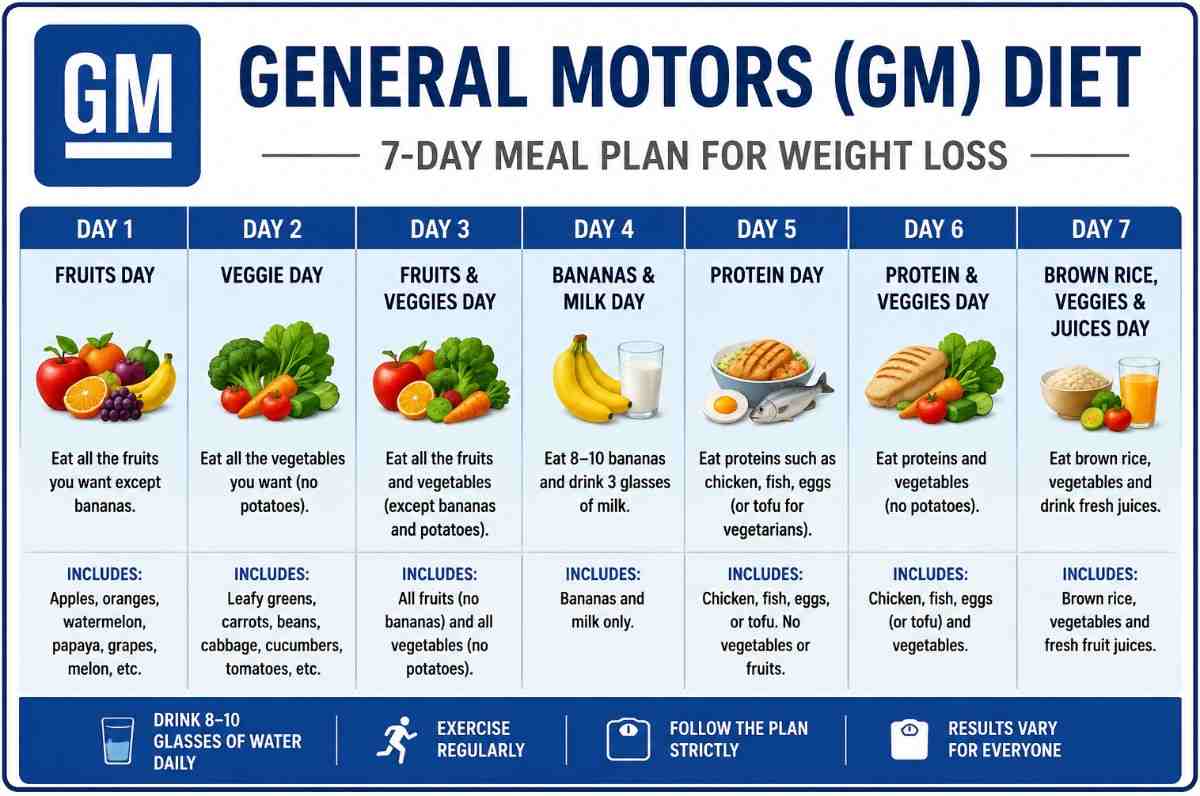
The General Motors (GM) Diet is a short-term, highly restrictive eating plan that has become popular online for people looking for rapid weight loss. It is commonly described as a 7-day diet, with different foods emphasized on each day, including fruits, vegetables, bananas, milk, and a small amount of meat or brown rice.
Although the GM Diet may cause the number on the scale to drop quickly, that does not necessarily mean the body is losing the same amount of body fat. Much of the early change can come from reduced food intake, lower carbohydrate intake, and changes in water and glycogen stores.
What Is the General Motors (GM) Diet?
The General Motors Diet, commonly called the GM Diet, is a seven-day restrictive diet plan that claims to promote rapid weight loss by changing the types of foods eaten each day.
Despite its name, there is no strong scientific evidence establishing that the diet was developed, tested, or officially endorsed by General Motors as a corporate program. The story surrounding its origin has circulated for many years, but the commonly repeated claims about its development are not supported by reliable clinical evidence.
The plan typically focuses on:
- Fruits on Day 1
- Vegetables on Day 2
- Fruits and vegetables on Day 3
- Bananas and milk on Day 4
- Meat, tomatoes, and sometimes vegetarian protein alternatives on Day 5
- Meat and vegetables on Day 6
- Brown rice, vegetables, and fruit juice on Day 7
The exact rules vary considerably between websites and versions of the diet. That inconsistency is another reason to be cautious about treating it as a standardized nutrition program.
How Does the GM Diet Work?
The GM Diet works primarily by severely restricting food choices and overall calorie intake for a short period.
The plan eliminates or greatly limits many common foods, including added fats, sweets, processed foods, and many sources of carbohydrates and protein. Because the total amount of food and energy consumed may be considerably lower than usual, some people experience rapid weight loss.
However, rapid scale changes should not automatically be interpreted as rapid fat loss.
When carbohydrate intake and overall food intake decrease, the body can use stored glycogen. Glycogen is stored together with water, so changes in glycogen stores can produce noticeable changes in body weight.
Once normal eating resumes, some of this lost water weight may return.
7-Day GM Diet Plan
The traditional GM Diet is usually presented as a seven-day schedule.
| Day | Foods Commonly Included | Main Focus |
|---|---|---|
| Day 1 | Fruits, especially water-rich fruits | Fruit |
| Day 2 | Vegetables, including cooked or raw vegetables | Vegetables |
| Day 3 | Fruits and vegetables | Fruits and vegetables |
| Day 4 | Bananas and milk or another specified dairy option | Bananas and milk |
| Day 5 | Meat with tomatoes, or vegetarian alternatives in some versions | Protein |
| Day 6 | Meat or vegetarian protein with vegetables | Protein and vegetables |
| Day 7 | Brown rice, vegetables, and fruit or unsweetened juice | Mixed plant foods |
This schedule is not a medically standardized diet plan, and versions found online can differ in portion sizes, permitted foods, beverages, and preparation methods.
Day 1: Fruits
The first day generally allows different types of fruit throughout the day.
Commonly suggested choices include:
- Apples
- Oranges
- Watermelon
- Papaya
- Berries
- Melons
- Grapefruit
- Kiwi
Some versions particularly emphasize watermelon and other water-rich fruits.
Fruit provides vitamins, minerals, water, and fiber. However, eating fruit alone for an entire day does not provide a balanced intake of protein and essential fats.
Day 2: Vegetables
Day 2 generally focuses on vegetables.
Examples include:
- Broccoli
- Cabbage
- Cucumber
- Spinach
- Tomatoes
- Carrots
- Lettuce
- Cauliflower
- Bell peppers
- Green beans
Vegetables can provide fiber and numerous micronutrients while contributing relatively few calories.
However, relying almost exclusively on vegetables can leave the diet low in protein and dietary fat.
Day 3: Fruits and Vegetables
Day 3 combines the foods from the first two days.
A person may eat fruits earlier in the day and vegetables throughout the day, although specific versions differ.
This day provides more variety than the first two days but may still be inadequate in protein, fat, and total energy depending on portion sizes.
Day 4: Bananas and Milk
Day 4 is usually centered around bananas and milk.
Bananas provide carbohydrates, potassium, and some fiber, while milk contributes protein, calcium, and other nutrients.
However, the very limited selection can make it difficult to meet overall nutritional requirements.
People who have lactose intolerance or a milk allergy may also have difficulty following this version.
Day 5: Protein and Tomatoes
Day 5 generally introduces a larger protein component.
Traditional versions commonly mention lean meat and tomatoes. Vegetarian adaptations may use foods such as beans, tofu, or another protein source.
The addition of protein makes the day more nutritionally balanced than the earlier days, but the overall seven-day pattern remains restrictive.
Day 6: Protein and Vegetables
Day 6 generally includes protein together with vegetables.
Common examples include lean meat, poultry, or vegetarian protein alternatives paired with vegetables.
Protein is important for maintaining muscle and supporting numerous functions in the body. However, the GM Diet does not provide a well-established framework for determining whether protein intake is adequate for an individual.
Day 7: Brown Rice, Vegetables, and Fruit
The final day usually includes brown rice, vegetables, and fruit or unsweetened fruit juice.
Brown rice provides carbohydrates and some fiber, while vegetables and fruit contribute vitamins, minerals, and other beneficial plant compounds.
At the end of the seven days, followers are generally encouraged to transition back toward a more normal eating pattern.
Does the GM Diet Help You Lose Weight?
It may cause short-term weight loss, but there is not enough high-quality evidence to conclude that the GM Diet itself produces sustainable fat loss.
The most obvious reason for weight loss is that the diet can substantially reduce calorie intake.
Calorie balance is an important component of weight management, and reducing calories while maintaining adequate nutrition can support weight loss. However, healthy weight-management programs generally emphasize sustainable eating habits rather than extreme restriction.
A person may therefore see a lower number on the scale after seven days without experiencing an equivalent reduction in body fat.
Potential Benefits of the GM Diet
The GM Diet has some features that may appear beneficial, although these should not be confused with evidence proving that the overall diet is healthy.
1. Increased Fruit Intake
The plan encourages eating fruit, which can increase intake of fiber, vitamins, minerals, and water.
2. Increased Vegetable Intake
Several days emphasize vegetables, potentially increasing consumption of nutrient-dense plant foods.
3. Reduced Processed Foods
The plan generally excludes many processed snacks, sweets, and fast foods.
4. Reduced Added Sugar
Most versions limit foods and drinks containing large amounts of added sugar.
5. Short-Term Structure
The seven-day format gives followers a simple schedule to follow, which some people may find easier than an open-ended diet.
6. Greater Awareness of Food Choices
Following a structured plan may make people more conscious of what and how much they eat.
However, these potential advantages can also be achieved through a much more balanced eating pattern without following the restrictive GM Diet.
10 Potential Risks and Side Effects of the GM Diet
1. Nutritional Deficiencies
The highly restrictive food choices may make it difficult to obtain enough protein, healthy fats, and several essential nutrients.
2. Hunger
The low energy intake may leave some people feeling hungry or unsatisfied.
3. Fatigue
Insufficient calorie intake can contribute to tiredness and reduced energy.
4. Headaches
Sudden changes in calorie intake, meal patterns, caffeine consumption, or carbohydrate intake may trigger headaches in some people.
5. Dizziness
Some people may experience lightheadedness when consuming substantially less food than usual.
6. Constipation or Digestive Changes
Sudden changes in fiber intake and food selection may alter bowel habits.
7. Loss of Lean Mass
Rapid weight loss and inadequate protein intake can potentially contribute to loss of lean tissue.
8. Difficulty Maintaining Weight Loss
Extreme diets can be difficult to sustain, making weight regain more likely when normal eating patterns return. NIDDK experts emphasize that sustainable eating patterns are generally more useful than diets that people repeatedly start and stop.
9. Gallstone Risk With Rapid Weight Loss
Very rapid weight loss can increase the risk of gallstones. NIDDK specifically notes that very-low-calorie diets and rapid weight loss can increase gallstone risk.
10. Unhealthy Relationship With Food
Repeated cycles of severe restriction followed by returning to previous eating habits may encourage an unhealthy dieting pattern.
Is the GM Diet Safe?
The GM Diet should not be considered a universally safe diet simply because it lasts only seven days.
Safety depends on factors such as age, overall health, medications, nutritional requirements, activity level, and whether someone has an underlying medical condition.
NIDDK recommends looking for weight-loss programs that include a healthy reduced-calorie eating plan, physical activity when appropriate, ongoing support, and strategies for maintaining weight loss.
A highly restrictive seven-day diet does not necessarily meet these criteria.
Who Should Avoid the GM Diet?
The GM Diet is particularly unsuitable to try without professional guidance for:
- Children and teenagers
- Pregnant people
- Breastfeeding mothers
- Older adults with increased nutritional needs
- People with diabetes
- People with kidney disease
- People with liver disease
- People with a history of eating disorders
- People recovering from illness or surgery
- People taking medications that require consistent food intake
- Anyone who has been advised to follow a medically prescribed diet
If you have a medical condition or take prescription medication, speak with a qualified healthcare professional or registered dietitian before making major dietary changes.
GM Diet vs. a Balanced Weight-Loss Diet
| Feature | GM Diet | Balanced Weight-Loss Approach |
|---|---|---|
| Duration | Usually 7 days | Long-term |
| Food variety | Very limited | Broad |
| Protein | Variable and sometimes low | Adequate |
| Healthy fats | Often restricted | Included in appropriate amounts |
| Vegetables | High on several days | Regularly included |
| Fruit | High on several days | Regularly included |
| Sustainability | Generally difficult | Designed for long-term adherence |
| Evidence for the specific plan | Limited | Stronger evidence for calorie-controlled healthy patterns |
| Main goal | Rapid short-term weight change | Sustainable weight management |
A Healthier Alternative to the GM Diet
Instead of following a highly restrictive seven-day plan, consider building meals around several food groups.
A balanced weight-loss meal can include:
- Protein: Eggs, fish, chicken, tofu, beans, lentils, Greek yogurt, or other suitable protein sources.
- Vegetables: Leafy greens, carrots, tomatoes, broccoli, cauliflower, peppers, and other colorful vegetables.
- Whole-food carbohydrates: Oats, brown rice, whole-grain bread, quinoa, potatoes, or other minimally processed carbohydrate sources.
- Healthy fats: Nuts, seeds, avocado, olive oil, and other sources of unsaturated fats.
- Fruit: Whole fruits rather than relying primarily on fruit juice.
This approach provides considerably more flexibility and can be adapted to cultural preferences, vegetarian diets, and individual nutritional requirements.
How to Lose Weight More Sustainably?
A sustainable approach does not have to involve completely eliminating food groups.
1. Eat Enough Protein
Including protein at meals can help support muscle maintenance and make meals more satisfying.
2. Prioritize Vegetables and Fruits
Vegetables and whole fruits provide fiber and a wide range of nutrients.
3. Choose High-Fiber Carbohydrates
Whole grains, beans, lentils, vegetables, and other high-fiber foods can be part of a balanced weight-management diet.
4. Limit Highly Processed Foods
Foods high in added sugar, refined carbohydrates, and excess calories can be eaten less frequently while nutrient-dense foods make up most of the diet.
5. Watch Portion Sizes
Even nutritious foods contribute calories, so portion awareness can be useful when weight loss is the goal.
6. Stay Physically Active
Weight management is influenced by both food intake and physical activity. NIDDK notes that successful weight-management programs commonly combine healthy eating with appropriate physical activity.
7. Set Realistic Goals
NIDDK notes that a reasonable initial goal for many people with overweight or obesity is losing around 5% to 10% of starting body weight over six months, rather than pursuing dramatic short-term changes.
Can You Repeat the GM Diet Every Month?
Repeating the GM Diet regularly is not recommended without professional nutritional guidance.
Repeating a restrictive diet can make it harder to maintain a balanced intake of calories, protein, fats, vitamins, and minerals. It may also reinforce cycles of restriction and weight regain.
A sustainable eating pattern is generally a better long-term strategy than repeatedly following a short crash diet.
Can the GM Diet Reduce Belly Fat?
No diet can selectively target belly fat simply by following a particular seven-day food schedule.
When someone loses body fat, where that fat comes from depends on individual biology and overall changes in body composition.
Reducing total calorie intake can contribute to weight loss, but a specific diet cannot guarantee fat loss from the abdomen alone.
Is the Weight Lost on the GM Diet Permanent?
Usually, there is no reason to expect the initial seven-day weight reduction to be permanent without continuing sustainable lifestyle changes.
Some early weight loss can represent water and glycogen changes rather than only body-fat loss. Once a person resumes their previous eating pattern, some weight may return.
Long-term weight management requires habits that can realistically be maintained.
Final Verdict: Is the GM Diet Worth Trying?
The General Motors Diet is a highly restrictive seven-day diet that may produce rapid short-term changes on the scale, but it lacks strong evidence supporting its specific protocol as a safe and sustainable weight-loss strategy.
Its emphasis on fruits and vegetables can be positive, but the overall plan is too restrictive to serve as a balanced long-term eating pattern for most people.
For sustainable weight management, a better strategy is to create a moderate calorie deficit while eating adequate protein, vegetables, fruits, whole grains or other high-fiber carbohydrates, and healthy fats. NIDDK recommends choosing a weight-loss program that is healthy, realistic, tailored to the individual, and designed to help maintain weight loss.
If you’re considering the GM Diet because you want to lose weight quickly, speaking with a registered dietitian or healthcare professional can help you choose an approach that fits your nutritional needs and health status.
FAQ’s
How much weight can you lose with the GM Diet in 7 days?
There is no reliable amount that everyone can expect to lose. Weight changes depend on factors such as starting weight, food intake, activity, and individual metabolism, and rapid changes on the scale should not be assumed to represent fat loss alone.
What can I eat on Day 1 of the GM Diet?
Day 1 traditionally focuses mainly on fruits. Common choices include apples, oranges, watermelon, papaya, berries, and other whole fruits.
What can I eat on Day 2 of the GM Diet?
Day 2 generally focuses on vegetables, including foods such as broccoli, cabbage, cucumber, spinach, carrots, tomatoes, cauliflower, and bell peppers.
Can I eat bananas on the GM Diet?
Yes. Traditional versions of the GM Diet usually reserve bananas primarily for Day 4, when they are commonly combined with milk.
Can I drink milk on the GM Diet?
Traditional GM Diet plans generally include milk on Day 4. However, people with lactose intolerance, milk allergy, or specific dietary requirements may need a different approach.
Can vegetarians follow the GM Diet?
Some versions provide vegetarian alternatives by replacing meat with foods such as beans, lentils, tofu, or other protein-rich foods. However, the nutritional adequacy of the overall seven-day plan can still be a concern.
Can I eat rice on the GM Diet?
Traditional versions usually allow brown rice on Day 7, together with vegetables and fruit. The exact permitted portions and foods vary between versions of the diet.
Can I exercise while following the GM Diet?
Intense exercise may be difficult when food and calorie intake are heavily restricted. If you feel weak, dizzy, or unusually tired, stop exercising and seek appropriate medical advice.
Does the GM Diet reduce water weight?
It can. Restricting calories and changing carbohydrate intake can alter glycogen and water stores, which may contribute to rapid changes in body weight during the first several days.
Can the GM Diet cause weakness?
Yes. The restrictive nature of the diet may leave some people feeling hungry, tired, weak, or lightheaded, particularly if their calorie intake becomes too low.
Can the GM Diet cause nutrient deficiencies?
A restrictive seven-day eating pattern may make it difficult to obtain adequate amounts of protein, healthy fats, and certain vitamins and minerals, especially if followed repeatedly.
Is the GM Diet good for long-term weight loss?
The GM Diet is not well supported as a long-term weight-management strategy. Evidence-based weight-loss programs generally emphasize a healthy reduced-calorie eating plan, physical activity, behavioral support, and strategies for maintaining weight loss.
Can I drink fruit juice on the GM Diet?
Some versions allow fruit juice, particularly toward the end of the seven-day plan. However, whole fruit is generally a more nutrient-dense choice because it provides fiber, while fruit juice can contain considerable natural sugar and calories.
Is the GM Diet suitable for pregnant women?
No. Pregnancy is not an appropriate time to follow a restrictive weight-loss diet unless specifically recommended and supervised by a qualified healthcare professional.
Is the GM Diet suitable for breastfeeding mothers?
Breastfeeding mothers have increased nutritional needs, so a highly restrictive diet may not be appropriate. It is best to discuss weight loss and dietary changes with a healthcare professional or registered dietitian.
Can people with diabetes follow the GM Diet?
People with diabetes should not start a restrictive diet such as the GM Diet without consulting their healthcare professional. Major changes in food intake can affect blood glucose levels and may require medication adjustments.
Can the GM Diet cause gallstones?
Rapid weight loss can increase the risk of gallstones. NIDDK specifically advises avoiding crash diets that promise very rapid weight loss and recommends slower, sustainable weight management.
What should I eat after finishing the GM Diet?
After the seven days, gradually return to a balanced eating pattern that includes vegetables, fruits, adequate protein, whole grains or other high-fiber carbohydrates, and healthy fats. A sustainable eating pattern is more useful than repeatedly following extreme diets.
Is the GM Diet better than a balanced diet?
No. A balanced diet provides a wider range of nutrients and can be adapted to individual calorie needs, health conditions, food preferences, and cultural eating habits. Long-term weight management generally benefits from sustainable lifestyle changes rather than extreme short-term restriction.
Is the GM Diet scientifically proven?
There is limited scientific evidence supporting the specific seven-day GM Diet protocol. Claims about rapid weight loss should therefore be viewed cautiously, particularly when they promise dramatic results in a short period.
What Can I Eat on Day 4 of the GM Diet?
Day 4 mainly includes bananas and milk, although this combination is restrictive and may not provide complete nutrition.
Does the GM Diet Really Work?
The GM Diet may cause short-term weight loss, but there is limited evidence that it produces sustainable long-term results.
Can I drink coffee on the GM Diet?
Rules vary between versions of the GM Diet. If coffee contains added sugar, cream, or large amounts of calories, it may conflict with some versions of the plan.
Is the GM Diet keto?
No. The GM Diet is not a ketogenic diet. It includes substantial amounts of fruit, vegetables, and sometimes brown rice, while ketogenic diets intentionally restrict carbohydrates to a much lower level.
Sources / References:
About the Author:
Written by: Kirti Solanki (Health Content Researcher)
Kirti Solanki researches health and nutrition topics and focuses on creating clear, reader-friendly content based on reliable health information and established nutritional guidance.
Disclaimer:
This article is for educational purposes only and does not replace medical or personalized nutrition advice. Speak with a qualified healthcare professional or registered dietitian before starting a restrictive diet, especially if you are pregnant, breastfeeding, taking medication, or managing a medical condition.
Also Read: