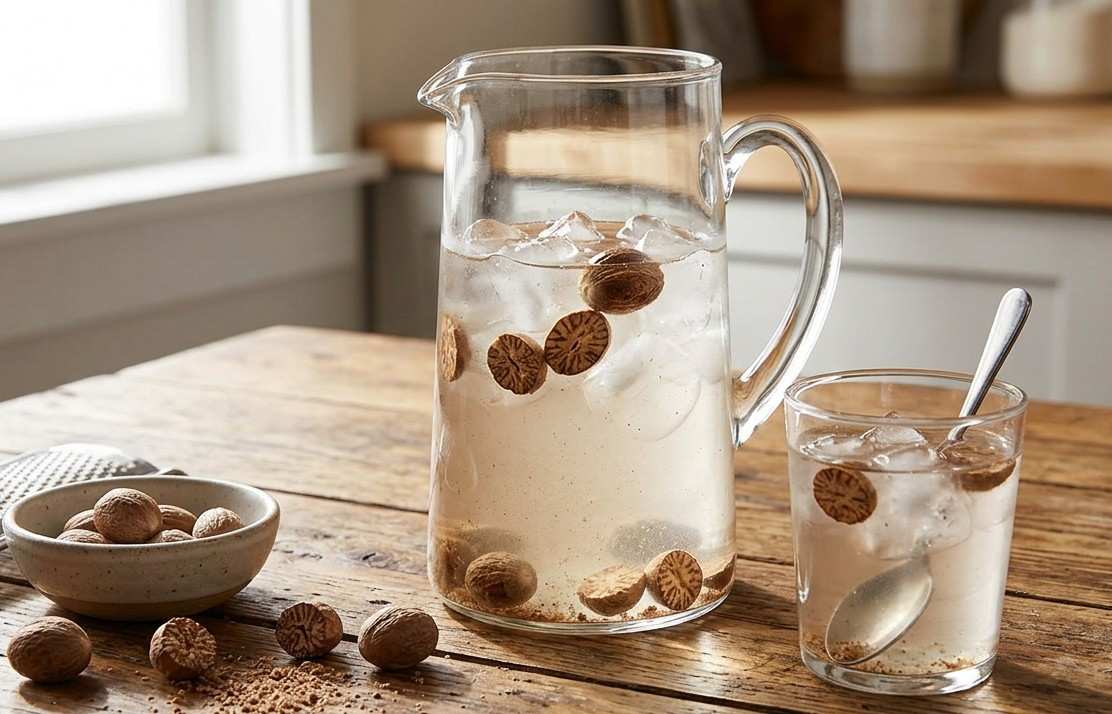
Nutmeg is a warm, aromatic spice that has been used for centuries in kitchens and traditional remedies. When infused in water, it creates a mild, soothing drink often referred to as nutmeg water. While it may seem simple, this beverage carries a surprising range of potential health benefits when used in moderation. This guide explores everything you need to know about nutmeg water—from its nutritional profile to its proven health benefits, preparation methods, and precautions.
What is Nutmeg Water?
Nutmeg water is a beverage made by infusing a small amount of ground nutmeg or crushed nutmeg seeds in warm or hot water. Nutmeg comes from the seed of the Myristica fragrans tree and is widely used in cooking, baking, and traditional medicine systems like Ayurveda.
When mixed with water, nutmeg releases bioactive compounds such as myristicin, elemicin, and essential oils. These compounds are believed to contribute to its calming, digestive, and anti-inflammatory properties. Water is typically consumed in small quantities due to the potency of the spice. It is often taken for relaxation, digestion, and general wellness.
Nutrition Facts of Nutmeg Water
| Nutrient | Amount (Approximate per 1 cup) |
|---|---|
| Calories | 5–10 kcal |
| Carbohydrates | 1–2 g |
| Protein | 0 g |
| Fat | 0–0.5 g |
| Fiber | 0.2–0.5 g |
| Calcium | 5–10 mg |
| Magnesium | 3–5 mg |
| Potassium | 10–20 mg |
| Iron | 0.1–0.3 mg |
| Antioxidants | Present in small amounts |
Note: Values vary depending on the quantity of nutmeg used.
20 Science-Backed Benefits of Nutmeg Water
- Improves digestion: Water may stimulate digestive enzymes, helping reduce bloating and indigestion.
- Relieves constipation: Its mild laxative effect can support smoother bowel movements.
- Promotes better sleep: Nutmeg contains compounds that may have calming effects on the nervous system, aiding sleep.
- Reduces stress and anxiety: The natural sedative properties may help relax the mind and body.
- Supports brain health: Compounds like myristicin may support cognitive function when consumed in safe amounts.
- Acts as a natural detoxifier: Nutmeg water may help flush toxins and support liver function.
- Boosts immunity: Its antioxidant content helps combat oxidative stress and supports immune health.
- Improves oral health: Nutmeg has antibacterial properties that may reduce bad breath and oral bacteria.
- Reduces inflammation: Anti-inflammatory compounds may help reduce minor aches and swelling.
- Supports heart health: Antioxidants may help maintain healthy blood circulation and reduce oxidative damage.
- Helps regulate blood sugar levels: Some studies suggest nutmeg may influence glucose metabolism.
- Enhances skin health: Antioxidants may help reduce acne and improve skin clarity.
- Supports respiratory health: Nutmeg may help relieve mild congestion and improve breathing.
- May relieve pain naturally: It has mild analgesic properties that can help with headaches or minor pain.
- Improves appetite: Nutmeg water may stimulate appetite in individuals with low hunger levels.
- Supports liver function: It may assist in detoxification and liver enzyme regulation.
- Promotes relaxation: Its soothing aroma and compounds may help calm the nervous system.
- May help with menstrual discomfort: Nutmeg’s relaxing properties may ease cramps.
- Supports weight management: By improving digestion and metabolism, it may assist in weight control.
- Enhances mood: Nutmeg compounds may help uplift mood and reduce mental fatigue.
10 Side Effects of Nutmeg Water
- Toxicity in high doses: Excessive nutmeg intake can lead to toxicity due to myristicin.
- Nausea and vomiting: Overconsumption may irritate the stomach.
- Dizziness: High amounts can affect the nervous system and cause lightheadedness.
- Hallucinations: Large doses may cause psychoactive effects.
- Increased heart rate: Overuse can lead to palpitations or irregular heartbeat.
- Dry mouth: Nutmeg may cause dehydration symptoms in excess.
- Allergic reactions: Some individuals may experience skin or respiratory allergies.
- Liver strain: High intake may burden liver function.
- Drug interactions: Nutmeg may interact with certain medications affecting the brain or liver.
- Pregnancy risks: High doses may be unsafe during pregnancy.
How to Make Nutmeg Water?
Ingredients:
- 1 cup warm water
- A pinch (about 1/8 teaspoon) of ground nutmeg
Method:
- Heat water until warm but not boiling.
- Add a small pinch of ground nutmeg.
- Stir well to mix evenly.
- Let it steep for 3–5 minutes.
- Strain if needed and drink warm.
Optional: Add honey for taste.
Tips for Consuming Nutmeg Water
- Always use nutmeg in very small quantities.
- Do not consume more than recommended amounts.
- Prefer freshly grated nutmeg for better potency.
- Avoid combining with alcohol or sedatives.
- Drink slowly to observe how your body reacts.
- Consult a healthcare provider if using regularly for health purposes.
Other Uses of Nutmeg Water
- Can be used as a natural mouth rinse for fresh breath.
- May be applied (cooled) to skin for minor acne relief.
- Can be used in aromatherapy-like routines for relaxation.
- Sometimes used as a mild herbal remedy in traditional practices.
How Much Nutmeg Water Can You Drink in a Day?
It is recommended to consume no more than 1 cup of nutmeg water per day, made with a very small pinch of nutmeg. Nutmeg is potent, and even moderate excess can lead to unwanted side effects.
Best Time to Drink Nutmeg Water
- Before bedtime: Helps promote relaxation and better sleep.
- After meals: May aid digestion and reduce bloating.
Avoid consuming it on an empty stomach if you have a sensitive digestive system.
Who Should Drink Nutmeg Water?
- Individuals with mild digestive issues
- People experiencing stress or sleep disturbances
- Those looking for natural relaxation remedies
- Individuals interested in traditional herbal drinks
Who Should Avoid Nutmeg Water?
- Pregnant or breastfeeding women
- Children (unless advised by a doctor)
- People with liver conditions
- Individuals on psychiatric or sedative medications
- Anyone sensitive to spices or prone to allergies
How to Store Nutmeg Water?
- Prepare fresh for best results.
- If needed, store in a covered container in the refrigerator.
- Consume within 24 hours.
- Reheat gently before drinking; avoid boiling again.
Precautions and Interactions
Nutmeg should always be used with caution. While small amounts are generally safe, excessive intake can be harmful. It may interact with medications that affect the central nervous system, liver enzymes, or mood regulation. Avoid combining nutmeg water with alcohol or sedatives, as it may intensify drowsiness or adverse effects.
If you have any medical condition or are taking medications, consult a healthcare professional before including water in your routine. Moderation is key to enjoying its potential benefits safely.
Final Thoughts
Nutmeg water is a simple yet powerful herbal drink with roots in traditional wellness practices. When consumed responsibly, it may offer benefits for digestion, relaxation, and overall health. However, due to its potency, it is essential to use it sparingly and mindfully.
FAQ’s
What is nutmeg water good for?
Water is commonly used to support digestion, promote relaxation, improve sleep quality, and provide mild anti-inflammatory and antioxidant benefits.
Can I drink nutmeg water every day?
Yes, but only in small amounts. A pinch of nutmeg in one cup of water per day is generally considered safe for most healthy adults.
Is nutmeg water safe for sleep?
Yes, drinking water before bedtime may help improve sleep due to its mild calming and sedative properties.
What happens if I drink too much nutmeg water?
Excess consumption can lead to side effects such as nausea, dizziness, hallucinations, rapid heartbeat, and even toxicity in severe cases.
Can nutmeg water help with digestion?
Yes, it may stimulate digestive enzymes and help reduce bloating, gas, and indigestion when consumed in moderation.
Is nutmeg water good for weight loss?
It may support weight management indirectly by improving digestion and metabolism, but it is not a standalone weight loss solution.
Can I drink nutmeg water on an empty stomach?
It is better to avoid drinking it on an empty stomach if you have a sensitive digestive system, as it may cause irritation in some people.
Is nutmeg water safe during pregnancy?
No, it is best avoided during pregnancy, especially in larger amounts, as nutmeg may have adverse effects.
Can children drink nutmeg water?
Nutmeg is very potent, so it is not recommended for children unless advised by a healthcare professional.
Does nutmeg water improve skin health?
Its antioxidant properties may help support clearer skin and reduce minor skin issues, but results vary from person to person.
How long does it take for nutmeg water to work?
Effects like relaxation or improved digestion may be noticed within a few hours, while long-term benefits require consistent, moderate use.
Can nutmeg water help reduce stress?
Yes, its natural calming compounds may help reduce stress and promote a sense of relaxation.
Is nutmeg water good for cold or cough?
It may provide mild relief due to its warming and soothing properties, but it is not a primary treatment.
Can I add other ingredients to nutmeg water?
Yes, you can add honey, cinnamon, or warm milk for better taste and added benefits, but keep the nutmeg quantity low.
Does nutmeg water have any side effects on the liver?
In small amounts, it is generally safe, but excessive intake may strain the liver.
Is nutmeg water addictive?
No, but misuse or excessive consumption for its psychoactive effects can be harmful and should be avoided.
Can nutmeg water help with menstrual cramps?
It may help ease mild discomfort due to its relaxing and anti-inflammatory properties.
How should nutmeg water taste?
It has a warm, slightly sweet, and mildly spicy flavor with a soothing aroma.
What is the safest way to consume nutmeg water?
Use only a pinch of nutmeg, limit intake to once daily, and avoid long-term excessive use to ensure safety.
What does nutmeg water smell like?
Water has a warm, sweet, and slightly spicy aroma with woody and earthy undertones, creating a comforting and mildly soothing scent.
Also Read: