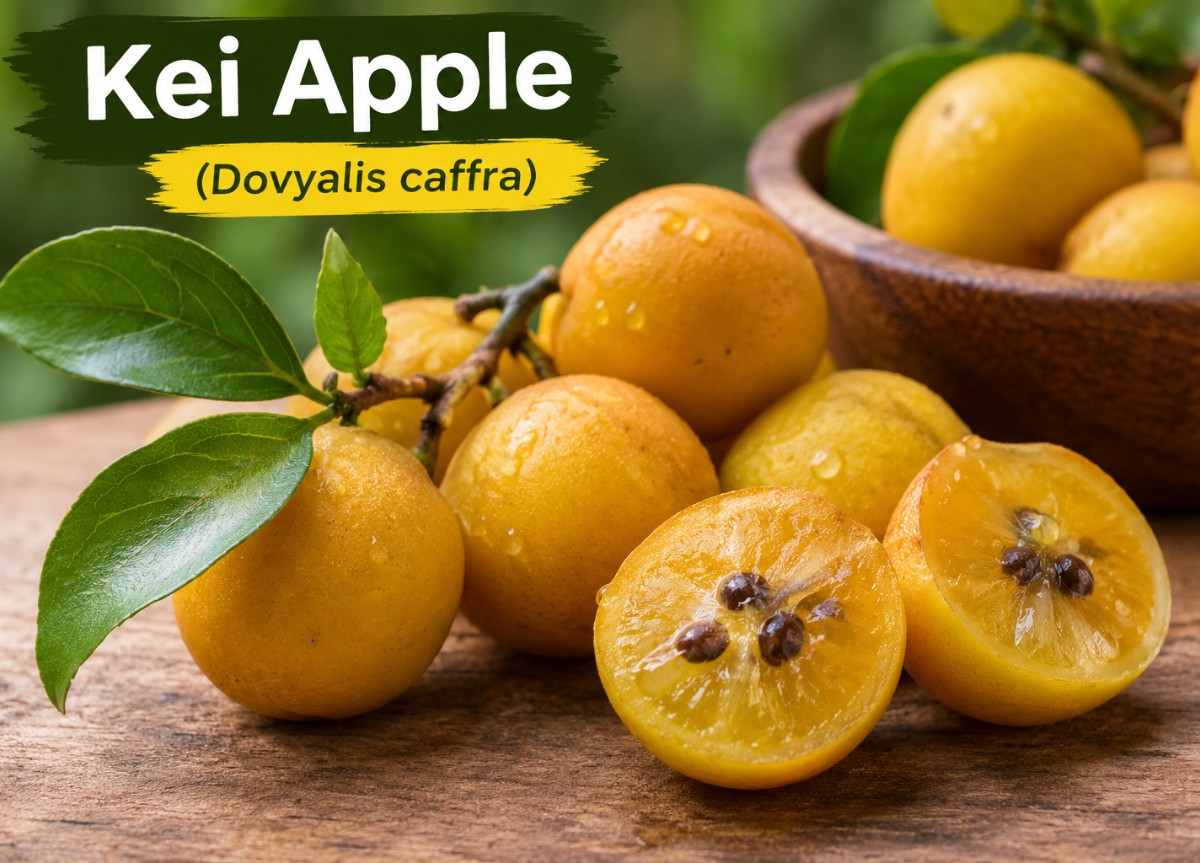
Kei apple is an unusual tropical fruit known for its bright yellow-orange colour, tangy flavour, and impressive nutritional potential. Although it is not as widely recognised as apples, oranges, or mangoes, this small fruit has attracted interest because of its vitamin C content, natural antioxidants, and traditional uses.
Native to southern Africa, kei apple is commonly grown as a fruit-bearing shrub and protective hedge. Its fruit can be eaten fresh when ripe or used to prepare jams, jellies, sauces, and refreshing drinks.
In this guide, we will explore what kei apple is, its nutritional value, 20 potential health benefits, possible side effects, ways to eat it, and important precautions.
What Is Kei Apple?
Kei apple, scientifically known as Dovyalis caffra, is a small edible fruit that belongs to the Salicaceae family. It is native to southern Africa, particularly regions around the Kei River in South Africa, from which it gets its common name.
The fruit is generally round, with a yellow to orange-yellow skin when ripe. Its juicy flesh has a distinctive sweet-and-sour flavour, although some varieties can be quite tart.
Kei apple grows on a hardy, thorny shrub or small tree that can tolerate relatively dry conditions. It is also cultivated in other warm regions as an ornamental plant, fruit crop, and natural security hedge.
Key characteristics of kei apple:
- Scientific Name: Dovyalis caffra
- Common Name: Kei apple, African apricot, African gooseberry
- Origin: Southern Africa
- Fruit Colour: Yellow to orange-yellow
- Taste: Tangy, sour, and slightly sweet
- Texture: Juicy and fleshy
- Edible Part: Ripe fruit pulp
- Common Uses: Fresh eating, jams, jellies, sauces, and beverages
Kei apple is different from the familiar supermarket apple (Malus domestica). Despite sharing the word apple in its name, the two fruits belong to different botanical groups.
Nutrition Facts of Kei Apple
Kei apple provides vitamin C, potassium, carbohydrates, and water. Here is its approximate nutritional composition per 100 grams of raw edible pulp.
| Nutrient | Amount per 100 g |
|---|---|
| Calories | 57 kcal |
| Water | 85.9 g |
| Carbohydrates | 12.7 g |
| Protein | 0.4 g |
| Fat | 0.4 g |
| Crude Fibre | 0.3 g |
| Vitamin C | 232 mg |
| Potassium | 606 mg |
| Iron | 0.1 mg |
| Copper | 0.06 mg |
| Vitamin B1 | 0.01 mg |
| Vitamin B2 | 0.05 mg |
| Vitamin B3 | 0.3 mg |
Source: World Agroforestry Food Composition Database. Some values are based on limited measurements and may vary.
20 Potential Health Benefits of Kei Apple
Kei apple contains nutrients that support several normal body functions. Here are 20 potential benefits:
- Supports Immune Health: Its vitamin C content helps maintain normal immune system function.
- Promotes Skin Health: Vitamin C supports collagen production, which helps maintain healthy skin.
- Supports Wound Healing: Vitamin C contributes to normal tissue repair and wound healing.
- Provides Antioxidant Protection: Vitamin C helps protect body cells against oxidative damage.
- Improves Iron Absorption: Eating kei apple alongside plant-based foods may help the body absorb iron more efficiently.
- Supports Heart Function: Its potassium content contributes to normal cardiovascular function.
- Helps Maintain Blood Pressure: Potassium supports healthy blood pressure regulation.
- Supports Muscle Function: Potassium helps muscles contract and function normally.
- Maintains Nerve Function: Potassium plays an important role in nerve signalling.
- Contributes to Hydration: Its high water content helps support daily fluid intake.
- Provides Natural Energy: Its carbohydrates provide energy for everyday activities.
- Supports Digestive Health: Its small amount of dietary fibre contributes to overall fibre intake.
- Supports Healthy Gums: Vitamin C helps maintain healthy gum tissue.
- Contributes to Bone Health: Potassium contributes to normal body functions involved in maintaining bone health.
- Supports Energy Metabolism: Its B vitamins contribute to normal energy metabolism.
- Helps Maintain Blood Vessel Structure: Vitamin C supports collagen formation, which is important for healthy blood vessels.
- Supports Overall Nutritional Health: It provides several nutrients that complement a varied and balanced diet.
- May Support Weight Management: Its relatively low calorie content makes fresh kei apple a suitable fruit snack.
- Offers a Hydrating Snack: Its water content makes it a refreshing alternative to some processed snacks.
- Adds Variety to Your Diet: Its unique tangy flavour offers another way to include different fruits in your daily meals.
10 Possible Side Effects of Kei Apple
Kei apple is an edible fruit, but excessive consumption or individual sensitivity may cause problems.
- Stomach Discomfort: Eating too much may cause digestive irritation.
- Acid Reflux: Its sour nature may trigger heartburn in sensitive individuals.
- Tooth Enamel Erosion: Frequent exposure to acidic fruit may affect tooth enamel.
- Allergic Reactions: Sensitive individuals may experience itching, swelling, or rashes.
- Digestive Problems: Large portions may cause bloating or loose stools.
- Added Sugar Intake: Sweetened jams and juices can increase calorie and sugar consumption.
- Unripe Fruit Discomfort: Very sour, unripe fruits may be unpleasant to eat.
- Mouth Irritation: Its acidity may irritate existing mouth ulcers.
- Food Contamination: Unwashed or spoiled fruit may cause foodborne illness.
- Individual Sensitivity: Some people may experience discomfort after eating this unfamiliar fruit.
Stop eating it if you experience an adverse reaction. Seek emergency care for breathing difficulties or throat swelling.
How to Eat Kei Apple?
Kei apple can be enjoyed fresh or incorporated into different recipes.
- Eat It Fresh: Wash and cut a fully ripe fruit before eating its pulp.
- Make Juice: Blend the pulp with water for a refreshing drink.
- Prepare Fruit Salad: Combine it with mango, banana, or papaya.
- Make Jam: Cook the pulp with sugar to prepare homemade jam.
- Prepare Jelly: Use its juice or pulp to make fruit jelly.
- Add to Smoothies: Blend it with yoghurt or other fruits.
- Prepare Sauces: Use its sour flavour in homemade sauces.
- Make Pickles: Use suitable unripe fruits in traditional pickle preparations.
Tips for Consuming Kei Apple
- Choose Ripe Fruits: Select yellow or orange-yellow fruits.
- Wash Properly: Clean the fruit under running water.
- Start Small: Try a small portion if eating it for the first time.
- Combine with Sweet Fruits: Balance its sour flavour with naturally sweet fruits.
- Avoid Spoiled Fruits: Do not consume mouldy or damaged fruit.
- Remove Seeds: Separate the seeds for easier consumption.
- Prefer Fresh Fruit: Choose fresh fruit over heavily sweetened products.
- Limit Added Sugar: Avoid adding excessive sugar to juices and jams.
- Use Clean Utensils: Maintain good food hygiene during preparation.
- Check Identification: Make sure the fruit is correctly identified before eating.
Other Uses of Kei Apple
Apart from eating it fresh, kei apple has several culinary and agricultural uses.
- Jam Preparation: Its pulp is used to make tangy fruit jams.
- Jelly Making: The fruit is suitable for homemade jellies.
- Fruit Beverages: Its pulp can be used in refreshing drinks.
- Desserts: It adds a sour flavour to different desserts.
- Fruit Salads: Chopped fruit can be added to mixed fruit salads.
- Pickles: Unripe fruits can be used in savoury preparations.
- Garden Hedges: Its thorny branches make useful protective hedges.
- Living Fences: It can create natural boundaries around farms and gardens.
- Animal Fodder: Its leaves are used as livestock feed in some regions.
- Wildlife Food: Its fruits provide food for birds and other animals.
How Much Kei Apple Can You Eat in a Day?
There is no officially established daily serving recommendation for kei apple.
You can start with approximately 50 grams and increase the portion according to your tolerance. Around 100 grams can be a practical serving for someone who enjoys the fruit.
People with sensitive stomachs or specific dietary restrictions should consider smaller portions.
Best Time to Eat Kei Apple
There is no scientifically proven best time to eat kei apple. You can enjoy it at different times:
- Morning: Include it with breakfast.
- Between Meals: Enjoy it as a fruit snack.
- With Lunch: Add it to a fruit salad.
- Afternoon: Prepare a refreshing fruit drink.
- After Dinner: Eat a small portion if acidic fruits do not trigger reflux.
Who Should Eat Kei Apple?
The following individuals may enjoy including kei apple in their diet:
- Vitamin C Seekers: People looking to increase their vitamin C intake.
- Health-Conscious Individuals: Those who enjoy adding different fruits to their diet.
- People Seeking Hydrating Foods: Individuals looking for water-rich fruits.
- Weight-Conscious Individuals: People seeking relatively low-calorie snacks.
- Plant-Based Eaters: Those who may benefit from vitamin C alongside plant-based iron sources.
- Fruit Lovers: People interested in trying less common tropical fruits.
- Home Cooks: Individuals who enjoy making homemade jams, juices, and desserts.
Who Should Not Eat Kei Apple?
Certain individuals should avoid kei apple or consult a healthcare professional before consuming it.
- People with Fruit Allergies: Those with a known allergy to kei apple should avoid it.
- People with Acid Reflux: Its acidity may aggravate heartburn.
- People with Sensitive Stomachs: Its sour flavour may cause discomfort.
- People with Mouth Ulcers: The acidity may irritate existing sores.
- People with Food Sensitivities: Those prone to fruit-related reactions should be cautious.
- People with Digestive Problems: Avoid it if it triggers bloating or diarrhoea.
- People with Dietary Restrictions: Those following potassium-restricted diets should seek medical advice.
How to Store Kei Apple?
- Unripe Fruits: Keep them in a clean, dry place until ripe.
- Ripe Fruits: Store them in the refrigerator.
- Clean Containers: Use suitable food-safe storage containers.
- Damaged Fruits: Separate bruised or spoiled fruits.
- Avoid Excess Moisture: Keep stored fruits dry to reduce mould growth.
- Before Eating: Wash the fruit under running water.
- Cut Fruit: Refrigerate promptly in an airtight container.
- Fruit Pulp: Freeze it in small portions for later use.
Always check for mould, unpleasant odours, or unusual texture before consumption.
Precautions and Interactions
- Check for Allergies: Avoid the fruit if you experience an allergic reaction.
- Choose Ripe Fruits: Prefer fully ripe fruits over very sour, unripe ones.
- Wash Thoroughly: Remove dirt and surface contaminants before eating.
- Avoid Excessive Intake: Eat moderate portions to reduce digestive discomfort.
- Consider Acid Reflux: Limit consumption if acidic foods trigger symptoms.
- Monitor Potassium: People with kidney disease or potassium restrictions should seek medical advice.
- Limit Added Sugar: Prefer fresh fruit over heavily sweetened preparations.
- Protect Your Teeth: Rinse your mouth with water after eating acidic fruit.
- Identify the Fruit: Confirm that it is Dovyalis caffra before consumption.
- Seek Medical Advice: Consult a healthcare professional if you have concerns about eating this fruit during pregnancy, breastfeeding, or while managing a medical condition.
FAQ’s
What does Kei apple taste like?
Kei apple has a tangy, sour, and slightly sweet flavour with juicy flesh.
What is kei apple good for?
Kei apple provides vitamin C, potassium, and water, which support immunity, hydration, and normal body functions.
Is kei apple rich in vitamin C?
Yes, 100 grams of raw kei apple pulp is reported to contain approximately 232 mg of vitamin C.
Can you eat kei apple raw?
Yes, fully ripe and properly washed kei apples can be eaten fresh.
Is kei apple good for weight loss?
Kei apple contains approximately 57 calories per 100 grams, making it a possible addition to a weight-conscious diet.
Is kei apple good for the skin?
Its vitamin C content supports collagen production, which helps maintain healthy skin.
Can diabetics eat kei apple?
People with diabetes may enjoy moderate portions of fresh kei apple while monitoring their carbohydrate intake and blood sugar levels.
Can pregnant women eat kei apple?
There is limited pregnancy-specific research on kei apple. Pregnant women should consume properly washed, ripe fruit and consult their healthcare professional if unsure.
Can you eat kei apple seeds?
The edible pulp is the commonly consumed portion. It is better to remove the seeds because reliable safety information about eating them is limited.
Is kei apple the same as a regular apple?
No. Kei apple (Dovyalis caffra) and common apple (Malus domestica) are different fruit species.
Where does kei apple grow?
Kei apple is native to southern Africa, particularly South Africa, and is cultivated in other warm regions.
Can kei apple be used to make juice?
Yes, its ripe pulp can be blended with water to prepare a refreshing, tangy fruit drink.
Is kei apple acidic?
Yes, kei apple has a naturally sour and acidic flavour, especially when it is not fully ripe.
Can I eat Kei Apple every day?
Yes, you can eat ripe kei apple daily in moderate portions as part of a balanced diet. Start with a small serving if you are trying it for the first time.
Is Kei Apple safe for children?
Yes, ripe kei apple can be offered to children in age-appropriate portions. Wash it properly, remove the seeds, and cut the flesh into small, manageable pieces to reduce choking risks.
Is Kei Apple fast-growing?
Yes, kei apple is a relatively fast-growing evergreen shrub under suitable warm conditions. Growth depends on soil quality, sunlight, water, and climate.
How long does Kei Apple take to mature?
Kei apple plants generally take around 3–5 years to produce fruit, depending on growing conditions and whether they are raised from seeds or propagated vegetatively.
Sources / References:
- PubMed
- South African National Biodiversity Institute (SANBI)
- World Agroforestry
- FAO – EcoCrop
- ScienceDirect
Disclaimer:
This article is intended for educational purposes only and does not replace professional medical advice. Consult a qualified healthcare professional for personalised dietary recommendations.
Also Read: