Understanding Medicare can feel confusing, especially when you come across different coverage options such as Medicare Part A, Part B, Part C, and Part D. Two terms that often cause confusion are Medicare Part B and Medicare Part D.
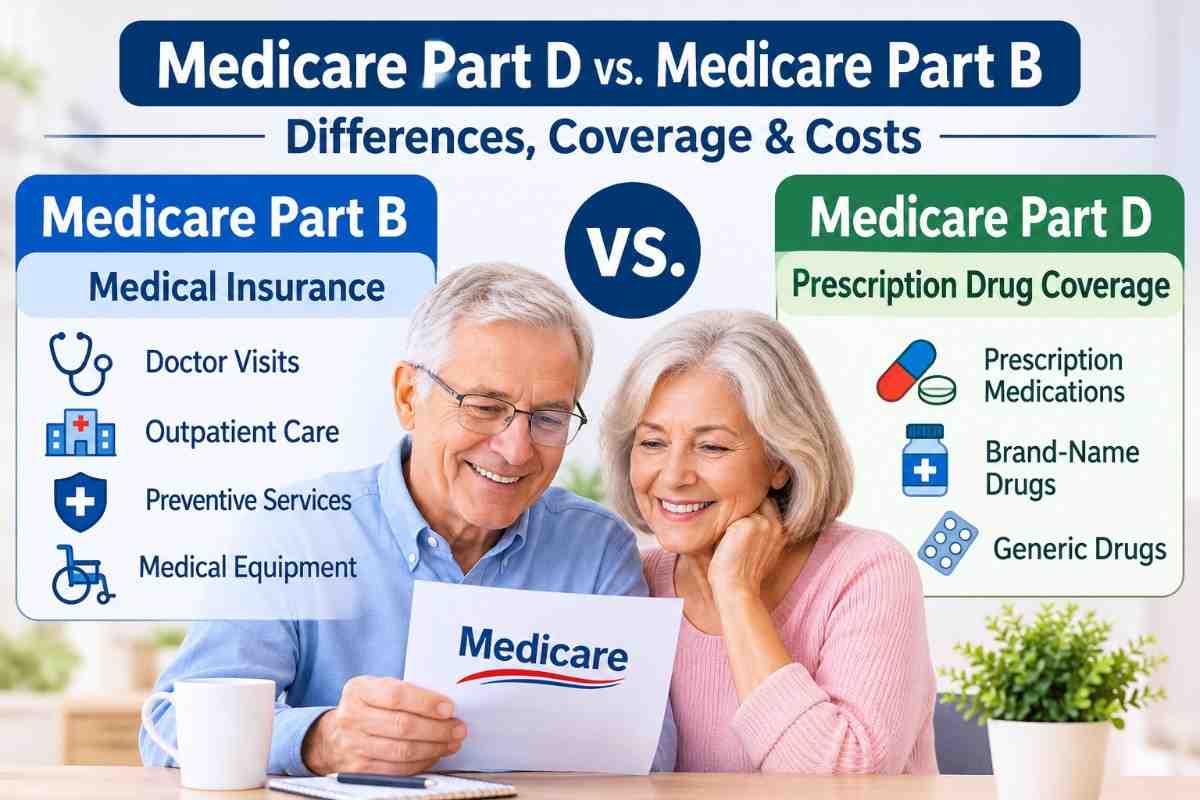
Although both are important parts of Medicare, they serve different purposes. Medicare Part B primarily covers medical services, including doctor visits, outpatient care, preventive services, and certain medications. Medicare Part D, on the other hand, helps pay for prescription drugs that you generally pick up from a pharmacy.
Knowing the difference between Medicare Part D vs. Medicare Part B can help you choose appropriate coverage, avoid unnecessary expenses, and understand what Medicare pays for.
Let’s explore how these two Medicare programs work, what they cover, how much they cost, and which one you may need.
What Is Medicare Part B?
Medicare Part B is the medical insurance portion of Original Medicare. It helps cover medically necessary healthcare services and preventive care.
It is designed to help people pay for healthcare received outside a hospital, such as visits to doctors, outpatient treatments, medical tests, and certain medical equipment.
Part B is generally required if you want to maintain Original Medicare coverage for outpatient medical services.
What Does Medicare Part B Cover?
Medicare Part B covers several healthcare services, including:
- Doctor Visits: Appointments with primary care doctors, specialists, and other healthcare providers.
- Outpatient Care: Medical treatments and procedures that do not require an inpatient hospital admission.
- Preventive Services: Screenings, vaccinations, wellness visits, and certain preventive tests.
- Medical Equipment: Medically necessary equipment such as wheelchairs, walkers, oxygen equipment, and hospital beds.
- Laboratory Tests: Certain blood tests, diagnostic tests, and other medically necessary laboratory services.
- Mental Health Services: Eligible outpatient mental health counseling and psychiatric services.
- Physical Therapy: Medically necessary physical therapy, occupational therapy, and speech-language pathology services.
- Certain Prescription Drugs: Some medications administered by healthcare professionals, including certain injections and infusions.
How Much Does Medicare Part B Cost in 2027?
Medicare Part B requires a monthly premium, an annual deductible, and coinsurance for covered medical services.
For 2027, the standard monthly Medicare Part B premium is $209.40, and the annual deductible is $292.
After meeting the deductible, beneficiaries generally pay 20% of the Medicare-approved amount for covered services when their provider accepts Medicare assignment.
People with higher incomes may pay an additional amount called the Income-Related Monthly Adjustment Amount (IRMAA).
What Is Medicare Part D?
Medicare Part D is prescription drug coverage that helps people with Medicare pay for medications.
Unlike Part B, which primarily covers medical services, Part D focuses on prescription drugs that people typically obtain from retail pharmacies or other approved pharmacies.
Medicare Part D is optional, but enrolling can help reduce prescription medication expenses.
You can get Part D coverage through a standalone Medicare Prescription Drug Plan (PDP) or through a Medicare Advantage plan that includes prescription drug coverage.
What Does Medicare Part D Cover?
Medicare Part D helps cover a wide range of prescription medications, including:
- Generic Medications: Lower-cost versions of many commonly prescribed medicines.
- Brand-Name Drugs: Covered brand-name medications included in your plan’s drug list.
- Blood Pressure Medications: Many prescription medicines used to manage hypertension.
- Diabetes Medications: Various prescription drugs used to manage diabetes.
- Cholesterol Medications: Covered medicines used to control cholesterol levels.
- Antibiotics: Many prescription antibiotics used to treat bacterial infections.
- Mental Health Medications: Many medications used to manage depression and other mental health conditions.
- Certain Vaccines: Recommended adult vaccines covered under Part D, including shingles and RSV vaccines.
Each Medicare Part D plan has a list of covered medications called a formulary. The drugs covered and their costs can differ between insurance companies and plans.
How Much Does Medicare Part D Cost in 2027?
Medicare Part D costs depend on the prescription drug plan you select. Different insurance companies offer different premiums, deductibles, and medication coverage.
For 2027, the standard Part D deductible is $700, while the annual out-of-pocket spending limit for covered Part D prescription drugs is $2,400.
Your expenses may include:
- Monthly Premium: Varies depending on the prescription drug plan.
- Annual Deductible: Up to $700 for the standard Part D benefit.
- Copayments: Fixed amounts paid for covered prescriptions.
- Coinsurance: A percentage of medication costs.
- Income-Related Adjustment: Higher-income beneficiaries may pay an additional monthly amount.
Once you reach the $2,400 out-of-pocket limit for covered Part D drugs, you generally pay nothing for those covered drugs for the remainder of 2027.
Medicare Part D vs. Medicare Part B: Key Differences
The biggest difference between Medicare Part B and Medicare Part D is the type of healthcare expenses they help cover.
Part B primarily pays for medical services and certain medications administered in medical settings, while Part D focuses on prescription drugs.
Here is a side-by-side comparison:
| Feature | Medicare Part B | Medicare Part D |
|---|---|---|
| Main Purpose | Medical insurance | Prescription drug coverage |
| Coverage Type | Doctor visits, outpatient care, and medical services | Prescription medications |
| Enrollment | Generally required for people using Original Medicare who need outpatient coverage | Optional, subject to eligibility and enrollment rules |
| Provider | Medicare | Medicare-approved private insurance companies |
| Monthly Premium | $209.40 standard | Varies by plan |
| Annual Deductible | $292 in 2027 | Varies by plan, Up to $700 in 2027 |
| Prescription Drugs | Covers certain medically administered drugs | Covers many outpatient prescription drugs |
| Pharmacy Coverage | Limited to specific covered drugs and arrangements | Covers eligible prescriptions through participating pharmacies |
| Late Enrollment Penalty | May apply | May apply |
| Out-of-Pocket Limit | No annual limit under Original Medicare alone | $2,400 in 2027 |
Medicare Part D vs. Medicare Part B: Prescription Drug Coverage
One of the most confusing aspects of Medicare is understanding which part pays for prescription medications.
Both Part B and Part D cover certain medications, but the difference usually depends on how and where you receive the medication.
Medicare Part B generally covers:
- Certain medications administered by a doctor or healthcare professional.
- Some injectable and infused medications.
- Certain medications used with durable medical equipment.
- Specific medications related to kidney dialysis.
- Certain immunosuppressive medications after qualifying organ transplants.
Medicare Part D generally covers:
- Many prescription medicines purchased at a pharmacy.
- Various oral medications.
- Many brand-name and generic prescription drugs.
- Certain medications used to manage chronic health conditions.
- Many recommended adult vaccines that are not covered under Part B.
For example, if your doctor administers a covered injection during an outpatient appointment, Medicare Part B may pay for it.
However, if your doctor prescribes a medication that you collect from a retail pharmacy, Medicare Part D will generally be responsible for coverage if the drug is included in your plan’s formulary.
There are exceptions, so always check your medication’s coverage before assuming which Medicare part will pay.
Can You Have Medicare Part B and Part D at the Same Time?
Yes. You can have both Medicare Part B and Part D at the same time.
In fact, many people with Original Medicare choose to enroll in both because they cover different healthcare needs.
Medicare Part B helps pay for doctor visits, outpatient treatments, and certain medical expenses, while Part D helps cover eligible prescription medications.
For example, a person with diabetes may use Part B for eligible doctor appointments, laboratory tests, and certain medical services. They may use Part D to help pay for covered prescription medications purchased from a pharmacy.
Having both types of coverage can provide broader healthcare protection, although premiums, deductibles, copayments, and coverage rules still apply.
Do You Need Both Medicare Part B and Part D?
Whether you need both depends on your healthcare requirements and existing insurance coverage.
If you have Original Medicare, Part B provides important outpatient medical coverage. Part D can help reduce the cost of prescription medications.
Consider the following situations:
- You Visit Doctors Regularly: Part B is important because it helps cover eligible medical appointments and outpatient services.
- You Take Prescription Medications: Part D may help reduce the cost of medications purchased from a pharmacy.
- You Have Chronic Health Conditions: Having appropriate medical and prescription drug coverage may help manage ongoing healthcare expenses.
- You Have Employer Drug Coverage: Check whether your existing prescription coverage is considered creditable before enrolling in Part D.
- You Have Medicare Advantage: Check whether your plan already includes Part D before purchasing separate drug coverage.
You should compare your healthcare needs, existing insurance, and potential expenses before making an enrollment decision.
What Happens If You Don’t Enroll in Medicare Part D?
If you decide not to enroll in Medicare Part D when you are first eligible, you may face a late enrollment penalty later.
Generally, if you go 63 consecutive days or more without Medicare Part D or other creditable prescription drug coverage after your initial enrollment period, you may have to pay a late enrollment penalty when you eventually join a plan.
The penalty is generally calculated using the number of months you went without creditable coverage and is added to your monthly Part D premium.
However, exceptions apply. For example, people who qualify for Extra Help generally do not have to pay the Part D late enrollment penalty.
If you already have prescription drug coverage through an employer, union, or another insurance provider, confirm whether it is creditable before delaying enrollment.
What Happens If You Don’t Enroll in Medicare Part B?
Delaying Medicare Part B enrollment can also create financial problems.
If you do not enroll when you are first eligible and do not qualify for a special enrollment period, you may have to pay a late enrollment penalty.
The standard Part B penalty is generally an additional 10% of the standard premium for each full 12-month period you could have had Part B but did not enroll.
This penalty usually continues for as long as you have Part B coverage.
However, people who have qualifying coverage through current employment may be able to delay enrollment without a penalty.
It is important to understand your enrollment rights before declining or delaying Part B.
How to Choose Between Medicare Part D and Medicare Part B
Choosing between these two programs is not usually an either-or decision because they provide different types of coverage.
Instead, consider how each part fits your healthcare needs.
Choose Medicare Part B for:
- Doctor visits and specialist appointments.
- Outpatient medical treatments.
- Preventive healthcare services.
- Certain medical equipment and supplies.
- Eligible injections and infusions.
Consider Medicare Part D for:
- Prescription medications purchased from a pharmacy.
- Covered generic and brand-name drugs.
- Prescription medicines used to manage chronic conditions.
- Eligible medications not covered under Part B.
- Certain recommended adult vaccines.
Before choosing a Part D plan, review its formulary, pharmacy network, monthly premium, deductible, and medication costs.
You can compare available plans through the official Medicare website at Medicare.gov.
Final Thoughts
The difference between Medicare Part D vs. Medicare Part B comes down to what each program covers.
Medicare Part B primarily provides medical insurance for doctor visits, outpatient care, preventive services, and certain medications. Medicare Part D provides prescription drug coverage through Medicare-approved private insurance plans.
Both can play an important role in managing healthcare expenses, particularly for people who regularly visit healthcare providers or take prescription medications.
Understanding their coverage, costs, and enrollment rules can help you make informed Medicare decisions and avoid unexpected expenses.
FAQ’s
Is Medicare Part D the same as Medicare Part B?
No. Medicare Part B covers medical services and certain medications, while Part D helps pay for eligible prescription drugs.
Do I need Part B before getting Part D?
You generally need Medicare Part A or Part B to enroll in a standalone Part D plan. You do not necessarily need both.
Does Medicare Part B cover prescription drugs?
Yes. Part B covers certain prescription drugs, particularly medications administered by healthcare professionals or used in specific medical situations.
Can I have Medicare Part B without Part D?
Yes. You can have Part B without Part D, although you may have to pay the full cost of many outpatient prescription medications.
Does Medicare Part D cover all medications?
No. Each plan has its own formulary, and not every prescription medication is covered. Check your plan’s drug list before enrolling.
Which is more expensive, Medicare Part B or Part D?
Medicare Part B has a standard monthly premium of $209.40 in 2027, while Part D premiums vary depending on the selected prescription drug plan.
Do I need both Medicare Part B and Part D?
You can have both. Part B covers outpatient healthcare, while Part D provides prescription drug coverage.
Which is more expensive, Medicare Part B or Part D?
Part B has a standard monthly premium, while Part D premiums vary depending on the insurance plan and coverage.
Sources / References:
- Medicare.gov – Parts of Medicare
- Medicare.gov – What’s Medicare Part D?
- Medicare.gov – Prescription Drug Coverage
- Medicare.gov – Medicare Part D Costs
- CMS – 2027 Medicare Parts A & B Premiums and Deductibles
Disclaimer:
This article is for educational and informational purposes only. Medicare costs, eligibility, and coverage rules may change. Consult Medicare.gov or a licensed Medicare professional for personalized guidance.
Also Read: