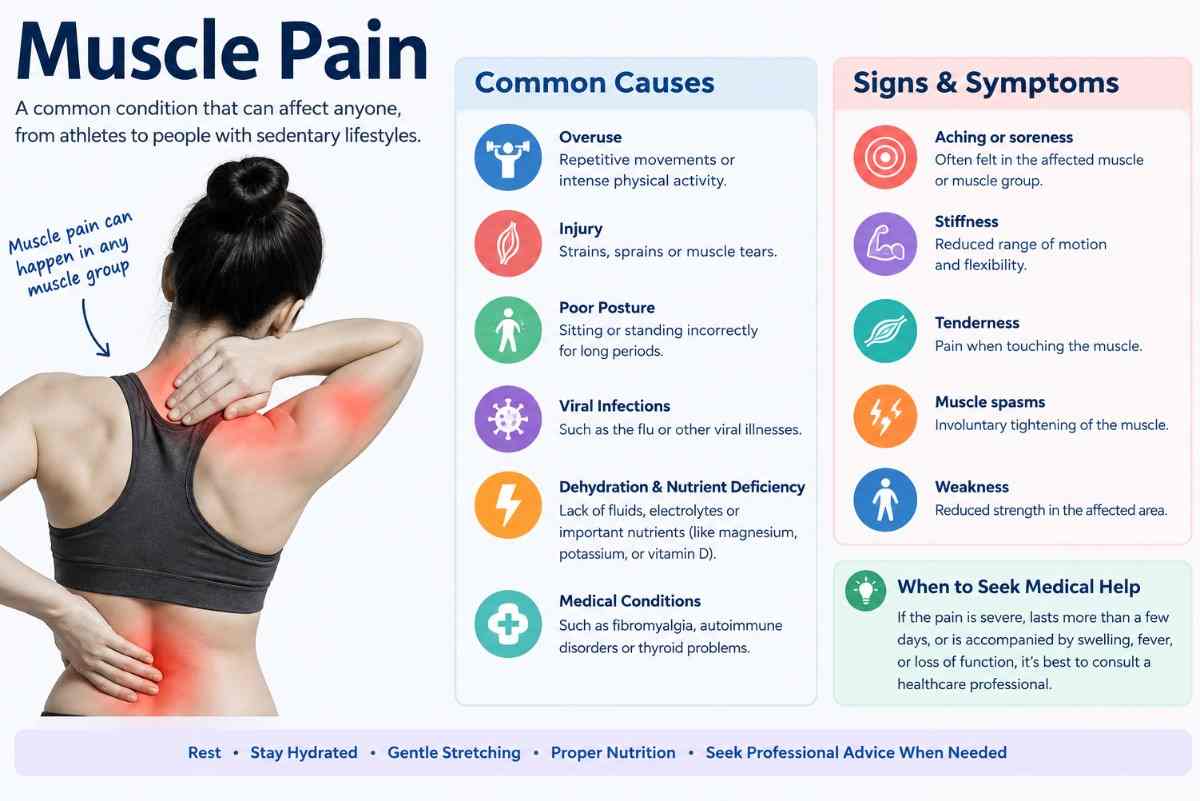
Muscle pain is one of the most common types of pain people experience. It can happen after an intense workout, a long day of physical work, poor posture, stress, or a minor injury. Sometimes, however, muscle pain can be related to an infection, medication, nutritional or electrolyte problems, or an underlying health condition.
The medical term for muscle pain is myalgia. It may affect one specific muscle, several muscles, or much of the body. The sensation can range from mild soreness to sharp pain, cramping, stiffness, tenderness, or burning.
Most mild muscle pain improves with rest and simple home care. Persistent, severe, unexplained, or unusual muscle pain deserves medical attention because identifying the underlying cause is important for proper treatment.
What Is Muscle Pain?
Muscle pain refers to discomfort, aching, tenderness, or soreness in the muscles and surrounding soft tissues. It may develop suddenly after an injury or physical activity, or it may gradually appear without an obvious cause.
Muscle pain can occur almost anywhere, including the:
- Neck
- Shoulders
- Back
- Arms
- Chest
- Abdomen
- Hips
- Thighs
- Calves
- Feet
Pain may be localized to one area or occur throughout the body.
Common Symptoms of Muscle Pain
Muscle pain does not always feel the same. Depending on its cause, you may experience:
- Aching or soreness
- Sharp or stabbing pain
- Muscle tenderness
- Stiffness
- Burning sensation
- Cramping
- Muscle spasms
- Swelling
- Bruising after an injury
- Reduced range of movement
- Weakness or difficulty using the affected muscle
If muscle pain occurs with symptoms such as fever, significant weakness, breathing difficulty, or an inability to move normally, medical evaluation may be necessary.
Common Causes of Muscle Pain
Muscle pain can have many causes. Some are temporary and relatively minor, while others require medical evaluation.
1. Muscle Overuse
Doing more physical activity than your muscles are accustomed to can cause soreness. This commonly happens after starting a new exercise routine or suddenly increasing workout intensity.
2. Muscle Strain
A muscle strain occurs when a muscle is stretched too far and some muscle fibers tear. It can happen during exercise, lifting, sports, falls, or sudden movements. Pain, swelling, bruising, and difficulty moving the muscle can occur.
3. Exercise-Related Soreness
Muscles can become sore after strenuous or unfamiliar exercise. This type of discomfort is particularly common when introducing new exercises or increasing training intensity.
4. Poor Posture
Sitting at a desk for long periods, looking down at a phone, or maintaining an awkward position can place continuous stress on muscles, especially those around the neck, shoulders, and back.
5. Stress and Muscle Tension
Emotional stress can cause muscles to remain tense for prolonged periods. This may contribute to discomfort in the neck, shoulders, upper back, and jaw.
6. Dehydration
Fluid loss from heavy exercise, sweating, vomiting, or diarrhea can contribute to muscle cramps and discomfort. Adequate hydration is particularly important during physical activity.
7. Electrolyte Imbalance
Low levels of certain electrolytes, including potassium or calcium, may contribute to muscle symptoms such as cramps or aching.
8. Viral Infections
Some infections, including influenza, can cause widespread muscle aches. When muscle pain appears together with fever, fatigue, cough, or other illness symptoms, an infection may be responsible.
9. Certain Medications
Some medicines can cause muscle pain as a side effect. Statins, which are commonly prescribed to lower cholesterol, are one example. New or worsening muscle pain after starting or changing a medication should be discussed with a healthcare professional.
10. Fibromyalgia
Fibromyalgia can cause widespread muscle and soft-tissue pain, along with symptoms such as fatigue, sleep difficulties, and headaches.
11. Autoimmune and Inflammatory Conditions
Conditions such as lupus, polymyositis, dermatomyositis, and polymyalgia rheumatica can cause muscle-related symptoms. These conditions require professional evaluation.
12. Rhabdomyolysis
Rhabdomyolysis is a serious condition involving significant muscle breakdown. It can occur after severe muscle injury or extreme physical exertion and requires prompt medical assessment.
Types of Muscle Pain
Muscle pain can be classified according to how and where it occurs.
1. Acute Muscle Pain
Acute pain develops suddenly and may result from an injury, strenuous activity, or illness.
2. Chronic Muscle Pain
Chronic muscle pain persists for a prolonged period and may be associated with ongoing conditions or repeated strain.
3. Localized Muscle Pain
Localized pain affects one specific area, such as the calf, shoulder, neck, or lower back.
4. Widespread Muscle Pain
Widespread pain affects several areas or much of the body and may occur with infections or certain chronic conditions.
5. Exercise-Related Muscle Pain
This type of soreness develops after physical activity, particularly when the body is exposed to unfamiliar or strenuous exercise.
Muscle Pain After Exercise
Muscle soreness after exercise is common, especially when you:
- Start a new workout
- Increase exercise intensity
- Lift heavier weights
- Exercise after a long break
- Perform movements your body is not accustomed to
However, severe pain, significant swelling, extreme weakness, or difficulty moving normally should not simply be dismissed as ordinary post-workout soreness.
If pain begins suddenly during exercise, particularly with a popping sensation or immediate loss of function, a muscle strain or another injury may be involved.
How to Treat Muscle Pain at Home?
Treatment depends on the cause and severity of the pain. For mild soreness or a minor muscle strain, several approaches may help.
1. Rest the Affected Muscle
Give the painful muscle a temporary break from strenuous activity. Complete inactivity for long periods is usually unnecessary for minor soreness, but continuing an activity that causes significant pain can worsen an injury.
2. Apply Ice After an Injury
For an acute muscle injury, ice may help reduce pain and swelling during the first several days. Wrap an ice pack in a cloth rather than applying ice directly to the skin.
3. Try Heat for Muscle Stiffness
After the initial injury period, warmth may feel soothing for some types of muscle soreness and stiffness. A warm shower or heating pad may help relax tense muscles.
4. Gentle Stretching
Once severe pain has settled, gentle stretching can help restore flexibility. Avoid forceful stretching of an acutely injured muscle.
5. Massage
Gentle massage may provide temporary relief for some types of muscle soreness and tension.
6. Stay Hydrated
Drink adequate fluids throughout the day, particularly when exercising or sweating heavily.
7. Gradually Return to Activity
As your symptoms improve, gradually return to normal activity instead of immediately returning to intense exercise.
8. Over-the-Counter Pain Relievers
Depending on your health history, medicines such as acetaminophen or nonsteroidal anti-inflammatory drugs such as ibuprofen or naproxen may help relieve pain. These medicines are not appropriate for everyone, so follow the product instructions and ask a healthcare professional or pharmacist if you are unsure.
Medical Treatment for Muscle Pain
Medical treatment for muscle pain depends on the underlying cause, severity, and duration of the symptoms. Mild muscle soreness may improve with rest and home care, while persistent or severe pain may require evaluation and targeted treatment.
1. Pain-Relieving Medicines
A healthcare professional may recommend medicines such as acetaminophen or NSAIDs, including ibuprofen or naproxen, when appropriate. These can help reduce pain and inflammation, but they are not suitable for everyone.
2. Prescription Medicines
For certain conditions, a doctor may prescribe stronger pain medicines or other medications based on the underlying cause. Prescription treatment should only be used under medical supervision.
3. Physical Therapy
Physical therapy can help people with muscle strains, weakness, stiffness, or recurring pain. A therapist may use stretching, strengthening exercises, mobility work, and other rehabilitation techniques.
4. Treatment for Muscle Strains
For a significant muscle strain, treatment may involve temporary activity modification, pain control, physical therapy, and a gradual return to normal activity.
5. Treating Dehydration or Electrolyte Problems
If muscle cramps or pain are related to dehydration or an electrolyte imbalance, treatment focuses on correcting the underlying fluid or electrolyte problem.
6. Treating Underlying Infections
When muscle aches are caused by an infection, treatment is directed at the infection and its symptoms rather than the muscle pain alone.
7. Medication Adjustment
Some medicines can cause muscle pain. If a medication is suspected, a doctor may review the dose or consider an alternative. Do not stop prescribed medication without medical advice.
8. Treatment for Inflammatory Conditions
If muscle pain is caused by an inflammatory or autoimmune condition, treatment may include prescription medicines that control inflammation or the underlying disease.
9. Treatment for Chronic Muscle Pain
Long-lasting muscle pain may require a combination of physical therapy, exercise, pain-management strategies, sleep improvement, and treatment of any underlying condition.
10. Emergency Treatment
Severe muscle pain accompanied by extreme weakness, significant swelling, dark-colored urine, difficulty breathing, or severe injury requires prompt medical evaluation. Conditions such as rhabdomyolysis can cause serious muscle damage and need urgent treatment.
Important: The best treatment for muscle pain is determined by its cause. Avoid relying on painkillers or supplements for ongoing symptoms without identifying why the pain is occurring.
Exercises That May Help Muscle Pain
For mild muscle tension and stiffness, gentle activities may be beneficial.
1. Walking
Easy walking can keep the body moving without placing excessive stress on sore muscles.
2. Gentle Stretching
Slow stretches can improve flexibility and reduce stiffness. Never force a painful stretch.
3. Swimming
Swimming can provide low-impact movement for many people with generalized muscle discomfort.
4. Cycling
Light cycling may provide gentle aerobic activity while reducing the impact on joints.
5. Mobility Exercises
Simple range-of-motion exercises can help prevent stiffness after periods of inactivity.
If you have an acute injury, significant swelling, or severe pain, ask a healthcare professional or physical therapist which exercises are appropriate.
How to Prevent Muscle Pain?
Some muscle pain can be prevented by taking care of your muscles before, during, and after physical activity.
1. Warm Up Before Exercise
Begin workouts with gentle movement to prepare your muscles for more demanding activity.
2. Increase Exercise Gradually
Avoid making sudden, large increases in workout intensity or duration.
3. Cool Down
Finish intense workouts with lighter activity and gentle stretching.
4. Maintain Good Posture
Pay attention to your sitting and standing positions, particularly if you work at a desk.
5. Stay Hydrated
Replace fluids lost through sweating, particularly during exercise or hot weather.
6. Take Recovery Days
Your muscles need time to recover after demanding workouts.
7. Strengthen Your Muscles
Regular, appropriately progressed strength training can help improve muscle conditioning and physical function.
8. Get Enough Sleep
Adequate sleep supports general recovery and can help you manage stress and fatigue.
Warming up, cooling down, staying hydrated, stretching, and gradually increasing exercise to help reduce the risk of muscle aches and strains.
When Is Muscle Pain Serious?
Most muscle soreness is not an emergency. However, certain symptoms should not be ignored.
Seek urgent medical attention if muscle pain occurs with:
- Difficulty breathing
- Dizziness
- Extreme muscle weakness
- Inability to perform normal daily activities because of weakness
- High fever with a stiff neck
- A severe injury that prevents movement
- Significant bleeding
- Inability to move an affected limb
- Rapidly worsening swelling
These symptoms can sometimes indicate a serious injury or underlying medical condition.
You should also contact a healthcare professional if muscle pain is severe and unexplained, persists despite home care, occurs with redness or swelling, develops after starting or increasing a medication, or occurs with a rash or possible tick exposure.
Muscle Pain and Medications
If your muscle pain started after beginning a new medicine or increasing the dose of an existing medicine, don’t automatically stop the medication on your own.
Tell your healthcare professional about:
- The name of the medication
- When you started taking it
- When the muscle pain began
- Whether the dose recently changed
- Whether you have weakness, cramps, or other symptoms
Statins are one group of medicines known to be associated with muscle symptoms.
How Is Muscle Pain Diagnosed?
A healthcare professional will usually begin by asking about your symptoms and medical history.
You may be asked:
- Where is the pain located?
- When did it begin?
- Did it start after exercise or an injury?
- Is the pain constant or intermittent?
- Does movement make it worse?
- Do you have weakness or difficulty moving?
- Have you recently had an infection?
- Have you started any new medications?
- Do you have fever, swelling, rash, or other symptoms?
Depending on your symptoms, a physical examination and tests may be recommended. Blood tests may sometimes be used to evaluate muscle enzymes or look for other possible causes.
Muscle Pain vs. Joint Pain
Muscle pain and joint pain can sometimes feel similar, but they come from different structures.
Muscle pain usually involves the muscles or surrounding soft tissues and may become noticeable after physical activity or strain.
Joint pain is centered around areas where bones meet, such as the knees, hips, shoulders, or fingers, and may be associated with swelling, warmth, tenderness, or pain during joint movement.
Because muscles, tendons, ligaments, and joints work closely together, distinguishing the exact source of pain can sometimes require a professional examination.
Foods and Nutrients for Healthy Muscles
A balanced diet supports normal muscle function and recovery. Instead of relying on one particular food or supplement, focus on a varied diet containing:
- Protein-rich foods
- Fruits and vegetables
- Whole grains
- Nuts and seeds
- Dairy or suitable alternatives
- Healthy fats
- Adequate fluids
If you suspect that a nutrient deficiency is contributing to muscle symptoms, speak with a healthcare professional before taking high-dose supplements. Muscle pain has many possible causes, and supplementation is not appropriate for everyone.
FAQ’s
How can I relieve muscle pain quickly?
Rest, gentle movement, ice after an injury, heat for stiffness, hydration, and appropriate over-the-counter pain relief may help.
How long does muscle pain last?
Mild muscle soreness often improves within a few days. Pain that persists or worsens should be evaluated by a healthcare professional.
Can dehydration cause muscle pain?
Yes. Dehydration can contribute to muscle cramps, soreness, and discomfort, especially after exercise or heavy sweating.
Should I exercise with muscle pain?
Light activity may be suitable for mild soreness, but avoid strenuous exercise when pain is severe or caused by an injury.
Can stress cause muscle pain?
Yes. Stress can increase muscle tension and contribute to pain, particularly in the neck, shoulders, and back.
What deficiency causes muscle pain?
Low levels of certain nutrients or electrolytes, such as potassium, calcium, or vitamin D, may contribute to muscle symptoms, but muscle pain has many possible causes.
When should I worry about muscle pain?
Seek medical attention for severe or unexplained pain, significant weakness, swelling, difficulty breathing, high fever, or pain that does not improve.
Can muscle pain be a sign of an illness?
Yes. Muscle pain can sometimes occur with infections, inflammatory diseases, autoimmune conditions, or medication side effects.
What is the difference between muscle pain and joint pain?
Muscle pain generally affects the muscles and surrounding tissues, while joint pain is centered around areas where two or more bones meet.
What should I drink for muscle pain?
Water is a good choice, especially if dehydration contributed to the pain. After heavy sweating or prolonged exercise, an electrolyte-containing drink may also help replace fluids and electrolytes.
What diseases start with muscle pain?
Muscle pain can occur with infections such as influenza, as well as conditions such as fibromyalgia, autoimmune diseases, and some inflammatory muscle disorders. Persistent or unexplained pain should be evaluated by a healthcare professional.
Why is my muscle pain not going away?
Muscle pain may persist because of continued overuse, an untreated injury, poor posture, medication side effects, dehydration, or an underlying medical condition. If pain continues or worsens despite rest and basic care, seek medical advice.
How many days does it take to cure muscle pain?
Mild muscle soreness often improves within a few days. More significant strains can take several weeks to recover. The recovery time depends on the cause and severity of the pain.
What foods help muscle recovery?
Protein-rich foods such as eggs, fish, dairy products, beans, lentils, and lean meats can support muscle repair. Fruits, vegetables, whole grains, nuts, and seeds also provide nutrients that support overall recovery.
Sources / References:
About the Author:
Written by: Kirti Solanki (Health Content Researcher)
Kirti Solanki is a health content researcher focused on creating clear, reader-friendly health information based on reliable medical sources and evidence.
Disclaimer:
This guide is for educational purposes only and does not replace professional medical advice, diagnosis, or treatment. Seek medical care for severe, persistent, unexplained, or worsening muscle pain.
Also Read: