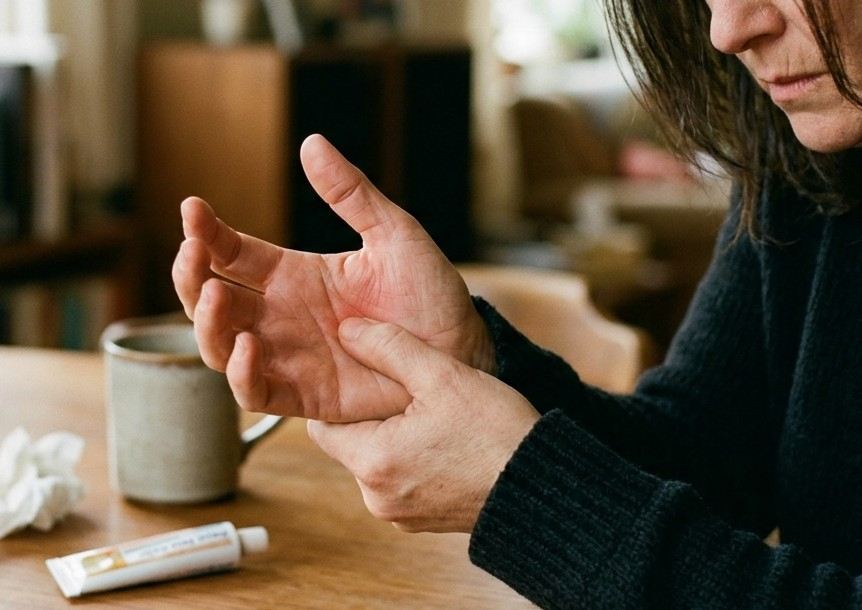
Palm pain can be surprisingly disruptive. Even mild discomfort can make everyday activities such as typing, writing, opening jars, carrying bags, exercising, or using a phone uncomfortable. The pain may feel like an ache, burning sensation, sharp stab, tenderness, tingling, or pressure.
The cause is not always obvious. Palm pain may follow an injury or overuse, but it can also be related to nerve compression, tendon problems, arthritis, or other conditions. The location and type of pain, along with symptoms such as numbness, swelling, clicking, or weakness, can provide useful clues.
This guide explains common causes of palm pain, symptoms to watch for, simple ways to manage mild discomfort, and when professional medical evaluation is important.
What Is Palm Pain?
Palm pain refers to discomfort anywhere on the palm-side surface of the hand, including the area beneath the fingers, around the thumb, or near the wrist.
It may occur suddenly after an injury or develop gradually from repeated movements. Some people experience pain only during gripping or movement, while others notice symptoms at rest or during the night. Palm pain itself is a symptom rather than a diagnosis, so identifying the underlying cause is important before choosing treatment.
What Does Palm Pain Feel Like?
Palm pain can have different characteristics depending on its cause. Common descriptions include:
- Aching: A dull, persistent discomfort that may become noticeable after using the hand.
- Sharp Pain: Sudden pain may occur with certain movements or after an injury.
- Burning: Burning or unusually sensitive skin can sometimes point toward nerve irritation.
- Tingling: Pins-and-needles sensations may occur with nerve compression.
- Tenderness: The palm may hurt when pressed or when gripping an object.
- Stiffness: Difficulty moving the fingers or thumb can accompany joint or tendon problems.
- Throbbing: Pulsing discomfort may occur with inflammation or injury.
- Weakness: Difficulty gripping or holding objects may occur when nerves or muscles are affected.
Common Causes of Palm Pain
1. Hand Injury
A fall, impact, cut, sprain, or other injury can cause palm pain. Bruising and soft-tissue damage may produce tenderness and swelling.
A sudden injury accompanied by severe pain, swelling, deformity, or a popping sound may indicate a fracture or more significant injury.
2. Carpal Tunnel Syndrome
Carpal tunnel syndrome occurs when the median nerve is compressed as it passes through the carpal tunnel near the wrist.
Symptoms can include numbness, tingling, burning, hand discomfort, and weakness, particularly affecting the thumb, index, middle, and part of the ring finger. Symptoms are often worse at night.
3. Trigger Finger
Trigger finger can cause pain or tenderness at the base of a finger or thumb on the palm side.
You may also notice stiffness, clicking, or a catching sensation when moving the affected finger.
4. Arthritis
Arthritis can cause pain, stiffness, swelling, and reduced movement in the joints of the hand.
Osteoarthritis and rheumatoid arthritis can affect the hand differently, but both may interfere with normal hand function.
5. Tendon Irritation
Repeated gripping, lifting, sports, household activities, or other repetitive movements can irritate tendons around the hand and wrist.
Pain may become more noticeable when moving a particular finger, thumb, or wrist.
6. Peripheral Neuropathy
Nerve problems can produce burning, sharp, or unusual sensations in the palm. Tingling, numbness, and changes in sensitivity may also occur.
7. Repetitive Hand Use
Typing, writing, gaming, crafting, playing an instrument, using tools, or repeated gripping can place stress on the hand and wrist.
Taking regular breaks and avoiding prolonged awkward wrist positions may help reduce strain.
8. Fracture
A broken bone can cause sudden and significant palm or hand pain, especially following a fall or direct impact.
Swelling, bruising, deformity, difficulty moving the hand, or a popping or grinding sound should be evaluated promptly.
9. Inflammation
Inflammation involving joints, tendons, or surrounding tissues can produce pain, swelling, stiffness, and reduced movement.
10. Nerve Compression Elsewhere
Not every nerve-related hand symptom begins in the hand. Nerve irritation involving the wrist, arm, or neck can sometimes contribute to symptoms in the hand.
Types of Palm Pain
Palm pain can be described in different ways depending on its location, sensation, and underlying cause.
- Upper Palm Pain: Pain in the upper part of the palm, closer to the fingers, may be related to tendon irritation, repetitive gripping, or strain.
- Lower Palm Pain: Pain in the lower palm, closer to the wrist, can sometimes be associated with wrist problems, nerve compression, or overuse.
- Right Hand Palm Pain: Pain affecting the palm of the right hand may result from injury, repetitive use, tendon problems, arthritis, or nerve irritation.
- Left Hand Palm Pain: Pain in the left palm can have similar causes, including strain, injury, nerve compression, arthritis, and repetitive hand movements.
- Middle of Palm Pain: Pain in the center of the palm may occur because of overuse, soft-tissue irritation, pressure, or inflammation.
- Thumb-Side Palm Pain: Pain near the base of the thumb may be linked to tendon irritation, arthritis, or overuse.
- Pinky-Side Palm Pain: Pain along the little-finger side may occur after injury or repeated pressure on the hand.
- Palm Pain Near the Fingers: Pain at the base of the fingers is commonly associated with tendon problems or trigger finger.
- Palm Pain Near the Wrist: Discomfort extending from the wrist into the palm can occur with nerve compression or wrist-related conditions.
- Burning Palm Pain: Burning sensations may suggest nerve irritation or neuropathy.
- Tingling Palm Pain: Tingling or pins-and-needles sensations can occur when a nerve is compressed or irritated.
- Sharp Palm Pain: Sudden, stabbing pain may occur following an injury or with certain tendon or nerve problems.
- Dull or Aching Palm Pain: A persistent ache is often associated with overuse, inflammation, or joint problems.
- Palm Pain With Numbness: Pain accompanied by numbness may indicate nerve involvement and should be evaluated if persistent.
- Palm Pain With Swelling: Swelling and tenderness may occur after an injury or with inflammation or infection.
- Palm Pain With Finger Stiffness: Pain and stiffness can be associated with arthritis, tendon conditions, or inflammation.
- Palm Pain During Gripping: Pain that appears when gripping or squeezing may be related to tendons, joints, muscles, or previous injury.
- Palm Pain at Night: Pain, tingling, or numbness that becomes worse at night can occur with conditions such as carpal tunnel syndrome.
- Palm Pain After Repetitive Use: Repeated typing, writing, lifting, gaming, or gripping can contribute to hand strain and discomfort.
Palm Pain Symptoms to Watch For
Pay attention to symptoms that occur alongside the pain.
Important clues include:
- Numbness or tingling
- Weak grip
- Difficulty moving a finger
- Clicking or catching
- Swelling
- Bruising
- Redness or warmth
- Burning sensations
- Pain that worsens at night
- Pain after repetitive activity
- Pain following an injury
- Changes in finger or hand color
- Loss of sensation
A combination of palm pain with numbness or weakness deserves particular attention because it may indicate nerve involvement.
How to Relieve Mild Palm Pain at Home?
If the pain is mild and there are no signs of a serious injury, conservative measures may help.
1. Rest Your Hand
Reduce activities that clearly worsen the pain, particularly heavy lifting, forceful gripping, or repetitive movements.
2. Apply an Ice Pack
After a recent injury, an ice pack wrapped in a towel can be applied for up to about 20 minutes at a time. Repeating this every 2 to 3 hours during the early period after injury.
Never place ice directly against the skin.
3. Avoid Tight Gripping
Try not to repeatedly squeeze tools, weights, phones, or other objects tightly while your hand is painful.
4. Consider a Splint
A suitable hand or wrist splint may provide support, particularly when symptoms are associated with wrist positioning or occur during sleep.
5. Keep the Hand Gently Moving
Once severe pain has settled, gentle movement can help prevent stiffness. Avoid exercises that significantly increase pain.
6. Remove Rings if Your Hand Swells
If the palm or fingers become swollen, remove rings and other jewelry promptly because swelling can make them difficult to remove later.
7. Use Pain Relief Carefully
Over-the-counter pain medicines may help some people, but the safest option depends on your health, other medicines, allergies, and the suspected cause of the pain. A pharmacist or healthcare professional can help you choose an appropriate option.
8 Best Exercises for Palm Pain Relief
Gentle exercises may help reduce stiffness, maintain flexibility, and improve hand function when palm pain is related to mild strain or overuse. Stop if an exercise causes sharp or worsening pain.
1. Gentle Fist
Slowly curl your fingers into a loose fist, without squeezing. Hold for 3–5 seconds, then slowly open your hand. Repeat 5–10 times.
2. Finger Stretch
Place your hand flat on a comfortable surface and gently straighten your fingers. Hold for 5–10 seconds, then relax. Repeat 5 times.
3. Finger Spreads
Keep your palm facing upward and gently spread your fingers apart. Hold for a few seconds and relax. Repeat 5–10 times.
4. Thumb-to-Finger Touch
Touch your thumb to the tip of each finger, forming an “O” shape with each one. Move slowly and repeat 5–10 times.
5. Thumb Stretch
Gently move your thumb across your palm toward the base of your little finger. Hold briefly, then return to the starting position. Repeat 5 times.
6. Wrist Stretch
Extend one arm with your palm facing upward. With the other hand, gently pull the fingers downward until you feel a mild stretch in the wrist and palm. Hold for 10–15 seconds.
7. Wrist Flexion and Extension
Rest your forearm on a table with your hand over the edge. Slowly move your wrist upward and downward through a comfortable range. Repeat 5–10 times.
8. Soft Ball Squeeze
For pain caused by mild weakness rather than an acute injury, gently squeeze a soft stress ball for 3–5 seconds and release. Start with 5 repetitions.
Important: Avoid squeezing exercises if your palm pain is caused by a recent injury, significant swelling, suspected fracture, or severe inflammation. If exercises increase pain, numbness, tingling, or weakness, stop and consult a healthcare professional.
Treatment for Palm Pain
Medical treatment for palm pain depends on the underlying cause. A doctor may recommend one or more of the following:
- Pain-Relieving Medicines: Over-the-counter pain relievers or anti-inflammatory medicines may be recommended for certain types of pain and inflammation.
- Splinting: A wrist or hand splint can help limit movement and reduce pressure on irritated tissues or nerves.
- Physical Therapy: Hand and wrist exercises may improve flexibility, strength, and function.
- Corticosteroid Injections: Steroid injections may be considered for conditions such as trigger finger or carpal tunnel syndrome when appropriate.
- Nerve Treatment: Persistent nerve compression may require specialized treatment, particularly when numbness or weakness develops.
- Treatment for Arthritis: Depending on the type of arthritis, treatment may include medicines, exercises, splinting, or other therapies.
- Treatment for Infection: If palm pain is caused by an infection, prescription treatment may be necessary and sometimes drainage is required.
- Surgery: Severe fractures, significant nerve compression, trigger finger that does not respond to conservative treatment, or certain tendon and structural problems may require surgery.
Important: Treatment should be based on the cause of the palm pain. Persistent pain, worsening symptoms, numbness, weakness, severe swelling, deformity, or difficulty moving the hand should be evaluated by a healthcare professional.
When Is Palm Pain Serious?
Palm pain should not be ignored when it is severe, persistent, recurrent, or associated with neurological symptoms.
Seek medical advice if:
- The pain is getting worse.
- It repeatedly comes back.
- It interferes with normal activities.
- It has not improved after about two weeks of home treatment.
- You develop tingling or loss of sensation.
- Your palm becomes warm, swollen, and stiff.
- You have diabetes and develop new hand problems.
Prompt evaluation is particularly important when symptoms affect your ability to grip or use the hand.
Warning Signs of Palm Pain That Need Urgent Medical Attention
Get urgent medical help if you have severe palm or hand pain, particularly when accompanied by:
- Inability to move the thumb or hand
- Inability to hold objects
- Loss of feeling in part or all of the hand
- A significant change in finger or hand shape
- A change in color
- A snap, grinding, or popping sound during an injury
- Severe swelling after trauma
- Feeling faint, dizzy, or sick because of the pain
- Feverishness or feeling generally unwell with a painful, warm, swollen hand
These symptoms can occur with serious injuries or infections and should be assessed promptly.
How Is Palm Pain Diagnosed?
A healthcare professional will usually begin by asking about:
- When the pain started
- Whether there was an injury
- What activities make it worse
- Whether you have numbness or tingling
- Whether the pain occurs at night
- Whether you have weakness
- Whether there is swelling or stiffness
The hand and wrist may then be examined for movement, tenderness, strength, sensation, and signs of inflammation.
Depending on the suspected cause, additional testing may include imaging or nerve tests. For example, nerve conduction studies and electromyography can help evaluate suspected carpal tunnel syndrome, while imaging may be useful when a fracture or another structural problem is suspected.
How to Prevent Palm Pain?
You cannot prevent every cause of palm pain, but several habits may reduce unnecessary strain.
- Take Regular Breaks: If your work involves repetitive hand movements, give your hands regular rest periods.
- Maintain a Neutral Wrist Position: Avoid keeping your wrists bent for prolonged periods while typing or performing repetitive activities.
- Avoid Excessive Grip Force: Use only as much force as necessary when holding tools or objects.
- Use Ergonomic Equipment: A comfortable keyboard, mouse, tools, or other equipment may reduce unnecessary strain.
- Warm Up Before Exercise: Gentle hand and wrist movements can prepare your hands before activities that involve gripping.
- Increase Activity Gradually: Avoid suddenly increasing the amount of weight or repetitive hand work you perform.
- Protect Your Hands: Use appropriate protective equipment during sports, manual work, and activities with a risk of injury.
Palm Pain at Night
Palm pain that is worse at night can have several possible causes.
One important possibility is carpal tunnel syndrome. Numbness or tingling involving the thumb, index, middle, and part of the ring finger may become particularly noticeable during sleep. Some people wake up and shake their hands to relieve the sensation.
However, nighttime palm pain does not automatically mean you have carpal tunnel syndrome. Persistent or worsening symptoms should be assessed by a healthcare professional.
Palm Pain From Typing or Using a Phone
Long periods of typing, mouse use, gaming, or holding a phone can contribute to hand and wrist discomfort.
Interestingly, computer use does not automatically mean someone has carpal tunnel syndrome. Mayo Clinic notes that evidence has not established keyboard use itself as a direct risk factor for carpal tunnel syndrome, although computer-related activities can contribute to other forms of hand discomfort. Try taking frequent breaks, changing hand positions, keeping the wrist relatively neutral, and avoiding prolonged gripping.
FAQ’s
Why does my palm hurt without an injury?
Pain without an obvious injury may be caused by repetitive hand use, inflammation, nerve irritation, or joint problems.
Can carpal tunnel cause palm pain?
Yes. Carpal tunnel syndrome can cause pain, tingling, burning, or numbness in the palm and fingers.
Why does my palm hurt when I grip something?
Pain while gripping may occur because of tendon irritation, arthritis, trigger finger, muscle strain, or an underlying hand injury.
Why does my palm hurt at night?
Nighttime palm pain, especially with numbness or tingling, can be associated with nerve compression such as carpal tunnel syndrome.
How to fix palm pain quickly?
Resting the hand, avoiding aggravating activities, and using a wrapped cold pack after an injury may help relieve mild pain.
Should I massage a painful palm?
Gentle massage may help some types of muscle or soft-tissue discomfort, but avoid aggressive massage if the hand is swollen or recently injured.
How long does palm pain usually last?
Minor strain or overuse may improve with rest, but persistent or recurring pain should be evaluated by a healthcare professional.
Can stress cause palm pain?
Stress can contribute to muscle tension and make discomfort more noticeable, but ongoing palm pain should not automatically be blamed on stress.
Final Thought
Palm pain can result from something as simple as overuse or a minor injury, but it can also signal conditions such as carpal tunnel syndrome, trigger finger, arthritis, tendon problems, or nerve irritation. The most useful clues are the location and character of the pain and whether symptoms such as numbness, weakness, swelling, clicking, or loss of movement are present.
For mild symptoms, resting the hand, reducing aggravating activities, using cold therapy after an injury, and maintaining gentle movement may help. However, severe pain, loss of sensation, deformity, inability to move the hand, or signs of infection require prompt medical attention.
Sources / References:
Disclaimer:
This guide is for general educational purposes and does not replace professional medical advice, diagnosis, or treatment. Seek medical care for severe, persistent, or worsening palm pain or concerning symptoms.
Also Read: