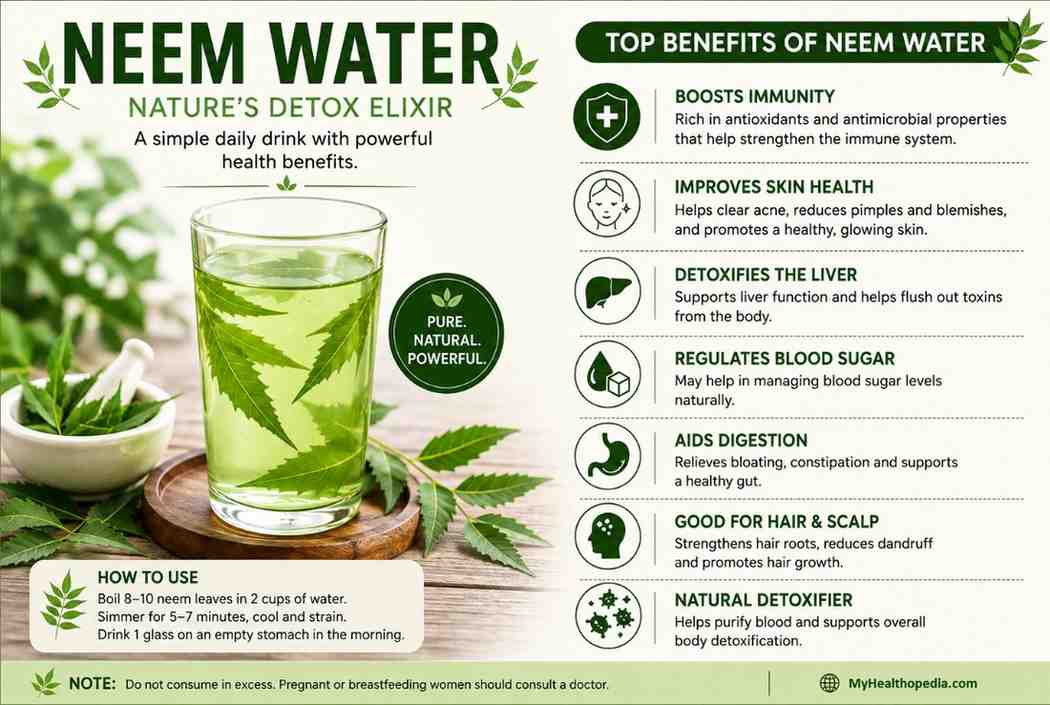
Neem water is a traditional herbal drink made by soaking or boiling neem leaves in water. Neem, scientifically known as Azadirachta indica, has been used in Indian traditional practices for generations, particularly for skin, oral, digestive, and general wellness purposes.
Today, neem water is often consumed as a homemade herbal drink because neem leaves contain naturally occurring compounds such as flavonoids, limonoids, polyphenols, and other phytochemicals. Laboratory and human research suggests that some neem preparations may have antioxidant, antimicrobial, anti-inflammatory, and blood-sugar-modulating properties.
What Is Neem Water?
Neem water is water infused with fresh or dried neem leaves. It is commonly prepared by washing neem leaves, simmering them in water for several minutes, and then straining the liquid.
The resulting drink is usually bitter and slightly herbal. In India, neem has a long history of traditional use, and different parts of the plant—including leaves, bark, flowers, fruits, and seeds—have been used in traditional preparations.
Modern research has identified several biologically active compounds in neem. Some laboratory and clinical studies have investigated neem preparations for blood-glucose regulation, inflammation, oxidative stress, oral health, and microbial activity. However, clinical evidence remains limited for many of the popular health claims surrounding neem.
A randomized clinical study involving people with type 2 diabetes found that a standardized aqueous neem leaf-and-twig extract used alongside metformin improved several measures of blood glucose, insulin resistance, endothelial function, oxidative stress, and inflammation over 12 weeks. Importantly, this was a standardized extract—not homemade neem water—so the results cannot be directly applied to every cup of neem water. (PubMed)
Properties of Neem Water
| Property | Description |
|---|---|
| Main plant | Azadirachta indica |
| Common name | Neem |
| Main part used | Usually neem leaves |
| Appearance | Pale green, yellowish, or brownish depending on preparation |
| Taste | Strong, bitter, herbal |
| Aroma | Distinctive, earthy and herbal |
| Major phytochemicals | Limonoids, flavonoids, polyphenols and other plant compounds |
| Preparation | Usually steeped or simmered in water |
| Caffeine | Naturally caffeine-free |
| Calories | Very low when prepared without sugar or other ingredients |
| Fat | Negligible in a water infusion |
| Protein | Negligible in a typical infusion |
| Sugar | Usually negligible unless sweeteners are added |
| Antioxidant potential | Suggested by laboratory and experimental research |
| Antimicrobial potential | Demonstrated in laboratory and some clinical applications |
| Blood-sugar research | Studied in standardized aqueous neem extracts |
| Traditional use | Skin, oral care, digestion and general wellness |
Important: The exact nutritional and phytochemical composition of neem water is not standardized. A homemade infusion should not be treated as nutritionally equivalent to a concentrated neem extract.
20 Proven Health Benefits of Neem Water
1. May Provide Antioxidant Compounds: Neem contains plant compounds with antioxidant activity that may help neutralize oxidative molecules in laboratory and experimental settings.
2. May Support Healthy Inflammatory Responses: Neem phytochemicals have demonstrated anti-inflammatory activity in experimental research, although the effect of ordinary neem water in humans has not been firmly established.
3. May Support Blood-Sugar Management: A randomized clinical trial found that a standardized aqueous neem leaf-and-twig extract improved fasting glucose, post-meal glucose, HbA1c, and insulin resistance in people with type 2 diabetes receiving standard treatment.
4. May Support Insulin Sensitivity: Research involving an aqueous neem preparation found improvements in markers of insulin resistance, suggesting that certain neem compounds may influence glucose metabolism.
5. May Support Cardiovascular Health: The same clinical research reported improvements in endothelial function, which is an important component of healthy blood-vessel function.
6. May Help Reduce Oxidative Stress: Standardized aqueous neem extract has been investigated for its ability to influence oxidative-stress markers, although more research is needed to determine the relevance to homemade neem water.
7. May Support a Healthy Inflammatory Balance: Clinical research has observed changes in inflammatory markers following standardized neem extract supplementation, but this does not establish neem water as an anti-inflammatory treatment.
8. May Have Antimicrobial Properties: Neem compounds have demonstrated antimicrobial activity in laboratory research, including activity against certain bacteria.
9. May Support Oral Health: Clinical studies of neem-based mouthrinses have reported reductions in plaque and gingival inflammation, although these findings concern mouthwash rather than drinking neem water.
10. May Support Gum Health: Neem-based oral preparations have been investigated as an adjunct to normal oral hygiene and may help reduce measures associated with gingivitis.
11. May Support Digestive Health: Traditional medicine has used neem preparations for digestive complaints, and some human research has investigated aqueous neem bark extracts for gastric acid secretion and ulcer-related conditions.
12. May Influence Gastric Acid Secretion: A clinical study of aqueous neem bark extract found reduced gastric acid secretion, although the preparation and dose were substantially different from homemade neem leaf water.
13. May Have Protective Effects Against Certain Microbes: Neem extracts have demonstrated antibacterial activity against several microorganisms in laboratory and experimental research, but this should not be interpreted as a treatment for infections.
14. May Support Skin Health Indirectly: Neem has traditionally been used for skin-related concerns, and reviews describe antimicrobial and anti-inflammatory properties of neem compounds that may be relevant to dermatological applications.
15. May Help Maintain General Antioxidant Defense: The polyphenols and other phytochemicals found in neem contribute to its overall antioxidant potential, although the amount delivered by a homemade drink varies.
16. May Support Metabolic Health: Research into standardized aqueous neem preparations has reported changes in several metabolic markers, including glucose and insulin-resistance measures.
17. May Support Healthy Endothelial Function: Improvements in endothelial function have been observed in clinical research using standardized neem preparations, suggesting an area worthy of further investigation.
18. May Help Moderate Certain Inflammatory Markers: Human research has reported changes in markers such as IL-6 and TNF-related inflammatory measures after neem extract supplementation, although more independent studies are required.
19. May Have Potential Gastroprotective Properties: Experimental and clinical research into neem bark preparations suggests possible effects on gastric secretion and ulcer-related mechanisms.
20. Provides a Caffeine-Free Herbal Drink Option: Unlike tea or coffee, plain neem water naturally contains no caffeine and can be consumed as a simple herbal infusion when appropriate for the individual.
10 Side Effects of Neem Water
Neem is not automatically safe simply because it is natural. Side effects may depend on the concentration, amount consumed, frequency, and individual health status.
1. Bitter Taste and Nausea: The strong bitterness of neem can cause nausea or stomach discomfort in some people, particularly when consumed on an empty stomach.
2. Stomach Upset: Larger amounts may cause abdominal discomfort, loose stools, or digestive irritation.
3. Possible Low Blood Sugar: Neem preparations may influence blood-glucose levels, which could potentially increase the risk of low blood sugar when combined with diabetes medicines.
4. Possible Allergic Reaction: Although uncommon, sensitive individuals may experience itching, rash, swelling, or other signs of an allergic reaction.
5. Possible Medication Interactions: Neem may interact with medicines or supplements that affect blood sugar or other physiological pathways, so people taking regular medication should seek professional advice.
6. Excessive Consumption May Be Harmful: Concentrated or prolonged oral exposure to neem preparations may carry toxicity concerns, and different neem preparations do not have the same safety profile.
7. Pregnancy-Related Concerns: Neem preparations have demonstrated reproductive effects in experimental research, so oral neem should not be casually used during pregnancy.
8. Possible Fertility Effects: Experimental toxicology research has raised concerns about reproductive effects with certain neem preparations and prolonged exposure.
9. Children May Be More Vulnerable: Neem products, particularly concentrated preparations such as neem oil, can be dangerous when swallowed by children, so homemade neem water should not be routinely given to children without medical advice.
10. Preparation-Related Contamination: Poorly washed leaves, contaminated water, or improper storage can introduce microorganisms and make homemade neem water unsafe.
How to Make Neem Water?
Making a mild neem infusion at home is relatively simple.
Ingredients:
- 5–10 young, clean neem leaves
- 2 cups of drinking water
Method:
- Wash the neem leaves thoroughly under clean running water.
- Add the leaves to approximately 2 cups of water.
- Bring the water to a gentle boil.
- Simmer for about 5–10 minutes.
- Turn off the heat and allow the liquid to cool.
- Strain out the leaves.
- Drink the prepared infusion while fresh.
Because neem is naturally very bitter, avoid adding large amounts of sugar simply to make it more palatable. If the taste is too strong, making a weaker infusion is a better approach.
There is no universally established recipe or medically validated home dosage for neem water. The concentration of active compounds can vary substantially between preparations.
Tips for Consuming Neem Water
- Start with a weak infusion rather than a highly concentrated preparation.
- Use fresh, clean neem leaves from a reliable source.
- Wash the leaves thoroughly before preparation.
- Do not consume neem water in large quantities simply because it is herbal.
- Avoid combining it with multiple other blood-sugar-lowering herbs without professional guidance.
- Stop using it if you develop persistent nausea, dizziness, rash, abdominal pain, or other unusual symptoms.
- Do not use neem water as a replacement for prescribed diabetes, blood-pressure, digestive, or other medicines.
- If you are taking medication regularly, discuss herbal products with your healthcare professional.
Other Uses of Neem Water
Neem water is not only used as a beverage. Traditionally, neem-infused water has also been used externally.
1. Skin Rinsing
Cooled neem water is sometimes used as a traditional skin rinse because neem contains compounds with antimicrobial and anti-inflammatory potential. However, sensitive skin can react to herbal preparations.
2. Scalp and Hair Care
Some people use diluted neem water as a scalp rinse as part of traditional hair-care routines. Scientific evidence for neem water specifically as a hair treatment remains limited.
3. Mouth Rinsing
Neem has been studied in mouthwash formulations for plaque and gingivitis. Research suggests potential benefits, but commercially formulated or studied mouthrinses should not be assumed to be equivalent to homemade neem water.
4. Traditional Household Uses
Neem water has traditionally been used in various household and personal-care practices. These traditional uses should not be confused with clinically proven medical treatments.
How Much Neem Water Can You Drink in a Day?
There is no scientifically established standard daily dose for homemade neem water.
A mild homemade infusion is very different from the standardized aqueous extracts used in clinical studies. For example, clinical research has used measured amounts of standardized neem extract under controlled conditions, rather than cups of homemade neem water.
For general wellness, it is better to avoid treating neem water like ordinary drinking water. If you choose to consume it, use a mild preparation and avoid excessive or prolonged daily consumption unless a qualified healthcare professional recommends it.
People taking diabetes medication should be especially cautious because standardized neem extracts have demonstrated glucose-lowering effects in clinical research.
Best Time to Drink Neem Water
There is no strong scientific evidence showing that neem water works best at a particular time of day.
Some people traditionally drink herbal preparations in the morning, often before breakfast. However, drinking neem water on an empty stomach may cause nausea or stomach discomfort in sensitive individuals because of its bitter taste.
If you choose to drink it, the most practical approach is to use a mild preparation and pay attention to how your body responds.
You do not need to drink neem water immediately after waking up for it to provide potential benefits.
Who Should Drink Neem Water?
Neem water is not necessary for everyone. If an adult is considering a mild neem infusion, these groups may be more appropriate candidates:
- Healthy Adults Interested in Traditional Herbal Drinks: Healthy adults who want to try neem as a traditional herbal beverage may consider a mild preparation occasionally, provided they have no relevant medical restrictions.
- Adults Familiar With Neem: People who have previously tolerated neem products may be less likely to experience unexpected sensitivity, although tolerance does not guarantee safety.
- People Interested in Caffeine-Free Drinks: Those looking for a naturally caffeine-free herbal infusion may use mild neem water as an occasional beverage.
- Adults Seeking Traditional Wellness Practices: People interested in traditional Indian wellness practices may choose neem water, but should keep traditional use separate from medically proven treatment.
- People Under Professional Guidance: Individuals using neem for a specific health reason should ideally do so with guidance from a qualified healthcare professional.
Who Should Avoid Neem Water?
Certain groups should avoid self-prescribing oral neem water or should discuss it with a healthcare professional first.
- Pregnant Women: Neem should not be routinely consumed during pregnancy because experimental research has raised concerns about reproductive effects.
- Breastfeeding Women: Because reliable safety information for medicinal oral neem use during breastfeeding is limited, it is safer to consult a healthcare professional before consuming it regularly.
- Young Children: Children should not be given concentrated neem preparations, and neem products should always be kept out of their reach.
- People Taking Diabetes Medication: Neem may influence blood glucose, potentially affecting the action of glucose-lowering medicines.
- People With Chronic Medical Conditions: Individuals with significant medical conditions should consult their healthcare professional before regularly using herbal preparations.
- People With Known Neem Allergy: Anyone who has previously reacted to neem should avoid drinking neem water.
- People Preparing for Surgery: Because herbal products can potentially affect physiological processes and interact with medicines, regular medicinal use should be discussed with a healthcare professional before surgery.
How to Store Neem Water?
Freshly prepared neem water is preferable to storing it for long periods.
- Refrigerate Promptly: If you are not drinking it immediately, place the cooled neem water in a clean, covered container and refrigerate it.
- Use a Clean Container: A thoroughly washed glass or food-safe container helps reduce the risk of contamination.
- Avoid Room-Temperature Storage: Do not leave homemade neem water sitting at room temperature for extended periods.
- Make Small Batches: Preparing only what you expect to use soon is generally better than storing a large quantity.
- Discard If It Changes: Throw it away if it develops an unusual smell, visible growth, cloudiness, fermentation, or other unexpected changes.
Precautions and Interactions
Neem water should be treated as a medicinal herbal preparation rather than ordinary flavored water.
- Diabetes Medicines: Neem preparations may lower blood glucose. If you take insulin or diabetes medicines, combining them with neem could potentially contribute to excessively low blood sugar. Clinical studies have specifically observed glucose-lowering effects with standardized aqueous neem extracts.
- Pregnancy: Avoid medicinal oral use during pregnancy unless specifically recommended by a qualified healthcare professional. Experimental studies have investigated neem extracts for effects on pregnancy and fertility.
- Children: Never assume that a preparation is safe for children simply because adults use it traditionally. Concentrated neem products can be particularly dangerous in children.
- Concentrated Products: Neem oil, concentrated extracts, capsules, and homemade leaf water are not interchangeable. Toxicity can differ substantially depending on the preparation. A toxicology review found important differences in safety between aqueous extracts and other neem-derived preparations.
- Long-Term Use: There is not enough high-quality evidence to establish that drinking neem water every day for months or years is safe for everyone.
- Medical Treatment: Neem water should never replace prescribed medication or professional treatment for diabetes, infections, ulcers, skin disease, or any other medical condition.
- Stop If You Feel Unwell: Stop drinking it and seek medical advice if you develop persistent vomiting, severe abdominal discomfort, dizziness, allergic symptoms, unusual weakness, or other concerning reactions.
FAQ’s
Can I drink neem water every day?
There is no established safe daily dose for homemade neem water, so regular long-term use should be approached cautiously.
Can neem water lower blood sugar?
Some standardized neem extracts have shown blood-sugar-lowering effects, but homemade neem water has not been studied in the same way.
Can neem water help with weight loss?
There is insufficient evidence to show that neem water directly causes weight loss.
Is neem water good for skin?
Neem contains compounds with antimicrobial and anti-inflammatory properties, but drinking neem water is not a proven treatment for skin conditions.
Can I drink neem water on an empty stomach?
Some people traditionally drink it in the morning, but there is no strong evidence that drinking it on an empty stomach provides extra benefits.
Is neem water safe during pregnancy?
Neem leaves water should generally be avoided during pregnancy unless specifically recommended by a healthcare professional.
Can children drink neem water?
Children should not routinely drink neem preparations without advice from a qualified healthcare professional.
What does neem water taste like?
Neem leaves water has a strong, bitter, earthy, and slightly herbal taste.
Does neem water detox the body?
There is no strong clinical evidence that neem leaves water performs a special detoxification process in the body.
Can neem water help digestion?
Neem has traditionally been used for digestive purposes, but evidence that homemade neem water improves digestion is limited.
Can neem water improve oral health?
Neem-based mouthrinses have been studied for plaque and gum health, but these findings should not be directly applied to drinking neem water.
Can neem water cure diabetes?
No. Neem leaves water is not a cure for diabetes and should never replace prescribed diabetes treatment.
How long does it take for Neem Water to work?
There is no fixed time for neem leaves water to produce noticeable effects. Any effects may depend on the preparation, amount consumed, and individual health, while many claimed benefits have not been established for homemade neem water.
What does Neem Water smell like?
Neem leaves water has a distinctive earthy, herbal, slightly bitter smell that can become stronger when the leaves are boiled.
What is Neem Water good for?
Neem leaves water may provide antioxidant and antimicrobial plant compounds, and neem preparations have been studied for blood-sugar regulation, oral health, inflammation, and digestive health. However, evidence specifically for homemade neem water remains limited.
Is neem boiled water good for skin?
Neem boiled water may be used traditionally as a skin rinse because neem contains compounds with antimicrobial and anti-inflammatory properties. However, it is not a proven treatment for acne, eczema, or other skin conditions, and it may irritate sensitive skin.
Final Takeaway
Neem water is a traditional herbal infusion with an interesting scientific background. Neem contains numerous bioactive plant compounds, and research has explored its antioxidant, antimicrobial, anti-inflammatory, oral-health, digestive, and metabolic properties.
Some human studies involving standardized aqueous neem extracts have produced promising findings, particularly in areas such as blood-glucose control and metabolic health.
At the same time, homemade neem water is not standardized, and many popular claims about it are based on traditional use, laboratory studies, animal research, or concentrated extracts. More high-quality clinical research is needed before neem water can be recommended as a treatment for specific diseases.
If you decide to drink neem water, moderation matters. Use clean leaves, prepare a mild infusion, avoid excessive consumption, and be especially cautious if you are pregnant, breastfeeding, giving it to a child, taking medication, or managing a chronic health condition.
Sources / References:
- World Health Organization (WHO): WHO – Traditional, Complementary and Integrative Medicine
- NIH / NCCIH: National Center for Complementary and Integrative Health (NCCIH)
- Ministry of AYUSH / National Medicinal Plants Board (NMPB): National Medicinal Plants Board, Ministry of AYUSH
- National Health Mission, India: National Health Mission (NHM), Ministry of Health & Family Welfare
- PubMed / National Library of Medicine: PubMed – U.S. National Library of Medicine
- National Library of Medicine (NLM): U.S. National Library of Medicine
About the Author:
Written by: Kirti Solanki (Health Content Researcher)
Health content researcher focused on creating reader-friendly, research-informed articles on nutrition, natural ingredients, wellness, and everyday health topics. Content is developed using available scientific literature and reputable health sources.
Disclaimer:
This article is for general educational purposes only and is not medical advice. Neem water should not replace prescribed treatment. Consult a qualified healthcare professional before using neem medicinally, especially during pregnancy, breastfeeding, childhood, or when taking medication.
Also Read: