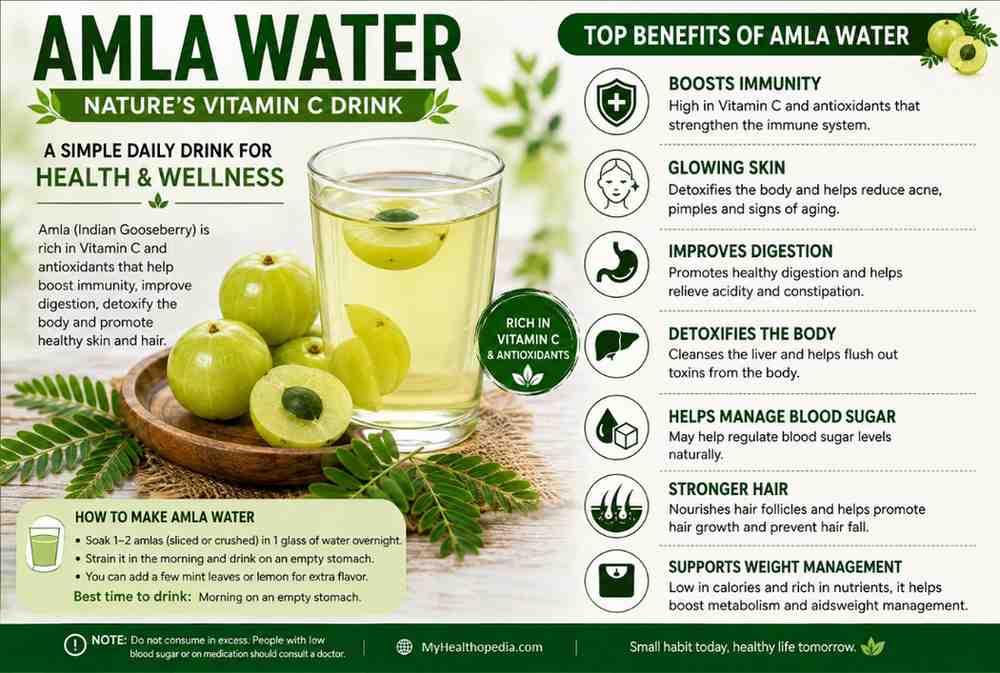
Amla water has been a familiar part of traditional Indian wellness practices for generations. Made by soaking or mixing fresh Indian gooseberry, also known as amla, with water, this simple drink is often consumed as part of a morning routine.
Amla is naturally rich in vitamin C and contains polyphenols and other plant compounds with antioxidant activity. Modern research has also investigated amla extracts for areas such as cholesterol, blood sugar, oxidative stress and cardiovascular health. However, it is important to remember that studies on concentrated amla extracts do not necessarily mean that the same effects will occur from a glass of homemade amla water. Still, when prepared without excessive sugar, amla water can be a refreshing way to include a nutrient-rich fruit in the diet.
What Is Amla Water?
Amla water is a beverage prepared by combining fresh amla fruit, amla juice or amla powder with water. Amla is scientifically known as Phyllanthus emblica and is commonly called Indian gooseberry. The fruit has a distinctive sour, tangy and slightly bitter taste, which is why it is often diluted with water.
Fresh amla contains vitamin C and various polyphenolic compounds. Reviews of amla research describe its antioxidant potential and its possible effects on metabolic and cardiovascular health. (PubMed Central (PMC))
A simple homemade version usually contains fresh amla blended or crushed with water. Some people add lemon, ginger, cumin or a small amount of honey, although these additions are not necessary. One important point is that amla water is not a medicine or detox treatment. It should be considered a food or beverage that may complement an otherwise balanced diet.
Nutrition Facts of Amla Water
The nutritional content of amla water can vary considerably depending on whether it is prepared from fresh fruit, juice, powder or a concentrated extract. Here is an approximate guide for 250 ml of homemade amla water prepared using about 20 g of fresh amla diluted with water.
| Nutrient | Approximate Amount per 250 ml* |
|---|---|
| Calories | 10–20 kcal |
| Carbohydrates | 2–5 g |
| Natural sugars | 1–3 g |
| Protein | Less than 1 g |
| Fat | Less than 1 g |
| Dietary fiber | Small amount |
| Vitamin C | Variable |
| Polyphenols | Present |
| Antioxidant compounds | Present |
| Sodium | Very low naturally |
| Added sugar | 0 g if prepared without sugar |
*Values vary according to the amount and form of amla used, preparation method and dilution.
20 Science-Backed Health Benefits of Amla Water
1. Supports Antioxidant Protection: Amla contains vitamin C and polyphenolic compounds that contribute to antioxidant activity and may help the body manage oxidative stress.
2. Supports Normal Immune Function: The vitamin C supplied by amla can contribute to normal immune-system function, although amla water should not be considered a treatment for infections.
3. Supports Collagen Formation: Vitamin C is required for normal collagen production, which is important for skin, blood vessels, cartilage and wound healing.
4. May Support Healthy Cholesterol Levels: Human studies of standardized amla extracts have reported reductions in total and LDL cholesterol, although these results cannot be directly equated with homemade amla water.
5. May Support Cardiovascular Health: Clinical research has found improvements in some cardiovascular risk markers following standardized amla extract supplementation, suggesting potential supportive cardiovascular effects.
6. May Help Reduce Oxidative Stress: Human trials using standardized amla preparations have reported improvements in several biomarkers associated with oxidative stress.
7. May Support Healthy Blood Sugar: Some clinical studies of concentrated amla preparations have reported improvements in blood glucose or HbA1c, but stronger evidence is needed before amla can be considered a treatment for diabetes.
8. May Support Healthy Lipid Metabolism: Research has investigated amla for its potential effects on cholesterol and other blood lipids, with several studies reporting favorable changes.
9. May Support Healthy Blood Vessel Function: A randomized clinical study found improved measures of endothelial function after standardized aqueous amla extract supplementation.
10. May Help Maintain a Nutrient-Rich Diet: Drinking unsweetened amla water can be an easy way to incorporate a fruit-based beverage into a healthy eating routine.
11. Provides Vitamin C: Amla can contribute vitamin C to the diet, an essential nutrient needed for several normal physiological processes.
12. Supports Iron Absorption: Vitamin C can improve the absorption of non-heme iron from plant foods, making vitamin-C-rich foods useful alongside iron-containing meals.
13. May Support Healthy Skin: Amla’s vitamin C contributes to collagen formation and its plant compounds provide antioxidant activity, both of which are relevant to normal skin health.
14. May Complement a Heart-Healthy Lifestyle: Unsweetened amla water can replace sugary beverages while providing compounds naturally found in amla, making it a reasonable addition to a heart-conscious diet.
15. May Support Metabolic Health: Studies of amla extracts have examined markers such as glucose, cholesterol, inflammation and oxidative stress in people with metabolic risk factors.
16. May Support Normal Inflammatory Balance: Some clinical research has observed reductions in inflammatory markers such as high-sensitivity C-reactive protein after standardized amla extract supplementation.
17. May Support Healthy HDL Levels: Some clinical studies have reported increases in HDL cholesterol following concentrated amla extract supplementation, although findings should not be assumed for homemade amla water.
18. May Help Replace High-Sugar Drinks: Plain amla water can provide a flavorful alternative to sweetened soft drinks, juices and other beverages containing substantial added sugar.
19. Provides Plant Polyphenols: Amla contains several polyphenolic compounds that contribute to its characteristic antioxidant profile and are being investigated for their biological effects.
20. Can Be Part of a Balanced Wellness Routine: When consumed sensibly, unsweetened amla water can fit into a diet that emphasizes fruits, vegetables, whole grains, adequate protein and regular physical activity.
10 Side Effects of Amla Water
Amla is a food, but drinking large amounts or consuming highly concentrated preparations may not suit everyone.
1. Stomach Discomfort: The sour nature of amla may cause stomach discomfort in some sensitive people, particularly when consumed in concentrated form.
2. Acidic Sensation: Some people may experience heartburn or an acidic feeling after drinking a strong amla preparation.
3. Nausea: Drinking a large quantity on an empty stomach may cause nausea in sensitive individuals.
4. Loose Stools: Excessive intake of amla or concentrated preparations may cause digestive changes in some people.
5. Increased Bowel Activity: The fruit may stimulate bowel activity in certain individuals, especially when consumed in larger amounts.
6. Tooth Enamel Concerns: Frequent exposure to acidic beverages may contribute to dental enamel erosion, so prolonged sipping of sour drinks is best avoided.
7. Low Blood Sugar Concern: Concentrated amla preparations may influence blood glucose, which could be important for people taking glucose-lowering medicines.
8. Possible Interaction With Iron Overload: High vitamin C intake can increase iron absorption and may be a concern for people with hereditary hemochromatosis.
9. Headache or Digestive Symptoms: Clinical studies of concentrated amla extracts have generally reported mild adverse events, although individual reactions can vary.
10. Problems From Added Ingredients: Excessive honey, sugar, salt or other additions can make an otherwise simple beverage less suitable for regular consumption.
How to Make Amla Water?
There are several traditional ways to prepare amla water.
Method 1: Fresh Amla Water
Ingredients:
- 1 fresh amla
- 250–300 ml drinking water
- Optional: a small piece of ginger or a pinch of roasted cumin powder
Method:
- Wash the amla thoroughly.
- Cut it into small pieces and remove the seed.
- Blend or crush the fruit with some water.
- Add the mixture to the remaining water.
- Strain if you prefer a smoother drink.
- Drink it fresh.
There is no need to add sugar. If the taste is too strong, simply dilute it with more water.
Method 2: Amla Powder Water
Mix approximately ½ teaspoon of amla powder with a glass of water and stir well.
The concentration of commercial amla powders varies, so follow the product label rather than assuming that all powders have the same strength.
Tips for Consuming Amla Water
- Start with a small amount if you have never consumed amla water before.
- Use fresh, clean drinking water.
- Wash fresh amla thoroughly before preparation.
- Avoid adding large quantities of sugar.
- Dilute the drink if it tastes excessively sour.
- Do not rely on amla water as a substitute for fruits and vegetables.
- If you experience stomach irritation, reduce the concentration or stop drinking it.
- Avoid sipping acidic drinks continuously throughout the day.
- Rinse your mouth with plain water after drinking if you are concerned about dental enamel.
- Choose fresh homemade preparations rather than heavily sweetened commercial beverages.
Other Uses of Amla Water
Amla water is primarily consumed as a beverage, but diluted amla preparations may also be used in traditional personal-care routines.
Hair Care
Some people use diluted amla preparations as part of traditional hair-care practices. Amla is also widely used in traditional hair oils and herbal preparations.
However, drinking amla water should not be presented as a scientifically proven treatment for hair loss.
Skin Care
Amla’s vitamin C and antioxidant compounds have attracted interest in skin health. However, applying acidic homemade amla water directly to the skin may cause irritation in sensitive individuals.
Cooking
A small amount of amla water can be incorporated into certain homemade drinks, chutneys or recipes for a sour flavor.
How Much Amla Water Can You Drink in a Day?
For a healthy adult, one small glass of diluted homemade amla water, around 150–250 ml, is a reasonable practical serving.
There is no universally established medical dosage for homemade amla water because its concentration varies greatly.
Clinical studies involving amla generally used standardized extracts in specific doses rather than ordinary homemade amla water. For example, some trials used 250–500 mg of standardized extract twice daily. Those doses should not be copied for homemade drinks because an extract and a glass of diluted fruit water are not equivalent. More is not necessarily better.
Best Time to Drink Amla Water
There is no scientifically established “perfect” time to drink amla water.
Some people prefer drinking it in the morning because it becomes an easy part of their daily routine. Others find that consuming sour drinks on an empty stomach causes discomfort.
If you tolerate it well, you can drink a small glass in the morning. If it causes acidity or nausea, try having it with or after food instead.
The most important factor is not the clock but the overall quality of your diet and your tolerance of the drink.
Who Should Drink Amla Water?
1. Healthy Adults: Healthy adults who enjoy the taste can include a moderate amount of unsweetened amla water as part of a balanced diet.
2. People Looking for a Low-Sugar Beverage: People trying to reduce sugary drinks may use diluted, unsweetened amla water as an alternative.
3. People With Low Fruit Intake: Amla water can provide some compounds from amla, although eating whole fruit generally provides more of the fruit’s structure and fiber.
4. People Interested in Vitamin C Foods: Individuals looking for naturally vitamin-C-containing foods may include amla as one dietary option.
5. People Following a Heart-Healthy Diet: Unsweetened amla water can fit into a heart-conscious eating pattern, particularly when it replaces sugary beverages.
6. People Who Enjoy Traditional Foods: Those who already include amla in their traditional diet can use diluted amla water as one simple preparation.
Who Should Avoid Amla Water?
1. People With Amla Sensitivity: Anyone who notices an allergic or unusual reaction after consuming amla should avoid it and seek appropriate medical advice.
2. People With Significant Acid Reflux: Those whose symptoms are triggered by sour or acidic drinks may find amla water uncomfortable.
3. People With Iron-Overload Disorders: Individuals with hereditary hemochromatosis should discuss high-vitamin-C intake with their healthcare professional because vitamin C can increase iron absorption.
4. People Taking Diabetes Medicines: Anyone taking glucose-lowering medication should speak with a healthcare professional before regularly consuming concentrated amla preparations because clinical research suggests amla may affect glucose-related measures.
5. People With Sensitive Digestion: Individuals who develop diarrhea, stomach pain or nausea after amla should avoid or reduce it.
6. People With Dental Enamel Problems: Those with significant enamel sensitivity should limit frequent exposure to acidic beverages.
7. Young Children Without Guidance: Concentrated herbal preparations should not be routinely given to young children without advice from a pediatric healthcare professional.
8. People Taking Multiple Medicines: Anyone using several prescription medicines should discuss regular concentrated herbal products with a healthcare professional.
How to Store Amla Water?
1. Refrigerate Fresh Amla Water: Keep freshly prepared amla water in a clean, covered container in the refrigerator.
2. Prefer Fresh Preparation: Homemade amla water is best consumed soon after preparation rather than being stored for several days.
3. Use a Clean Container: Always use a thoroughly washed bottle or glass container to reduce the chance of contamination.
4. Avoid Room-Temperature Storage: Do not leave homemade amla water sitting at room temperature for extended periods.
5. Discard Unusual Preparations: Throw away the drink if it develops an unusual smell, appearance, taste or signs of spoilage.
6. Do Not Repeatedly Open the Bottle: Keeping a covered container closed helps protect the beverage from environmental contamination.
Precautions and Interactions
Amla water is generally used as a food beverage rather than as a medicinal treatment, but a few precautions are sensible.
1. Diabetes Medicines
Amla extracts have been studied for their potential effects on blood glucose. If you take insulin or other glucose-lowering medication, do not use concentrated amla products as a replacement for prescribed treatment. Discuss regular use with your healthcare professional.
2. Cholesterol Medicines
Research has investigated amla extracts for cholesterol management, but this does not mean amla water can replace statins or other prescribed medicines. A systematic review found potential improvements in total and LDL cholesterol with amla extracts, but also noted limitations and heterogeneity in the evidence.
3. Iron-Overload Conditions
Vitamin C increases absorption of non-heme iron and can be problematic in people with hereditary hemochromatosis when consumed in high amounts.
4. Pregnancy and Breastfeeding
Amla as a normal food is different from taking concentrated extracts or supplements. Pregnant or breastfeeding women should discuss regular medicinal-strength amla products with their healthcare professional rather than assuming that a concentrated preparation is automatically safe.
5. Kidney Concerns
People with a history of kidney stones or significant kidney disease should avoid very high-dose vitamin C supplementation unless medically advised. Homemade amla water is generally much less concentrated than vitamin C supplements, but people with kidney conditions should still discuss regular use with their healthcare professional.
6. Do Not Replace Medical Treatment
Amla water may be a nutritious addition to a diet, but it should not replace medicines prescribed for diabetes, high cholesterol, hypertension, anemia or other medical conditions.
Amla Water vs. Whole Amla
If the goal is nutrition, eating the whole fresh fruit can have an advantage because you consume the fruit rather than only its diluted liquid.
Amla water can nevertheless be convenient for people who find fresh amla too sour or difficult to eat. A useful approach is to think of amla water as one small part of a healthy diet rather than a miracle drink.
Final Thoughts
Amla water is a simple traditional beverage made from one of India’s best-known fruits. Amla provides vitamin C and a variety of plant compounds, including polyphenols, that have demonstrated antioxidant activity in laboratory and human research.
For most healthy adults, a small glass of unsweetened, diluted amla water can be a pleasant addition to a balanced diet. There is no need to drink large quantities or treat it as a detox, weight-loss cure or replacement for medical treatment.
FAQ’s
What is Amla Water good for?
Indian gooseberry water provides vitamin C and plant compounds with antioxidant activity and may support overall nutrition, immune function, skin health and metabolic health when consumed as part of a balanced diet.
Can I drink Amla Water every day?
Yes, most healthy adults can generally drink a small glass of diluted, unsweetened Indian gooseberry water daily if they tolerate it well.
Is Amla Water good for weight loss?
Indian gooseberry water is low in calories when prepared without sugar, so it can replace high-calorie beverages. However, there is not enough evidence to say that amla water directly causes weight loss.
Can Amla Water be taken on an empty stomach?
Some people drink it in the morning on an empty stomach, but it may cause acidity or stomach discomfort in sensitive individuals. If this happens, drink it with or after food.
Does Amla Water improve skin?
Amla contains vitamin C, which supports collagen production and antioxidant protection. However, drinking Indian gooseberry water alone cannot guarantee clearer or younger-looking skin.
Is Amla Water good for hair?
Amla is traditionally used in hair care and contains antioxidant compounds, but there is limited evidence that drinking amla water alone promotes hair growth.
Can Amla Water reduce blood sugar?
Some studies of concentrated amla extracts have reported improvements in blood-glucose measures, but homemade amla water should not be used to treat diabetes or replace prescribed medication.
Is Amla Water good for cholesterol?
Research on standardized amla extracts suggests that amla may help improve some cholesterol levels, particularly LDL cholesterol. More research is needed to determine whether ordinary amla water has the same effect.
Does Amla Water have vitamin C?
Yes. Amla is naturally rich in vitamin C, although the amount remaining in homemade amla water depends on the quantity of fruit used and the preparation method.
Can I drink Amla Water before bed?
You can, but it is not necessary. If sour or acidic drinks cause reflux or stomach discomfort at night, it is better to avoid drinking it close to bedtime.
Does Amla Water detox the body?
There is no strong scientific evidence that amla water “detoxes” the body. The liver and kidneys naturally perform the body’s major detoxification functions.
Is Amla Water acidic or alkaline?
Amla is naturally acidic and has a sour taste. Drinking Indian gooseberry water should not be considered a reliable way to make the body’s internal pH alkaline.
Can I drink Amla Water during pregnancy?
Amla as a normal food is different from concentrated amla supplements or extracts. Pregnant women should consult their healthcare professional before regularly consuming concentrated amla preparations.
Can children drink Amla Water?
Small amounts of amla as a food may be appropriate for many children, but concentrated amla drinks or supplements should not be routinely given to young children without guidance from a pediatric healthcare professional.
Does Amla Water cause acidity?
It can cause acidity, heartburn or stomach discomfort in some people because amla is naturally sour and acidic. Diluting it and drinking it with food may improve tolerance.
Can Amla Water improve digestion?
Some people find amla preparations comfortable for digestion, but strong clinical evidence that homemade Indian gooseberry water improves digestion is limited.
How long does Amla Water take to work?
There is no fixed time because amla water is a food rather than a medicine. Nutritional benefits come from regular dietary intake rather than an immediate effect.
Can I drink Amla Water for glowing skin?
Amla provides vitamin C and antioxidant compounds that support normal skin function, but healthy skin also depends on adequate nutrition, sleep, hydration, sun protection and overall lifestyle.
What does Amla Water taste like?
Indian gooseberry water has a distinctly sour, tangy and slightly bitter taste. Diluting it with more water can make the flavor milder.
What does Amla Water smell like?
Fresh Indian gooseberry water usually has a mild, fresh and slightly fruity smell. A strong fermented or unpleasant odor can indicate spoilage.
Can I add honey to Amla Water?
Yes, a small amount of honey can be added to improve the taste, but adding too much increases the sugar and calorie content.
Is Amla Water better than eating fresh Amla?
Not necessarily. Eating fresh amla provides the whole fruit, while Indian gooseberry water is diluted and may contain less fiber and fewer nutrients depending on preparation.
Can Amla Water be stored overnight?
Fresh Indian gooseberry water is best consumed soon after preparation. If necessary, keep it covered and refrigerated and discard it if its smell, taste or appearance changes.
Sources / References:
- NIH
- PubMed Central
- National Center for Complementary and Integrative Health (NCCIH)
- USDA FoodData Central – Food and Nutrition Database
- World Health Organization – Healthy Diet Guidance
- Indian Council of Medical Research (ICMR)
- National Institute of Nutrition, India
- Ministry of AYUSH, Government of India
About the Author:
Written by: Kirti Solanki (Health Content Researcher)
Kirti Solanki writes research-informed health and nutrition content, focusing on making complex wellness information simple, practical and easy for everyday readers to understand.
Disclaimer:
This article is for general educational purposes only and is not a substitute for professional medical advice, diagnosis or treatment. If you have a medical condition, take prescription medicines, or are pregnant or breastfeeding, consult a qualified healthcare professional before using concentrated amla products regularly.
Also Read: