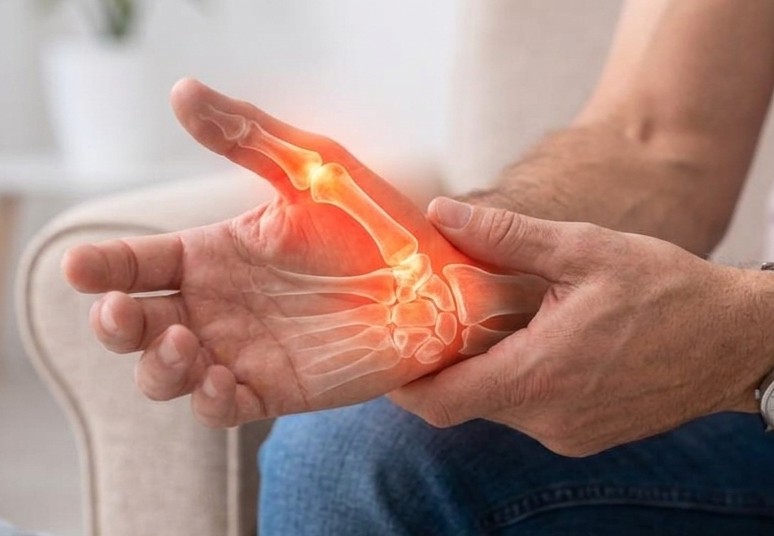
Thumb pain can make surprisingly simple activities difficult. Opening a jar, typing, holding a phone, writing, buttoning clothes, or gripping a cup may become uncomfortable when your thumb hurts.
Thumb pain can develop suddenly after an injury or gradually because of repetitive movements, tendon problems, arthritis, nerve compression, or other conditions. The location and character of the pain can sometimes provide clues, but a healthcare professional may be needed to determine the exact cause.
What Is Thumb Pain?
Thumb pain refers to discomfort, aching, tenderness, stiffness, burning, or sharp pain affecting the thumb or the area where the thumb joins the hand or wrist.
The pain may occur:
- At the base of the thumb
- Around the thumb joint
- Along the side of the thumb
- Near the wrist
- In the palm below the thumb
- Throughout the thumb
It may happen only when you move or grip something, or it may continue even when your hand is resting.
Thumb pain is not a diagnosis by itself. It is a symptom that can have several possible causes.
Common Causes of Thumb Pain
1. Thumb Sprain
A sprain occurs when ligaments supporting the thumb are stretched or injured. It can happen after a fall, sports injury, sudden twisting, or forceful movement.
Pain, swelling, bruising, and difficulty gripping are common symptoms.
2. De Quervain’s Tenosynovitis
De Quervain’s tenosynovitis affects the tendons on the thumb side of the wrist. It can cause pain near the base of the thumb that becomes worse with gripping, lifting, or moving the wrist.
Repetitive hand movements can contribute to this condition.
3. Thumb Arthritis
Osteoarthritis can affect the joints at the base of the thumb. It may cause aching, stiffness, swelling, reduced movement, and pain during activities that require gripping or pinching.
Osteoarthritis commonly affects the hands, including the base and ends of the thumbs.
4. Overuse and Repetitive Strain
Repeated typing, texting, gaming, playing an instrument, using tools, or performing manual work can place extra stress on the thumb.
Pain may develop gradually and become noticeable after prolonged activity.
5. Thumb Fracture
A broken thumb can occur after a fall, direct impact, sports injury, or other trauma. Severe pain, swelling, bruising, deformity, or inability to move the thumb can occur.
A popping or snapping sound at the time of an injury can also be a warning sign of a fracture.
6. Trigger Finger
Although trigger finger commonly affects the fingers, it can also affect the thumb, a condition sometimes called trigger thumb.
It may cause pain or tenderness in the palm at the base of the thumb, along with stiffness, clicking, or catching when the thumb moves.
7. Carpal Tunnel Syndrome
Carpal tunnel syndrome involves pressure on the median nerve at the wrist. It can cause numbness, tingling, weakness, or discomfort involving the thumb and nearby fingers.
Symptoms may be particularly noticeable at night and can eventually affect grip strength.
8. Tendon Injury
Tendons connect muscles to bones and help the thumb move. Repetitive use, sudden force, or injury can irritate or damage a tendon and cause pain with movement.
9. Nerve Irritation
Nerve-related thumb pain may feel different from joint or muscle pain. Burning, tingling, numbness, or weakness can suggest nerve involvement.
10. Ganglion Cyst
A ganglion cyst is a fluid-filled lump that can develop near a joint or tendon. If it occurs around the wrist or thumb area, it may cause pressure, discomfort, or pain with movement.
Symptoms That May Occur With Thumb Pain
Depending on the underlying cause, thumb pain may occur with:
- Swelling
- Stiffness
- Tenderness
- Bruising
- Weakness
- Reduced range of motion
- Difficulty gripping
- Difficulty pinching
- Clicking or popping
- Numbness or tingling
- Burning sensations
- A visible lump
- Pain that worsens with activity
The combination of symptoms can help a healthcare professional determine what may be causing the problem.
Thumb Pain by Location
| Location of Pain | Possible Causes |
|---|---|
| Base of thumb | Arthritis, tendon problems, sprain |
| Thumb-side wrist | De Quervain’s tenosynovitis, wrist injury |
| Palm below thumb | Trigger thumb, tendon irritation |
| Thumb joint | Arthritis, sprain, injury |
| Entire thumb after trauma | Fracture, severe sprain |
| Thumb with numbness or tingling | Carpal tunnel syndrome or nerve irritation |
These are possible causes rather than a way to diagnose yourself.
Thumb Pain From Arthritis
Thumb arthritis is a common reason for persistent pain around the base of the thumb.
The pain may initially appear during activities such as:
- Opening jars
- Turning keys
- Using scissors
- Writing
- Pinching objects
- Holding heavy items
As symptoms progress, stiffness and reduced movement may become more noticeable. Osteoarthritis can cause pain during joint use, stiffness after rest, swelling, and changes in joint movement.
Treatment depends on severity and may include activity modification, exercises, supportive devices, medication, physical or occupational therapy, injections, or surgery in selected cases.
Is Thumb Pain a Sign of a Serious Problem?
Most thumb pain is not caused by a serious condition, particularly when it follows overuse and improves with rest.
However, some symptoms require prompt medical evaluation.
Seek urgent medical attention if:
- Your thumb looks deformed.
- You cannot move your thumb.
- You cannot hold objects.
- You have severe pain after an injury.
- Your thumb has significantly changed color.
- You have lost sensation in your hand or thumb.
- You heard a snap, grinding, or popping sound during an injury.
- Significant swelling develops after trauma.
These symptoms can occur with fractures or other significant injuries.
How to Relieve Thumb Pain at Home?
For mild thumb pain without signs of a serious injury, simple measures may help.
1. Rest the Thumb
Reduce activities that make the pain worse. This does not necessarily mean keeping your thumb completely still for long periods.
2. Apply Ice
For a recent injury or swelling, an ice pack wrapped in a towel can be applied for up to about 20 minutes at a time. NHS guidance suggests repeating this every 2 to 3 hours when needed.
Never apply ice directly to the skin.
3. Consider a Thumb Splint
A thumb splint can temporarily support the joint and reduce painful movement. Some people find wearing one at night helpful.
The appropriate type of splint depends on the cause of the pain.
4. Reduce Repetitive Activities
Temporarily reduce activities such as excessive texting, typing, gaming, heavy gripping, or repetitive tool use if they trigger symptoms.
5. Use Gentle Movement
Once an acute injury has settled, gentle thumb and hand movements may help prevent stiffness. Exercises should not cause significant pain.
6. Make Daily Tasks Easier
Using jar openers, larger handles, ergonomic tools, or other assistive devices can reduce the amount of force required from the thumb.
7. Consider Pain Relief
Over-the-counter pain medicines may help some people, but they are not appropriate for everyone. Ask a doctor or pharmacist which option is suitable for you, particularly if you have other medical conditions or take other medicines.
7 Best Exercises for Thumb Pain Relief
Gentle thumb exercises may help improve flexibility, movement, and strength when thumb pain is related to stiffness, mild overuse, or some types of arthritis. Start slowly and avoid movements that increase pain.
1. Thumb Flexion
Hold your hand upright with your fingers straight. Slowly bend your thumb across your palm, then return it to the starting position.
Repeat: 5–10 times.
2. Thumb Opposition
Touch the tip of your thumb to the tip of each finger, one at a time, forming an “O” shape. Move slowly and comfortably.
Repeat: 5–10 rounds.
3. Thumb Stretch
Gently pull your thumb away from your palm using your other hand until you feel a mild stretch. Do not force it.
Hold: 10–20 seconds.
Repeat: 2–3 times.
4. Thumb Abduction
Place your hand flat on a table with your palm facing upward. Slowly move your thumb away from your fingers and then bring it back.
Repeat: 5–10 times.
5. Thumb-to-Palm Exercise
With your palm facing upward, slowly move your thumb across your palm toward the base of your little finger. Return it gently.
Repeat: 5–10 times.
6. Gentle Thumb Circles
Move your thumb slowly in small circles, keeping the movement comfortable.
Repeat: 5 circles in each direction.
7. Soft Ball Squeeze
Hold a soft stress ball or therapy ball in your hand. Gently squeeze it without causing pain, then relax.
Repeat: 5–10 times.
This exercise may be useful for gradually building hand and grip strength, but strengthening should generally be avoided during an acute injury unless advised by a healthcare professional.
Tips for Exercising With Thumb Pain
- Move slowly and avoid jerking movements.
- Keep the exercises within a comfortable range.
- Do not exercise through sharp or severe pain.
- Stop if you develop increased swelling, numbness, or tingling.
- If you recently injured your thumb, get medical advice before starting strengthening exercises.
- For ongoing pain, a physiotherapist or occupational therapist can recommend exercises based on the underlying cause.
Important: Exercises are not appropriate for every cause of thumb pain. A fracture, significant sprain, severe tendon injury, or other acute problem may require rest and medical treatment rather than exercise.
Treatment for Thumb Pain
Medical treatment for thumb pain depends on the underlying cause, how severe the symptoms are, and how long they have been present. A doctor may recommend one or more of the following treatments.
1. Pain-Relieving Medicines
Over-the-counter medicines such as acetaminophen or certain anti-inflammatory medicines may help reduce pain. A doctor or pharmacist can advise which option is appropriate, especially if you take other medicines or have existing health conditions.
2. Anti-Inflammatory Medicines
Nonsteroidal anti-inflammatory drugs (NSAIDs) may help reduce pain and inflammation associated with some thumb injuries, arthritis, and tendon problems. They may be available as tablets or topical preparations.
3. Thumb Splint or Brace
A splint can restrict painful thumb movement and provide support while tissues heal. Splints are commonly used for conditions such as thumb arthritis and de Quervain’s tenosynovitis.
4. Physical Therapy
A physical therapist may prescribe stretching, range-of-motion, and strengthening exercises to improve thumb movement and function. Exercises are usually tailored to the specific cause of pain.
5. Occupational Therapy
An occupational therapist can teach ways to perform everyday activities while putting less stress on the thumb. They may also recommend supportive devices or changes to work techniques.
6. Corticosteroid Injections
For certain conditions, such as de Quervain’s tenosynovitis or thumb arthritis, a corticosteroid injection may help reduce inflammation and pain. Whether an injection is appropriate depends on the diagnosis.
7. Treatment for Nerve Problems
If thumb pain is related to nerve compression, such as carpal tunnel syndrome, treatment may include wrist splinting, activity modification, medication, injections, or surgery in more severe cases.
8. Treatment for a Fracture
A fractured thumb may require immobilization with a splint or cast. Some fractures, particularly those that are displaced or unstable, may require surgery.
9. Surgery
Surgery is generally considered when conservative treatments do not provide enough relief or when there is significant structural damage. Depending on the condition, procedures may repair damaged tissues, stabilize a fracture, release a compressed nerve, or treat severe thumb arthritis.
10. Treatment for Thumb Arthritis
Treatment for thumb arthritis may include activity modification, splinting, exercises, pain-relieving medicines, injections, and, when symptoms are severe and other treatments have not helped, surgery.
When Should You See a Doctor for Thumb Pain?
Make an appointment with a healthcare professional if your thumb pain:
- Does not improve with home care
- Continues for more than about two weeks
- Keeps coming back
- Is getting worse
- Interferes with normal activities
- Causes persistent stiffness
- Is accompanied by numbness or tingling
- Makes gripping difficult
NHS guidance specifically recommends medical assessment when thumb pain has not improved after two weeks of home treatment or is interfering with everyday activities.
How Is Thumb Pain Diagnosed?
A healthcare professional may ask:
- When did the pain begin?
- Did an injury occur?
- Where exactly does it hurt?
- What movements make it worse?
- Is there swelling or stiffness?
- Do you have numbness or tingling?
- Does the thumb click or lock?
- Are you having difficulty gripping?
They may examine the thumb, hand, and wrist and check movement, strength, tenderness, and sensation.
Depending on the suspected cause, imaging such as an X-ray or other tests may be recommended.
Can Thumb Pain Become Chronic?
Yes. Thumb pain can become persistent when the underlying cause continues or is not adequately treated.
Chronic pain is also known as persistent pain or long-term pain.
Persistent thumb pain may be associated with conditions such as arthritis, recurring tendon problems, nerve compression, or previous injuries.
Long-term pain does not necessarily mean the thumb is permanently damaged. Identifying the cause and developing an appropriate treatment plan can help improve function and quality of life.
How to Prevent Thumb Pain?
You can reduce the risk of some types of thumb pain by:
- Taking breaks during repetitive hand activities
- Avoiding unnecessarily tight gripping
- Using ergonomic keyboards and tools
- Maintaining good wrist and hand positioning
- Increasing activity gradually
- Using appropriate protective equipment during sports
- Strengthening the hand and thumb appropriately
- Avoiding repeatedly performing painful movements
- Getting injuries evaluated when necessary
If a particular activity repeatedly causes pain, changing how you perform it may be more useful than simply continuing through the discomfort.
Thumb Pain vs. Wrist Pain
Thumb and wrist pain can overlap because several tendons and nerves travel between the thumb, hand, and wrist.
Pain on the thumb side of the wrist, especially when moving the thumb or gripping, can occur with de Quervain’s tenosynovitis. Wrist problems can also produce symptoms involving the thumb.
This is why identifying the exact location of pain is important.
FAQ’s
Why does my thumb hurt when I bend it?
Pain when bending the thumb may be caused by arthritis, tendon irritation, trigger thumb, or an injury.
Why does my thumb hurt when I grip something?
Gripping can worsen pain caused by thumb arthritis, tendon problems, sprains, or inflammation around the thumb joint.
Can thumb pain be caused by arthritis?
Yes. Thumb arthritis commonly causes pain, stiffness, swelling, and weakness, especially during gripping or pinching.
Why does my thumb hurt at night?
Nighttime thumb pain may occur with arthritis, tendon problems, overuse, or nerve-related conditions such as carpal tunnel syndrome.
Can texting cause thumb pain?
Yes. Frequent texting and repetitive thumb movements can strain the thumb and contribute to pain.
Is thumb pain a sign of a serious problem?
Usually not, but severe pain after an injury, deformity, loss of sensation, or inability to move the thumb requires prompt medical evaluation.
How long does thumb pain usually last?
It depends on the cause. Mild overuse pain may improve within days, while arthritis, fractures, or tendon injuries may require longer treatment.
What doctor should I see for thumb pain?
You can start with a primary care doctor, who may refer you to an orthopedic, hand, rheumatology, or other appropriate specialist.
Can thumb pain go away on its own?
Mild thumb pain from temporary overuse or a minor injury may improve with rest and self-care, but persistent pain should be evaluated.
Why does my thumb hurt without an injury?
Overuse, arthritis, tendon irritation, nerve compression, and repetitive movements can cause thumb pain even when there has been no obvious injury.
How long does thumb pain take to heal?
Healing time depends on the cause. Mild overuse pain may improve with activity modification, while fractures, tendon injuries, and arthritis may require longer-term treatment.
Should I massage a painful thumb?
Gentle massage may feel comfortable for some types of muscle or soft-tissue discomfort, but it should not be used aggressively over a recent injury, significant swelling, or suspected fracture.
What could be causing my thumb pain and weak grip?
Thumb pain with a weak grip can be caused by arthritis, tendon problems, a sprain, nerve compression, or an injury. Persistent weakness should be evaluated by a healthcare professional.
Can thumb pain be heart related?
Thumb pain alone is usually not a sign of a heart problem. However, heart-related pain can sometimes spread to the arm, shoulder, jaw, neck, or hand. If thumb or hand pain occurs suddenly with chest pressure, shortness of breath, sweating, nausea, or dizziness, seek emergency medical care.
What disease starts with thumb pain?
Thumb pain can be an early symptom of conditions such as thumb osteoarthritis, de Quervain’s tenosynovitis, trigger thumb, or certain nerve problems. The cause cannot be determined from thumb pain alone.
Final Thought
Thumb pain can result from something as simple as repetitive use or as significant as a fracture. Arthritis, tendon problems, sprains, nerve compression, and overuse are among the common causes. Rest, activity modification, cold therapy after an injury, appropriate support, and gentle movement may help mild symptoms. However, severe pain, deformity, loss of sensation, inability to move the thumb, or pain that does not improve should be medically evaluated.
Sources / References
Disclaimer:
This guide is for general educational purposes only and does not replace professional medical advice, diagnosis, or treatment. Seek medical care for severe, persistent, or worsening thumb pain.
Also Read: