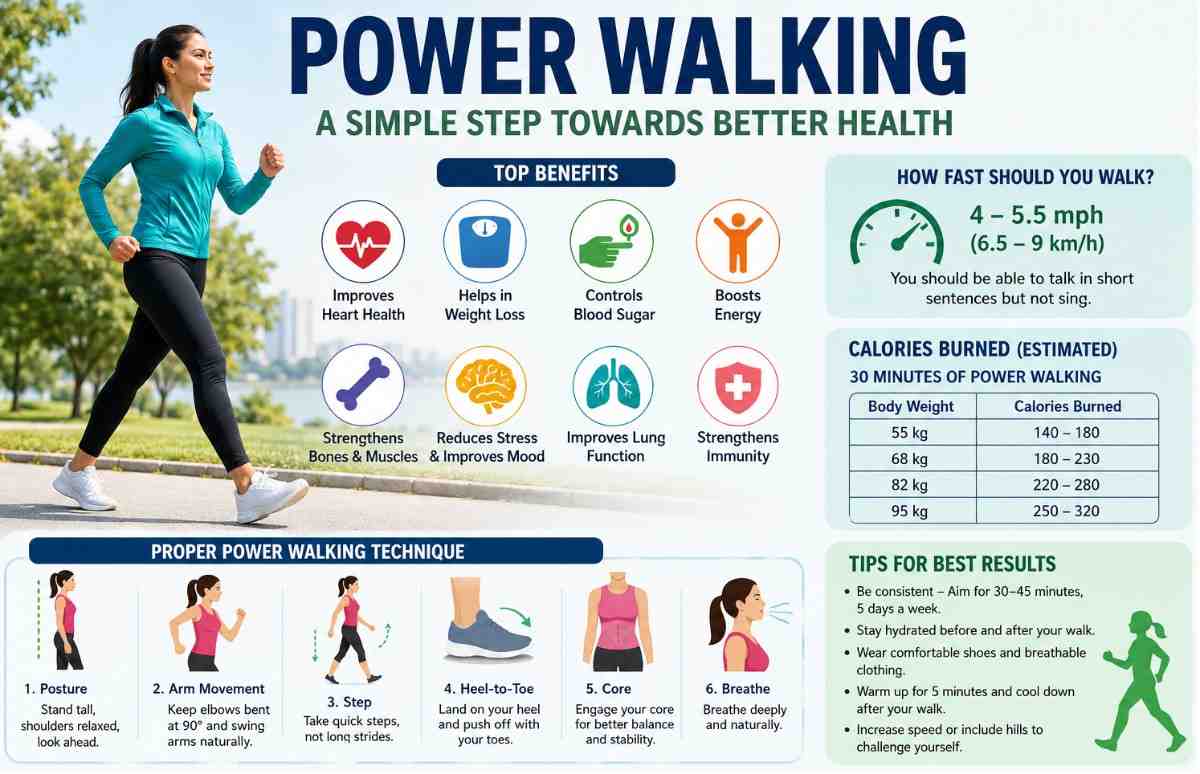
Power walking, also known as speed walking, is one of the simplest yet most effective forms of exercise that almost anyone can add to their daily routine. Unlike a leisurely stroll, power walking combines speed, proper posture, and purposeful movement to elevate your heart rate while remaining gentle on your joints. Whether your goal is weight management, improved cardiovascular health, better mental well-being, or increased endurance, power walking offers impressive health benefits without requiring expensive equipment or a gym membership.
Many people overlook walking because it seems too simple to make a difference. However, research consistently shows that brisk walking performed regularly can significantly improve heart health, support healthy weight loss, strengthen muscles, reduce stress, and lower the risk of several chronic diseases.
If you’re looking for an exercise that fits busy schedules, is suitable for beginners, and can be enjoyed outdoors or on a treadmill, power walking deserves a place in your fitness routine.
What is Power Walking?
Power walking is a fast-paced style of walking that involves walking at a brisk speed while maintaining proper posture, controlled arm movement, and longer purposeful strides without transitioning into running.
Unlike jogging, one foot remains in contact with the ground at all times, making power walking a low-impact aerobic exercise. Most power walkers maintain a pace between 4 and 5.5 miles per hour (6.5 to 9 km/h) depending on their fitness level.
The objective isn’t simply to walk faster—it’s to walk efficiently using the correct technique.
How is Power Walking Different from Regular Walking?
| Feature | Regular Walking | Power Walking |
|---|---|---|
| Speed | 2–3 mph | 4–5.5 mph |
| Intensity | Light | Moderate |
| Heart Rate | Slightly elevated | Significantly elevated |
| Arm Movement | Natural | Active pumping motion |
| Calorie Burn | Lower | Higher |
| Fitness Benefits | Basic mobility | Cardiovascular fitness, endurance, weight management |
Proper Power Walking Technique
Using the correct form helps maximize benefits while reducing the risk of discomfort or injury.
1. Maintain Good Posture
- Stand tall.
- Keep your shoulders relaxed.
- Look straight ahead.
- Tighten your core muscles gently.
- Avoid slouching.
2. Bend Your Arms
Keep elbows bent around 90 degrees.
Swing your arms naturally from shoulder to hip rather than across your body. Strong arm movement helps increase speed.
3. Take Quick Steps
Instead of taking long strides, increase your cadence by taking shorter, faster steps.
4. Heel-to-Toe Motion
Land on your heel first.
Roll smoothly through the middle of your foot before pushing off with your toes.
5. Engage Your Core
A slightly engaged core improves balance, posture, and walking efficiency.
6. Breathe Naturally
Use deep, rhythmic breathing rather than shallow breaths.
20 Proven Health Benefits of Power Walking
1. Improves Heart Health
Power walking strengthens the heart and improves circulation, reducing the risk of cardiovascular disease.
2. Helps Lower Blood Pressure
Regular brisk walking supports healthy blood pressure levels over time.
3. Supports Weight Loss
Because it burns more calories than regular walking, power walking can contribute to calorie deficits needed for weight loss.
4. Burns More Calories
A faster pace increases energy expenditure without the higher impact associated with running.
5. Builds Endurance
Walking consistently improves stamina for daily activities and other forms of exercise.
6. Improves Lung Function
Power walking challenges your respiratory system, helping improve oxygen delivery.
7. Strengthens Leg Muscles
It works the calves, quadriceps, hamstrings, glutes, and hip muscles.
8. Improves Bone Health
Weight-bearing activities help maintain bone density and reduce age-related bone loss.
9. Supports Joint Health
Unlike running, power walking places less stress on knees and hips while keeping joints mobile.
10. Helps Manage Blood Sugar
Regular brisk walking improves insulin sensitivity and helps regulate blood glucose levels.
11. Reduces Stress
Walking encourages the release of endorphins, which naturally improve mood.
12. Improves Mental Health
Many people experience reduced anxiety and better emotional well-being after regular walking sessions.
13. Enhances Sleep Quality
Daily exercise can promote deeper and more restful sleep.
14. Boosts Energy
Improved circulation allows oxygen and nutrients to reach muscles more efficiently.
15. Strengthens Core Stability
Maintaining proper posture naturally activates abdominal and lower back muscles.
16. Improves Balance
Power walking strengthens muscles responsible for stability and coordination.
17. Supports Healthy Aging
Regular walking helps maintain independence, mobility, and overall physical function.
18. Reduces Chronic Disease Risk
Routine physical activity lowers the risk of conditions such as heart disease, type 2 diabetes, and certain cancers.
19. Improves Immune Function
Moderate exercise may strengthen immune defenses when performed consistently.
20. Easy to Maintain Long-Term
Power walking requires minimal equipment, making it one of the most sustainable fitness habits.
Related Articles:
- Walking Before or After a Meal: Which is Better for Your Health?
- Feeling Unsteady While Walking? The Vitamins You May Need
- Lose Weight in a Week: The Best 7-Day Walking Plan
How to Get Started with Power Walking?
Starting a power walking routine is simple and doesn’t require expensive equipment. Follow these easy steps:
1. Wear Comfortable Walking Shoes
Choose supportive walking shoes with good cushioning and a proper fit to reduce the risk of discomfort or injury.
2. Warm Up
Walk at an easy pace for 5–10 minutes to prepare your muscles and joints.
3. Focus on Proper Form
Stand tall, keep your shoulders relaxed, engage your core, and swing your arms naturally while taking quick, controlled steps.
4. Start Slowly
Begin with 15–20 minutes of power walking, 3–5 days per week. Increase your pace and duration gradually as your fitness improves.
5. Walk at a Brisk Pace
Aim for a speed where you can talk but not sing comfortably. This indicates you’re walking at a moderate intensity.
6. Cool Down
Finish your walk with 5 minutes of slower walking, followed by gentle stretches for your calves, hamstrings, quadriceps, and hips.
7. Stay Consistent
Try to power walk for 30–45 minutes on most days of the week to enjoy long-term health and fitness benefits.
Calories Burned During Power Walking
Calories burned depend on body weight, walking speed, terrain, and duration.
| Body Weight | 30 Minutes | 60 Minutes |
| 55 kg | 140–180 calories | 280–360 calories |
| 68 kg | 180–230 calories | 360–460 calories |
| 82 kg | 220–280 calories | 440–560 calories |
| 95 kg | 250–320 calories | 500–640 calories |
Is Power Walking Good for Weight Loss?
Yes. Power walking can support sustainable weight loss when combined with a balanced diet and consistent exercise routine.
Benefits include:
- Burns calories efficiently
- Preserves muscle better than extreme dieting
- Improves metabolism
- Can be performed daily
- Easier to maintain than high-intensity workouts
Aim for 150–300 minutes per week for meaningful health and weight-management benefits.
How Fast Should You Power Walk?
Your ideal pace depends on fitness level.
| Fitness Level | Recommended Pace |
| Beginner | 4 mph (6.5 km/h) |
| Intermediate | 4.5 mph (7.2 km/h) |
| Advanced | 5–5.5 mph (8–9 km/h) |
A simple guideline is the “talk test.” You should be able to speak in short sentences but not comfortably sing while walking.
Beginner 4-Week Power Walking Plan
Week 1
- 20 minutes
- 5 days per week
- Comfortable brisk pace
Week 2
- 25–30 minutes
- Increase arm swing
- Focus on posture
Week 3
- 35 minutes
- Include hills if available
- Maintain steady pace
Week 4
- 40–45 minutes
- Add short intervals of faster walking
- Continue 5 days weekly
Best Time for Power Walking
Each time of day offers unique advantages.
Morning
Benefits:
- Boosts energy
- Improves consistency
- Starts metabolism early
Afternoon
Benefits:
- Muscles are naturally warmer
- Often allows faster walking speeds
Evening
Benefits:
- Helps relieve stress
- Can improve sleep if finished at least a couple of hours before bedtime
The best time is ultimately the one that fits your schedule and allows you to stay consistent.
What Should You Wear for Power Walking?
Shoes
Choose supportive walking shoes with:
- Good cushioning
- Flexible soles
- Proper arch support
Clothing
Wear breathable, moisture-wicking clothing that allows free movement.
Accessories
Useful items include:
- Water bottle
- Fitness tracker
- Sunscreen
- Hat or sunglasses for outdoor walks
Common Mistakes to Avoid
- Walking with poor posture
- Taking overly long strides
- Looking down constantly
- Wearing unsupportive footwear
- Skipping warm-up and cool-down
- Walking too fast too soon
- Ignoring hydration
Who Should Try Power Walking?
Power walking is suitable for:
- Beginners
- Older adults
- Office workers
- People returning to exercise
- Individuals seeking low-impact workouts
- Anyone looking to improve overall fitness
People with certain medical conditions, severe joint problems, or recent injuries should consult a healthcare professional before starting a new exercise routine.
Frequently Asked Questions
Is 30 minutes of power walking a day enough?
Yes. A 30-minute daily power walk improves heart health, burns calories, and supports overall fitness.
Is power walking better than walking?
Yes. Power walking burns more calories and provides greater cardiovascular benefits than regular walking.
Can I lose weight by power walking?
Yes. Power walking can support weight loss when combined with a healthy diet and regular exercise.
Is power walking better than regular walking?
Yes. Power walking is generally more intense than regular walking, helping you burn more calories, improve heart health, and build endurance.
How many calories does power walking burn?
Depending on your body weight and walking speed, power walking can burn approximately 280–600 calories per hour.
Is power walking better than running?
Power walking is lower impact and easier on the joints, making it a great alternative to running for beginners, older adults, or people recovering from injuries.
How long should I power walk each day?
Aim for 30–45 minutes on most days of the week. Beginners can start with 15–20 minutes and gradually increase their duration.
Can I power walk every day?
Yes. speed walking is a low-impact exercise that most healthy adults can safely do daily, provided they allow adequate recovery if needed.
Does power walking burn belly fat?
Power walking helps reduce overall body fat by burning calories. While you can’t target belly fat specifically, regular power walking combined with a healthy diet can help reduce abdominal fat over time.
What muscles does power walking work?
Power walking primarily works the calves, quadriceps, hamstrings, glutes, hip muscles, and core, while your arms and shoulders help maintain momentum.
Is power walking safe for seniors?
Yes. speed walking is an excellent low-impact exercise for older adults because it helps improve balance, cardiovascular health, muscle strength, and mobility while placing less stress on the joints.
Final Thoughts
Power walking proves that effective exercise doesn’t have to be complicated. With proper technique, consistency, and gradual progression, it can improve heart health, strengthen muscles, support weight management, reduce stress, and enhance overall well-being.
Whether you’re just beginning your fitness journey or looking for a sustainable alternative to high-impact workouts, power walking offers an accessible way to stay active. A comfortable pair of walking shoes, a safe route, and a commitment to regular movement are often all you need to experience its many benefits.
Sources / References:
- World Health Organization (WHO)
- Centers for Disease Control and Prevention (CDC)
- American Heart Association
- American College of Sports Medicine (ACSM)
- Harvard T.H. Chan School of Public Health – Nutrition Source
- National Institute on Aging
About the Author:
Written by: Kirti Solanki (Health Content Researcher)
Kirti Solanki is a health content researcher who specializes in creating evidence-based articles on nutrition, fitness, wellness, pregnancy, and healthy living. Her goal is to simplify medical research into practical, easy-to-understand information that helps readers make informed lifestyle choices. Every article is carefully researched using reputable medical organizations and peer-reviewed resources to ensure accuracy and reliability.
Disclaimer:
This guide is intended for educational and informational purposes only and should not be considered medical advice, diagnosis, or treatment. Always consult a qualified healthcare professional before beginning a new exercise program, especially if you have an underlying medical condition, recent injury, or concerns about your health. Individual results may vary.
Also Read: