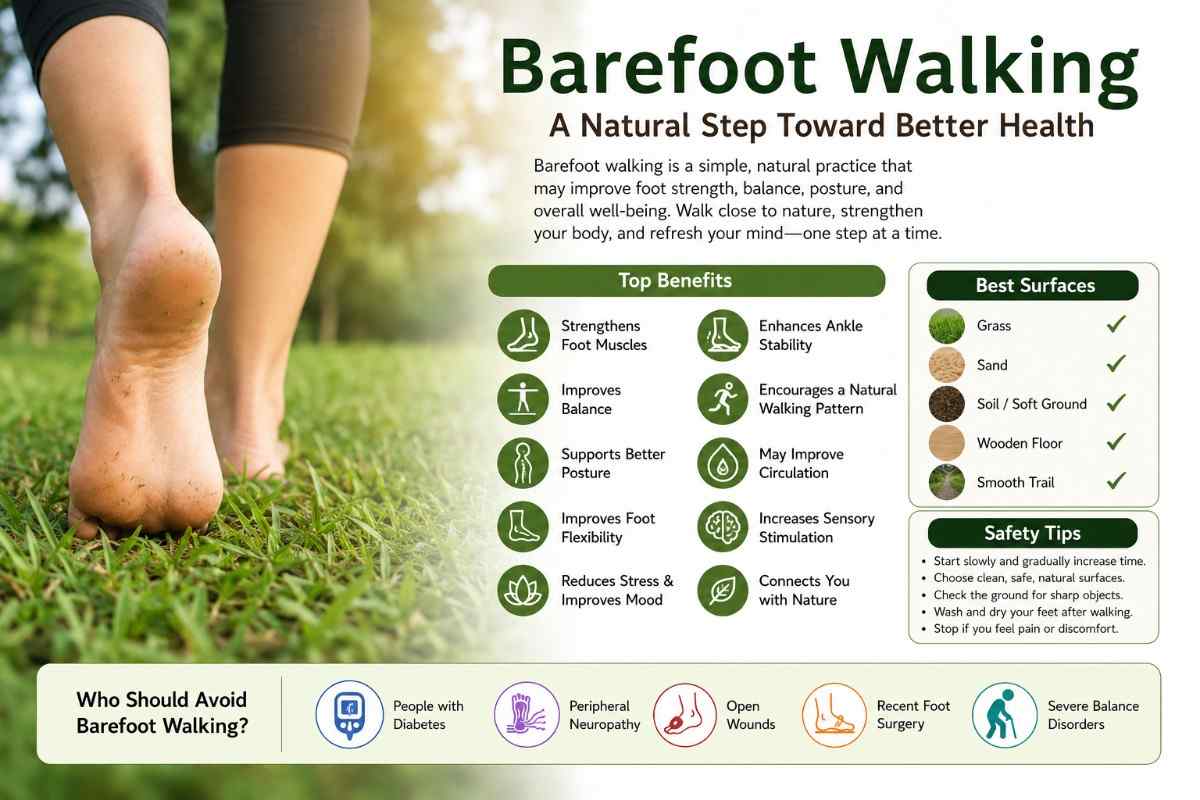
Walking is one of the simplest and most effective forms of exercise. While most people lace up a pair of shoes before heading outdoors, a growing number of health enthusiasts are rediscovering an age-old practice—barefoot walking. Also known as “grounding” or “earthing” when practiced on natural surfaces, barefoot walking involves walking without shoes on grass, sand, soil, or other natural terrains.
In this guide, you’ll learn what barefoot walking is, its potential health benefits, possible risks, who should avoid it, and how to safely incorporate it into your daily routine.
What Is Barefoot Walking?
Barefoot walking simply means walking without wearing shoes or footwear. Humans spent thousands of years walking barefoot before modern footwear became common. Today, however, supportive shoes have become the norm, which has changed how our feet function.
Walking barefoot allows the feet to move naturally. It activates muscles that are often underused when wearing cushioned shoes, helping improve foot mobility and sensory awareness.
Barefoot walking can be practiced on:
- Grass
- Sand
- Soft soil
- Smooth natural trails
- Indoor wooden floors
- Yoga mats
- Clean beaches
Walking barefoot on unsafe or contaminated surfaces should always be avoided.
20 Proven Health Benefits of Barefoot Walking
1. Strengthens Foot Muscles
Walking barefoot activates the small muscles in the feet that are less engaged while wearing supportive shoes. Stronger feet may improve overall foot function and stability.
2. Improves Balance
The soles of your feet contain thousands of sensory receptors. Walking barefoot enhances feedback to the brain, helping improve coordination and balance.
3. Supports Better Posture
Without thick shoe soles altering your gait, many people naturally adopt a more upright posture and balanced walking pattern.
4. May Reduce Foot Pain
Strengthening foot muscles over time may help reduce discomfort caused by weak or inactive feet. However, people with existing foot conditions should consult a healthcare professional before starting.
5. Improves Ankle Stability
Barefoot walking challenges the ankle muscles, improving stability and potentially lowering the risk of minor sprains.
6. Encourages a Natural Walking Pattern
Many cushioned shoes promote heel striking. Barefoot walking often encourages a gentler midfoot or forefoot landing, reducing impact forces.
7. Increases Foot Flexibility
Regular barefoot movement helps maintain flexibility in the toes, arches, and ankles.
8. Enhances Body Awareness
Barefoot walking improves proprioception—the body’s awareness of its position and movement—which may benefit athletes and older adults.
9. Builds Stronger Arches
Walking barefoot allows the arches to function naturally, helping strengthen supportive muscles over time.
10. May Improve Circulation
Walking itself promotes healthy blood circulation, and the increased muscle activity in barefoot walking may further stimulate blood flow in the feet.
11. Helps Relieve Stress
Walking outdoors on natural surfaces can be relaxing and may reduce mental stress through exposure to nature and gentle physical activity.
12. May Improve Mood
Physical activity releases endorphins, and spending time outdoors has been associated with better emotional well-being.
13. Increases Sensory Stimulation
Walking barefoot allows your feet to experience different textures, temperatures, and surfaces, stimulating the nervous system.
14. Promotes Better Foot Mobility
Barefoot walking encourages natural toe movement and improves joint mobility in the feet.
15. May Improve Running Mechanics
Some runners use gradual barefoot training to improve running form and strengthen their feet, though sudden transitions can increase injury risk.
16. Supports Healthy Aging
Better balance, coordination, and foot strength may help older adults maintain mobility and reduce fall risk when practiced safely.
17. Encourages Outdoor Activity
Barefoot walking on beaches or grassy parks can make daily exercise more enjoyable, increasing consistency.
18. May Help Prevent Overuse of Footwear
Constantly wearing highly supportive shoes may weaken foot muscles over time. Occasional barefoot walking may help maintain natural foot function.
19. Improves Toe Function
Walking barefoot allows the toes to spread naturally, improving grip and stability.
20. Promotes Mindful Walking
Without shoes, people often walk more slowly and deliberately, increasing mindfulness and awareness of their surroundings.
Related Articles:
- 15 Signs You’re Overtraining Your Body and What to Do About It
- What Persistent Leg Pain While Walking Indicates?
- What Calluses on Your Feet Say About Your Walking Pattern?
Does Barefoot Walking Really Improve Health?
Research suggests barefoot walking can strengthen foot muscles, improve balance, and enhance natural movement. However, many claims surrounding “grounding” or “earthing”—such as reducing inflammation or improving sleep through direct contact with the earth—require more high-quality scientific evidence before firm conclusions can be made.
The most consistently supported benefits relate to biomechanics, foot strength, and balance rather than systemic health effects.
How to Start Barefoot Walking Safely?
If you’re new to barefoot walking, begin gradually.
Week 1
Walk barefoot indoors for 10–15 minutes daily.
Week 2
Walk on soft grass for 10–20 minutes.
Week 3
Increase to 20–30 minutes if comfortable.
Week 4
Add sand, smooth trails, or clean parks while paying attention to how your feet feel.
Avoid rushing the process, as your muscles and tendons need time to adapt.
Best Surfaces for Barefoot Walking
| Surface | Good Choice? |
|---|---|
| Grass | Excellent |
| Beach Sand | Excellent |
| Soft Soil | Very Good |
| Wooden Floor | Good |
| Yoga Mat | Good |
| Smooth Natural Trail | Good |
| Concrete | Moderate |
| Asphalt | Not Ideal |
| Gravel | Poor for Beginners |
| Broken Pavement | Avoid |
Potential Risks of Barefoot Walking
Although barefoot walking offers benefits, it also comes with risks.
1. Cuts and Injuries
Sharp rocks, broken glass, and thorns can injure bare feet.
2. Infections
Walking barefoot in contaminated areas may expose you to bacteria, fungi, or parasites.
3. Foot Fatigue
New barefoot walkers may experience soreness while their feet adapt.
4. Plantar Fascia Strain
Overdoing barefoot walking too quickly can strain the plantar fascia.
5. Burns
Hot pavement and sand can cause burns during summer.
Who Should Avoid Barefoot Walking?
Barefoot walking may not be appropriate for everyone, including:
- People with diabetes and reduced foot sensation
- Individuals with severe peripheral neuropathy
- Those with open wounds
- People recovering from foot surgery
- Individuals with severe plantar fasciitis
- Anyone with serious balance disorders unless supervised
Consult a healthcare professional before beginning barefoot walking if you have a chronic foot or medical condition.
Tips for Safe Barefoot Walking
- Start slowly.
- Choose clean natural surfaces.
- Inspect the ground before walking.
- Wash and dry your feet afterward.
- Moisturize cracked skin.
- Stop if you experience persistent pain.
- Progress gradually.
Barefoot Walking vs Walking with Shoes
| Feature | Barefoot Walking | Walking with Shoes |
| Foot Muscle Activation | High | Moderate |
| Balance Training | Better | Moderate |
| Injury Protection | Low | High |
| Natural Movement | Excellent | Moderate |
| Cushioning | None | High |
| Suitable for Rough Terrain | No | Yes |
| Risk of Cuts | Higher | Lower |
Common Myths About Barefoot Walking
Myth 1: Barefoot Walking Cures Every Disease
There is no scientific evidence that barefoot walking cures diseases.
Myth 2: Shoes Are Always Bad
Quality footwear protects the feet and remains important for sports, work, and hazardous environments.
Myth 3: Everyone Should Walk Barefoot
Not everyone is a suitable candidate. People with certain medical conditions should avoid barefoot walking.
Myth 4: More Is Always Better
Sudden long-distance barefoot walking can increase injury risk. Gradual progression is essential.
How Long Should You Walk Barefoot?
Beginners should aim for:
- Week 1: 10–15 minutes
- Week 2: 15–20 minutes
- Week 3: 20–30 minutes
- Advanced: 30–60 minutes if comfortable
Consistency matters more than duration.
Barefoot Walking for Different Age Groups
Children
Children naturally develop strong feet through barefoot play on safe surfaces.
Adults
Adults can benefit from improved foot strength and balance by introducing barefoot walking gradually.
Older Adults
Older adults may experience balance improvements but should use caution and avoid uneven terrain if they have mobility issues.
FAQs
Is barefoot walking good for your health?
Yes, barefoot walking may help strengthen foot muscles, improve balance, increase foot mobility, and encourage a more natural walking pattern when practiced safely on clean, suitable surfaces.
Is it okay to walk barefoot every day?
For most healthy people, walking barefoot daily can be beneficial if you start gradually and avoid rough, dirty, or hazardous surfaces.
Does barefoot walking strengthen your feet?
Yes. Walking barefoot activates small muscles in the feet and ankles that are often less active when wearing supportive shoes.
Can barefoot walking improve posture?
It may. Walking barefoot encourages a more natural gait, which can support better posture and body alignment over time.
Is barefoot walking good for plantar fasciitis?
It depends. Some people may benefit from gradual foot strengthening, while others may experience increased pain. Consult a healthcare professional before trying it.
Is walking barefoot safe for people with diabetes?
Generally, no. People with diabetes are often advised to avoid walking barefoot because reduced foot sensation can increase the risk of injuries and infections.
What is the best surface for barefoot walking?
Soft, clean surfaces such as grass, sand, smooth soil, or indoor wooden floors are the best options, especially for beginners.
Can barefoot walking improve balance?
Yes. Barefoot walking enhances sensory feedback from the feet, which can improve balance, coordination, and body awareness.
How long should I walk barefoot each day?
Beginners can start with 10–15 minutes a day and gradually increase the duration as their feet become stronger and more comfortable.
Is walking barefoot on concrete safe?
Occasional barefoot walking on smooth concrete may be acceptable for experienced walkers, but beginners should start on softer surfaces to reduce stress on the feet.
Can children walk barefoot?
Yes. Walking barefoot on safe, clean surfaces can support healthy foot development and strengthen foot muscles in children.
Does barefoot walking burn more calories?
Barefoot walking does not significantly increase calorie burn compared to regular walking, but it may activate more muscles in the feet and lower legs.
Can barefoot walking help flat feet?
Some studies suggest it may strengthen the muscles that support the arches, but results vary. People with flat feet should seek professional advice before making major changes to their footwear.
Is walking barefoot in the house good for you?
Yes. Walking barefoot indoors on clean, safe floors may strengthen foot muscles and improve balance. People with diabetes or foot problems should consult a healthcare professional first.
Is walking barefoot good for Achilles tendonitis?
It depends. It may help strengthen the feet but can also strain the Achilles tendon. Consult your healthcare provider before trying it.
What is the correct way to walk barefoot?
Walk on clean, soft surfaces, take short steps, land gently, maintain good posture, and increase your walking time gradually.
Why do Koreans walk barefoot?
Many Koreans walk barefoot indoors because shoes are removed before entering homes, promoting cleanliness, comfort, and traditional living practices.
Final Thoughts
Barefoot walking reconnects us with one of the most natural forms of movement. While it isn’t a cure-all, it can strengthen foot muscles, improve balance, encourage better posture, and make walking more mindful when practiced safely.
The key is moderation. Start slowly, choose clean natural surfaces, and listen to your body. Pair barefoot walking with regular physical activity, healthy footwear when needed, and proper foot care for the best long-term results.
Sources / References:
- American Podiatric Medical Association
- Harvard Health Publishing
- Mayo Clinic
- National Institutes of Health (PubMed)
- Centers for Disease Control and Prevention (CDC)
- World Health Organization (WHO)
About the Author:
Written by: Kirti Solanki (Health Content Researcher)
Kirti Solanki is a health content researcher who creates evidence-based, reader-friendly wellness articles focused on nutrition, fitness, pregnancy, parenting, and preventive health. Every article is researched using trusted medical resources and current scientific literature to provide accurate, practical, and easy-to-understand information for readers.
Disclaimer:
This guide is intended for educational and informational purposes only and should not be considered medical advice, diagnosis, or treatment. Always consult a qualified healthcare professional before starting a new exercise routine, especially if you have diabetes, foot disorders, chronic health conditions, or concerns about your mobility. Never ignore professional medical advice because of information you have read online.
Also Read: