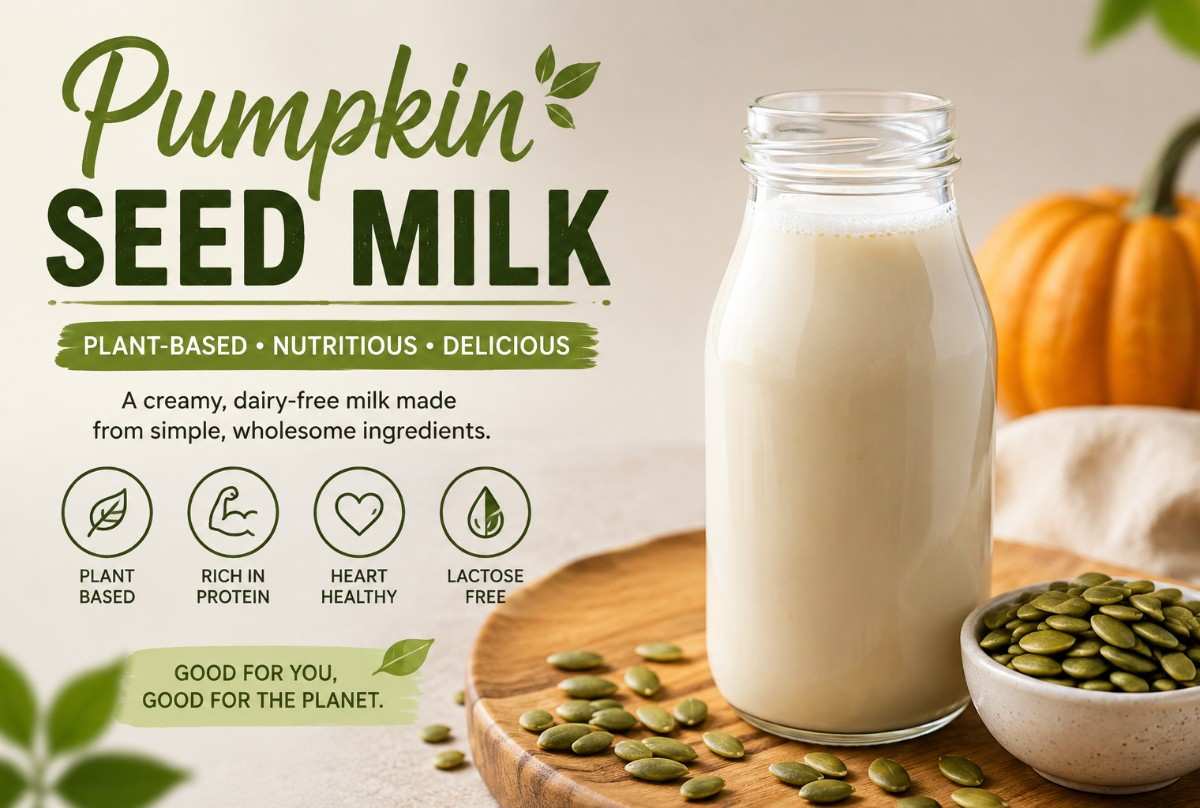
Pumpkin seed milk is a creamy, plant-based drink made by blending pumpkin seeds with water and then straining the mixture if a smoother texture is preferred. It has a mild, nutty flavor and can be used much like other plant milks in smoothies, oatmeal, coffee, cereal, soups, and baking.
What makes pumpkin seed milk interesting is the nutrition of its main ingredient. Pumpkin seeds provide protein, unsaturated fats, magnesium, zinc, phosphorus, iron, potassium, and other nutrients. A recent review of pumpkin seeds highlights their protein, healthy fats, minerals, phytochemicals, and antioxidant compounds. However, the exact nutrition of pumpkin seed milk depends heavily on how many seeds are used, how much water is added, whether the pulp is strained out, and whether the product is fortified. (PubMed Central (PMC))
Unlike dairy milk, homemade pumpkin seed milk is not naturally a significant source of calcium or vitamin D unless it is fortified or those nutrients are added separately. This is important if you are using it as a regular milk replacement.
What Is Pumpkin Seed Milk?
Pumpkin seed milk is a non-dairy beverage prepared by soaking pumpkin seeds and blending them with water. The blended mixture can be strained through a nut-milk bag or fine sieve to create a smoother drink.
You can make it with raw, unsalted pumpkin seed kernels or pepitas. Some people lightly toast the seeds first, which gives the milk a deeper, roasted flavor.
Pumpkin seeds themselves are nutrient-dense. USDA-linked nutrition data lists approximately 559 calories, 30.2 grams of protein, 49.1 grams of fat, 592 mg of magnesium, 7.8 mg of zinc, 8.8 mg of iron, and 809 mg of potassium per 100 grams of dried pumpkin seed kernels. These numbers describe the seeds, not a finished glass of pumpkin seed milk, because homemade milk is diluted and some nutrients remain in the discarded pulp.
Nutrition Facts of Pumpkin Seed Milk
Because homemade pumpkin seed milk does not have a standardized recipe, the following is an approximate nutrition profile for 1 cup (240 ml) of homemade milk made from about ¼ cup pumpkin seed kernels and water, before optional sweeteners or fortification. Actual values can vary considerably.
| Nutrient | Approximate Amount per 1 Cup |
|---|---|
| Calories | 130–150 kcal |
| Protein | 7–8 g |
| Total Fat | 12–13 g |
| Saturated Fat | 2–3 g |
| Carbohydrates | 3–4 g |
| Dietary Fiber | 1–2 g* |
| Magnesium | 140–160 mg* |
| Phosphorus | 280–320 mg* |
| Potassium | 190–220 mg* |
| Iron | 2–2.5 mg* |
| Zinc | 1.8–2.2 mg* |
| Calcium | 10–20 mg* |
| Cholesterol | 0 mg |
| Added Sugar | 0 g if unsweetened |
*Estimated from the ingredients; actual amounts depend on soaking, blending, straining, and how much pulp is retained.
20 Proven Health Benefits of Pumpkin Seed Milk
1. Provides Plant-Based Protein: Pumpkin seed milk can contribute plant protein to the diet, which helps support muscle maintenance, enzymes, hormones, and other normal body functions.
2. Supports Magnesium Intake: Pumpkin seeds are exceptionally rich in magnesium, a mineral involved in muscle and nerve function, energy production, blood glucose regulation, blood pressure regulation, and bone health.
3. Supplies Zinc: Pumpkin seeds provide zinc, an essential mineral involved in immune function, protein synthesis, DNA production, and wound healing.
4. Provides Healthy Unsaturated Fats: Pumpkin seeds contain predominantly unsaturated fats, which can be part of a heart-conscious eating pattern when they replace foods high in saturated fats.
5. Supports Heart-Healthy Eating: Choosing unsaturated-fat-rich foods such as seeds instead of foods high in saturated fat can support healthier cholesterol patterns as part of an overall balanced diet.
6. Helps Support Normal Muscle Function: Magnesium contributes to normal muscle contraction and nerve function, making magnesium-rich foods useful components of a balanced diet.
7. Supports Bone Health: Magnesium and phosphorus found in pumpkin seeds contribute to normal bone structure and mineral metabolism.
8. Contributes to Energy Metabolism: Magnesium participates in numerous biochemical reactions involved in energy production, while pumpkin seed protein and fats provide energy and nutrients.
9. Supports Normal Nerve Function: Magnesium is important for nerve impulse transmission and normal nervous-system function.
10. Provides Antioxidant Compounds: Pumpkin seeds contain antioxidant-related compounds, including vitamin E and other phytochemicals, although the concentration in homemade milk depends on processing and straining.
11. May Help Support Immune Function: Zinc is essential for normal immune-system function, so a pumpkin seed beverage can contribute to overall zinc intake.
12. Provides Iron: Pumpkin seeds contain iron, a mineral needed for hemoglobin formation and oxygen transport; however, pumpkin seed milk should not automatically be considered a treatment for iron deficiency.
13. Can Be Naturally Dairy-Free: Homemade pumpkin seed milk contains no dairy ingredients, making it a useful option for people who choose dairy-free beverages.
14. Can Be Vegan-Friendly: When made with pumpkin seeds, water, and plant-based optional ingredients, pumpkin seed milk can fit easily into a vegan diet.
15. Contains No Dietary Cholesterol: As a plant-based beverage, unsweetened pumpkin seed milk does not naturally contain dietary cholesterol.
16. Can Replace Less Nutritious Beverages: Unsweetened pumpkin seed milk can be a useful alternative to sugary drinks when it replaces beverages high in added sugar.
17. May Support a Nutrient-Dense Diet: Pumpkin seeds supply protein, minerals, healthy fats, and bioactive compounds, making them a nutrient-dense ingredient.
18. Can Contribute to Satiety: Its combination of protein and fat may make pumpkin seed milk more satisfying than a low-nutrient, sugar-sweetened beverage, although individual responses vary.
19. May Support Overall Metabolic Health: Magnesium contributes to normal blood glucose regulation and energy metabolism, while replacing saturated fats with unsaturated fats can support cardiometabolic health.
20. Offers a Versatile Way to Eat Seeds: Turning pumpkin seeds into milk can make it easier to incorporate their nutrients into smoothies, breakfasts, sauces, and other everyday foods.
10 Side Effects of Pumpkin Seed Milk
Pumpkin seed milk is generally well tolerated by many people, but it is not suitable for everyone and large amounts can cause digestive discomfort.
1. Digestive Discomfort: Drinking a large quantity may cause bloating, gas, abdominal discomfort, or loose stools, particularly in people who are not accustomed to higher-fat or higher-fiber foods.
2. Pumpkin Seed Allergy: People with a pumpkin seed allergy can develop allergic symptoms after consuming pumpkin seed milk, ranging from mild reactions to potentially serious reactions.
3. Extra Calories: Homemade milk made with a large amount of seeds can be calorie-dense, particularly when sweeteners are added.
4. Possible Nausea: A rich, concentrated preparation may cause nausea or stomach discomfort in sensitive individuals.
5. Diarrhea From Excessive Intake: Consuming large quantities may overwhelm the digestive system and cause loose stools in some people.
6. Added Sugar Concerns: Commercial or homemade versions containing sugar, syrups, dates, or flavored ingredients can significantly increase sugar and calorie intake.
7. Mineral Excess From Very Large Amounts: Regularly consuming unusually large quantities of pumpkin seeds or concentrated seed beverages can substantially increase mineral intake, so moderation is sensible.
8. Medication Absorption Issues: The mineral content of pumpkin seeds, particularly magnesium, can matter when very high intakes or supplements are involved because magnesium can interfere with absorption of certain medications.
9. Spoilage Risk: Homemade pumpkin seed milk is perishable and can become unsafe if it is left unrefrigerated or stored improperly.
10. Nutritional Imbalance as a Milk Replacement: Relying exclusively on homemade pumpkin seed milk instead of a nutritionally complete milk or fortified alternative could leave gaps in nutrients such as calcium, vitamin D, or vitamin B12.
How to Make Pumpkin Seed Milk?
Ingredients:
- 1 cup raw, unsalted pumpkin seed kernels
- 3–4 cups filtered water
- 1 teaspoon vanilla extract, optional
- 1–2 dates or a small amount of maple syrup, optional
- A small pinch of salt, optional
Method:
- Soak the Seeds: Place pumpkin seeds in plenty of water and soak them for approximately 4–8 hours or overnight.
- Drain and Rinse: Drain the soaking water and rinse the seeds thoroughly.
- Blend: Add the soaked seeds and 3–4 cups fresh water to a high-speed blender.
- Blend Until Smooth: Blend for approximately 45–60 seconds until the mixture becomes creamy.
- Strain if Desired: Pour the mixture through a nut-milk bag, cheesecloth, or fine-mesh strainer if you prefer a smoother beverage.
- Flavor: Add vanilla, cinnamon, dates, or another preferred ingredient if desired.
- Chill: Refrigerate immediately in a clean, covered container.
For a thicker milk, use less water. For a lighter drink, increase the water.
Do You Have to Soak Pumpkin Seeds?
No. Soaking is not absolutely necessary, but it can soften the seeds and make blending easier. If you have a powerful blender, you can make pumpkin seed milk without soaking, although the texture may vary.
How to Drink Pumpkin Seed Milk?
Pumpkin seed milk can be enjoyed cold, gently warmed, or blended into other foods.
Try drinking it:
- Plain and chilled.
- With cinnamon and vanilla.
- In smoothies.
- With oatmeal or overnight oats.
- With cereal or granola.
- In coffee or tea.
- Blended with banana and berries.
- With cocoa powder for a chocolate-flavored drink.
- Alongside breakfast.
- As a base for protein smoothies.
If you are trying it for the first time, start with a small serving rather than drinking a large glass immediately.
Tips for Consuming Pumpkin Seed Milk
- Choose Unsalted Seeds: Use plain, unsalted pumpkin seed kernels to keep sodium under control.
- Avoid Excess Sweeteners: Unsweetened pumpkin seed milk is the simplest everyday option, particularly if you are monitoring added sugar.
- Use Fresh Seeds: Rancid pumpkin seeds can give the milk an unpleasant taste and odor.
- Adjust the Thickness: Use more water for a lighter milk and less water for a creamier consistency.
- Shake Before Drinking: Homemade pumpkin seed milk naturally separates during storage, so shake or stir it before serving.
- Use a Clean Blender: Wash and dry your blender and utensils thoroughly before preparation.
- Keep It Refrigerated: Homemade seed milk should be chilled promptly and kept at 40°F (4°C) or below.
- Choose Fortified Commercial Milk When Appropriate: If pumpkin seed milk is being used as a primary milk substitute, a fortified product may provide nutrients such as calcium and vitamin D that homemade versions generally lack.
How to Use Pumpkin Seed Milk?
Pumpkin seed milk is surprisingly versatile.
In Breakfast Foods
Pour it over oatmeal, cereal, granola, or muesli. It also works well in overnight oats and chia pudding.
In Smoothies
Blend it with banana, berries, spinach, cocoa, nut butter, or protein powder.
In Coffee
Its nutty flavor can work particularly well in coffee, although homemade versions may separate more readily than commercial barista-style plant milks.
In Baking
Use it in pancakes, muffins, quick breads, waffles, and other recipes that call for milk.
In Cooking
It can be incorporated into creamy soups, sauces, curries, and mashed vegetables.
Other Uses of Pumpkin Seed Milk
- Smoothie Base: Use it instead of dairy milk or another plant milk.
- Oatmeal: Add it while cooking oats for a creamy texture.
- Chia Pudding: Combine it with chia seeds and refrigerate until thickened.
- Pancakes: Substitute it for regular milk in pancake batter.
- Muffins: Use it in muffins and quick breads.
- Creamy Soups: Add a small amount to vegetable soups for extra richness.
- Sauces: It can be blended into dairy-free sauces and dressings.
- Hot Chocolate: Combine it with unsweetened cocoa and cinnamon for a creamy plant-based drink.
How Much Pumpkin Seed Milk Can You Drink in a Day?
There is no established official daily serving recommendation specifically for pumpkin seed milk.
For most healthy adults, about 1 cup (240 ml) per day is a practical starting serving. Some people may comfortably consume more depending on the recipe and the rest of their diet.
The key point is that homemade pumpkin seed milk can vary greatly in concentration. A milk made with 1 cup of seeds and only 2 cups of water is nutritionally and calorically very different from one made with ¼ cup of seeds and 4 cups of water.
If you drink it regularly, consider it part of your overall diet rather than a supplement or treatment.
Best Time to Drink Pumpkin Seed Milk
There is no scientifically established “best” time to drink pumpkin seed milk.
Morning
It can be a convenient addition to breakfast, particularly with oats, cereal, fruit, or a smoothie.
Before or After Exercise
Its protein and energy content can complement a balanced snack or meal around exercise.
Evening
Some people enjoy magnesium-containing foods in the evening. However, pumpkin seed milk should not be promoted as a guaranteed sleep treatment. Magnesium is involved in normal nervous-system and muscle function, but drinking pumpkin seed milk does not guarantee better sleep.
With Meals
It can simply be consumed alongside lunch or dinner if you enjoy its flavor.
Who Should Drink Pumpkin Seed Milk?
- People Seeking a Dairy-Free Drink: Individuals who avoid dairy can use pumpkin seed milk as one option among several plant-based beverages.
- Vegans and Vegetarians: Unsweetened pumpkin seed milk can fit naturally into vegan and vegetarian eating patterns.
- People Looking for Plant Protein: Pumpkin seeds provide meaningful amounts of plant protein and can contribute to daily protein intake.
- People Seeking More Magnesium: Those wanting to include more magnesium-rich foods in their diets may enjoy pumpkin seed milk as one food-based option.
- People Who Enjoy Seed-Based Foods: Pumpkin seed milk is an easy way to incorporate pumpkin seeds into smoothies, breakfast dishes, and recipes.
- People Limiting Dietary Cholesterol: As a plant-based beverage, pumpkin seed milk naturally contains no dietary cholesterol.
- People Choosing Unsaturated Fats: Pumpkin seeds contain unsaturated fats that can fit into a heart-conscious dietary pattern.
Who Should Avoid Pumpkin Seed Milk?
- People With Pumpkin Seed Allergy: Anyone with a known pumpkin seed allergy should avoid pumpkin seed milk because it can trigger an allergic reaction.
- People With Significant Digestive Sensitivity: Those who develop bloating, diarrhea, or abdominal discomfort after consuming pumpkin seeds should limit or avoid the beverage.
- People Watching Calorie Intake: Very concentrated pumpkin seed milk can contain substantially more calories than a lightly prepared version.
- People Needing a Complete Milk Replacement: Individuals relying on milk for calcium, vitamin D, vitamin B12, or other nutrients should choose an appropriately fortified alternative rather than assuming homemade pumpkin seed milk provides the same nutrition.
- People Taking Certain Medications: Anyone taking medicines that can interact with magnesium or mineral-rich foods should ask a pharmacist or healthcare professional about appropriate timing and intake.
- People With Certain Kidney Conditions: Individuals with impaired kidney function may need individualized advice about mineral intake and should discuss concentrated seed beverages with their healthcare professional.
How to Store Pumpkin Seed Milk?
- Use a Clean Container: Transfer freshly made milk into a clean, airtight glass bottle or food-safe container.
- Refrigerate Promptly: Homemade pumpkin seed milk is perishable and should be refrigerated promptly rather than left at room temperature.
- Keep the Refrigerator Cold: Maintain the refrigerator at or below 40°F (4°C).
- Use It Quickly: Because homemade pumpkin seed milk contains water and has no commercial preservation system, making smaller batches and consuming them promptly is the safer approach.
- Do Not Leave It Out: Perishable foods should generally not remain at room temperature for more than two hours, or one hour when the temperature is above 90°F (32°C).
- Expect Separation: Natural separation is normal, so shake the container before drinking.
- Check for Spoilage: Discard the milk if it develops an unusual odor, flavor, texture, mold, or other signs of spoilage; remember that harmful bacteria may not always produce obvious changes in appearance or smell.
- Freeze With Care: If freezing, leave expansion space in the container and expect the texture to change after thawing.
For food safety, it is better to make small batches than to keep homemade pumpkin seed milk for an extended period. Official food-safety guidance emphasizes prompt refrigeration and keeping perishable foods at 40°F (4°C) or below.
Precautions and Interactions
Pumpkin seed milk is a food rather than a medication, but a few precautions are worth keeping in mind.
- Allergies: Do not consume pumpkin seed milk if you have a known allergy to pumpkin seeds or have previously experienced an allergic reaction to them.
- Medication Timing: Magnesium can interfere with the absorption of certain oral medicines, including some tetracycline and quinolone antibiotics and oral bisphosphonates. If you take these medicines, ask your healthcare professional or pharmacist whether you should separate them from magnesium-rich foods or supplements.
- Kidney Health: People with impaired kidney function may handle minerals differently and should seek individualized dietary advice before regularly consuming concentrated mineral-rich beverages.
- Added Sugar: Check labels carefully when buying commercial pumpkin seed milk because flavored versions may contain added sugars.
- Fortification: Homemade pumpkin seed milk is not nutritionally equivalent to fortified commercial plant milk. If you are replacing dairy milk regularly, look for products fortified with calcium and vitamin D or obtain these nutrients from other foods.
- Pregnancy and Breastfeeding: Pumpkin seeds are foods that can be included in a balanced diet for many people, but homemade seed milk should be prepared with careful food hygiene. Pregnant individuals should be particularly careful with perishable homemade foods and refrigeration because foodborne infections can have more serious consequences during pregnancy.
- Children: Pumpkin seed milk should not automatically be used as a nutritional substitute for breast milk, infant formula, or nutritionally appropriate milk for young children without guidance from a pediatrician or qualified dietitian.
FAQs
What is pumpkin seed milk good for?
Pumpkin seed milk can provide plant-based protein, magnesium, zinc, phosphorus, iron, and healthy unsaturated fats, depending on how it is prepared.
Does pumpkin seed milk have protein?
Yes. Pumpkin seeds are naturally rich in protein, although the protein content of the milk depends on how many seeds are used and whether the mixture is strained.
Can I drink pumpkin seed milk every day?
Most healthy adults can enjoy a moderate serving, such as about 1 cup daily, if they tolerate it well.
Is pumpkin seed milk good for weight loss?
It may help with fullness because it contains protein and fat, but pumpkin seed milk is not a weight-loss treatment and concentrated versions can be calorie-dense.
Does pumpkin seed milk help with sleep?
Pumpkin seeds contain magnesium, which supports normal nerve and muscle function, but pumpkin seed milk has not been proven to treat insomnia or guarantee better sleep.
Is pumpkin seed milk good for the skin?
Its nutrients, including zinc, protein, healthy fats, and antioxidant compounds, support normal skin health as part of an overall nutritious diet.
Is pumpkin seed milk good for hair?
Pumpkin seeds provide nutrients such as zinc, iron, protein, and magnesium that are important for normal body functions, including maintaining healthy hair. It is not a proven treatment for hair loss.
Does pumpkin seed milk contain calcium?
Homemade pumpkin seeds milk generally contains relatively little calcium compared with dairy milk or fortified plant milks. Some commercial versions are fortified with calcium.
Is pumpkin seed milk dairy-free?
Yes. Pumpkin seeds milk made from pumpkin seeds and water is naturally dairy-free.
Is pumpkin seed milk vegan?
Yes, when made with pumpkin seeds, water, and other plant-based ingredients, it is suitable for a vegan diet.
Does pumpkin seed milk have cholesterol?
No. Plant-based pumpkin seeds milk naturally contains no dietary cholesterol.
Is pumpkin seed milk good for the heart?
It can fit into a heart-healthy diet because pumpkin seeds contain predominantly unsaturated fats, particularly when they replace foods higher in saturated fat.
Can pumpkin seed milk increase iron levels?
Pumpkin seeds contain iron, so the milk may contribute to dietary iron intake. However, it should not be used to treat iron-deficiency anemia without medical guidance.
Can I drink pumpkin seed milk at night?
Yes. There is no specific requirement to drink it at a particular time, and some people enjoy it as an evening beverage.
What does pumpkin seed milk taste like?
It usually has a mild, creamy, nutty flavor. Toasted pumpkin seeds produce a stronger roasted taste.
Does pumpkin seed milk need to be refrigerated?
Yes. Homemade pumpkin seeds milk should be refrigerated promptly and kept at 40°F (4°C) or below.
How long does homemade pumpkin seed milk last?
Because homemade pumpkin seeds milk has no commercial preservatives, it is best made in small batches and consumed promptly while refrigerated. Discard it if it develops an unusual smell, taste, texture, or mold.
Can pumpkin seed milk replace cow’s milk?
It can replace cow’s milk in many recipes, but homemade pumpkin seed milk does not naturally provide the same amounts of calcium, vitamin D, vitamin B12, or other nutrients.
What does Pumpkin Seed Milk smell like?
It has a mild, nutty, earthy smell. A sour or rancid odor may indicate spoilage.
Is Pumpkin Seed Milk safe for pregnant women?
Generally, yes, when prepared hygienically and stored properly. Consult your healthcare provider if you have dietary concerns.
Is Pumpkin Seed Milk safe for children?
It can be suitable for older children, but it should not replace breast milk, infant formula, or appropriate milk without pediatric guidance.
Is pumpkin seed milk healthy?
Pumpkin seed milk can be a nutritious plant-based beverage because pumpkin seeds provide protein, magnesium, zinc, iron, phosphorus, potassium, and unsaturated fats. Its nutritional value depends on how concentrated the milk is and whether it is strained.
Why does pumpkin seed milk separate?
Separation is normal in homemade plant milk because the water and seed components naturally separate over time. Shake or stir it before drinking.
Can we eat pumpkin seeds with milk?
Yes, pumpkin seeds can generally be eaten with milk. You can add them to smoothies, oatmeal, cereal, or simply enjoy them alongside milk.
Which is better, chia seed milk or pumpkin seed milk?
Neither is universally better. Pumpkin seed milk generally provides more protein, magnesium, zinc, and healthy fats, while chia seed milk can provide more fiber and omega-3 ALA. Choose based on your nutritional needs.
Sources / References:
- USDA FoodData Central – Food Composition Database
- NIH Office of Dietary Supplements
- American Heart Association – Fats in Foods
- FDA – Are You Storing Food Safely?
- FoodSafety.gov – Cold Food Storage Chart
- PubMed
- U.S. Food and Drug Administration
Disclaimer:
This article is for general educational purposes only and does not replace personalized medical advice, diagnosis, or treatment. If you have an allergy, kidney condition, take medication, or have specific nutritional needs, consult a qualified healthcare professional before making major dietary changes.
Also Read: