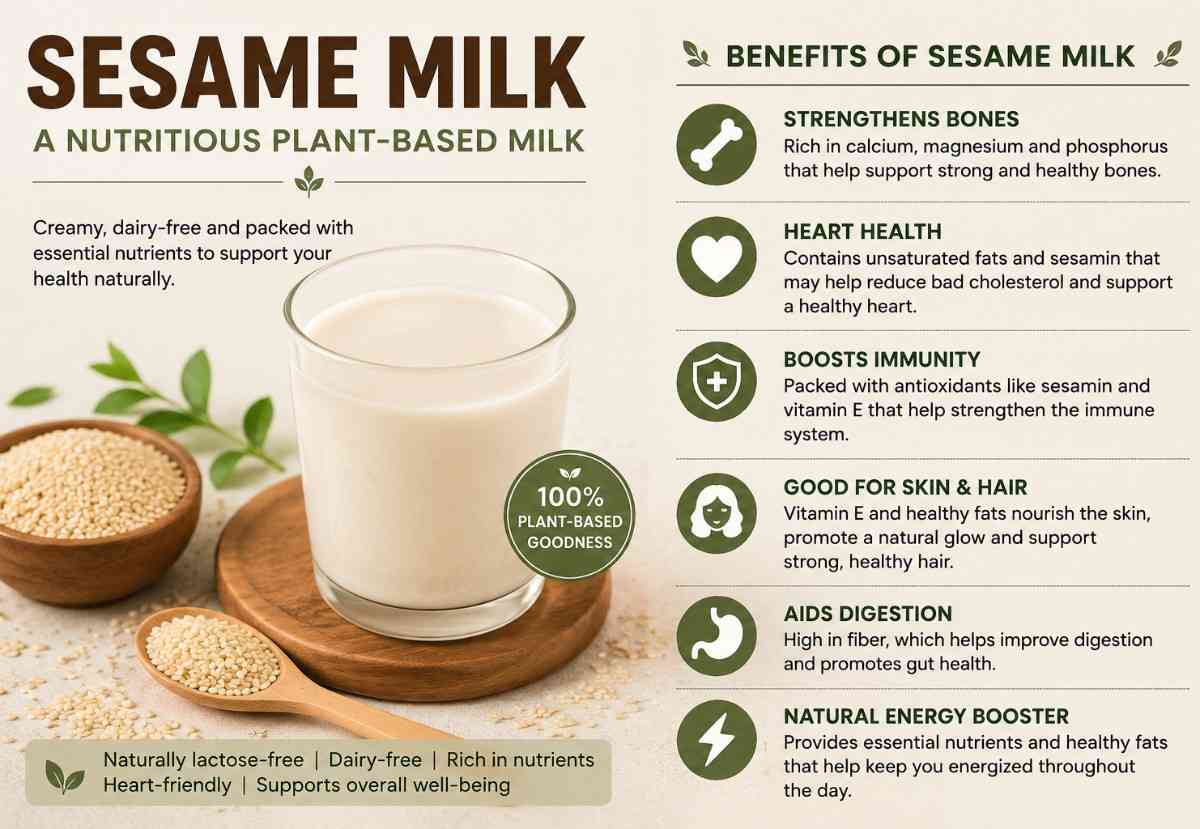
Sesame milk is a creamy, plant-based beverage made by blending sesame seeds with water and then straining or leaving the mixture unstrained, depending on the desired texture. It has a mild nutty flavor and can be enjoyed on its own, added to smoothies, or used in recipes.
Sesame seeds are naturally rich in protein, healthy fats, minerals, and plant compounds such as lignans. Research on sesame itself suggests potential benefits for cardiovascular and metabolic health, although it is important not to assume that drinking sesame milk will produce the same effects as the concentrated sesame products used in clinical studies.
Unlike dairy milk, homemade sesame milk is naturally lactose-free and contains no cholesterol. However, its nutritional value depends heavily on how many sesame seeds are used, whether the pulp is strained out, and whether the drink is fortified.
What Is Sesame Milk?
Sesame milk is a non-dairy milk alternative prepared primarily from sesame seeds and water. White sesame seeds are commonly used because they create a lighter-colored beverage, while black sesame seeds produce a darker drink with a stronger, more distinctive flavor.
A basic homemade version requires only soaked sesame seeds and water. Some people add dates, vanilla, cinnamon, cocoa, or a small amount of salt for flavor.
One important point is that homemade sesame milk should not automatically be considered nutritionally equivalent to commercial plant milks. Commercial products may be fortified with nutrients such as calcium and vitamin D, while homemade versions generally contain whatever nutrients are extracted from the seeds. Sesame seeds themselves are particularly notable for calcium, magnesium, iron, zinc, protein, unsaturated fats, and fiber.
Nutrition Facts of Sesame Milk
Here is approximate profile for 1 cup (240 ml) of homemade sesame milk prepared from about 30 g sesame seeds and water, before optional sweeteners. Actual values can vary considerably, especially when the milk is strained.
| Nutrient | Approximate Amount per 1 Cup |
|---|---|
| Calories | 70–100 kcal |
| Protein | 4–5 g |
| Total Fat | 15–16 g |
| Carbohydrates | 7 g |
| Dietary Fiber | Up to 3–4 g* |
| Calcium | Up to 290 mg* |
| Magnesium | Up to 105 mg* |
| Iron | Up to 4.4 mg* |
| Phosphorus | Up to 189 mg* |
| Potassium | Up to 140 mg* |
| Zinc | Up to 2.3 mg* |
| Cholesterol | 0 mg |
| Lactose | 0 g |
*These figures are theoretical estimates based on the nutrient content of the sesame seeds used; actual amounts in the finished liquid can be lower because some nutrients remain in the discarded pulp. For comparison, whole dried sesame seeds contain substantial amounts of calcium and magnesium, but soaking, blending, dilution, and straining change how much of these nutrients ultimately reaches the beverage.
20 Science-Backed Health Benefits of Sesame Milk
1. Provides Plant-Based Protein: Sesame milk can contribute plant protein to the diet, which supports muscle maintenance, tissue repair, and many normal body functions.
2. Supports Bone Health: Sesame seeds provide calcium and magnesium, two minerals involved in maintaining healthy bones, although the amount delivered by homemade milk varies with preparation.
3. Provides Healthy Unsaturated Fats: Sesame contains predominantly unsaturated fats, which can be part of a heart-friendly eating pattern when they replace some saturated fats.
4. Supplies Magnesium: Sesame is a good source of magnesium, a mineral involved in normal muscle, nerve, and energy metabolism.
5. Provides Iron: Sesame seeds contain iron, which the body needs to make hemoglobin and support oxygen transport.
6. Contains Zinc: Sesame provides zinc, an essential mineral involved in immune function, wound healing, and cellular processes.
7. Offers Antioxidant Plant Compounds: Sesame contains lignans and other bioactive compounds that have antioxidant properties and are being investigated for their potential health effects.
8. May Support Heart Health: Research involving sesame products suggests possible improvements in some cardiovascular risk markers, although results are not uniform and more research is needed.
9. May Help Support Healthy Cholesterol Levels: Human studies of sesame have reported reductions in some lipid measures, but the evidence is mixed and cannot be directly applied to every serving of sesame milk.
10. May Support Healthy Blood Pressure: Certain sesame compounds have been investigated for their possible effects on blood pressure, but sesame milk should not be considered a treatment for hypertension.
11. May Support Blood Sugar Management: A recent systematic review found that sesame supplementation was associated with improvements in some markers of glycemic control, although these studies used specific sesame interventions rather than ordinary homemade sesame milk.
12. Provides Energy: The fats and protein in sesame can make sesame milk more filling and energy-dense than many very-low-calorie beverages.
13. Can Contribute to a Dairy-Free Diet: Sesame milk can provide another option for people who avoid dairy, provided their overall diet supplies adequate protein, calcium, vitamin D, and other nutrients.
14. Naturally Contains No Lactose: Homemade sesame milk contains no lactose because it is made from seeds rather than cow’s milk.
15. Contains Fiber When Unstrained: If you keep the blended sesame pulp in the beverage, the drink can retain more of the seed’s dietary fiber than a heavily strained version.
16. Supports Normal Muscle Function: Calcium and magnesium participate in normal muscle contraction and nerve signaling, making mineral-rich foods valuable components of a balanced diet.
17. Supports Normal Nerve Function: Minerals such as calcium and magnesium contribute to normal nerve transmission and other neurological processes.
18. May Help Increase Dietary Variety: Adding sesame milk to the diet can introduce different plant nutrients and flavors without relying exclusively on dairy or one type of plant milk.
19. Can Be a Useful Smoothie Ingredient: Its creamy consistency can add protein, fats, and minerals to smoothies, especially when combined with fruit, oats, or other nutrient-dense ingredients.
20. Can Complement a Balanced Eating Pattern: Sesame milk can be a nutritious addition to a varied diet when consumed in reasonable portions and when important nutrients missing from homemade versions are obtained elsewhere.
10 Side Effects of Sesame Milk
1. Sesame Allergy: Sesame can cause serious allergic reactions in sensitive individuals and is recognized as a major food allergen in the United States.
2. Digestive Discomfort: Drinking a large amount of sesame milk may cause bloating, gas, or stomach discomfort in some people, particularly when the beverage contains a substantial amount of blended seed.
3. High Calorie Intake: Because sesame seeds are energy-dense, large servings can add significant calories to the diet.
4. High Fat Content: Sesame milk made with a large quantity of seeds can contain considerable fat, even though much of it is unsaturated.
5. Loose Stools: The combination of fat and fiber may cause loose stools in some people when consumed in large quantities.
6. Nausea: A rich, concentrated sesame beverage may cause nausea in people who are sensitive to high-fat foods.
7. Blood Sugar Concerns From Added Sweeteners: Sweetening sesame milk heavily with sugar, syrups, or dates can substantially increase its carbohydrate and calorie content.
8. Mineral Absorption Can Vary: Sesame contains compounds such as phytates that can bind some minerals and influence their absorption, so sesame milk should be part of a varied diet rather than the sole source of minerals.
9. Possible Cross-Contact: Packaged sesame products may be manufactured alongside other allergens, so people with severe food allergies should carefully check labels.
10. Food Safety Problems From Poor Storage: Homemade sesame milk can spoil relatively quickly if it is left at room temperature or stored improperly.
How to Make Sesame Milk?
Ingredients:
- 1/4 cup raw sesame seeds
- 2 to 3 cups filtered water
- 1 date or a small amount of maple syrup, optional
- 1/2 teaspoon vanilla extract, optional
- Small pinch of salt, optional
Method:
- Soak the Sesame Seeds: Place the sesame seeds in a bowl and cover them with water, then soak for approximately 4–8 hours.
- Drain and Rinse: Drain the soaking water and rinse the seeds thoroughly.
- Blend: Add the soaked seeds and 2–3 cups of fresh water to a blender and blend until smooth.
- Add Flavor: Add vanilla, a date, cinnamon, or another optional flavoring if desired.
- Strain: Pour the mixture through a fine-mesh strainer, nut-milk bag, or clean cheesecloth if you prefer a smoother drink.
- Refrigerate: Transfer the finished sesame milk to a clean, covered container and refrigerate promptly.
For a creamier beverage, use less water. For a lighter drink, increase the amount of water.
How to Drink Sesame Milk?
Sesame milk can be enjoyed chilled, gently warmed, or incorporated into other foods.
You can drink it plain or combine it with cinnamon, vanilla, unsweetened cocoa, or a small amount of natural sweetener. It can also be blended with bananas, berries, oats, or other ingredients to make a filling smoothie.
If you are trying sesame milk for the first time, starting with a small serving is sensible, particularly if you have never consumed sesame regularly.
Tips for Consuming Sesame Milk
- Choose fresh, good-quality sesame seeds.
- Soak the seeds before blending for a smoother beverage.
- Use filtered water for better flavor.
- Avoid adding excessive sugar or syrup.
- Keep the pulp if you want more fiber and a thicker texture.
- Strain the milk if you prefer a lighter consistency.
- Refrigerate homemade sesame milk promptly.
- Shake the beverage before drinking because natural separation can occur.
- Start with a small serving if you are new to sesame.
- Choose fortified commercial sesame or other plant milk when you specifically need reliable amounts of calcium or vitamin D.
How to Use Sesame Milk?
Sesame milk is versatile and can be used in both sweet and savory foods.
It can be added to:
- Smoothies
- Overnight oats
- Chia pudding
- Breakfast cereals
- Coffee
- Tea
- Pancake batter
- Waffles
- Baked goods
- Soups
- Sauces
- Curries
- Porridge
Its nutty flavor works particularly well with cinnamon, dates, cocoa, bananas, oats, and warm spices.
Other Uses of Sesame Milk
Smoothies
Use sesame milk as the liquid base for fruit or vegetable smoothies.
Breakfast Foods
Pour it over cereal, granola, oatmeal, or muesli.
Desserts
Use it in puddings, chia desserts, or homemade frozen treats.
Baking
Replace some dairy or other plant milk with sesame milk in pancakes, muffins, and quick breads.
Savory Recipes
Its nutty flavor can work in creamy soups, sauces, and certain curry preparations.
Coffee and Tea
A small amount can add creaminess and a subtle roasted flavor to hot beverages.
How Much Sesame Milk Can You Drink in a Day?
There is no established official daily serving specifically for sesame milk.
For most healthy adults, about 1 cup (240 ml) per day can be a reasonable starting portion, provided it fits comfortably into the overall diet.
People who make highly concentrated sesame milk may want smaller servings because the beverage can become quite energy-dense.
The most important factor is the amount of sesame seeds used. A beverage made with 1 tablespoon of seeds is nutritionally very different from one made with 1/4 or 1/2 cup.
If you use sesame milk as a replacement for dairy milk, check whether it provides comparable amounts of protein, calcium, vitamin D, and other nutrients. Homemade sesame milk is not automatically nutritionally equivalent to fortified commercial milk alternatives.
Best Time to Drink Sesame Milk
There is no scientifically established “best time” to drink sesame milk.
Morning
Sesame milk can be added to breakfast smoothies, oatmeal, or cereal.
Afternoon
It can work as part of a snack, particularly when paired with fruit or whole grains.
Evening
A small serving can be included with an evening meal or snack if it fits your dietary needs.
Around Exercise
It can be incorporated into a smoothie after physical activity, especially when combined with other protein- and carbohydrate-containing foods.
The overall quality of your diet matters much more than the exact time you drink it.
Who Should Drink Sesame Milk?
- People Looking for Dairy-Free Options: Sesame milk can provide a plant-based alternative for people who want variety beyond conventional dairy products.
- People Following Plant-Based Diets: Unsweetened sesame milk can fit vegetarian and vegan eating patterns.
- People Seeking Plant-Based Nutrients: Sesame provides protein, unsaturated fats, calcium, magnesium, iron, zinc, and other nutrients.
- People Who Enjoy Nutty Flavors: Sesame milk is a good option for people who like the naturally earthy, slightly nutty taste of sesame.
- People Wanting More Dietary Variety: Adding different plant-based beverages can make a balanced diet more varied and enjoyable.
- People Avoiding Lactose: Homemade sesame milk contains no lactose because it is made from sesame seeds rather than dairy.
Who Should Avoid Sesame Milk?
- People With Sesame Allergy: Anyone with a known sesame allergy should avoid sesame milk because sesame can trigger potentially severe allergic reactions.
- People With Previous Severe Reactions to Sesame: People with a history of serious sesame reactions should not experiment with homemade sesame milk without appropriate medical guidance.
- People Unsure About an Existing Allergy: Anyone who develops hives, swelling, breathing difficulty, vomiting, or other concerning symptoms after consuming sesame should stop consuming it and seek appropriate medical attention.
- People Watching Calorie Intake: Highly concentrated sesame milk can be calorie-dense, so portion size matters.
- People Sensitive to High-Fat Foods: A concentrated preparation may cause digestive discomfort in people who do not tolerate high-fat foods well.
- People With Specific Dietary Restrictions: Anyone following a medically prescribed diet should check whether sesame milk fits their individual nutritional requirements.
How to Store Sesame Milk?
- Refrigerate Promptly: Store homemade sesame milk in the refrigerator rather than leaving it at room temperature.
- Use a Clean Container: Keep the milk in a clean, airtight glass bottle or food-safe container.
- Shake Before Drinking: Natural separation is normal, so shake the container gently before serving.
- Use It Quickly: Homemade sesame milk does not contain the preservatives found in some commercial products, so it is best consumed within a few days.
- Check for Spoilage: Discard the milk if it develops an unusual smell, flavor, appearance, or signs of spoilage.
- Do Not Leave It Out: Avoid keeping homemade sesame milk unrefrigerated for extended periods.
- Freeze With Caution: Freezing is possible, but it may change the texture and cause separation after thawing.
Precautions and Interactions
Sesame milk is a food rather than a medicine, but several precautions are worth remembering.
Sesame allergy is the most important concern. Sesame is recognized as one of the nine major food allergens in the United States, and sesame-containing packaged foods must be labeled accordingly under U.S. federal requirements effective January 1, 2023. (U.S. Food and Drug Administration)
If you have a known sesame allergy, avoid milk and products containing sesame. People with food allergies should also check packaged products for allergen information because ingredients and manufacturing practices can change.
Do not use sesame milk as a replacement for medically required nutrition without checking its nutrient profile. Homemade milk may contain much less calcium or vitamin D than fortified commercial plant milks, depending on preparation.
Be cautious with added sugars. Sweetened sesame milk can quickly become a high-calorie beverage.
Consider your total diet. Sesame milk can contribute useful nutrients, but it should complement a varied diet containing vegetables, fruits, legumes, whole grains, protein sources, and other nutrient-rich foods.
Medication concerns: There is not enough evidence to treat ordinary amounts of milk as having clinically important medication interactions. However, people taking multiple medications or following a medically restricted diet should discuss major dietary changes with their healthcare professional.
Is Sesame Milk Healthy?
Sesame milk can be a nutritious plant-based beverage, particularly when made with a reasonable amount of sesame seeds and little or no added sugar.
Its strongest nutritional features come from sesame seeds themselves, which contain protein, unsaturated fats, calcium, magnesium, iron, zinc, fiber, and bioactive compounds. Research on sesame products has also found promising effects on some cardiometabolic markers, although the evidence is not strong enough to describe sesame milk as a treatment for cholesterol, diabetes, high blood pressure, or other medical conditions. (PubMed Central (PMC))
One of the biggest advantages of making milk at home is that you can control the ingredients. You can leave out added sugar, adjust the concentration, and decide whether to strain the pulp.
However, if your primary goal is to obtain calcium and vitamin D from a milk alternative, compare nutrition labels carefully. Fortified plant beverages can provide more predictable amounts of these nutrients, while homemade milk can vary considerably.
Final Thoughts
Sesame milk is a simple, creamy alternative to conventional dairy milk that can add variety to a balanced diet. Its nutritional value comes primarily from sesame seeds, which are naturally rich in minerals, plant protein, unsaturated fats, fiber, and bioactive compounds.
It can be especially useful for people looking for dairy-free or plant-based beverage options. At the same time, it should not be viewed as a miracle drink or substitute for medical treatment.
For the best nutritional value, choose an unsweetened preparation, use an appropriate portion, store it safely, and make sure the rest of your diet provides nutrients that homemade milk may lack.
FAQ’s
Is sesame milk good for bones?
Sesame seeds contain calcium and magnesium, which are important for bone health. However, the actual calcium content of homemade milk depends on how it is prepared.
Is sesame milk good for weight loss?
Unsweetened milk can fit into a weight-management diet, but it is relatively calorie-dense when made with larger amounts of sesame seeds. Portion size matters.
Does sesame milk contain protein?
Yes. Sesame seeds provide plant-based protein, although the amount in milk varies depending on the quantity of seeds used and whether the milk is strained.
Is sesame milk dairy-free?
Yes. milk is made from sesame seeds and water, so it is naturally dairy-free and lactose-free.
Is sesame milk vegan?
Yes, homemade milk is vegan when made with sesame seeds, water, and plant-based optional ingredients.
Can I drink sesame milk every day?
Most healthy adults can include a moderate amount, such as about 1 cup daily, as part of a balanced diet. People with sesame allergies should avoid it.
Does sesame milk have calcium?
Yes, sesame seeds are naturally rich in calcium. However, homemade milk may provide less calcium than whole sesame seeds because of dilution and straining.
Is sesame milk better than cow’s milk?
Neither is universally better. Cow’s milk naturally provides protein, calcium, and other nutrients, while milk is dairy-free and plant-based. Nutritional values depend on the specific product or recipe.
Does sesame milk contain lactose?
No. milk does not naturally contain lactose because it is made from seeds rather than dairy.
Can sesame milk help lower cholesterol?
Sesame consumption has been studied for potential effects on cholesterol and other cardiovascular markers, but evidence is mixed. Milk should not be considered a treatment for high cholesterol.
Can sesame milk help with blood sugar?
Some research on sesame supplementation suggests possible benefits for certain blood-sugar markers, but this evidence cannot be directly applied to every homemade milk recipe.
Is sesame milk good for skin?
Sesame provides healthy fats, minerals, and antioxidant compounds that contribute to overall nutrition. However, drinking milk has not been proven to directly treat specific skin conditions.
Can I drink sesame milk at night?
Yes. There is no established medical reason that milk must be consumed at a particular time of day. An unsweetened serving can be included as part of an evening meal or snack.
How long does homemade sesame milk last?
Homemade milk should be refrigerated in a clean, covered container and used within a few days. Discard it if it develops an unusual smell, taste, appearance, or other signs of spoilage.
Can sesame milk cause allergies?
Yes. Sesame is a major food allergen and can cause reactions ranging from mild symptoms to potentially severe allergic reactions. People with sesame allergies should avoid it.
Can sesame milk cause gas or bloating?
It can. A concentrated serving containing substantial amounts of sesame may cause bloating, gas, or digestive discomfort in some people.
Can I make sesame milk without soaking the seeds?
Yes, but soaking can make the seeds easier to blend and may produce a smoother beverage. The seeds should still be thoroughly rinsed before preparation.
Is black sesame milk better than white sesame milk?
Both can be nutritious. Black sesame generally has a stronger flavor and darker color, while white sesame produces a milder and lighter-colored beverage.
Can sesame milk be used in coffee?
Yes. milk can be added to coffee, although its nutty flavor may be more noticeable than that of conventional dairy or neutral plant milks.
Can I use sesame milk in smoothies?
Yes. milk works well as a smoothie base and pairs nicely with bananas, berries, oats, dates, cinnamon, and cocoa.
Does sesame milk help with calcium intake?
It can contribute calcium, but homemade milk does not necessarily provide as much calcium as fortified commercial plant milk. Check the nutrition label when calcium intake is a priority.
Can children drink sesame milk?
Sesame milk can be included as a food or beverage for children when appropriate, but homemade milk should not automatically replace breast milk, infant formula, or nutritionally complete milk alternatives for infants and young children. Consult a pediatrician about appropriate milk choices.
Does sesame milk contain cholesterol?
No. milk made solely from plant ingredients contains no dietary cholesterol.
What does sesame milk taste like?
Milk usually has a mild, creamy, earthy, and slightly nutty flavor. The taste becomes stronger when more sesame seeds are used.
Can I sweeten sesame milk?
Yes. You can add dates, cinnamon, vanilla, or a small amount of maple syrup. For everyday use, keeping added sugar low is generally preferable.
Is sesame milk good for people who cannot drink regular milk?
It can be an option for people avoiding dairy or lactose, provided they do not have a sesame allergy and their overall diet supplies enough protein, calcium, vitamin D, and other essential nutrients.
Can sesame milk replace dairy milk completely?
It can replace dairy milk in some recipes and diets, but homemade milk is not nutritionally identical to dairy milk. If using it as a primary milk alternative, choose a nutritionally adequate or fortified product and maintain a balanced diet.
What does Sesame Milk smell like?
Sesame milk usually has a mild, earthy, nutty aroma similar to sesame seeds. A strong sour, rancid, or unpleasant smell may indicate that homemade sesame milk has spoiled.
Is Sesame Milk safe for pregnant women?
Generally, sesame milk can be included during pregnancy if it is made hygienically and the pregnant person does not have a sesame allergy. However, homemade sesame milk should not be relied upon as a replacement for nutritionally complete milk or fortified alternatives. Pregnant women with specific dietary or medical concerns should consult their healthcare provider.
What is Sesame Milk good for?
Sesame milk can provide plant-based protein, healthy unsaturated fats, magnesium, calcium, iron, zinc, and other nutrients. It can also be a useful dairy-free and lactose-free beverage when included as part of a balanced diet.
Sources / References:
- U.S. Food and Drug Administration
- FDA — Food Allergies and Major Food Allergens
- NIH Office of Dietary Supplements — Calcium Fact Sheet
- NIAMS — Calcium and Vitamin D for Bone Health
- Clinical Evidence of Sesame: Systematic Review and Meta-Analysis
- Review of Sesame Lignans and Their Potential Health Effects
- USDA-derived Sesame Seed Nutrition Data
About the Author:
Written by: Kirti Solanki, Health Content Researcher
Kirti Solanki creates reader-friendly health and nutrition content based on scientific literature and reputable health-information sources. Content is reviewed for clarity, evidence quality, and practical usefulness.
Disclaimer:
This article is for general educational purposes only and is not a substitute for professional medical advice, diagnosis, or treatment. If you have a food allergy, medical condition, or specific dietary requirement, consult a qualified healthcare professional before making significant dietary changes.
Also Read: