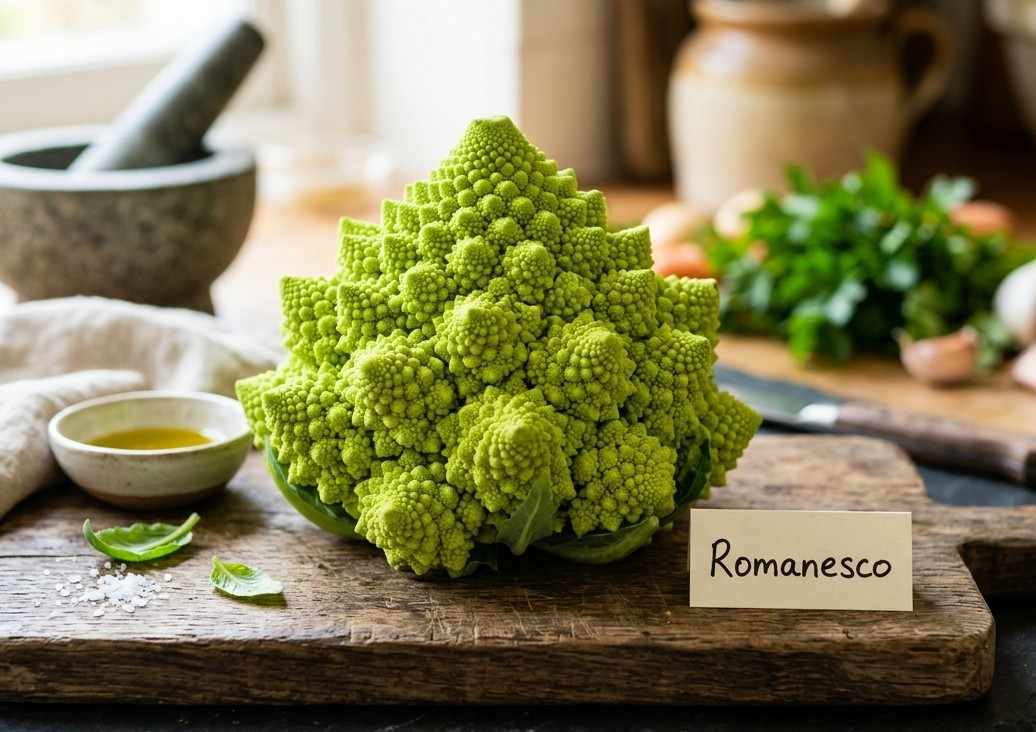
Romanesco is one of those vegetables that immediately catches your attention. Its bright green color and naturally occurring spiral, pointed florets make it look almost geometric, but its appeal is more than visual. Romanesco is a member of the Brassica oleracea family and is closely related to cauliflower and broccoli.
It has a mild, slightly nutty flavor and a firm texture. You can eat it raw, steam it, roast it, stir-fry it, add it to soups, or use it in salads and pasta dishes. Like other cruciferous vegetables, Romanesco also provides fiber, vitamin C, folate, vitamin K, potassium, and plant compounds called glucosinolates. Below is a practical guide to Romanesco, including its nutrition, potential health benefits, possible side effects, cooking methods, storage tips, and precautions.
What Is Romanesco?
Romanesco, also called Romanesco broccoli, Roman cauliflower, Romanesque cauliflower, or Roman broccoli, is a green cruciferous vegetable belonging to the Brassica oleracea species. It is particularly recognizable because its florets form repeated spiral or pyramid-like patterns.
Although it is often described as a cross between broccoli and cauliflower, Romanesco is better understood as a distinct cultivated form within the same species rather than simply a modern broccoli-cauliflower hybrid. It has been associated historically with Italy and was documented there as “Broccolo romanesco.”
Romanesco has a delicate flavor that is generally milder and less bitter than some other brassica vegetables. It can be enjoyed raw when tender or cooked using methods such as steaming, roasting, boiling, pan-frying, and baking.
Its nutritional profile can vary depending on variety, growing conditions, and preparation method, but it is generally a low-calorie vegetable containing fiber, protein, vitamin C, folate, vitamin K, potassium, and other micronutrients.
Nutrition Facts of Romanesco
| Nutrient | Approximate Amount per 100 g |
|---|---|
| Calories | 24–42 kcal |
| Protein | 2.9–4.1 g |
| Total Fat | 0.2–0.4 g |
| Carbohydrates | 2.2–4.3 g |
| Dietary Fiber | 2.4–3.3 g |
| Sugars | About 2–3 g |
| Calcium | About 30–35 mg |
| Iron | About 0.9 mg |
| Potassium | About 300–370 mg |
| Vitamin C | About 70–82 mg |
| Vitamin K | About 20 µg |
| Folate (Vitamin B9) | About 36–57 µg |
| Vitamin B6 | About 0.2 mg |
20 Proven Health Benefits of Romanesco
1. Supports Immune Function: Romanesco provides vitamin C, an essential nutrient involved in normal immune-system function and antioxidant protection.
2. Promotes Digestive Health: Its dietary fiber can help support regular bowel movements and contribute to normal digestive function.
3. Supports a Healthy Gut Microbiome: Fiber and other plant compounds can contribute to a diverse and healthy intestinal environment.
4. Helps Support Heart Health: Its fiber, potassium, vitamin C, and other plant compounds can form part of a heart-friendly eating pattern.
5. Supports Normal Blood Pressure: Potassium contributes to normal blood-pressure regulation, while Roman broccoli is naturally low in sodium.
6. Helps Maintain Bone Health: Vitamin K contributes to normal bone metabolism, while Roman broccoli also provides calcium and other micronutrients.
7. Supports Healthy Skin: Vitamin C is required for normal collagen formation, making Romanesco a useful food for a nutrient-rich diet that supports skin health.
8. Provides Antioxidant Compounds: Vitamin C and various phytochemicals help the body deal with oxidative stress.
9. Supports Healthy Cell Function: Folate is important for DNA synthesis, cell division, and normal cellular processes.
10. May Support Metabolic Health: Its relatively low calorie content and fiber make Romanesco a useful vegetable in balanced eating patterns focused on metabolic health.
11. May Support Healthy Cholesterol Levels: Dietary fiber can contribute to maintaining healthy blood lipid levels when included as part of an overall healthy diet.
12. Supports Weight-Management Goals: Romanesco is relatively low in calories while providing fiber and volume, which can make meals more filling.
13. Provides Glucosinolates: Like other cruciferous vegetables, Romanesco contains glucosinolates that can break down into biologically active compounds called isothiocyanates.
14. Provides Anti-Inflammatory Phytochemicals: Research on cruciferous vegetables suggests that glucosinolate-derived compounds may influence biological pathways involved in inflammation, although more human research is needed.
15. May Contribute to Long-Term Disease Prevention: Higher consumption of cruciferous vegetables has been associated with several favorable health outcomes, although associations do not prove that Romanesco itself prevents disease.
16. Supports Red Blood Cell Formation: Folate contributes to normal cell division and red blood cell formation.
17. Supports Normal Nerve and Muscle Function: Potassium is an essential electrolyte involved in normal nerve signaling and muscle function.
18. Helps Increase Vegetable Variety: Adding unusual vegetables such as Romanesco can make a balanced diet more diverse and enjoyable.
19. Can Support a Fiber-Rich Diet: Its fiber content can contribute toward daily fiber intake alongside fruits, vegetables, legumes, and whole grains.
20. Provides Nutrients With Few Calories: Roman broccoli offers several vitamins, minerals, fiber, and plant compounds without contributing large amounts of calories.
10 Side Effects of Romanesco
Romanesco is generally considered a nutritious food for most people, but eating large amounts or having individual sensitivities can cause problems.
1. Gas and Bloating: As a cruciferous vegetable, Romanesco may cause gas or bloating in some people, particularly when eaten in large portions.
2. Abdominal Discomfort: People with sensitive digestive systems may experience cramping or discomfort after eating a large serving.
3. Changes in Bowel Habits: A sudden increase in fiber can temporarily cause changes such as increased bowel movements or loose stools.
4. Constipation From Low Fluid Intake: Increasing fiber without drinking enough fluids may worsen constipation in some individuals.
5. Food Allergy: Although uncommon, a person with an allergy or hypersensitivity to Brassica vegetables may react to Romanesco.
6. Vitamin K Consideration: Roman broccoli contains vitamin K, so people taking warfarin should keep their intake consistent and discuss significant dietary changes with their healthcare professional.
7. Digestive Sensitivity: People following a medically prescribed diet for certain gastrointestinal conditions may need to adjust their intake according to individual tolerance.
8. Raw Vegetable Discomfort: Raw Romanesco can be harder to tolerate than cooked Roman broccoli for people who are sensitive to high-fiber vegetables.
9. Excessive Intake May Increase Digestive Symptoms: Eating very large quantities can increase gas and abdominal discomfort without providing additional meaningful nutritional advantages.
10. Individual Intolerance: Some people simply tolerate Roman broccoli poorly even though it is considered a healthy vegetable for most people.
How to Eat Romanesco?
Romanesco is versatile and can be eaten both raw and cooked.
For raw eating, wash the vegetable thoroughly and separate the florets into small pieces. Tender Roman broccoli can be added to salads, vegetable platters, grain bowls, and dips.
For cooked dishes, cut the head into evenly sized florets so they cook at a similar rate. You can steam, roast, boil, sauté, stir-fry, or bake Romanesco.
It pairs well with ingredients such as:
- Olive oil
- Garlic
- Lemon
- Black pepper
- Herbs
- Parmesan
- Chickpeas
- Pasta
- Rice
- Eggs
- Fish
- Chicken
Tips for Consuming Romanesco
- Choose Fresh Romanesco: Look for firm, compact heads with bright green florets and no major discoloration.
- Wash Before Eating: Rinse Roman broccoli thoroughly under running water before cutting or consuming it.
- Cut Into Similar-Sized Florets: Evenly sized pieces cook more consistently.
- Start With a Moderate Portion: If you rarely eat cruciferous vegetables, gradually increasing the amount may help reduce digestive discomfort.
- Avoid Overcooking: Shorter cooking methods can help preserve texture and some heat-sensitive nutrients.
- Try Steaming: Steaming provides a simple way to soften Romanesco while maintaining much of its flavor and structure.
- Use Healthy Seasonings: Lemon juice, herbs, garlic, and a small amount of olive oil can enhance its natural flavor without requiring heavy sauces.
- Combine With Protein: Pair Roman broccoli with beans, lentils, eggs, fish, chicken, tofu, or other protein sources for a more balanced meal.
How to Cook Romanesco?
1. Steaming
Separate Romanesco into florets and steam for approximately 5–8 minutes, or until tender but still slightly crisp.
2. Roasting
Toss florets with a small amount of olive oil, garlic, pepper, and herbs. Roast until the edges become lightly browned.
3. Stir-Frying
Cut the florets into smaller pieces and stir-fry them with other vegetables. A short cooking time helps preserve their pleasant texture.
4. Boiling
Place florets in boiling water until tender, then drain immediately. Avoid prolonged boiling because water-soluble nutrients can be lost during cooking.
5. Air-Frying
Lightly coat Roman broccoli florets with oil and seasonings before air-frying until the edges are crisp.
6. Baking
Romanesco can be combined with cheese, herbs, grains, or other vegetables and baked as a casserole or gratin.
Research on cruciferous vegetables indicates that cooking can change glucosinolate content and bioavailability, with prolonged or intense heating potentially reducing some beneficial compounds.
Other Uses of Romanesco
- Salads: Small raw florets can add crunch, color, and nutrients to green or grain-based salads.
- Soups: Roman broccoli can be blended into creamy vegetable soups or added to chunky soups.
- Pasta: Cooked florets work well with pasta, garlic, olive oil, herbs, and cheese.
- Rice Bowls: Roasted Roman broccoli can be added to rice bowls with beans, tofu, chicken, or other vegetables.
- Vegetable Gratin: Roman broccoli can be baked with a light cheese or herb-based sauce.
- Romanesco Mash: Soft cooked florets can be mashed as an alternative to traditional mashed vegetables.
- Romanesco Couscous: Finely chopped or grated Roman broccoli can be used as a vegetable-based alternative to couscous in some dishes.
- Stir-Fry: Small florets can be combined with mushrooms, peppers, carrots, and other vegetables.
- Pizza Topping: Roasted Roman broccoli can be used as a colorful vegetable topping for homemade pizza.
- Pasta Sauce: Cooked Roman broccoli can be blended with olive oil, garlic, herbs, and other ingredients to create a vegetable-based sauce.
How Much Romanesco Can You Eat in a Day?
For most healthy adults, about 1–2 cups of cooked or raw Romanesco as part of the day’s vegetable intake can be a reasonable practical portion, depending on individual calorie and dietary needs.
There is no established Romanesco-specific daily dosage. Your overall vegetable intake, digestive tolerance, age, health conditions, and medications are more important than following a fixed amount.
If you are not accustomed to high-fiber vegetables, start with a smaller portion and gradually increase it.
Best Time to Eat Romanesco
There is no medically established “best time” to eat Romanesco.
You can include it at breakfast, lunch, or dinner depending on your meal pattern. Many people may find it easiest to eat with lunch or dinner because it works naturally as a side dish or part of a main meal.
If Roman broccoli causes gas or bloating for you, eating a moderate cooked portion rather than a large raw serving may be more comfortable.
Who Should Eat Romanesco?
- Healthy Adults: Most healthy adults can include Roman broccoli as part of a varied and balanced diet.
- People Seeking More Fiber: Roman broccoli can help increase dietary fiber intake when combined with other fiber-rich foods.
- People Looking for Vitamin C Foods: Its vitamin C content makes it a useful addition to a diet containing a variety of fruits and vegetables.
- People Following Weight-Management Diets: Its relatively low calorie density can make it useful for meals designed to provide volume without excessive calories.
- People Wanting More Vegetables: Roman broccoli offers a different flavor, texture, and appearance compared with more familiar vegetables.
- People Following Plant-Based Diets: Romanesco can be combined with beans, lentils, tofu, nuts, seeds, and grains in plant-based meals.
- People Interested in Cruciferous Vegetables: Roman broccoli provides glucosinolates and other compounds characteristic of Brassica vegetables.
Who Should Not Eat Romanesco?
- People With a Known Brassica Allergy: Anyone with a confirmed allergy to Roman broccoli or related Brassica vegetables should avoid it unless advised otherwise by an allergy specialist.
- People With Significant Digestive Sensitivity: Those who consistently develop substantial bloating or discomfort after eating cruciferous vegetables may need to limit their intake.
- People Taking Warfarin: People taking warfarin should not necessarily avoid Roman broccoli, but they should keep vitamin-K-containing vegetable intake consistent and discuss dietary changes with their healthcare professional.
- People With Individual Food Intolerance: Anyone who repeatedly experiences symptoms after eating Romanesco should discuss the pattern with a healthcare professional.
- People on Therapeutic Diets: Individuals following a medically prescribed diet should follow the dietary recommendations provided for their particular condition.
How to Store Romanesco?
- Refrigerate Promptly: Keep fresh Roman broccoli in the refrigerator rather than leaving it at room temperature for extended periods.
- Keep It Dry: Excess moisture can encourage deterioration, so avoid washing it until you are ready to use it when possible.
- Use a Perforated Bag: A breathable or perforated produce bag can help protect the vegetable while allowing some airflow.
- Use Fresh Romanesco Soon: Depending on freshness and storage conditions, Roman broccoli is generally best used within several days; some produce guidance recommends around 2–3 days for optimal quality.
- Freeze for Longer Storage: Roman broccoli can be blanched and frozen for longer-term storage.
- Store Cut Florets Carefully: Once cut, keep Roman broccoli in a clean, covered container in the refrigerator and use it promptly.
Precautions and Interactions
- Warfarin Interaction: Roman broccoli contains vitamin K, so people taking warfarin should maintain a consistent intake rather than making sudden large changes to their consumption.
- Medication Changes: If you take medications affected by dietary vitamin K, discuss significant changes in your intake with your healthcare professional.
- Allergy Precaution: People with known Brassica allergies should avoid Romanesco and seek professional advice regarding safe vegetable alternatives.
- Digestive Tolerance: Start with a smaller portion if cruciferous vegetables commonly cause you gas or bloating.
- Wash Thoroughly: Clean fresh Roman broccoli before eating to reduce surface dirt and potential microbial contamination.
- Do Not Rely on Romanesco as Treatment: Roman broccoli can contribute valuable nutrients to a healthy diet but should not be used as a treatment or replacement for prescribed medical care.
- Consider Cooking Method: Excessive heating can affect glucosinolates and other heat-sensitive compounds, so shorter cooking methods may help preserve some nutritional qualities.
- Keep Portions Balanced: Eating a variety of vegetables is preferable to relying heavily on one vegetable every day.
Romanesco vs Broccoli vs Cauliflower
Romanesco sits nutritionally and botanically close to broccoli and cauliflower, but there are some noticeable differences.
| Feature | Romanesco | Broccoli | Cauliflower |
|---|---|---|---|
| Color | Bright green | Green | Usually white |
| Flavor | Mild, slightly nutty | More pronounced | Mild |
| Texture | Firm and crisp | Firm | Dense and tender |
| Family | Brassica | Brassica | Brassica |
| Vitamin C | High | High | Moderate to high |
| Fiber | Provides dietary fiber | Provides dietary fiber | Provides dietary fiber |
| Glucosinolates | Present | Present | Present |
| Common Uses | Roasting, steaming, salads, pasta | Steaming, roasting, stir-frying | Roasting, mashing, curries |
The exact nutritional profile varies according to variety and preparation, but all three vegetables can contribute useful nutrients and phytochemicals to a balanced diet.
Final Thoughts
Romanesco is more than an unusual-looking vegetable. Its combination of vitamin C, fiber, folate, vitamin K, potassium, and cruciferous-vegetable phytochemicals makes it a nutritious addition to a varied diet.
Its mild flavor also makes it easy to use in everyday cooking. Try it roasted with garlic and olive oil, steamed as a simple side dish, mixed into pasta, or eaten raw in a salad.
The strongest evidence supports viewing Roman broccoli as part of an overall healthy eating pattern rather than as a food that can independently prevent or treat disease. Research on glucosinolates and cruciferous vegetables is promising, but some proposed health effects still require stronger human clinical evidence.
FAQ’s
Is Romanesco broccoli or cauliflower?
Roman broccoli belongs to the same Brassica oleracea species as broccoli and cauliflower, but it is a distinct cultivated vegetable rather than simply ordinary broccoli or cauliflower.
What does Romanesco taste like?
Roman broccoli has a mild, slightly nutty and earthy flavor with a firm, crunchy texture when raw and a tender texture when cooked.
Is Romanesco healthy?
Yes, Roman broccoli is a nutrient-rich vegetable that provides fiber, vitamin C, folate, vitamin K, potassium, and various plant compounds.
Can you eat Romanesco raw?
Yes, tender Roman broccoli can be eaten raw after being thoroughly washed and cut into small florets, making it suitable for salads and vegetable platters.
Is Romanesco good for weight loss?
Roman broccoli can fit well into a weight-management diet because it is relatively low in calories and provides fiber that can contribute to fullness.
Is Romanesco good for digestion?
Its dietary fiber can support normal digestion and bowel regularity, although eating a large amount at once may cause gas or bloating in some people.
Can you eat Romanesco every day?
Most healthy people can include Roman broccoli regularly, but it is better to eat a variety of vegetables rather than relying on one vegetable every day.
Is Romanesco good for the gut?
Its fiber can support digestive health and provide substrate for beneficial gut bacteria as part of an overall fiber-rich diet.
Can Romanesco cause gas?
Yes, Roman broccoli can cause gas or bloating in some people because cruciferous vegetables contain fermentable carbohydrates and fiber.
Is Romanesco safe during pregnancy?
Roman broccoli can generally be included in a balanced pregnancy diet when properly washed and prepared, but individual dietary needs should be discussed with a healthcare professional when necessary.
Can children eat Romanesco?
Yes, properly prepared Roman broccoli can be included in a child’s diet, with the texture and serving size adjusted according to the child’s age and eating abilities.
Is Romanesco good for the heart?
Roman broccoli provides fiber, potassium, vitamin C, and other plant compounds that can contribute to an overall heart-healthy eating pattern.
Does Romanesco contain vitamin C?
Yes, Roman broccoli is a good source of vitamin C, although the exact amount varies with variety and preparation.
Does Romanesco contain vitamin K?
Yes, Roman broccoli contains vitamin K, which is involved in normal blood clotting and bone metabolism.
Can people taking warfarin eat Romanesco?
People taking warfarin may be able to eat Roman broccoli, but because it contains vitamin K, they should keep their intake consistent and discuss significant dietary changes with their healthcare professional.
How long does Romanesco take to cook?
Small Roman broccoli florets generally become tender within about 5–10 minutes when steamed or boiled, while roasting usually takes longer depending on the oven temperature and floret size.
Can Romanesco be frozen?
Yes, Roman broccoli can be blanched and frozen for longer-term storage.
How long does Romanesco last in the refrigerator?
Fresh Roman broccoli is generally best used within several days, although its exact shelf life depends on freshness and storage conditions.
How do you know if Romanesco has gone bad?
Discard Roman broccoli if it develops extensive dark discoloration, a slimy texture, mold, or an unpleasant rotten smell.
Can you eat Romanesco leaves?
Young, clean Roman broccoli leaves can generally be cooked like other edible Brassica leaves, provided they are fresh and thoroughly washed.
Is Romanesco a genetically modified vegetable?
The distinctive spiral appearance of Roman broccoli is a natural result of its plant growth pattern and selective cultivation; the vegetable is not inherently a genetically modified food.
Why does Romanesco have spiral patterns?
Its florets form repeating spiral structures through the plant’s growth process, creating the characteristic geometric appearance.
Can Romanesco be eaten raw in salads?
Yes, raw Roman broccoli can add crunch and a mild flavor to salads, particularly when the florets are young and tender.
Is Romanesco low in calories?
Yes, Roman broccoli is a relatively low-calorie vegetable, making it easy to incorporate into meals without adding a large amount of energy.
Is Romanesco keto-friendly?
Roman broccoli can generally fit into a low-carbohydrate or ketogenic eating pattern when portion sizes and total daily carbohydrate intake are considered.
What vegetables are similar to Romanesco?
Broccoli, cauliflower, broccolini, Brussels sprouts, cabbage, and other cruciferous vegetables are among the closest culinary and nutritional alternatives.
Is Romanesco available in India?
Yes, Roman broccoli is available in India, mainly through specialty vegetable sellers, gourmet markets, and some online stores.
Why is Romanesco so expensive?
Its limited availability, specialty status, and lower production compared with broccoli and cauliflower can make Roman broccoli more expensive.
Is Romanesco healthier than broccoli?
Both are nutritious cruciferous vegetables, and neither is universally healthier than the other.
Where is Romanesco originally from?
Roman broccoli is traditionally associated with the Roman countryside of Italy.
Is it hard to grow Romanesco?
Roman broccoli can be moderately challenging to grow because it needs cool temperatures, consistent care, and protection from pests.
Where can I buy Romanesco?
You can find it at specialty vegetable markets, gourmet stores, farmers’ markets, and selected online sellers when available.
What is Romanesco good for?
Roman broccoli provides fiber, vitamin C, vitamin K, folate, potassium, and beneficial plant compounds as part of a balanced diet.
Sources / References:
Disclaimer:
This article is for general educational purposes only and does not replace professional medical or dietary advice. People with allergies, medical conditions, or medication-related dietary restrictions should consult a qualified healthcare professional.
Also Read: