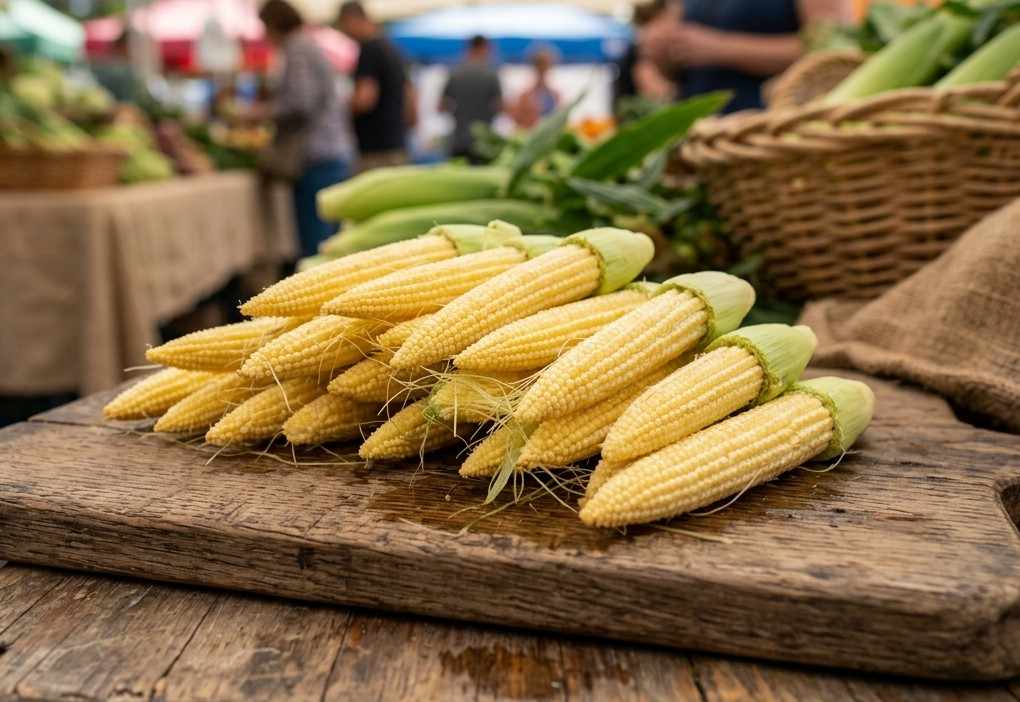
Baby corn, also known as young corn or cornlettes, is a small, tender version of corn that is harvested before the kernels fully develop. Unlike mature corn, the entire baby corn cob is soft enough to eat, including the cob itself. Its mild sweetness, crunchy texture, and versatility make it a popular ingredient in stir-fries, soups, salads, curries, noodles, and mixed vegetable dishes.
Baby corn is also relatively low in calories and provides dietary fiber along with small amounts of protein, vitamins, minerals, and plant compounds. However, its nutritional composition can vary depending on variety, growing conditions, freshness, and cooking method.
What Is Baby Corn?
Baby corn is the immature ear of the corn plant (Zea mays L.), harvested at an early stage before the kernels mature. It is generally eaten whole after removing the husk and silk.
Unlike mature sweet corn, which is mainly eaten for its developed kernels, baby corn has a thin, tender cob that can also be consumed. It is commonly used in Asian-style cooking and is available fresh, canned, frozen, or pickled.
Baby corn can be eaten raw when properly washed, although cooking it can make it softer and easier to incorporate into meals.
Its nutritional value is different from mature corn because baby corn contains much more water and generally provides fewer calories and carbohydrates per 100 grams. One analytical study of fresh baby corn reported about 92% moisture and approximately 18 kcal per 100 grams, while another study reported similar high moisture and low-energy characteristics.
Nutrition Facts of Baby Corn
The exact nutritional values can vary considerably between varieties and preparation methods. The following is an approximate values based on published analyses of fresh Young corn.
| Nutrient | Approximate amount per 100 g |
|---|---|
| Calories | About 18–30 kcal |
| Water | About 90–93 g |
| Protein | About 1.5–2.5 g |
| Carbohydrates | About 4–6 g |
| Dietary Fiber | About 2–4 g |
| Fat | About 0.2–0.7 g |
| Calcium | Variable |
| Iron | Small amount |
| Magnesium | Small amount |
| Phosphorus | Small amount |
| Potassium | Small amount |
| Vitamin C | Small amount |
| Folate | Small amount |
| Beta-carotene | Present in small amounts |
20 Proven Health Benefits of Baby Corn
- Supports Digestive Health: The dietary fiber in baby corn can contribute to normal bowel function and help support a healthy digestive system.
- Provides Dietary Fiber: Baby corn contains both soluble and insoluble fiber, which can contribute to overall daily fiber intake.
- May Support Regular Bowel Movements: Including fiber-containing vegetables such as Young corn in meals can help promote regularity when combined with adequate fluid intake.
- Low in Calories: Fresh baby corn provides relatively few calories per 100 grams, making it useful for people who want to add volume and crunch to meals without adding many calories.
- Can Support Weight-Management Diets: Its low energy density and fiber content can make baby corn a practical vegetable choice as part of a balanced calorie-conscious eating pattern.
- Provides Plant-Based Nutrients: Young corn contributes small amounts of vitamins, minerals, and plant compounds that complement nutrients obtained from other vegetables.
- Supports a Balanced Diet: Adding baby corn to mixed vegetable dishes can increase vegetable variety and help make meals more nutrient-dense.
- Provides Some Vitamin C: Fresh Young corn contains vitamin C, an antioxidant nutrient involved in normal immune function and collagen formation.
- Contains Folate: Baby corn provides some folate, a B vitamin needed for DNA synthesis and normal cell division.
- Provides Magnesium: Young corn contains magnesium, a mineral involved in normal muscle and nerve function.
- Provides Phosphorus: Its phosphorus content contributes to the body’s normal bone, teeth, and energy-related processes.
- Contains Potassium: Baby corn provides potassium, an electrolyte important for normal nerve signaling and muscle function.
- Provides Small Amounts of Iron: Young corn can contribute a modest amount of iron to the diet, although it should not be considered a major iron source.
- Contains Antioxidant Compounds: Research on baby corn and maize has identified phenolic compounds and carotenoid-related phytochemicals, although their amounts depend on the variety and processing method.
- May Help Increase Vegetable Variety: Its mild flavor and crunchy texture can make it easier to add another vegetable to stir-fries, salads, soups, and mixed dishes.
- Naturally Low in Fat: Fresh baby corn contains very little fat, making it suitable for meals where you want a lighter vegetable component.
- Contains Some Plant Protein: Although Young corn is not a high-protein food, it contributes a small amount of plant protein to meals.
- Can Add Volume to Meals: Because fresh baby corn contains a high proportion of water, it can add bulk and texture without contributing large amounts of energy.
- Useful in Balanced Carbohydrate Meals: Young corn contains relatively modest amounts of carbohydrate compared with mature corn and can be paired with protein, healthy fats, and other vegetables.
- Versatile for Healthy Cooking: Steaming, grilling, roasting, or lightly stir-frying Young corn can provide flavorful vegetable options without requiring large amounts of added fat.
10 Side Effects of Baby Corn
Baby corn is generally well tolerated when eaten as part of a balanced diet, but some people may experience problems depending on quantity, preparation, or individual sensitivity.
- Gas and Bloating: Eating a large amount of fiber-rich Young corn at once may cause gas, bloating, or abdominal discomfort, particularly if your usual diet is low in fiber.
- Digestive Discomfort: People with sensitive digestive systems may experience discomfort after eating large portions.
- Allergic Reactions: Although uncommon, people with a corn allergy may develop symptoms after consuming baby corn.
- Diarrhea From Excessive Intake: Suddenly consuming a large amount of fiber may loosen stools or cause diarrhea in some individuals.
- Constipation From Low Fluid Intake: Increasing fiber without drinking enough fluids can sometimes worsen constipation.
- Problems With Pickled Baby Corn: Pickled versions can contain considerable amounts of sodium, depending on the product and brine.
- Excess Sodium From Canned Products: Some canned Young corn products contain added salt, which may be a concern for people following sodium-restricted diets.
- Foodborne Illness Risk: Raw or improperly handled fresh produce can carry harmful microorganisms, so appropriate washing, storage, and preparation are important.
- Added-Calorie Cooking: Deep-frying baby corn or preparing it with heavy sauces can substantially increase the calorie, fat, and sodium content of the final dish.
- Individual Food Sensitivity: People who notice recurring symptoms after eating corn should discuss the reaction with a healthcare professional rather than repeatedly testing themselves with larger amounts.
How to Eat Baby Corn?
Baby corn can be eaten in several ways depending on your preference.
You can:
- Add raw, properly washed Young corn to salads.
- Steam it and serve it with other vegetables.
- Stir-fry it with bell peppers, broccoli, mushrooms, and carrots.
- Add it to soups and vegetable stews.
- Include it in noodles or fried rice.
- Grill or roast it with herbs and spices.
- Add it to curries and vegetable gravies.
- Use canned baby corn after draining and rinsing it.
- Add sliced Young corn to wraps or grain bowls.
- Combine it with tofu, beans, lentils, chicken, or fish for a more balanced meal.
Tips for Consuming Baby Corn
- Wash Fresh Baby Corn: Rinse fresh Young corn thoroughly under running water before cutting or cooking it. FDA guidance recommends washing fresh produce under running water and does not recommend using soap or detergent.
- Choose Fresh Corn: Look for Young corn that is firm, crisp, and free from excessive discoloration, slime, or unpleasant odors.
- Watch the Portion: Start with a moderate portion if you are not accustomed to eating fiber-rich vegetables.
- Check Canned Labels: Look for canned Young corn with lower sodium when you are trying to reduce salt intake.
- Rinse Canned Corn: Draining and rinsing canned baby corn can help remove some of the liquid and surface salt.
- Avoid Overcooking: Light cooking can preserve the characteristic crunch and make Young corn more enjoyable.
- Combine With Protein: Pair Young corn with tofu, beans, eggs, fish, poultry, or another protein source to create a more balanced meal.
- Limit Heavy Sauces: Creamy, sugary, or very salty sauces can turn an otherwise light vegetable dish into a much heavier meal.
How to Cook Baby Corn?
1. Steaming
Wash the Young corn and steam it for several minutes until it becomes tender but still slightly crisp. Steaming is a simple option when you want to minimize added oil.
2. Stir-Frying
Heat a small amount of cooking oil in a pan and add baby corn along with vegetables such as bell peppers, broccoli, carrots, and mushrooms. Stir-fry until the vegetables are cooked but remain crisp.
3. Boiling
Place Young corn in boiling water and cook until tender. Drain well and season with herbs, spices, or a small amount of healthy cooking oil.
4. Grilling
Brush fresh Young corn lightly with oil and grill until it develops light browning. It can then be seasoned with herbs, pepper, garlic, or lemon.
5. Roasting
Roast Young corn with vegetables and mild spices for a simple side dish.
6. Adding to Soups
Baby corn can be sliced and added to vegetable soups, noodle soups, and broths toward the later part of cooking.
Cooking can alter nutrient composition. Research comparing raw and cooked Young corn has found differences in fiber, phytochemicals, and other nutritional components depending on the cooking method.
Other Uses of Baby Corn
- Stir-Fry Ingredient: Young corn is commonly used in vegetable stir-fries because it retains a pleasant crunch.
- Salad Ingredient: Sliced Young corn can add texture and mild sweetness to salads.
- Soup Ingredient: It works well in clear vegetable soups, noodle soups, and Asian-inspired broths.
- Pickled Vegetable: Young corn can be preserved in vinegar or brine and used as a crunchy side or salad ingredient.
- Pizza Topping: Sliced Young corn can be added to homemade vegetable pizzas.
- Wrap Filling: Cooked Young corn can be combined with other vegetables and protein as a wrap filling.
- Noodle Dishes: It pairs well with noodles, tofu, mushrooms, and other vegetables.
- Rice Dishes: Chopped baby corn can be included in vegetable rice and fried rice.
- Curry Ingredient: Young corn can be cooked in tomato-based, coconut-based, or other vegetable gravies.
- Grilled Side Dish: Whole Young corn can be grilled and served as a vegetable side.
How Much Baby Corn Can You Eat in a Day?
There is no universally established daily recommended amount specifically for baby corn.
For most healthy adults, about ½ to 1 cup of cooked or sliced baby corn as part of a meal is a practical portion. The appropriate amount depends on your overall vegetable intake, calorie needs, digestive tolerance, and the rest of your diet.
If you are eating canned or pickled Young corn, pay attention to sodium on the nutrition label.
People who are not accustomed to high-fiber foods should increase portions gradually and maintain adequate fluid intake.
Best Time to Eat Baby Corn
Baby corn does not have a scientifically established “best” time of day.
It can be eaten at:
- Lunch: Add it to a vegetable bowl, salad, stir-fry, or rice dish.
- Dinner: Pair it with protein and other vegetables for a balanced meal.
- As a Snack: Lightly cooked Young corn can be used as part of a vegetable snack.
- Before or After Exercise: It can be included in a balanced meal, although it is not specifically an exercise-performance food.
The overall quality and balance of your diet are more important than eating Young corn at a particular time.
Who Should Eat Baby Corn?
- People Looking for Low-Calorie Vegetables: Fresh Young corn can add volume and crunch to meals without contributing many calories.
- People Increasing Fiber Intake: Its dietary fiber content can help contribute to daily fiber intake.
- Vegetarian and Vegan Dieters: Young corn can add variety and plant-based nutrients to vegetarian and vegan meals.
- People Who Enjoy Asian-Style Foods: Its texture works particularly well in stir-fries, soups, noodles, and mixed vegetable dishes.
- People Wanting More Vegetable Variety: Baby corn offers a different texture and flavor from commonly eaten vegetables.
- Healthy Adults: Most healthy adults can include Young corn as part of a varied and balanced diet.
Who Should Not Eat Baby Corn?
- People With Confirmed Corn Allergy: Anyone with a diagnosed corn allergy should avoid Young corn unless their healthcare professional has specifically advised otherwise.
- People With a Previous Serious Reaction to Corn: A history of a significant food reaction warrants professional allergy evaluation rather than self-testing.
- People Who Develop Repeated Digestive Symptoms: Persistent bloating, diarrhea, abdominal pain, or other symptoms after eating corn should be discussed with a healthcare professional.
- People Following a Medically Prescribed Diet: Those on specific therapeutic diets should consider their individual nutritional requirements before making substantial dietary changes.
- People Sensitive to High-Sodium Foods: Those limiting sodium should choose fresh Young corn or low-sodium products rather than heavily salted canned or pickled varieties.
How to Store Baby Corn?
- Refrigerate Fresh Baby Corn: Store fresh Young corn in the refrigerator to help maintain quality and freshness.
- Keep It Dry: Excess moisture can encourage deterioration, so keep fresh Young corn appropriately dry until preparation.
- Use Quickly: Fresh Young corn is best consumed while it remains firm and crisp rather than being stored for unnecessarily long periods.
- Refrigerate Cut Corn: Once Young corn has been cut, keep it refrigerated in a clean, covered container.
- Refrigerate Opened Packages: Once packaged or canned baby corn has been opened, transfer leftovers to a suitable covered container and refrigerate promptly.
- Check for Spoilage: Discard Young corn that develops mold, slime, a strong unpleasant odor, or obvious spoilage.
- Keep Refrigerated Produce Cold: FDA guidance recommends keeping perishable produce refrigerated at 40°F (4°C) or below.
- Avoid Cross-Contamination: Keep fresh produce away from raw meat, poultry, and seafood during preparation and storage.
Precautions and Interactions
- Wash Before Preparation: Wash fresh Young corn thoroughly under running water before eating or cooking, unless the package specifically identifies it as ready-to-eat.
- Do Not Use Soap: Do not wash baby corn with household soap, detergent, or bleach because these products are not intended for washing food.
- Check Canned Sodium: Read nutrition labels carefully if you need to restrict sodium.
- Watch Added Ingredients: Sauces, marinades, and pickling liquids may contain substantial sodium, sugar, or other ingredients.
- Increase Fiber Gradually: If your normal diet is low in fiber, gradually increase baby corn and other high-fiber foods to reduce the likelihood of digestive discomfort.
- Maintain Adequate Hydration: Drink enough fluids when increasing dietary fiber.
- Consider Corn Allergy: People with known corn allergy should avoid Young corn and discuss suitable alternatives with an allergy specialist.
- Separate Raw Foods: Use clean utensils and surfaces and prevent contact between fresh produce and raw meat or seafood to reduce cross-contamination.
- Be Careful With Medical Diets: If you have a medical condition requiring dietary restrictions, follow your healthcare professional’s individualized dietary advice.
- No Major Drug Interaction Is Established: Baby corn itself is a food rather than a concentrated supplement, and there are no well-established clinically important drug interactions specific to ordinary dietary portions; however, the ingredients added during preparation or preservation may matter for some people.
Is Baby Corn Healthy?
Yes, baby corn can be a nutritious addition to a balanced diet. It is relatively low in calories and provides dietary fiber along with small amounts of protein, vitamins, minerals, and plant compounds.
However, it is better to think of baby corn as one useful vegetable among many, rather than a special food that can independently prevent disease or produce dramatic health effects. Current research supports its nutritional value, but direct human evidence for many specific health claims remains limited.
Baby Corn vs Mature Corn
| Feature | Baby Corn | Mature/Sweet Corn |
|---|---|---|
| Harvest stage | Immature | More mature |
| Edible portion | Whole tender cob | Mainly kernels |
| Texture | Crisp and tender | Juicy and soft |
| Calories | Generally lower | Generally higher |
| Carbohydrates | Generally lower | Generally higher |
| Fiber | Provides dietary fiber | Provides dietary fiber |
| Common uses | Stir-fries, soups, salads | Corn on the cob, salads, soups, corn dishes |
| Flavor | Mild and slightly sweet | Sweeter and more pronounced |
The nutritional differences are largely related to the stage of development and water content. Research comparing baby corn with mature corn has found substantial differences in moisture, energy, carbohydrate, and other nutritional components.
FAQ’s
Is baby corn good for weight loss?
Young corn can support a calorie-conscious diet because it is relatively low in calories and provides fiber that can contribute to fullness.
Can I eat baby corn every day?
Yes, most healthy people can eat Young corn regularly as part of a varied and balanced diet.
Is baby corn good for diabetes?
Young corn can fit into a diabetes-friendly meal because it is relatively low in calories and carbohydrates, but portion size and the overall meal composition are still important.
Is baby corn high in carbohydrates?
No, fresh Young corn generally contains considerably less carbohydrate per 100 grams than mature corn, although the exact amount varies by variety and preparation.
Does baby corn contain fiber?
Yes, Young corn contains dietary fiber, which can contribute to digestive health and help increase your overall daily fiber intake.
Is baby corn good for constipation?
Its fiber content may help support regular bowel movements, particularly when consumed as part of a high-fiber diet with adequate fluids.
Can baby corn cause gas?
Yes, eating a large quantity of Young corn may cause gas or bloating in some people because it contains dietary fiber.
Is baby corn safe during pregnancy?
Properly washed and safely cooked Young corn can generally be included in a balanced pregnancy diet, provided there is no individual corn allergy or dietary restriction.
Can babies eat baby corn?
Young corn can be introduced according to a child’s developmental stage and ability to safely handle solid foods, but parents should prepare it appropriately and supervise eating.
Is baby corn good for children?
Yes, properly prepared Young corn can be included as one of the vegetables in a child’s balanced diet.
Can you eat baby corn raw?
Yes, fresh Young corn can be eaten raw when properly washed and handled, although cooking is often preferred for texture and flavor.
Is baby corn gluten-free?
Plain Young corn is naturally gluten-free, but packaged, canned, pickled, or prepared Young corn products may contain sauces or ingredients that contain gluten.
Is baby corn good for the stomach?
Young corn can provide fiber that supports normal digestion, although people with sensitive digestion may experience gas or bloating after eating large portions.
Does baby corn help with digestion?
The dietary fiber in Young corn can contribute to normal bowel function and overall digestive health.
Is baby corn good for the skin?
Young corn provides nutrients and plant compounds that contribute to a healthy diet, but there is not enough direct human evidence to say that eating Young corn specifically improves skin.
Is baby corn good for the heart?
Young corn can be part of a heart-healthy eating pattern because it is naturally low in fat and provides fiber, but it should not be considered a treatment for heart disease.
Is baby corn good for high blood pressure?
Fresh Young corn can be included in a balanced diet for people managing blood pressure, particularly when prepared without excessive salt or high-sodium sauces.
Does baby corn contain iron?
Yes, Young corn contains some iron, but it is not considered a particularly rich source of iron.
Does baby corn contain protein?
Yes, Young corn contains a small amount of plant protein, but it should be paired with other protein-rich foods when a meal requires substantial protein.
Is baby corn better than regular corn?
Young corn and mature corn have different nutritional profiles and culinary uses, so neither is universally better; Young corn is generally lower in calories and carbohydrates because it is harvested at an immature stage.
Is baby corn a vegetable?
Young corn is botanically an immature ear of maize, but it is commonly classified and consumed as a vegetable.
Is baby corn low in calories?
Yes, fresh Young corn is relatively low in calories because it contains a high proportion of water.
Can baby corn help you feel full?
Its fiber and water content can contribute to meal volume and fullness, although satiety depends on the entire meal.
Is canned baby corn healthy?
Canned Young corn can be a convenient vegetable choice, but check the nutrition label because some varieties contain added sodium.
Should canned baby corn be washed?
Draining and rinsing canned Young corn can remove some of the canning liquid and surface sodium.
How long does baby corn last in the refrigerator?
Fresh Young corn should be kept refrigerated and used while it remains fresh, firm, and free from spoilage; packaged products should be stored according to their label instructions.
Can baby corn be frozen?
Yes, Young corn can be frozen, although blanching it before freezing can help preserve its quality, texture, and color.
Can baby corn be eaten at night?
Yes, Young corn can be eaten at dinner or at night as part of a balanced meal unless it causes digestive discomfort for you.
Does baby corn increase blood sugar?
Young corn contains carbohydrates and can contribute to blood glucose, but its carbohydrate content is generally lower than that of mature corn.
Can baby corn cause an allergic reaction?
Yes, although uncommon, people with corn allergy may react to Young corn and should avoid it if advised by their healthcare professional.
Is baby corn good for a low-calorie diet?
Yes, fresh Young corn can be useful in low-calorie meals because it provides volume and texture without adding many calories.
Can baby corn be used in salads?
Yes, raw or lightly cooked Young corn can add crunch and mild sweetness to vegetable salads.
Can baby corn be eaten with other vegetables?
Yes, Young corn pairs well with broccoli, carrots, bell peppers, mushrooms, peas, cabbage, spinach, and many other vegetables.
Does baby corn help with weight gain?
Young corn itself is relatively low in calories, so it is not particularly effective for increasing calorie intake unless combined with energy-dense foods such as nuts, seeds, oils, grains, or protein-rich ingredients.
Is baby corn suitable for vegetarians?
Yes, plain Young corn is a plant food and is suitable for vegetarian and vegan diets.
What is Baby Corn good for?
Young corn is good for adding dietary fiber, nutrients, crunch, and volume to meals while providing relatively few calories.
What does Baby Corn taste like?
Young corn has a mild, slightly sweet flavor with a fresh, crunchy texture that is less starchy than mature sweet corn.
How long does baby corn take to grow?
Young corn can often be harvested about 45 to 65 days after planting, depending on the corn variety, growing conditions, temperature, and cultivation method.
Can I grow baby corn at home?
Yes, you can grow Young corn at home in a sunny location with fertile, well-drained soil, adequate moisture, and enough space for the plants to develop.
Is baby corn healthier than sweet corn?
Baby corn and sweet corn have different nutritional profiles; Young corn is generally lower in calories and carbohydrates because it is harvested while immature, while mature sweet corn generally provides more energy and carbohydrates.
Final Thoughts
Baby corn is a versatile, crunchy vegetable that can make everyday meals more interesting while contributing fiber, modest amounts of protein, and several micronutrients. It is particularly useful in stir-fries, soups, salads, curries, noodles, and mixed vegetable dishes.
For the healthiest preparation, choose fresh or lower-sodium varieties, wash fresh produce properly, use moderate amounts of oil and sauces, and combine Young corn with other vegetables and a good source of protein.
Sources / References:
Disclaimer:
This guide is for general educational purposes only and does not replace personalized medical or dietary advice. People with food allergies, medical conditions, or special dietary requirements should consult a qualified healthcare professional.
Also Read: