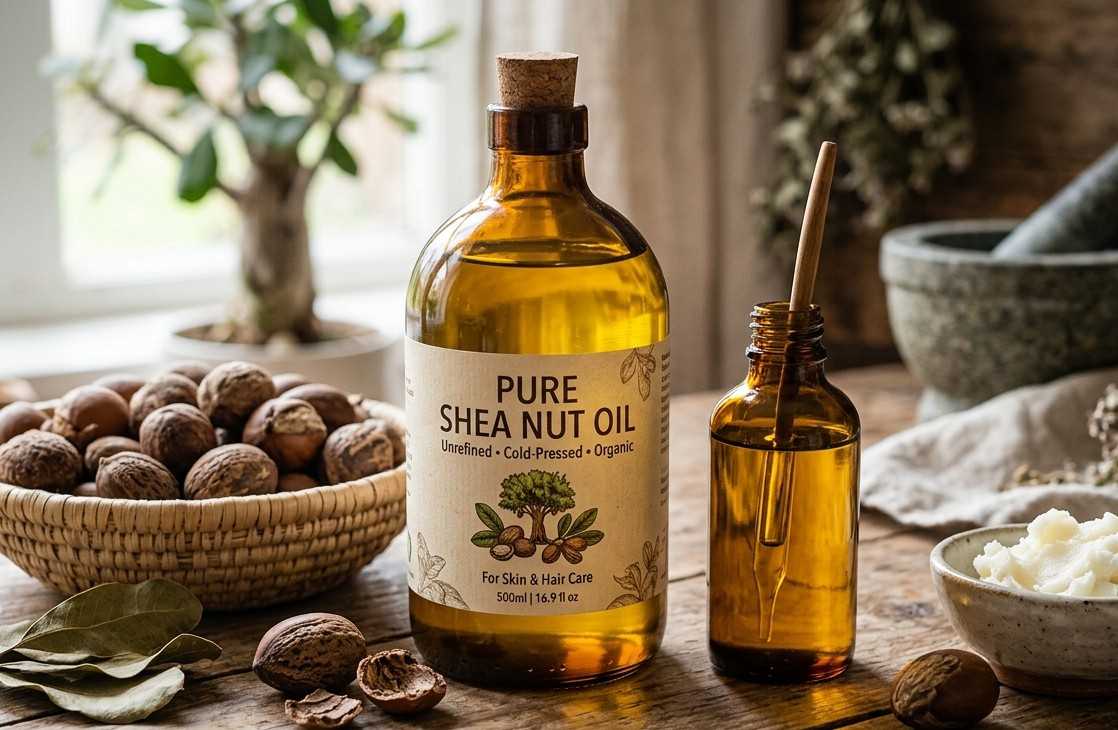
Shea Nut Oil has been treasured for centuries across Africa for its nourishing, healing, and protective qualities. Extracted from the nuts of the shea tree, this golden oil is widely used in skincare, haircare, traditional medicine, and even cooking in some regions. While many people are familiar with shea butter, shea nut oil is its lighter, more fluid counterpart — offering similar benefits with easier absorption.
In this guide, you’ll discover everything you need to know about Shea Nut Oil, including its nutrition profile, science-backed health benefits, side effects, dosage, uses, storage tips, and precautions.
What is Shea Nut Oil?
Shea Nut Oil is a natural vegetable oil extracted from the nuts of the shea tree (Vitellaria paradoxa), native to West and Central Africa. The oil is derived during the process of making shea butter, but it is separated in liquid form and refined or cold-pressed for various uses.
Unlike solid shea butter, shea nut oil remains liquid at room temperature, making it easier to apply and blend into skincare and haircare products. It contains essential fatty acids, antioxidants, vitamins, and anti-inflammatory compounds that contribute to its wide range of benefits.
Traditionally, Shea Nut Oil has been used to:
- Moisturize dry skin
- Heal minor wounds
- Protect against sun damage
- Improve hair health
- Soothe inflammation
Its rich nutrient composition makes it valuable both topically and, in some cases, internally.
Nutrition Facts of Shea Nut Oil
Below is the approximate nutritional composition of pure Shea Nut Oil (per 1 tablespoon – 14 grams):
| Nutrient | Approximate Amount |
|---|---|
| Calories | 120 kcal |
| Total Fat | 14 g |
| Saturated Fat | 6–7 g |
| Monounsaturated Fat | 6 g |
| Polyunsaturated Fat | 0.5–1 g |
| Vitamin E | 1–2 mg |
| Phytosterols | Present |
| Triterpenes | Present |
| Omega-9 (Oleic Acid) | High |
| Omega-6 (Linoleic Acid) | Moderate |
Shea Nut Oil is rich in oleic acid and stearic acid, which help maintain skin barrier function and cellular integrity.
20 Proven Benefits of Shea Nut Oil
Below are the top scientifically supported and traditionally recognized benefits of Shea Nut Oil.
- Deep Skin Moisturization – Shea Nut Oil penetrates deeply into the skin to provide long-lasting hydration without clogging pores.
- Improves Skin Elasticity – The essential fatty acids help enhance collagen production and maintain skin firmness.
- Reduces Inflammation – Natural anti-inflammatory compounds soothe irritated, inflamed, or sensitive skin.
- Helps Treat Eczema – Its moisturizing and calming properties reduce dryness, itching, and flare-ups.
- Supports Acne-Prone Skin – Non-comedogenic properties help balance sebum production without blocking pores.
- Anti-Aging Support – Vitamin E and antioxidants protect against free radical damage and reduce fine lines.
- Heals Minor Cuts and Burns – Traditional use shows it supports faster wound healing.
- Relieves Sunburn – Cooling and soothing properties calm sun-damaged skin.
- Improves Stretch Marks – Regular massage may reduce the appearance of stretch marks over time.
- Softens Rough Skin – Excellent for elbows, heels, and knees due to its emollient nature.
- Promotes Healthy Hair Growth – Nourishes the scalp and reduces dryness that can inhibit hair growth.
- Reduces Dandruff – Moisturizes dry scalp and decreases flaking.
- Strengthens Hair Strands – Fatty acids help prevent breakage and split ends.
- Protects Against Environmental Damage – Forms a protective barrier against pollution and harsh weather.
- Supports Joint Health – When used in massage, it may reduce joint stiffness and discomfort.
- Boosts Immune Function – Antioxidants help support the body’s natural defense system.
- May Support Heart Health – Healthy fats like oleic acid may contribute to improved lipid balance when consumed in moderation.
- Improves Lip Health – Hydrates and protects dry, chapped lips effectively.
- Enhances Skin Glow – Regular use improves skin texture and radiance.
- Supports Hormonal Balance – Phytosterols may play a role in maintaining hormonal equilibrium.
10 Side Effects of Shea Nut Oil
Although generally safe, excessive or improper use may cause the following:
- Allergic Reaction – Individuals allergic to tree nuts may experience skin irritation or allergic symptoms.
- Clogged Pores in Some Skin Types – Very oily or acne-prone individuals may experience breakouts.
- Digestive Upset – Consuming large amounts may cause nausea or stomach discomfort.
- Weight Gain – High calorie content may contribute to weight gain if overconsumed.
- Skin Sensitivity – Some individuals may experience redness or itching.
- Interaction with Medications – May interfere with cholesterol-lowering or blood-thinning medications.
- Rancidity Risk – Improper storage can cause oxidation, leading to skin irritation.
- Hormonal Sensitivity – Phytosterols may not be suitable for hormone-sensitive conditions.
- Contact Dermatitis – Rare but possible in sensitive individuals.
- Scalp Buildup – Excessive use on hair can cause greasy buildup.
How to Use Shea Nut Oil?
Shea Oil is versatile and can be used in multiple ways:
For Skin
- Apply directly as a moisturizer after bathing.
- Use as a massage oil.
- Add to DIY creams or lotions.
For Hair
- Warm slightly and massage into scalp.
- Use as a leave-in conditioner in small amounts.
- Mix with other oils like coconut or jojoba.
For Internal Use
- Only use food-grade, cold-pressed oil.
- Add small amounts to salads or smoothies.
Other Uses of Shea Nut Oil
- Makeup remover
- Cuticle oil
- Lip balm ingredient
- Beard oil
- Baby massage oil
- Carrier oil for essential oils
- Soap and candle making
Tips for Consuming Shea Nut Oil
- Choose cold-pressed, food-grade oil.
- Start with small amounts (½ teaspoon).
- Do not overheat; use in low-heat cooking or raw applications.
- Store properly to prevent rancidity.
How to Take Shea Nut Oil?
If consuming internally:
- Add ½ to 1 teaspoon to smoothies.
- Drizzle over cooked vegetables.
- Mix into herbal teas (in small amounts).
- Blend into salad dressings.
Always consult a healthcare professional before using it therapeutically.
How to Make Shea Nut Oil at Home?
Traditional extraction involves:
- Collecting and drying shea nuts.
- Cracking and roasting kernels.
- Grinding into paste.
- Kneading with warm water.
- Separating oil from paste.
- Heating gently to extract liquid oil.
- Filtering and storing in clean containers.
Note: Home extraction is labor-intensive and may not produce highly refined oil.
How Much Shea Nut Oil Can You Use Per Day?
For topical use, 1–2 teaspoons daily is generally sufficient.
For internal consumption, limit to ½–1 tablespoon per day unless advised otherwise by a healthcare professional.
Shea Nut Oil Dosage
- Topical: Apply thin layer once or twice daily.
- Hair: 1–2 teaspoons per application.
- Internal: ½–1 tablespoon daily (food-grade only).
Best Time to Use Shea Nut Oil
- After showering for maximum absorption.
- Before bedtime for deep overnight nourishment.
- Before sun exposure for mild protective barrier (not a sunscreen replacement).
Who Should Use Shea Nut Oil?
- Individuals with dry or sensitive skin
- People with eczema or dermatitis
- Those with dry scalp or dandruff
- Individuals seeking natural anti-aging skincare
- Pregnant women (for stretch mark massage, with medical approval)
Who Should Not Use Shea Nut Oil?
- Individuals with tree nut allergies
- Those with extremely oily, acne-prone skin (without patch testing)
- People on blood-thinning medication (internal use)
- Individuals with hormone-sensitive conditions (consult doctor)
How to Store Shea Nut Oil?
- Store in a cool, dark place.
- Keep in airtight glass containers.
- Avoid direct sunlight.
- Refrigeration can extend shelf life.
- Use within 12–24 months.
Signs of spoilage include a strong rancid smell or cloudy texture.
Precautions and Interactions
- Always perform a patch test before topical use.
- Consult a doctor before internal consumption.
- Avoid mixing with strong chemical treatments.
- Pregnant or breastfeeding women should seek medical advice.
- Stop use if irritation occurs.
Final Thoughts
Shea Nut Oil is a powerful natural remedy that offers hydration, nourishment, and protective benefits for both skin and hair. Rich in essential fatty acids, antioxidants, and anti-inflammatory compounds, it has earned its place in traditional medicine and modern skincare alike.
When used correctly and in moderation, Oil can become a valuable addition to your beauty and wellness routine. However, as with any natural product, proper dosage, quality selection, and individual sensitivity should always be considered.
FAQ’s
What is Shea Nut Oil used for?
Oil is mainly used for moisturizing skin, improving hair health, reducing inflammation, and supporting skin barrier repair. It is also sometimes used in cooking when food-grade oil is available.
Is Shea Nut Oil the same as shea butter?
No, Oil is the liquid fraction extracted from shea nuts, while shea butter is the solid fat. The oil is lighter in texture and absorbs faster into the skin.
Can Shea Nut Oil be used on the face?
Yes, Oil can be used on the face as a moisturizer, especially for dry or sensitive skin. However, people with very oily or acne-prone skin should do a patch test first.
Is Shea Nut Oil good for hair growth?
Oil nourishes the scalp, reduces dryness, and strengthens hair strands, which may indirectly support healthier hair growth.
Can Shea Nut Oil clog pores?
Oil is generally considered low-comedogenic, but in some individuals with oily skin, excessive use may clog pores.
Is Shea Nut Oil safe to consume?
Only food-grade, cold-pressed Shea Oil is safe for consumption in small amounts. Always consult a healthcare professional before using it internally.
How often can I use Shea Nut Oil on my skin?
You can apply it once or twice daily, depending on your skin type and hydration needs.
Does Shea Nut Oil help with stretch marks?
Regular massage with Shea Oil may improve skin elasticity and reduce the appearance of stretch marks over time.
Can pregnant women use Shea Nut Oil?
Topical use is generally considered safe, but pregnant women should consult their doctor before regular use, especially for internal consumption.
How long does Shea Nut Oil last?
When stored properly in a cool, dark place, Shea Oil typically lasts 12 to 24 months.
Is Shea Nut Oil suitable for sensitive skin?
Yes, its anti-inflammatory properties make it suitable for sensitive skin, but a patch test is always recommended.
Can Shea Nut Oil help with eczema?
Its moisturizing and soothing properties may help reduce dryness, itching, and irritation associated with eczema.
What does Shea Nut Oil smell like?
Unrefined Oil has a mild, nutty aroma, while refined versions have little to no scent.
Can I mix Shea Nut Oil with other oils?
Yes, it blends well with oils like coconut, jojoba, almond, and essential oils for enhanced benefits.
Is Shea Nut Oil good for lips?
Yes, it works as a natural lip moisturizer and protects against dryness and cracking.
Can Shea Nut Oil be used daily?
Yes, it is safe for daily topical use when applied in moderate amounts.
Does Shea Nut Oil expire?
Yes, like all natural oils, it can become rancid over time, especially if exposed to heat or light.
Is Shea Nut Oil suitable for oily skin?
It may work for some oily skin types, but individuals prone to breakouts should use it sparingly and monitor skin reactions.
Can children use Shea Nut Oil?
Topical use is generally safe for children, but internal use should only be done under medical supervision.
How to use shea oil for hair?
Warm a small amount of oil between your palms and massage it into your scalp and hair, focusing on dry ends. You can use it as a pre-shampoo treatment, leave-in conditioner (in small amounts), or mix it with other oils for a deep conditioning mask.
Is shea nut oil a seed oil?
Yes, oil is technically a seed oil because it is extracted from the kernel (seed) of the shea fruit produced by the shea tree.
Is shea nut oil heavy?
Oil is considered moderately heavy due to its high stearic and oleic acid content, but it absorbs better than solid shea butter. It may feel rich on oily skin or fine hair if used in large amounts.
Is shea good for fine hair?
Oil can benefit fine hair when used sparingly, as it helps reduce dryness and frizz. However, applying too much may weigh fine hair down and make it appear greasy.
Does shea nut oil go bad?
Yes, like all natural oils, shea oil can become rancid over time, especially when exposed to heat, light, or air. Proper storage in a cool, dark place can extend its shelf life to 12–24 months.
Is shea nut oil healthy?
Oil contains healthy fats, antioxidants, and vitamin E, which support skin health and may contribute to heart health when consumed in moderation. However, it is calorie-dense and should be used in balanced amounts.
Also Read: