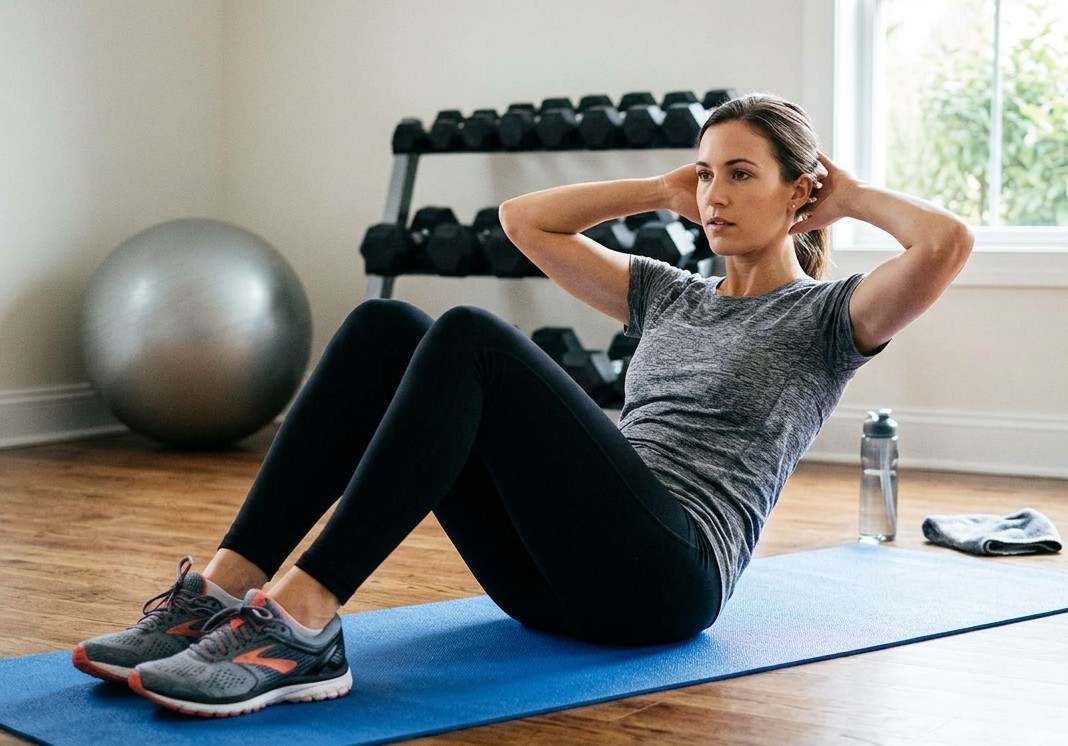
Sit-ups are one of the most recognizable abdominal exercises. They require no equipment, can be performed almost anywhere, and have been part of fitness routines for decades. Whether you want to strengthen your abdominal muscles, improve your core control, or add a simple bodyweight movement to your workout, sit-ups may seem like an obvious choice.
However, sit-ups are not necessarily the best core exercise for everyone. The movement repeatedly flexes the spine and also involves the hip flexor muscles. Poor technique, excessive repetitions, or exercising through pain may place unnecessary stress on the lower back.
This does not mean that sit-ups are automatically bad. For some healthy, active people, they can be included as one part of a well-rounded strength routine. The key is understanding how to perform them correctly, knowing their limitations, and combining them with other core exercises.
What Are Sit-Ups?
Sit-ups are a bodyweight exercise in which you start lying on your back and raise your upper body toward your knees before slowly returning to the starting position.
The movement primarily involves trunk flexion and requires your abdominal muscles and hip flexors to work together.
Unlike a crunch, which generally involves lifting only the head, neck, and upper shoulders from the floor, a traditional sit-up brings the torso much farther upward.
What Muscles Do Sit-Ups Work?
Sit-ups mainly involve the muscles responsible for controlling movement around the abdomen and hips.
1. Rectus Abdominis
The rectus abdominis is the long abdominal muscle at the front of the torso. It is commonly associated with the “six-pack” appearance and contributes to trunk flexion.
2. Obliques
The internal and external obliques are located along the sides of the abdomen. They assist with trunk movement and help stabilize the torso.
3. Hip Flexors
The hip flexors, including the iliopsoas group, play an important role in bringing the torso upward during a traditional sit-up.
4. Transverse Abdominis
The transverse abdominis is a deeper abdominal muscle that contributes to abdominal and trunk stability. However, sit-up should not be considered a complete exercise for every core muscle.
The abdominal muscles are only part of the larger core system, which also includes muscles around the back, hips, pelvis, and trunk. A balanced routine should therefore include different types of core exercises.
How to Do Sit-Ups Correctly?
Proper technique matters more than simply completing a large number of repetitions.
Step 1: Lie on Your Back
Lie on a firm, comfortable surface with your knees bent and feet positioned on the floor.
Step 2: Position Your Hands
Place your hands lightly behind your head or across your chest. If your hands are behind your head, avoid pulling on your neck.
Step 3: Brace Your Core
Gently tighten your abdominal muscles before starting the movement.
Step 4: Lift Your Torso
Slowly raise your upper body toward your knees while maintaining controlled movement.
Step 5: Avoid Using Momentum
Do not swing your arms or jerk your body upward. The movement should be deliberate.
Step 6: Lower Yourself Slowly
Return toward the floor under control rather than dropping your torso.
Step 7: Repeat
Perform a manageable number of repetitions while maintaining good form.
If your technique deteriorates because you are tired, stop the set rather than forcing additional repetitions.
15 Variations of Sit-Ups
Changing the sit-up variation can alter the difficulty, range of motion, and muscles involved. Choose a variation that matches your fitness level and avoid any movement that causes pain.
- Basic Sit-Ups: The traditional version performed with bent knees and feet on the floor.
- Half Sit-Ups: Lift only partway toward a sitting position, making this a simpler option for beginners.
- Crunch Sit-Ups: Combine a smaller crunching motion with a controlled lift of the upper body.
- Butterfly Sit-Ups: Place the soles of your feet together and allow your knees to fall outward while performing the sit-up.
- V-Sit-Ups: Raise your torso and legs toward each other, creating a V shape. This is a more challenging variation.
- Straight-Leg Sit-Ups: Keep the legs extended rather than bending the knees. This increases the challenge for the abdominal and hip muscles.
- Bicycle Sit-Ups: Add a controlled rotation as you rise to involve the abdominal and oblique muscles.
- Russian Twist Sit-Ups: Perform a sit-up and transition into controlled torso rotations. This combines flexion with rotational movement.
- Weighted Sit-Ups: Hold a light weight against your chest while performing the movement. This should only be attempted after mastering bodyweight sit-up.
- Decline Sit-Ups: Perform sit-up on a decline bench to increase the resistance and difficulty.
- Medicine Ball Sit-Ups: Hold a medicine ball while sitting up. More advanced versions can involve passing or pressing the ball.
- Jackknife Sit-Ups: Bring the upper body and legs toward each other during the movement, creating a challenging full-core exercise.
- Sit-Up to Press: Hold a suitable weight and combine the sit-up with an overhead press for an added upper-body challenge.
- Slow-Tempo Sit-Ups: Take several seconds to lift and lower your body. Slowing the movement can make regular sit-ups more challenging without adding weight.
- Assisted Sit-Ups: Use an appropriate anchor or assistance to make the movement easier while learning proper technique.
Beginner tip: Start with basic or half sit-ups and focus on controlled movement. More advanced variations should be introduced gradually rather than simply increasing repetitions.
15 Proven Benefits of Sit-Ups
Sit-ups can offer several fitness benefits when performed appropriately.
- Strengthens Abdominal Muscles: Sit-ups primarily work the rectus abdominis and help improve abdominal strength.
- Improves Core Strength: Regular sit-up can contribute to stronger muscles around the abdomen and trunk.
- Builds Muscular Endurance: Repeated, controlled sit-ups can improve how long your abdominal muscles can work before becoming fatigued.
- Supports Better Trunk Control: Stronger abdominal muscles can help you maintain control of your torso during everyday movements and exercise.
- Engages the Hip Flexors: Sit-ups also involve the hip flexor muscles, which help move the torso and legs.
- Improves Functional Strength: The ability to control your torso can support movements such as getting up from the floor, bending, and changing positions.
- Requires No Equipment: Sit-up can be performed at home or almost anywhere without weights or gym equipment.
- Easy to Add to Workouts: They can be included in beginner routines, bodyweight circuits, or dedicated core workouts.
- Can Support Athletic Training: A stronger trunk can contribute to better movement control during various sports and physical activities.
- Improves Exercise Awareness: Performing sit-up with proper form can help you learn to brace and control your abdominal muscles.
- Convenient for Home Workouts: Sit-ups are a simple option when you have limited space or equipment.
- Can Be Progressively Challenging: You can increase difficulty by slowing the movement, adding repetitions gradually, or eventually using appropriate resistance under professional guidance.
- Supports a Balanced Fitness Routine: When combined with other core and full-body exercises, sit-up can contribute to overall muscular fitness.
- May Improve Core Exercise Endurance: Consistent training can make abdominal-focused movements easier over time.
- Supports General Physical Fitness: Sit-ups can be one component of a broader exercise routine that includes aerobic activity, strength training, mobility, and other core exercises.
Do Sit-Ups Give You a Flat Stomach?
Sit-ups can strengthen the abdominal muscles, but doing sit-ups alone does not specifically remove belly fat.
Fat loss occurs through an overall energy balance influenced by food intake, physical activity, genetics, sleep, and other factors. You cannot reliably choose one particular area of the body from which fat will disappear simply by exercising that area.
Therefore, if your goal is a leaner waist, focus on a combination of regular physical activity, resistance training, nutritious eating, adequate sleep, and sustainable habits.
Can Sit-Ups Give You Six-Pack Abs?
Sit-ups can strengthen the rectus abdominis, but visible abdominal definition depends on more than abdominal exercise.
Body-fat levels, genetics, muscle development, nutrition, and overall training all influence how visible the abdominal muscles become.
In other words, doing hundreds of sit-ups every day does not guarantee six-pack abs.
Risks of Sit-Ups
- Lower Back Strain: Repeated spinal flexion during sit-ups may place stress on the lower back, especially with poor technique or excessive repetitions.
- Neck Strain: Pulling on the head or neck with your hands can cause unnecessary neck tension.
- Hip Flexor Overuse: Sit-ups strongly involve the hip flexors, which may become tight, fatigued, or uncomfortable when overworked.
- Muscle Soreness: Beginners may experience abdominal or hip soreness after performing more sit-up than their muscles are accustomed to.
- Poor Form: Moving too quickly, using momentum, or lifting the torso incorrectly can reduce exercise quality and increase the risk of discomfort.
- Existing Back Problems May Worsen: People with certain back conditions may find repeated sit-ups uncomfortable or aggravating.
- Overtraining: Performing very high numbers of sit-ups frequently can contribute to muscle fatigue without providing additional benefits.
- Abdominal Discomfort: Excessive effort or holding the breath during repetitions may cause discomfort, particularly in beginners.
- Not Suitable for Everyone: People recovering from injuries, surgery, or certain medical conditions may need alternative core exercises.
- Pain Should Not Be Ignored: Sharp, persistent, or worsening pain during or after sit-up is a reason to stop the exercise and seek appropriate medical advice.
Tip: Focus on slow, controlled repetitions rather than chasing a high number. If traditional sit-up cause back or neck discomfort, exercises such as planks, dead bugs, or bird dogs may be better alternatives.
How Many Calories Do Sit-Ups Burn?
The calories burned during sit-ups vary depending on body weight, exercise intensity, number of repetitions, and duration. The figures below are approximate estimates for continuous sit-up exercise.
| Body Weight | 10 Minutes | 20 Minutes | 30 Minutes |
|---|---|---|---|
| 50 kg (110 lb) | 35–45 calories | 70–90 calories | 105–135 calories |
| 60 kg (132 lb) | 42–54 calories | 84–108 calories | 126–162 calories |
| 70 kg (154 lb) | 49–63 calories | 98–126 calories | 147–189 calories |
| 80 kg (176 lb) | 56–72 calories | 112–144 calories | 168–216 calories |
| 90 kg (198 lb) | 63–81 calories | 126–162 calories | 189–243 calories |
| 100 kg (220 lb) | 70–90 calories | 140–180 calories | 210–270 calories |
Important: These are approximate ranges, not exact measurements. In a typical workout, sit-ups are usually performed in sets with rest periods, so actual calorie expenditure may be lower than continuous-exercise estimates.
Sit-Ups vs. Crunches
Sit-ups and crunches are similar but involve different ranges of movement.
| Feature | Sit-Ups | Crunches |
|---|---|---|
| Starting position | Lying on back | Lying on back |
| Movement | Torso rises substantially | Upper torso lifts partially |
| Main focus | Abdominals and hip flexors | Abdominal muscles |
| Equipment | Usually none | Usually none |
| Difficulty | Generally higher | Generally lower |
| Range of motion | Larger | Smaller |
Neither exercise needs to be the only core movement in a workout.
Sit-Ups vs. Planks
Planks train the core differently from sit-ups.
| Feature | Sit-Ups | Planks |
|---|---|---|
| Type | Dynamic | Isometric |
| Spine movement | Repeated trunk flexion | Minimal movement when properly performed |
| Hip flexors | More involved | Less dominant |
| Equipment | None | None |
| Main training style | Repetitions | Time under tension |
Recent Harvard Health guidance notes that planks can provide a more balanced approach to core training because they recruit muscles across the front, sides, and back of the body, whereas traditional sit-ups emphasize fewer muscle groups.
How Many Sit-Ups Should You Do?
There is no universal number of sit-ups that everyone needs to perform.
If you are new to exercise, start with a small number of controlled repetitions and focus on technique rather than trying to reach a high target.
For example, you might begin with:
- 1–2 sets
- 5–10 controlled repetitions per set
- Adequate rest between sets
As your strength and technique improve, you can gradually increase the challenge.
You do not need to perform hundreds of sit-up to strengthen your core.
How Often Should You Do Sit-Ups?
The appropriate frequency depends on your overall workout program, recovery, fitness level, and goals.
Instead of training the same movement excessively, consider incorporating core exercises into a balanced strength program. Current CDC guidance recommends that adults perform muscle-strengthening activities involving all major muscle groups on at least two days each week.
Your core can be trained through several different movements rather than relying entirely on sit-up.
Common Sit-Up Mistakes
1. Pulling on the Neck
Using your hands to pull your head forward can place unnecessary strain on the neck.
2. Moving Too Quickly
Fast repetitions often reduce control and encourage momentum.
3. Doing Too Many Repetitions
More repetitions are not automatically better. Quality should come before quantity.
4. Ignoring Back Pain
Pain is not a sign that an exercise is working effectively. Stop if sit-up cause significant or persistent discomfort.
5. Relying Only on Sit-Ups
The core contains many muscles, so a balanced routine should use different exercises.
6. Using Momentum
Swinging the upper body upward can shift some of the work away from the intended muscles.
Are Sit-Ups Bad for Your Back?
Sit-ups can be uncomfortable or unsuitable for some people, particularly when performed repeatedly with poor form or when someone already has back problems.
Traditional sit-up repeatedly flex the spine and involve the hip flexors. Harvard Health has noted concerns about the stress sit-up can place on the back and suggests considering other core exercises, particularly for people who experience discomfort.
This is why there is no need to force yourself to perform sit-up if another core exercise feels more comfortable and appropriate.
Who Should Be Careful With Sit-Ups?
You should consider professional guidance before performing sit-ups if you:
- Have persistent or significant lower-back pain
- Have a recent back or abdominal injury
- Have recently had abdominal surgery
- Experience pain while performing the movement
- Have a condition that affects your spine or movement
- Are returning to exercise after a long period of inactivity
- Have another medical condition that makes abdominal exercise difficult
People with chronic health conditions or disabilities may benefit from discussing appropriate exercise types and amounts with a healthcare professional or physical activity specialist.
Safer Alternatives to Traditional Sit-Ups
If traditional sit-ups are uncomfortable, there are many ways to strengthen your core without repeatedly performing full sit-up.
1. Planks
Planks challenge the abdominal and supporting core muscles while keeping the torso relatively stable.
2. Dead Bugs
Dead bugs train abdominal control while you coordinate movement of the arms and legs.
3. Bird Dogs
Bird dogs challenge core stability while involving the hips, shoulders, and back.
4. Glute Bridges
Glute bridges strengthen the glutes while also requiring trunk stability.
5. Modified Crunches
A smaller range of movement may feel more manageable for some people than a full sit-up.
6. Abdominal Bracing
Learning to gently activate the abdominal muscles without repeatedly flexing the spine can be a useful component of core training.
A variety of core exercises can help develop strength and control rather than repeatedly stressing the same movement pattern.
Sit-Ups for Beginners
If you are completely new to abdominal exercises, do not worry about how many repetitions you can complete.
Start with good positioning and slow movements. You may also begin with easier exercises such as abdominal bracing, modified crunches, dead bugs, or short plank holds.
As your control improves, gradually increase the difficulty.
The goal is to build strength consistently rather than exhaust your abdominal muscles during one workout.
Can You Do Sit-Ups Every Day?
Doing sit-ups every day is not necessary for most people.
Your abdominal muscles need recovery just like other muscles. More importantly, repeating the same spinal-flexion movement every day may not provide the balanced core training you are looking for.
A varied routine that includes different core movements can be more useful than performing large numbers of sit-up daily.
Sit-Ups and Weight Loss
Sit-ups burn some calories because they require muscular effort, but they are not a major calorie-burning exercise.
If weight loss is your goal, combine strength training with aerobic activities such as brisk walking, cycling, swimming, jogging, or other activities you enjoy.
The CDC recommends that adults aim for at least 150 minutes of moderate-intensity aerobic activity each week, along with muscle-strengthening activity on at least two days.
Tips for Better Sit-Ups
- Warm up before starting your workout.
- Use controlled movements.
- Keep your neck relaxed.
- Do not pull your head forward with your hands.
- Focus on technique rather than speed.
- Stop if you develop pain.
- Increase repetitions gradually.
- Include other core exercises in your routine.
- Allow adequate recovery between challenging workouts.
- Combine strength training with regular aerobic activity.
FAQ’s
What are sit-ups good for?
Sit-up primarily strengthen the abdominal muscles and can improve trunk strength and muscular endurance.
Do sit-ups burn belly fat?
No, sit-up strengthen the abdominal muscles but cannot specifically target belly fat. Overall fat loss requires a combination of physical activity, nutrition, and a sustainable calorie balance.
Are sit-ups good for weight loss?
Sit-up use energy but are not a high-calorie-burning exercise. Weight loss is better supported by combining regular aerobic activity, strength training, and healthy eating habits.
Are sit-ups better than crunches?
Neither is universally better. Sit-up involve a larger range of motion, while crunches generally use a shorter movement and may be more comfortable for some people.
Can beginners do sit-ups?
Yes, some beginners can perform sit-up, but easier exercises such as modified crunches, dead bugs, and planks may be better starting options.
How long does it take to see results from sit-ups?
Strength and endurance may improve within several weeks of consistent training, but visible abdominal changes depend on overall exercise, nutrition, body composition, and genetics.
Can sit-ups reduce waist size?
Sit-up can strengthen the abdominal muscles but do not specifically reduce waist fat. Overall fat loss is needed to reduce body fat around the waist.
Why do my hip flexors hurt during sit-ups?
Traditional sit-up strongly involve the hip flexors, so discomfort may occur if they are overworked or if your technique needs improvement.
Should I do sit-ups before or after cardio?
Either can work. If improving core strength is your priority, performing sit-up or other core exercises earlier in the workout may help you maintain better technique.
Can sit-ups strengthen the lower abs?
Sit-up engage the abdominal muscles as a whole rather than specifically isolating the lower abs. Exercises that challenge the entire core can provide more balanced training.
Why does my back hurt after doing sit-ups?
Back pain may result from poor technique, excessive repetitions, muscle fatigue, or an underlying condition. Stop if the exercise causes pain and consider professional guidance if symptoms persist.
Are 100 sit-ups a day effective?
Doing 100 sit-ups is not necessary to build a stronger core. Controlled repetitions combined with a variety of core and full-body exercises can be more effective than simply increasing the number of sit-ups.
Final Thoughts
Sit-ups remain a familiar and accessible abdominal exercise, but they are not the only way to build a strong core.
They can strengthen the abdominal muscles and be useful for some people when performed with good technique. However, traditional sit-up also involve repeated spinal flexion and substantial hip-flexor activity, which means they may not be appropriate for everyone.
A stronger core is best developed through variety. Combining exercises such as planks, dead bugs, bird dogs, bridges, and other strength movements can help train the trunk more comprehensively.
Most importantly, exercise should support your health rather than leave you repeatedly dealing with pain. If sit-up hurt, there is no need to force them into your routine.
Sources / References:
About the Author:
Written by: Kirti Solanki (Health Content Researcher)
Kirti Solanki creates research-based health and wellness content designed to make complex health information clear, practical, and easy to understand.
Disclaimer:
This article is for general educational purposes only and does not replace professional medical advice. If you have an injury, medical condition, or persistent pain, consult a qualified healthcare professional before starting or changing an exercise program.
Also Read: