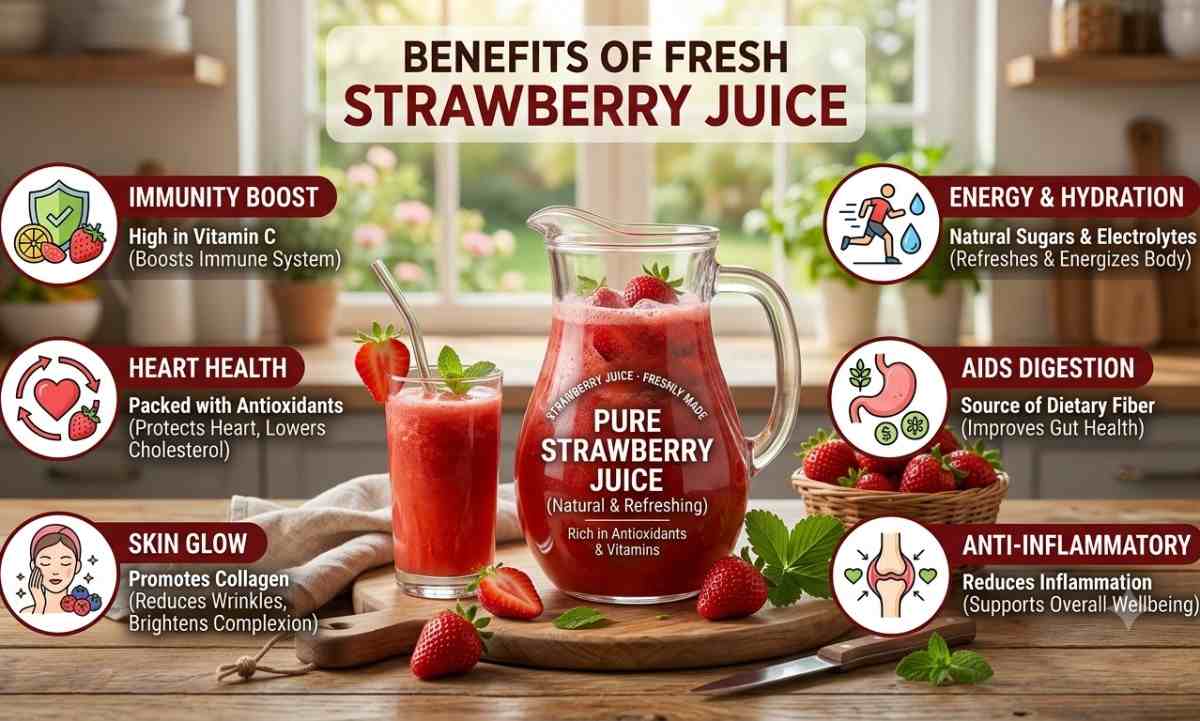
Strawberry juice is a refreshing fruit drink made by blending or extracting the juice from fresh strawberries. Naturally sweet, slightly tart, and rich in vitamin C and plant compounds, it can be an enjoyable way to add more fruit to your diet.
Strawberries contain vitamin C, folate, manganese, potassium, and several polyphenols, including anthocyanins and ellagic-acid-related compounds. Research on strawberries suggests that these compounds may support antioxidant defenses, cardiovascular health, and healthy inflammatory responses. However, most research has studied whole strawberries rather than strawberry juice specifically, so the benefits of juice should not be overstated.
What Is Strawberry Juice?
Strawberry juice is a beverage prepared from fresh or frozen strawberries, usually with water and sometimes with lemon juice or another fruit. It can be made at home by blending strawberries and straining the mixture, or by blending and keeping the pulp.
Homemade strawberry juice is often different from commercial strawberry drinks. Some packaged products contain added sugar, syrups, concentrates, flavorings, or other fruit juices. Reading the ingredient list can help you choose a product that contains mostly or entirely strawberries without unnecessary added sugars.
Strawberries are particularly well known for their vitamin C and polyphenol content. A review of strawberry bioactive compounds notes that fresh strawberries provide substantial vitamin C along with folate and minerals and contain flavonoids such as anthocyanins.
Nutrition Facts of Strawberry Juice
| Nutrient | Approximate Amount per 1 Cup (240 mL) |
|---|---|
| Calories | 50–80 kcal |
| Carbohydrates | 12–19 g |
| Natural sugars | 8–13 g |
| Protein | 1–2 g |
| Total fat | Less than 1 g |
| Dietary fiber | 0.5–3 g* |
| Vitamin C | 60–100 mg* |
| Folate | 20–40 mcg* |
| Potassium | 200–300 mg* |
| Manganese | 0.3–0.6 mg* |
| Sodium | Very low |
| Added sugar | 0 g when unsweetened |
20 Proven Health Benefits of Strawberry Juice
1. Supports Antioxidant Protection: Strawberry juice can provide vitamin C and polyphenolic compounds that contribute to the body’s antioxidant defenses.
2. Supports Immune Function: Its vitamin C content helps support normal immune-system function and collagen formation.
3. Supports Skin Health: Vitamin C is needed for collagen production, which helps maintain normal skin structure.
4. May Support Heart Health: Strawberry polyphenols have been studied for their potential relationship with cardiovascular health and cardiometabolic risk factors.
5. May Support Healthy Blood Vessels: Strawberry compounds have been investigated for effects on vascular function and nitric-oxide-related pathways.
6. May Help Reduce Oxidative Stress: Anthocyanins and other polyphenols in strawberries can contribute to antioxidant activity.
7. May Support a Healthy Inflammatory Response: Human studies of strawberry consumption have reported changes in some markers associated with inflammation, although results vary.
8. Supports Collagen Formation: Vitamin C from strawberries contributes to normal collagen production for skin, cartilage, bones, and blood vessels.
9. Provides Folate: Strawberries provide folate, a B vitamin needed for normal DNA synthesis and cell division.
10. Provides Potassium: Strawberry drinks can contribute some potassium, an essential mineral involved in normal muscle and nerve function.
11. May Support Metabolic Health: Controlled studies of strawberries have reported improvements in some cardiometabolic measures, although these studies generally used whole strawberries or strawberry preparations rather than ordinary juice.
12. May Support Healthy Cholesterol Levels: Research on strawberries suggests possible favorable effects on lipid-related cardiovascular risk markers, but more research is needed.
13. May Support Brain Health: Strawberry polyphenols are being investigated for potential relationships with cognitive and neurological health.
14. Provides Plant Polyphenols: Strawberries contain several bioactive compounds, including anthocyanins, flavonols, catechins, and ellagic-acid-related compounds.
15. Supports Healthy Digestion When Pulp Is Retained: A blended strawberry drink that keeps the fruit pulp can provide more fiber than strained juice.
16. May Help Increase Fruit Intake: An unsweetened strawberry drink can be a convenient way to include fruit as part of an overall balanced diet.
17. Supports Normal Energy Metabolism: Strawberries provide carbohydrates along with several micronutrients that participate in normal metabolic processes.
18. May Support Exercise Recovery Nutrition: Its carbohydrate and fluid content can complement a balanced snack after physical activity, especially when paired with protein.
19. Naturally Low in Fat: Unsweetened strawberry juice is naturally very low in fat, making it an easy addition to many balanced eating patterns.
20. Provides a Refreshing Alternative to Sugary Drinks: Choosing unsweetened homemade strawberry juice instead of sugar-sweetened beverages can help reduce unnecessary added-sugar intake.
10 Side Effects of Strawberry Juice
Strawberry juice is generally safe for most people when consumed in reasonable amounts, but it is not suitable for everyone.
1. Allergic Reactions: People with a strawberry allergy may experience itching, hives, swelling, digestive symptoms, or other allergic reactions after consuming strawberries or strawberry juice.
2. Blood Sugar Rise: Juice contains readily available carbohydrates and may raise blood glucose more quickly than eating whole strawberries because much of the fruit’s structure and fiber may be lost.
3. Digestive Discomfort: Large amounts may cause bloating, abdominal discomfort, or loose stools in sensitive individuals.
4. Acid Reflux Symptoms: The natural acidity of strawberries may aggravate heartburn or reflux symptoms in some people.
5. Dental Erosion Risk: Frequent exposure to acidic fruit drinks can contribute to dental enamel erosion, particularly when consumed slowly throughout the day.
6. Tooth Decay Risk: Sweetened strawberry drinks can increase exposure to sugars and may contribute to tooth decay when consumed frequently.
7. Added Sugar Concerns: Commercial strawberry beverages can contain significant amounts of added sugar, increasing calories without providing the same nutritional value as whole fruit.
8. Reduced Fiber Intake: Straining strawberry juice removes much of the fruit’s fiber, making it nutritionally different from eating whole strawberries.
9. Medication-Related Concerns: People taking medications or following therapeutic diets should consider the total carbohydrate and potassium content of their diet rather than assuming fruit juice is automatically suitable.
10. Food-Safety Problems: Fresh homemade juice can become contaminated if strawberries, utensils, blenders, or storage containers are not handled properly.
How to Make Strawberry Juice?
Making strawberry juice at home is simple and allows you to control the ingredients.
Ingredients:
- 1½ to 2 cups fresh strawberries
- ½ to 1 cup cold water
- 1–2 teaspoons lemon juice, optional
- Ice, optional
- Sweetener, optional and preferably kept to a minimum
Method:
- Wash the strawberries thoroughly under running water.
- Remove the green tops and discard any damaged or spoiled berries.
- Add the strawberries and water to a blender.
- Blend until smooth.
- Add lemon juice if you prefer a slightly tangy flavor.
- Drink it as a pulpy strawberry drink or strain it through a fine sieve for a thinner juice.
- Serve immediately over ice if desired.
For a more nutritious everyday drink, keeping the pulp is generally preferable because it preserves more of the fruit’s fiber.
How to Drink Strawberry Juice?
Strawberry juice can be enjoyed on its own or alongside a meal or snack.
A practical serving is around ½ to 1 cup (120–240 mL) of unsweetened juice. If the drink is concentrated or very sweet, a smaller portion may be more appropriate.
You can also dilute strawberry juice with water to create a lighter drink. Another option is to blend strawberries with water, yogurt, or milk to make a more filling smoothie.
For the best nutritional profile, avoid turning strawberry juice into a dessert drink by adding large amounts of sugar, syrup, condensed milk, or sweetened cream.
Tips for Consuming Strawberry Juice
- Choose fresh, ripe strawberries whenever possible.
- Wash strawberries thoroughly before blending.
- Avoid adding unnecessary sugar.
- Keep the pulp when possible to retain more fiber.
- Drink homemade juice soon after preparation.
- Dilute concentrated juice with water if it tastes too sweet.
- Check labels for added sugars when buying packaged strawberry drinks.
- Do not use spoiled or moldy strawberries.
- Pair the juice with a protein- or fiber-rich food if you want a more filling snack.
- Remember that whole strawberries generally provide more fiber and greater satiety than juice.
Current U.S. dietary guidance emphasizes whole fruit over juice and recommends that when juice is consumed, it should be 100% juice and appropriately pasteurized.
Other Uses of Strawberry Juice
Strawberry juice is useful for more than simply drinking.
- It can be added to smoothies for natural strawberry flavor.
- It can be mixed into homemade popsicles.
- It can be used as a base for fruit mocktails.
- It can be added to chia pudding or overnight oats.
- It can flavor homemade yogurt.
- It can be incorporated into salad dressings.
- It can be used in fruit-based sauces.
- It can be frozen into ice cubes for flavored water.
- It can be added to homemade gelatin desserts.
- It can be used in marinades or fruit-based glazes.
How Much Strawberry Juice Can You Drink in a Day?
For most healthy adults, about ½ to 1 cup of unsweetened strawberry juice per day is a reasonable practical serving.
There is no universally established medical dosage for strawberry juice. Your appropriate amount depends on your overall diet, calorie needs, blood-glucose control, and whether the drink contains added sugar.
If you are drinking 100% fruit juice, remember that whole fruit should generally make up a substantial portion of your fruit intake. Dietary Guidelines recommend that at least half of recommended fruit intake come from whole fruit rather than 100% juice.
Best Time to Drink Strawberry Juice
There is no scientifically established “best” time to drink strawberry juice.
- Morning: It can be included with breakfast, especially when paired with protein and fiber.
- Midday: A small serving can work well as part of a balanced lunch or snack.
- Before Exercise: Its carbohydrate content may provide readily available energy, although individual tolerance varies.
- After Exercise: It can contribute fluid and carbohydrates when consumed alongside a protein-rich food.
- Evening: It is generally fine for most people, but those who experience reflux or prefer to limit carbohydrates late in the day may want a smaller serving.
The most important factor is not the clock but the overall quality and quantity of your diet.
Who Should Drink Strawberry Juice?
- Healthy Adults: Most healthy adults can enjoy moderate amounts of unsweetened strawberry juice as part of a balanced diet.
- People Seeking More Vitamin C: Strawberry juice can contribute vitamin C to the diet.
- People Who Enjoy Fruit Drinks: Homemade unsweetened juice can be a better choice than many sugar-sweetened beverages.
- Active Individuals: It can provide fluids and carbohydrates around physical activity when appropriate.
- People Increasing Fruit Variety: Strawberry juice can add variety, although whole strawberries remain an excellent choice.
- People Who Prefer Smoothies: Keeping the strawberry pulp makes a smoothie more filling and preserves more of the fruit’s fiber.
Who Should Avoid Strawberry Juice?
- People With Strawberry Allergy: Anyone with a known strawberry allergy should avoid strawberry juice unless their healthcare professional has specifically advised otherwise.
- People With Poor Blood-Glucose Control: Individuals with diabetes or other glucose-management concerns should account for the drink’s carbohydrate content.
- People With Frequent Acid Reflux: Strawberry juice may worsen symptoms in some sensitive individuals.
- People Following a Low-Potassium Diet: Those medically advised to restrict potassium should discuss appropriate fruit portions with their healthcare professional.
- Young Infants: Fruit juice is not recommended for infants under 12 months, and juice is unnecessary for toddlers as a routine beverage.
- People Avoiding Added Sugar: Packaged strawberry drinks should be checked carefully because some contain added sugars.
How to Store Strawberry Juice?
- Refrigerate Quickly: Place freshly prepared strawberry juice in a clean, covered container and refrigerate promptly.
- Use Fresh Juice Soon: Homemade juice is best consumed soon after preparation rather than stored for several days.
- Use a Clean Container: A clean, airtight glass or food-safe container helps reduce contamination and unwanted odors.
- Keep It Cold: Store strawberry juice in the refrigerator rather than leaving it at room temperature for extended periods.
- Freeze for Longer Storage: If you need to keep homemade strawberry juice longer, freezing it in appropriate containers or ice-cube trays can be useful.
- Check Before Drinking: Discard juice if it develops an unusual smell, visible mold, excessive fermentation, or other signs of spoilage.
- Do Not Return Partially Consumed Juice: Avoid pouring leftover juice back into the main storage container after drinking directly from it.
Precautions and Interactions
Strawberry juice is a food rather than a medicine, and there is no established therapeutic dose. Its effects can also differ depending on whether the drink is strained, blended with pulp, sweetened, diluted, or combined with other ingredients.
People with a known strawberry allergy should avoid it. Anyone with diabetes or another condition requiring carbohydrate management should account for juice as part of their total carbohydrate intake.
If you have been prescribed a potassium-restricted diet, ask your healthcare professional how strawberry drinks fit into your meal plan. The same applies to people with significant kidney disease or other conditions requiring individualized nutrition advice.
Because fruit juice can contain less fiber than whole fruit, it should not routinely replace whole strawberries. Whole fruit provides a more intact food matrix and generally offers greater satiety.
When purchasing strawberry juice, check the nutrition label and ingredient list. Prefer products labeled as 100% strawberry juice or 100% fruit juice without added sugars, rather than sweetened strawberry-flavored beverages.
Strawberry Juice vs. Whole Strawberries
| Feature | Strawberry Juice | Whole Strawberries |
|---|---|---|
| Vitamin C | Yes | Yes |
| Polyphenols | Yes | Yes |
| Natural sugars | Yes | Yes |
| Fiber | Usually lower | Higher |
| Satiety | Usually lower | Higher |
| Convenience | Very convenient | Convenient |
| Added sugar risk | Higher in commercial drinks | Very low naturally |
| Best everyday choice | Moderate amount | Excellent regular fruit choice |
The processing method matters because pressing, pasteurization, drying, and other processing techniques can alter the concentration and availability of strawberry bioactive compounds.
FAQ’s
Is strawberry juice healthy?
Unsweetened juice can provide vitamin C and plant polyphenols, but whole strawberries generally provide more fiber and greater fullness.
Does strawberry juice contain fiber?
It depends on how it is made. Strained juice contains much less fiber, while a blended drink that retains strawberry pulp contains more.
What does strawberry juice taste like?
Juice has a naturally sweet, fruity, and slightly tangy taste, with a fresh berry flavor.
What does strawberry juice smell like?
Fresh juice has a sweet, fruity, and mildly floral aroma similar to ripe strawberries.
Is strawberry juice good for you?
Yes, unsweetened juice can provide vitamin C and beneficial plant compounds, although whole strawberries contain more fiber.
Can I drink strawberry juice every day?
Yes, a small serving of unsweetened juice can fit into a balanced diet, but whole strawberries are generally a better everyday choice.
Is strawberry juice good for skin?
Juice provides vitamin C, which supports normal collagen production and healthy skin.
Does strawberry juice help with weight loss?
Juice does not directly cause weight loss, and whole strawberries may be more filling because they contain more fiber.
Is strawberry juice good for digestion?
Blended juice with pulp provides some fiber, while strained juice contains much less fiber.
Can I drink strawberry juice at night?
Yes, you can drink it at night, although people with acid reflux may find acidic fruit drinks uncomfortable before bedtime.
Is strawberry juice safe during pregnancy?
Moderate amounts can generally be included in a healthy pregnancy diet when prepared safely, but pregnant individuals should follow their healthcare provider’s advice.
Is strawberry juice good for children?
Children over 12 months can have limited amounts of 100% fruit juice, but whole strawberries are generally preferred.
Does strawberry juice contain vitamin C?
Yes, strawberries are a good source of vitamin C, although the amount in juice depends on the recipe and preparation method.
Can strawberry juice increase blood sugar?
Yes, juice contains natural sugars and may raise blood glucose, particularly when consumed in larger amounts or without fiber.
Can strawberry juice cause allergies?
Yes. People with a strawberry allergy can develop symptoms such as itching, hives, swelling, or digestive discomfort.
Is strawberry juice better than whole strawberries?
No. Whole strawberries generally provide more fiber and are more filling, while juice is mainly useful for convenience and variety.
Can strawberry juice be made without sugar?
Yes. Ripe strawberries are naturally sweet, so you can make juice with just strawberries and water without adding sugar.
How long does homemade strawberry juice last?
For the best quality and food safety, homemade strawberry juice should be refrigerated promptly and consumed as soon as practical rather than stored for several days.
Can strawberry juice be frozen?
Yes, juice can be frozen in suitable airtight containers or ice-cube trays for longer storage.
Does strawberry juice help with immunity?
Its vitamin C content supports normal immune function, but strawberry juice should not be considered a treatment or cure for infections.
Is strawberry juice acidic or alkaline?
Strawberries are naturally acidic, so strawberry juice is generally considered an acidic fruit drink.
Sources / References:
Disclaimer:
This article is for general educational purposes only and is not medical advice. Consult a qualified healthcare professional for personalized dietary guidance, especially if you have an allergy, chronic condition, or specific dietary restrictions.
Also Read: