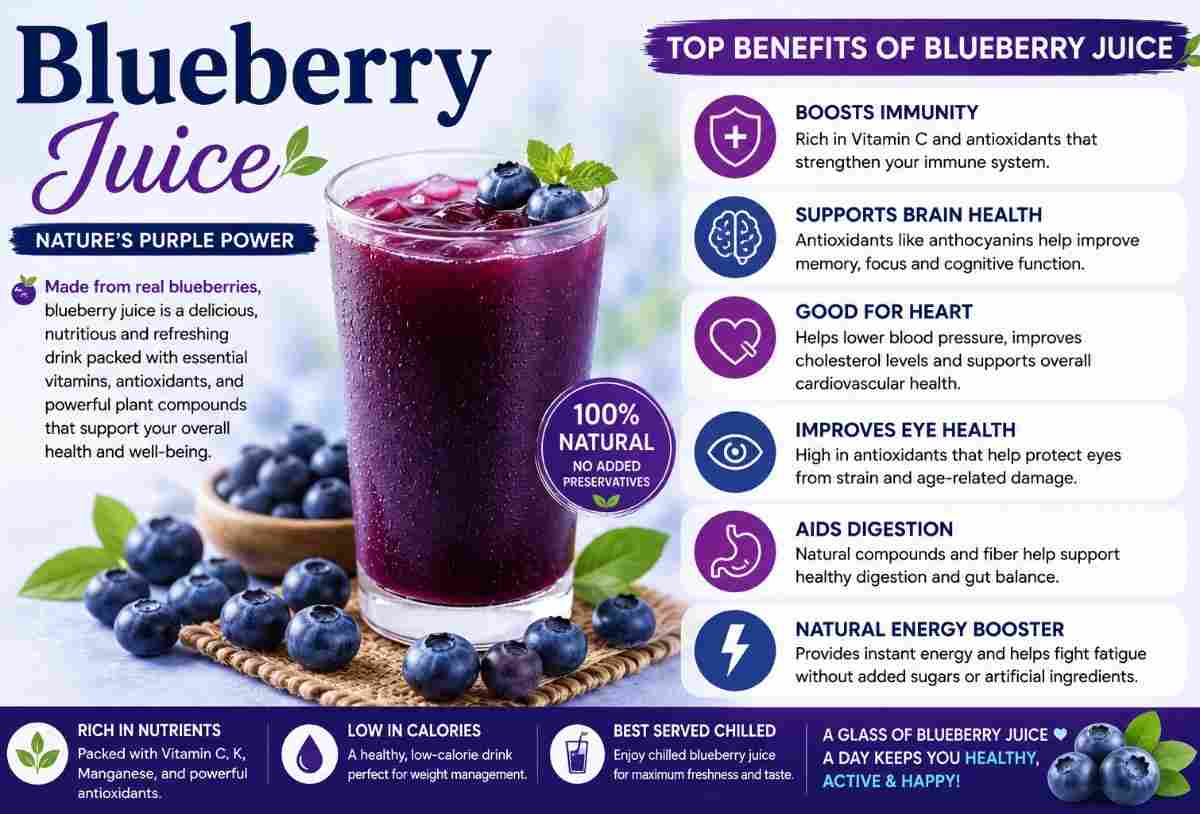
Blueberry juice is a vibrant, naturally sweet drink made from fresh or frozen blueberries. Its deep purple-blue color comes largely from anthocyanins, a group of plant compounds that have attracted considerable scientific interest because of their antioxidant and vascular effects.
Unlike many packaged fruit drinks, homemade blueberry juice can be prepared without added sugar. However, there is an important difference between blueberry juice and whole blueberries: juicing or straining removes much of the fruit’s fiber. For this reason, blueberry juice can complement a healthy diet, but it should not routinely replace whole fruit.
What Is Blueberry Juice?
Blueberry juice is a beverage prepared by extracting liquid from fresh or frozen blueberries. It can be made by blending blueberries with water and either drinking the mixture as a thicker juice or straining it to remove some of the pulp.
Homemade blueberry juice generally has a naturally sweet-tart flavor with a fruity aroma and deep purple, blue, or reddish-purple color. The exact taste depends on the blueberry variety, ripeness, water-to-fruit ratio, and whether sweeteners are added.
Blueberries contain several nutrients and phytochemicals, including vitamin C, vitamin K, manganese, and polyphenols such as anthocyanins. These compounds are responsible for much of the scientific interest surrounding blueberries.
One important distinction is that 100% blueberry juice is different from a blueberry-flavored drink. A flavored beverage may contain added sugar, water, syrups, or only a small percentage of actual fruit juice. Checking the ingredient list and Nutrition Facts label is therefore important.
The Dietary Guidelines for Americans note that 100% fruit juice can fit into a healthy dietary pattern but contains less fiber than whole fruit, so fruit should mostly be consumed in whole form.
Nutrition Facts of Blueberry Juice
The following is an approximate nutrition values for 1 cup (240 mL) of unsweetened homemade blueberry juice prepared from blueberries and water. Actual values vary considerably depending on the amount of fruit used, whether the pulp is retained, and how the juice is prepared.
| Nutrient | Approximate Amount per 1 Cup |
|---|---|
| Calories | 80–100 kcal |
| Carbohydrates | 20–24 g |
| Total sugars | 16–20 g |
| Dietary fiber | 0–2 g* |
| Protein | 0.5–1 g |
| Fat | Less than 1 g |
| Vitamin C | Approximately 10–15 mg |
| Vitamin K | Approximately 15–25 mcg |
| Manganese | Approximately 0.3–0.5 mg |
| Potassium | Approximately 120–180 mg |
| Anthocyanins | Variable |
| Added sugar | 0 g when homemade without sweetener |
20 Proven Health Benefits of Blueberry Juice
1. Provides Antioxidant Plant Compounds
Blueberry juice supplies anthocyanins and other polyphenols that can help the body manage oxidative stress, although antioxidant activity in laboratory testing does not automatically translate into disease prevention in humans.
2. May Support Heart Health
Blueberries and anthocyanin-rich foods have been studied for their potential effects on cardiovascular risk factors, including vascular function and certain blood lipid measures.
3. May Support Healthy Blood Vessel Function
Human intervention research suggests that berry anthocyanins may improve markers of endothelial function, which is important for healthy blood-vessel performance.
4. May Help Support Healthy Blood Pressure
Some studies of berry anthocyanins have reported improvements in blood pressure, although results vary and blueberry juice should not be considered a treatment for hypertension.
5. Supports Cognitive Health
Blueberry interventions have shown promising effects on certain measures of memory and cognitive performance, although research remains mixed and much of it involves blueberries or concentrated products rather than ordinary juice.
6. May Support Memory
Studies of blueberry consumption have reported improvements in some memory-related outcomes, particularly in certain groups of children and older adults, but more standardized research is needed.
7. Supplies Vitamin C
Unsweetened blueberry juice provides vitamin C, a nutrient involved in normal immune function, collagen formation, wound healing, and protection of cells from oxidative stress.
8. Provides Vitamin K
Blueberries contribute vitamin K, which is important for normal blood clotting and bone metabolism.
9. Provides Manganese
Blueberries contain manganese, a mineral involved in normal energy metabolism, connective-tissue formation, and antioxidant enzyme function.
10. Supports Hydration
Because blueberry juice contains a substantial amount of water, an unsweetened serving can contribute to daily fluid intake.
11. May Help Protect Cells From Oxidative Stress
Anthocyanins and other blueberry polyphenols have antioxidant properties that may help counter oxidative processes in the body.
12. May Support a Healthy Inflammatory Response
Human studies of blueberries and their bioactive compounds have investigated changes in markers associated with oxidative stress and inflammation, with results suggesting potential benefits but not establishing blueberry juice as an anti-inflammatory treatment.
13. May Support Healthy Cholesterol Levels
Research on anthocyanins and anthocyanin-rich berries has found potential improvements in some lipid measures, although findings are not consistent across every blueberry intervention.
14. May Support Metabolic Health
Research involving anthocyanins has reported possible improvements in markers such as glucose regulation and lipid profiles, but these findings cannot be directly interpreted as proof that ordinary blueberry juice prevents or treats metabolic disease.
15. Can Add Nutrient Variety to the Diet
A small serving of unsweetened blueberry juice can provide fruit-derived nutrients and polyphenols, making it one convenient way to add variety to an otherwise balanced diet.
16. May Support Healthy Aging
The combination of anthocyanins and other polyphenols has generated interest in healthy aging, particularly because vascular and cognitive health tend to become increasingly important with age.
17. May Support Vascular Protection
Research suggests berry anthocyanins may positively influence vascular function, which is one reason blueberries continue to be studied for cardiovascular health.
18. Provides a Naturally Fruity Alternative to Sugary Drinks
When prepared without added sugar, blueberry juice can replace some sugar-sweetened beverages while providing naturally occurring fruit compounds.
19. May Support Overall Antioxidant Status
Blueberries contain multiple polyphenolic compounds that have been associated with changes in antioxidant-related biomarkers in human research.
20. Can Make Fruit Intake More Enjoyable
For people who find plain water or whole fruit less appealing, a small glass of unsweetened blueberry juice can be an enjoyable way to include fruit flavors in a balanced eating pattern.
10 Side Effects of Blueberry Juice
Blueberry juice is generally well tolerated in moderate amounts, but drinking large servings or choosing sweetened commercial products may cause problems for some people.
1. May Cause Digestive Discomfort
Larger amounts may cause bloating, abdominal discomfort, or loose stools, particularly in people with sensitive digestive systems.
2. May Increase Sugar Intake
Although the sugar in unsweetened blueberry juice occurs naturally, juice can deliver more sugar in a smaller volume than whole fruit because much of the fiber and physical bulk are removed.
3. Added Sugar Can Increase Calories
Sweetened blueberry drinks can contain substantially more sugar and calories than homemade unsweetened juice.
4. May Affect Blood Glucose
People with diabetes or impaired glucose regulation should account for the carbohydrate content of juice, particularly when drinking larger portions.
5. May Contribute to Dental Problems
Frequent exposure to sugary or acidic beverages can increase the risk of tooth decay, especially when juice is sipped slowly throughout the day.
6. May Cause Allergic Reactions
Although blueberry allergy is uncommon, anyone who develops itching, swelling, hives, vomiting, or breathing difficulty after consuming blueberries should stop drinking the juice and seek appropriate medical care.
7. May Interact With Certain Dietary Restrictions
People following medically prescribed diets may need to account for the carbohydrates, potassium, vitamin K, or other nutrients provided by blueberry juice.
8. May Be Less Filling Than Whole Blueberries
Strained juice contains much less fiber than whole blueberries, so it may be less filling and easier to consume quickly.
9. May Cause Problems When Excessively Consumed
Drinking several glasses a day can unnecessarily increase calorie and carbohydrate intake without providing the same fiber and chewing benefits as whole fruit.
10. Packaged Products May Contain Extra Ingredients
Some blueberry beverages contain added sugar, syrups, flavorings, or other ingredients, making them nutritionally different from unsweetened 100% blueberry juice.
How to Make Blueberry Juice?
Making blueberry juice at home is simple and gives you better control over the ingredients.
Ingredients:
- 1 cup fresh or frozen blueberries
- 1 to 1½ cups cold drinking water
- 1–2 teaspoons lemon juice, optional
- A small amount of honey, optional
Method:
- Wash fresh blueberries thoroughly under clean running water.
- Add the blueberries and water to a blender.
- Blend until smooth.
- For a thicker drink, keep the pulp instead of straining it.
- For a thinner juice, strain the blended mixture through a fine-mesh strainer.
- Add lemon juice if you prefer a brighter, slightly tangy flavor.
- Avoid adding sugar when possible; if sweetness is necessary, use only a small amount.
- Serve immediately or refrigerate promptly.
Tip: Using the pulp gives the drink more fiber and makes it closer to a blueberry smoothie than traditional strained juice.
How to Drink Blueberry Juice?
Blueberry juice can be enjoyed on its own or incorporated into meals.
For most adults, a small serving of around 4–8 fluid ounces (120–240 mL) is a practical starting point. If the juice is concentrated or particularly sweet, a smaller serving may be more appropriate.
You can also dilute blueberry juice with water to reduce its sweetness and make a larger, lighter beverage.
Another option is to combine a small amount of blueberry juice with sparkling water for a refreshing drink without turning it into a high-sugar beverage.
If you want the nutritional advantages of the whole fruit, consider blending blueberries rather than straining them. This preserves more of the fruit’s fiber.
Tips for Consuming Blueberry Juice
- Choose 100% blueberry juice or homemade juice instead of blueberry-flavored drinks.
- Look for products with no added sugar.
- Keep portions moderate because juice is less filling than whole blueberries.
- Use frozen blueberries when fresh berries are unavailable.
- Keep the pulp if you want more fiber.
- Dilute concentrated juice with water.
- Pair juice with a meal containing protein or healthy fats rather than drinking a large amount by itself.
- Avoid slowly sipping juice throughout the entire day to reduce repeated exposure of teeth to sugars and acids.
- Treat juice as a complement to whole fruit rather than a replacement for it.
- Check the Nutrition Facts label carefully when buying packaged blueberry juice.
Other Uses of Blueberry Juice
Blueberry juice is useful beyond simply drinking it from a glass.
- Smoothies: Add a small amount to smoothies made with yogurt, oats, bananas, or other berries.
- Overnight Oats: Mix blueberry juice into overnight oats for additional fruit flavor and color.
- Chia Pudding: Use a small amount of blueberry juice as part of the liquid in homemade chia pudding.
- Salad Dressing: Blueberry juice can be reduced and combined with vinegar, olive oil, and herbs to make a fruit-based dressing.
- Marinades: A small amount can add fruity acidity and color to certain marinades.
- Frozen Treats: Freeze unsweetened blueberry juice in molds to make simple homemade ice pops.
- Mocktails: Combine blueberry juice with sparkling water, lemon, and fresh herbs for a nonalcoholic beverage.
- Sauces: Reduced blueberry juice can be used in sweet or savory sauces.
How Much Blueberry Juice Can You Drink in a Day?
There is no universally established therapeutic dose of blueberry juice.
For a healthy adult, about 4–8 ounces (120–240 mL) of unsweetened blueberry juice per day is a reasonable moderate serving, particularly when the rest of the diet already contains plenty of whole fruit.
You do not need to drink blueberry juice every day to obtain the benefits of blueberries. Whole blueberries generally offer an advantage because they provide more fiber and require more chewing, which can improve fullness.
The Dietary Guidelines for Americans emphasize that whole fruit should make up most fruit intake and that 100% fruit juice contains less dietary fiber than whole fruit.
For children, serving sizes should be age-appropriate. The 2020–2025 Dietary Guidelines state that fruit juice is not necessary during the second year of life and, when 100% juice is provided, up to 4 ounces per day can fit within a healthy dietary pattern.
Best Time to Drink Blueberry Juice
There is no scientifically established “best time” to drink blueberry juice.
In the Morning
A small glass can be included with breakfast, especially when paired with protein-rich foods such as eggs, Greek yogurt, or unsweetened oatmeal.
With Lunch
Blueberry juice can be included with lunch as an alternative to sweetened soft drinks.
Before or After Exercise
Its carbohydrates can contribute to energy intake around physical activity, although water remains the primary beverage for ordinary hydration.
In the Evening
There is no strong evidence that blueberry juice must be avoided at night. However, drinking a large sugary serving immediately before bed may be less desirable for people monitoring calorie or carbohydrate intake.
Overall, portion size and the nutritional quality of the juice matter more than the exact time of day.
Who Should Drink Blueberry Juice?
1. People Looking for an Unsweetened Fruit Beverage
Adults who want a naturally fruity alternative to sugar-sweetened beverages may enjoy a moderate serving of unsweetened blueberry juice.
2. People Who Enjoy Berries
Anyone who enjoys the sweet-tart flavor of blueberries can use the juice as an occasional part of a varied diet.
3. People Wanting More Polyphenol-Rich Foods
People interested in increasing their intake of plant foods containing polyphenols may include blueberries or blueberry juice as part of an overall healthy eating pattern.
4. People Who Have Difficulty Eating Whole Fruit
A small amount of 100% fruit juice can provide some fruit-derived nutrients for people who occasionally have difficulty eating whole fruit, although whole fruit remains preferable when practical.
5. Active Adults
Active adults can include a moderate amount of blueberry juice as a carbohydrate-containing beverage around meals or exercise when it fits their overall nutritional needs.
6. Adults Interested in Cardiovascular Nutrition
People following a heart-healthy eating pattern may include blueberries and other berries because research has identified potentially favorable effects on vascular function.
7. Older Adults
Older adults may include blueberries as part of a balanced diet, particularly because blueberry research has explored cognitive and vascular health.
Who Should Avoid Blueberry Juice?
1. People With a Blueberry Allergy
Anyone with a confirmed blueberry allergy should avoid blueberry juice and other blueberry-containing products.
2. People Advised to Limit Carbohydrates
People following a medically prescribed carbohydrate-controlled diet should count blueberry juice toward their daily carbohydrate intake.
3. People Who Need to Limit Potassium
Individuals on medically prescribed potassium restrictions should discuss appropriate portions with their healthcare professional.
4. People Sensitive to Fruit Acids
People who notice digestive discomfort or reflux symptoms after acidic beverages may need to reduce their intake or avoid juice if it consistently triggers symptoms.
5. People Who Need to Limit Sugar
Individuals who need strict blood-glucose or calorie control should be especially careful with sweetened blueberry beverages and large portions.
6. Young Infants
Fruit juice should not be given to infants younger than 12 months according to the Dietary Guidelines for Americans.
7. People Who Replace Whole Fruit With Juice
Anyone relying heavily on juice instead of whole fruit should reconsider the balance because juice provides less dietary fiber.
8. People Taking Certain Medications
People taking medications affected by vitamin K intake, blood pressure, blood glucose, or other dietary factors should ask their healthcare professional whether regular blueberry juice fits their individual treatment plan.
How to Store Blueberry Juice?
1. Refrigerate Immediately
Place freshly prepared blueberry juice in the refrigerator promptly rather than leaving it at room temperature for extended periods.
2. Use a Clean, Airtight Container
Store the juice in a clean, covered glass or food-safe container to reduce contamination and protect its flavor.
3. Drink It Fresh
Homemade blueberry juice is best consumed within a short period because it lacks the preservatives found in some commercial beverages.
4. Avoid Repeatedly Opening the Container
Keeping the container closed helps reduce exposure to air, odors, and potential contaminants.
5. Freeze Extra Juice
If you have prepared more juice than you can drink promptly, freezing it in suitable containers or ice-cube trays can help extend its usability.
6. Check for Spoilage
Discard blueberry juice if it develops an unusual smell, visible mold, unexpected fermentation, gas production, or an abnormal taste.
Precautions and Interactions
Blueberry juice is a food rather than a medicine, but a few precautions are worth keeping in mind.
- Watch Portion Size: Even unsweetened fruit juice contains naturally occurring sugars, so larger servings can add considerable carbohydrates and calories.
- Prefer Unsweetened Juice: Choose products without added sugar whenever possible.
- Do Not Treat It as Medicine: Although research on blueberries and anthocyanins is promising, blueberry juice should not be used to replace prescribed treatment for high blood pressure, diabetes, high cholesterol, or other medical conditions. Human evidence is encouraging in several areas but remains mixed and often involves forms of blueberries other than ordinary juice.
- Consider Blood Sugar: People with diabetes should include the carbohydrate content of juice in their overall meal plan.
- Consider Medication Advice: If you take prescription medications or have a condition requiring a medically restricted diet, ask your doctor or registered dietitian about regular consumption.
- Remember the Fiber Difference: Strained blueberry juice contains considerably less fiber than whole blueberries, so it should not completely replace whole fruit.
- Choose Pasteurized Commercial Juice When Appropriate: If purchasing commercial juice, check the label for pasteurization and storage instructions, especially when serving children, older adults, pregnant individuals, or people with weakened immune systems.
- Do Not Assume More Is Better: Drinking several glasses of blueberry juice does not necessarily provide greater health benefits and can increase sugar and calorie intake.
Blueberry Juice vs. Whole Blueberries
Although blueberry juice can be nutritious, whole blueberries generally have an important nutritional advantage: fiber.
When you eat whole blueberries, you consume the skin, pulp, and seeds along with the naturally occurring nutrients. When blueberries are juiced and strained, much of the fiber is removed.
This difference can influence fullness, digestion, and the way quickly you consume the fruit.
For everyday eating, therefore, a useful approach is to prioritize whole blueberries and use unsweetened blueberry juice as an occasional or moderate beverage.
The Dietary Guidelines specifically recognize that 100% fruit juice can contribute to a healthy dietary pattern while also emphasizing that whole fruit should make up most fruit intake because juice contains less dietary fiber.
Final Thought
Blueberry juice is a flavorful way to enjoy some of the nutrients and plant compounds found in blueberries. Its anthocyanins and other polyphenols are the main reason blueberries have received so much scientific attention, with research suggesting potential benefits for vascular function, cardiovascular health, oxidative stress, and certain aspects of cognition.
Still, blueberry juice is not a miracle drink. Whole blueberries should generally be prioritized because they provide more fiber, while unsweetened blueberry juice can be enjoyed in moderate portions as part of a balanced diet.
For most healthy adults, keeping a serving around 4–8 ounces and choosing a product with no added sugar is a practical approach. People with diabetes, food allergies, medication-related dietary restrictions, or other medical conditions should consider their individual nutritional needs before drinking it regularly.
FAQ’s
Is blueberry juice good for you?
Yes, unsweetened juice can provide anthocyanins, vitamin C, vitamin K, manganese, and other plant compounds. However, whole blueberries are generally a better everyday choice because they contain more fiber.
Can I drink blueberry juice every day?
Yes, most healthy adults can enjoy a moderate serving of unsweetened juice daily. Around 4–8 ounces (120–240 mL) is a reasonable portion for many people.
Is blueberry juice good for the heart?
Blueberries contain anthocyanins and other polyphenols that have been studied for their potential cardiovascular benefits, including effects on blood-vessel function and some cardiovascular risk factors.
Does blueberry juice help with blood pressure?
Some research suggests that anthocyanin-rich berries may support healthy blood pressure, but juice should not be considered a treatment for high blood pressure.
Is blueberry juice good for the brain?
Blueberries have been studied for their potential effects on memory and cognitive function. The evidence is promising but does not prove that ordinary juice can prevent or treat brain disorders.
What does blueberry juice taste like?
Juice usually tastes fruity, mildly sweet, and slightly tart. Its flavor becomes stronger when the blueberry pulp is retained.
What does blueberry juice smell like?
Fresh juice generally has a mild, sweet, fruity berry aroma. A fermented or unpleasant smell may indicate spoilage.
Is blueberry juice good for weight loss?
Blueberries juice can fit into a weight-management diet when consumed in moderation, but it is not a weight-loss drink. Whole blueberries are usually more filling because they contain more fiber.
Is blueberry juice high in sugar?
Unsweetened juice contains naturally occurring fruit sugars. Sweetened commercial blueberry beverages can contain considerably more sugar, so checking the Nutrition Facts label is important.
Can people with diabetes drink blueberry juice?
People with diabetes may be able to include small portions of unsweetened juice, but the carbohydrate content should be considered as part of their overall meal plan. Whole blueberries generally provide more fiber.
Is blueberry juice good for digestion?
Juice can contribute fluids to the diet, but strained juice contains much less fiber than whole blueberries. Keeping some pulp can increase its fiber content.
Is blueberry juice good for the skin?
Blueberries provide vitamin C and polyphenols that support normal antioxidant and collagen-related processes. However, drinking juice alone cannot guarantee clearer or younger-looking skin.
Can children drink blueberry juice?
Children over 12 months can have age-appropriate amounts of 100% fruit juice, but whole fruit should generally be preferred. The American Academy of Pediatrics recommends limiting juice intake according to the child’s age.
Can babies drink blueberry juice?
Fruit juice is not recommended for infants younger than 12 months. For older babies, discuss appropriate foods and beverages with a pediatrician.
Is blueberry juice safe during pregnancy?
Unsweetened, pasteurized juice can generally be included in a balanced pregnancy diet. Pregnant people should avoid unpasteurized juices because of the risk of harmful bacteria.
Can blueberry juice improve immunity?
Juice provides nutrients such as vitamin C and plant compounds that contribute to normal body functions, but it does not directly prevent infections or replace a balanced diet.
Can I drink blueberry juice at night?
Yes, there is no general requirement to avoid juice at night. However, people watching their carbohydrate or calorie intake may prefer a smaller serving.
How long does blueberry juice last in the refrigerator?
Homemade blueberry juice is best consumed within a few days when properly refrigerated in a clean, airtight container. Discard it if you notice mold, fermentation, an unusual smell, or other signs of spoilage.
Is blueberry juice better than eating blueberries?
Not generally. Whole blueberries provide significantly more fiber and are usually the better everyday choice. Blueberry juice can still be a convenient addition when consumed in moderate amounts.
Can blueberry juice help lower cholesterol?
Some research on blueberries and anthocyanin-rich foods suggests possible improvements in certain cholesterol and lipid measures, but evidence is not strong enough to use juice as a cholesterol-lowering treatment.
Can blueberry juice help with inflammation?
Blueberries contain polyphenols that may influence oxidative stress and inflammatory pathways. However, blueberry juice should be viewed as part of a healthy diet rather than a treatment for inflammation.
Is homemade blueberry juice healthier than store-bought juice?
Homemade juice can make it easier to avoid added sugar and control the ingredients. Store-bought 100% blueberry juice can also be nutritious, but labels should be checked for added sugars and other ingredients.
Can I drink blueberry juice on an empty stomach?
Most people can drink a small amount on an empty stomach, but some individuals may experience stomach discomfort from fruit acids. Having it with food can be more comfortable if you are sensitive.
Is blueberry juice good for the kidneys?
Blueberry juice can be part of a healthy diet for many people, but it is not proven to cleanse or treat the kidneys, and those with kidney disease should check with a healthcare professional before drinking it regularly.
Sources / References:
About the Author:
Written by: Kirti Solanki, Health Content Researcher
Kirti Solanki writes research-informed health and nutrition content, focusing on clear, practical explanations of foods, beverages, wellness topics, and everyday health choices.
Disclaimer:
This article is for general educational purposes only and does not replace professional medical advice, diagnosis, or treatment. If you have a medical condition, food allergy, or take prescription medication, consult a qualified healthcare professional before making significant dietary changes.
Also Read: