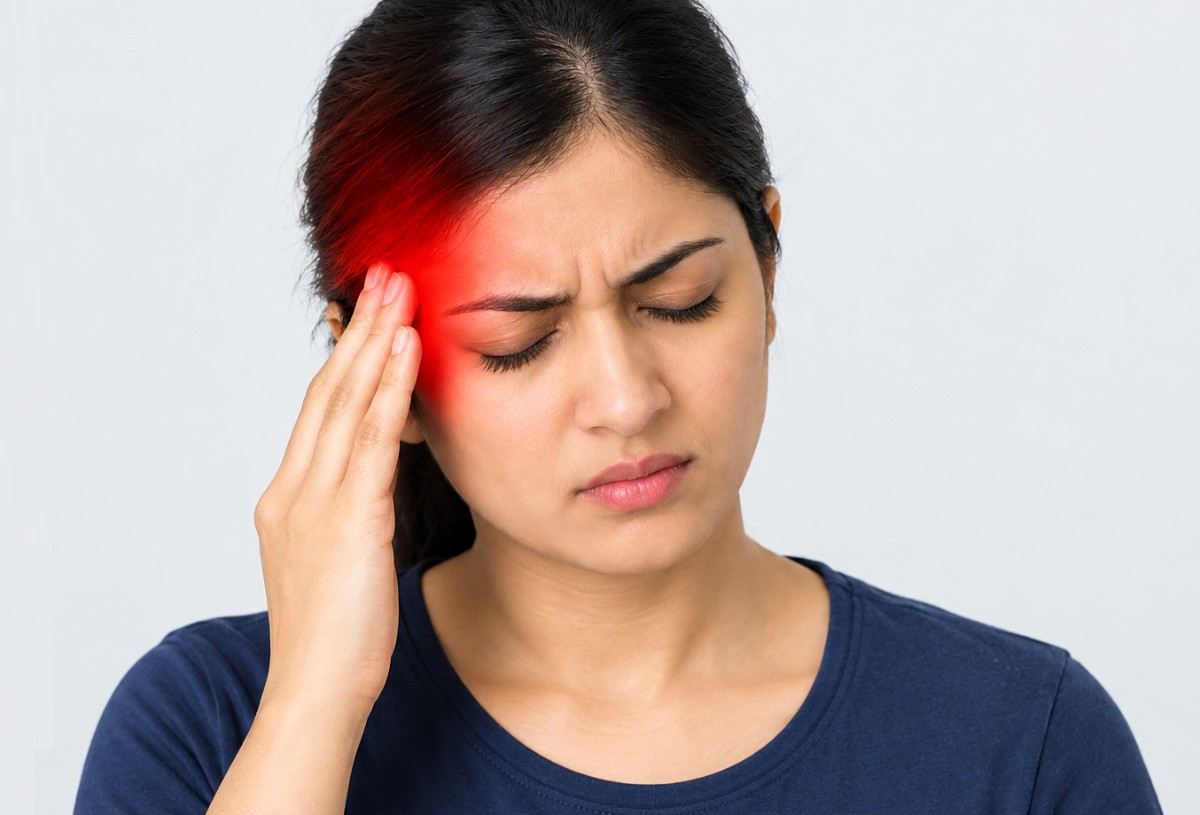
A headache on the right side of your head can be uncomfortable, distracting, and sometimes worrying. You may feel a dull ache near your right temple, throbbing pain behind your right eye, or sharp pain that spreads toward your neck. The meaning of the pain depends on its intensity, duration, location, and any other symptoms you experience.
A right-sided headache does not necessarily indicate a serious health problem. However, a new, sudden, or unusually severe headache can sometimes signal a medical emergency.
Understanding the possible causes can help you decide whether you can try simple self-care measures or need medical attention. This article explains what a right-sided headache may mean, how to recognize warning signs, and when to consult a healthcare professional.
What Does a Right-Sided Headache Mean?
A right-sided headache means that the pain is mainly located on the right side of your head. It may affect your forehead, temple, area around your eye, scalp, or the back of your head.
The location alone cannot tell you exactly what is causing the pain. For example, migraines often affect one side of the head, while cluster headaches commonly cause intense pain around one eye. Muscle tension, dehydration, sinus inflammation, and other conditions can also cause pain on the right side.
Pay attention to how the pain begins, how long it lasts, whether it keeps returning, and whether you experience nausea, vision changes, fever, or other symptoms. These details can help a healthcare professional identify the likely cause.
8 Possible Causes of a Right-Sided Headache
A headache on the right side can develop for several reasons. The following are common possibilities, although your symptoms alone may not be enough to determine the exact cause.
1. Migraine
Migraine is one of the common causes of one-sided head pain. It may cause a throbbing or pulsing sensation on the right side that worsens with movement or everyday activities.
Other symptoms can include nausea, vomiting, sensitivity to bright lights or loud sounds, and sometimes visual disturbances known as an aura. A migraine attack may last several hours or longer.
Migraines can affect either side of the head, and the side may change between attacks.
2. Tension-Type Headache
Tension-type headaches often cause a dull ache, pressure, or tightness around the head. Although the pain commonly affects both sides, some people may feel it more strongly on the right.
Stress, poor sleep, prolonged computer use, and strain in the neck or shoulders may contribute to this type of headache.
If your head hurts after a long day of work, particularly when your neck or shoulders feel tight, muscle strain or a tension-type headache may be worth considering.
3. Cluster Headache
A cluster headache causes intense, sharp, burning, or stabbing pain, usually around or behind one eye. The pain may spread to the right temple or other parts of the face.
You may also experience a watery or red eye, a blocked or runny nostril, or a drooping eyelid on the affected side. Attacks often begin suddenly, last between 15 minutes and three hours, and may occur several times a day during a cluster period.
Because cluster headaches can be extremely painful, a new episode of this kind should be assessed by a healthcare professional.
4. Dehydration
Not drinking enough fluids can trigger or worsen a headache. You may be more likely to experience dehydration after exercising, spending time in hot weather, sweating heavily, or having vomiting or diarrhoea.
Other signs may include thirst, a dry mouth, dark urine, and urinating less often than usual.
Dehydration-related headaches do not always affect the entire head. The pain may be felt mainly on one side, including the right side.
5. Eye Strain or Vision Problems
Long hours spent looking at a computer, mobile phone, or other digital screen can contribute to headaches, particularly if you have uncorrected vision problems or are working in poor lighting.
You may notice discomfort around the right temple or behind the right eye, along with tired eyes, blurred vision, or difficulty focusing.
Taking regular screen breaks may help. However, persistent headaches accompanied by eye pain or changes in vision deserve medical assessment. Sudden vision loss or a painful red eye requires urgent medical attention.
6. Sinus Inflammation or Infection
Inflammation of the sinuses can cause pressure or pain around the forehead, cheeks, nose, or eyes. The discomfort may feel more noticeable on one side.
Other symptoms of a sinus infection can include nasal congestion, thick nasal discharge, reduced sense of smell, and facial tenderness.
However, migraine can also cause facial pressure, watery eyes, and nasal congestion. These symptoms alone do not prove that a sinus infection is responsible. A clinician can help distinguish between the two conditions.
7. Neck Problems or Poor Posture
Pain originating in the neck can spread to the back of the head and sometimes toward one temple or eye. This may occur with muscle strain, prolonged poor posture, or certain neck-related headache disorders.
You might notice that the headache worsens when you turn your head or hold your neck in one position for a long time.
If the pain keeps returning, spreads from the neck to the head, or limits your neck movement, arrange a medical evaluation rather than assuming it is simply a posture problem.
8. Medication Overuse or Medication Side Effects
Some medicines can cause headaches as a side effect. In addition, taking headache-relief medicines too frequently can lead to medication-overuse headaches.
These headaches may occur repeatedly and can affect one or both sides of the head. The pattern may become more frequent over time.
If you regularly need painkillers to get through the day, speak with a healthcare professional about safer and more effective treatment options. Do not increase your dose or stop prescribed medicines without appropriate medical advice.
Is a Right-Sided Headache a Sign of Something Serious?
Most headaches are not caused by a life-threatening condition. However, the location of the pain cannot rule out serious problems.
Less common but important causes include bleeding around the brain, stroke, infections affecting the brain or its surrounding tissues, and blood vessel disorders. These conditions may produce additional symptoms, but a sudden, severe headache can itself be a warning sign.
Seek emergency medical care if your headache:
- Starts suddenly and becomes extremely severe within seconds or minutes.
- Occurs with weakness, numbness, facial drooping, confusion, difficulty speaking, or trouble walking.
- Is accompanied by fever and a stiff neck, particularly with severe illness or confusion.
- Causes sudden vision loss, double vision with other concerning symptoms, or loss of consciousness.
- Develops after a head injury, particularly if the pain is worsening.
Do not wait for the symptoms to improve on their own if any of these warning signs occur. Use your local emergency service or go to the nearest emergency department.
A new headache with jaw pain while chewing, scalp tenderness, or vision changes also requires urgent medical assessment, particularly in adults over 50.
How to Relieve a Right-Sided Headache at Home
If your headache is mild, familiar, and not accompanied by warning signs, a few simple measures may help reduce discomfort.
- Drink enough water: Replenish fluids, especially if you have been sweating or drinking less than usual.
- Rest in a quiet room: If you have migraine symptoms, resting in a dark, quiet space may help.
- Eat regular meals: Avoid skipping meals, as hunger can trigger headaches in some people.
- Take breaks from screens: Reduce prolonged screen use and give your eyes time to rest.
- Improve your posture: Keep your neck comfortable while working, reading, or using your phone.
- Try a cool compress: Place a cool cloth on your forehead or the affected area if it feels soothing.
- Manage stress: Gentle relaxation exercises and a consistent sleep routine may help reduce some headache triggers.
- Use medication carefully: An appropriate over-the-counter pain reliever may help, but follow the label and check with a pharmacist or doctor if you have other medical conditions, take other medicines, or are pregnant.
These measures may help with some common headaches, but they are not a substitute for medical assessment when symptoms are severe, unusual, or persistent.
When Should You See a Doctor for a Right-Sided Headache?
Arrange an appointment with a healthcare professional if:
- Your headaches keep returning or are becoming more frequent.
- The pain is getting worse or does not improve with appropriate self-care.
- Your headaches interfere with sleep, work, or daily activities.
- You develop a new headache pattern or a headache that feels different from your usual ones.
- You regularly need pain-relief medication.
- You have persistent eye discomfort, unexplained vomiting, or other concerning symptoms.
A doctor may ask about the pain’s location, intensity, duration, associated symptoms, medications, and possible triggers. Depending on your history and examination, further tests may or may not be necessary. Keeping a headache diary can help identify patterns and support diagnosis.
How to Prevent Recurring Right-Sided Headaches
Although not every headache can be prevented, healthy daily habits may help reduce the frequency of some headaches.
- Maintain a regular sleep schedule: Aim for consistent bedtimes and wake-up times.
- Stay hydrated: Drink fluids regularly throughout the day.
- Avoid skipping meals: Eat balanced meals at reasonably consistent times.
- Identify your triggers: Record possible links between headaches, stress, food, sleep, and menstrual cycles.
- Limit excessive caffeine: Sudden changes in caffeine intake can trigger headaches in some people.
- Take regular screen breaks: Adjust your workstation and avoid prolonged awkward neck positions.
- Manage stress: Find relaxation methods that fit your daily routine.
- Use headache medication appropriately: Frequent use can contribute to medication-overuse headaches.
If you experience recurrent headaches despite these changes, ask a healthcare professional about preventive treatment options.
FAQ’s
Can a right-sided headache be a sign of a stroke?
A headache alone is not usually a sign of stroke, but a sudden severe headache with weakness, facial drooping, confusion, or difficulty speaking requires emergency medical attention.
Why does the right side of my head hurt near my eye?
Pain near the right eye may result from migraine, cluster headaches, eye strain, or sinus problems. A painful red eye or sudden vision changes require urgent medical assessment.
Can dehydration cause a right-sided headache?
Yes, dehydration can trigger or worsen headaches, sometimes affecting one side of the head. Drinking water may help if dehydration is the cause.
Should I worry about a right-sided headache every day?
Daily or recurring headaches should be evaluated by a healthcare professional, particularly if they are worsening, unusual, or require frequent pain medication.
Can stress cause pain on the right side of the head?
Yes, stress can trigger or worsen tension-type headaches and migraines. However, persistent or unusual pain should not automatically be attributed to stress.
How long does a right-sided headache last?
The duration depends on the cause. Some headaches last minutes or hours, while migraines may last 4–72 hours. Cluster headache attacks typically last 15 minutes to 3 hours.
Can sinus problems cause a headache on the right side?
Yes, sinus inflammation can cause pressure around the forehead, cheek, or eye, sometimes on one side. However, migraines can cause similar symptoms.
Conclusion
A right-sided headache can mean several things, ranging from migraine and tension-type headaches to dehydration, eye strain, or cluster headaches. The side of your head that hurts does not, by itself, reveal whether the cause is harmless or serious.
Pay attention to the severity, duration, frequency, and accompanying symptoms. Mild headaches may improve with rest, hydration, and appropriate self-care, but recurring or worsening headaches should be assessed by a healthcare professional. Sudden severe pain or headache accompanied by neurological symptoms requires emergency medical attention.
Sources and References:
About the Author: Written by: Kirti Solanki (Health Content Researcher):
Kirti Solanki creates reader-friendly health content informed by reputable medical sources. Her work aims to explain health topics clearly, encourage informed decisions, and help readers recognize when professional medical advice is needed.
Disclaimer:
This article is for educational purposes only and does not replace professional medical advice, diagnosis, or treatment. Consult a qualified healthcare professional for persistent or concerning headaches. Seek emergency care for sudden, severe headaches or symptoms that may indicate a serious medical condition.
Also Read: