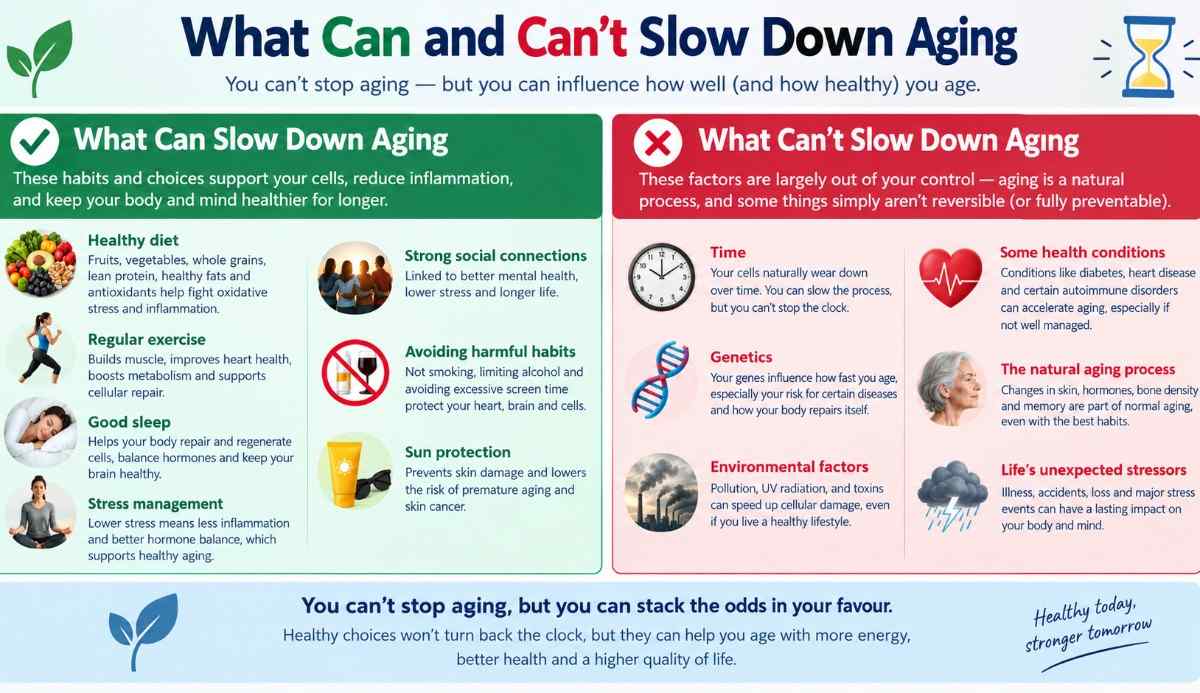
Aging is a natural part of life, but how we age can be influenced by our daily habits, environment, genetics, and overall health. While some changes, such as wrinkles, gray hair, and a gradual loss of muscle strength, are expected over time, other age-related problems may be delayed or managed through healthy lifestyle choices.
With so many anti-aging creams, supplements, special diets, and longevity trends available today, it can be difficult to separate scientific evidence from marketing claims. The truth is that you cannot completely stop aging, but you can take meaningful steps to protect your health, maintain your strength, and reduce the risk of many age-related diseases.
Understanding what actually works — and what does not — can help you make better decisions about your long-term health without wasting money on unproven treatments.
What Happens to the Body as We Age?
Aging involves gradual changes throughout the body. Over time, cells accumulate damage, muscle mass and bone density may decline, skin becomes less elastic, and some body systems may not function as efficiently as they once did.
The immune system also changes with age, and the risk of conditions such as heart disease, type 2 diabetes, osteoporosis, and certain types of cancer increases. However, these changes do not happen at the same rate in everyone.
Genetics play a role, but lifestyle, environmental exposures, access to health care, and existing medical conditions also influence how a person ages. Some people remain physically active and mentally sharp well into older age, while others experience health problems earlier in life.
The goal of healthy aging is not to look young forever. It is to preserve physical function, mental well-being, independence, and quality of life for as long as possible.
10 Things That Can Help Slow Down the Effects of Aging
- Regular Physical Activity: Walking, swimming, and strength training help maintain muscle mass, bone strength, balance, and heart health as you grow older.
- Balanced Diet: Eating fruits, vegetables, whole grains, nuts, legumes, and protein-rich foods provides essential nutrients that support healthy cells and reduce the risk of chronic diseases.
- Quality Sleep: Getting around seven to nine hours of sleep each night supports memory, immune function, physical recovery, and metabolic health.
- Sun Protection: Using broad-spectrum sunscreen, wearing protective clothing, and seeking shade help reduce premature wrinkles, dark spots, and UV-related skin damage.
- Avoiding Smoking: Quitting smoking reduces the risk of heart disease, lung disease, and cancer while helping protect skin health and circulation.
- Stress Management: Practicing relaxation techniques, maintaining hobbies, and taking regular breaks can improve emotional well-being and support healthy sleep habits.
- Social Connections: Spending time with friends, family, and community groups can reduce loneliness, provide emotional support, and promote a better quality of life.
- Mental Stimulation: Reading, learning new skills, solving puzzles, and engaging in meaningful activities help keep the brain active and support cognitive health.
- Managing Chronic Conditions: Monitoring blood pressure, cholesterol, and blood sugar helps reduce the risk of complications that can affect long-term health and independence.
- Limiting Alcohol: Reducing alcohol consumption helps protect the liver, improve sleep, and lower the risk of certain cancers and other alcohol-related health problems.
10 Things That Cannot Reliably Slow Down or Reverse Aging
Not every product or habit promoted as an anti-aging solution has strong scientific support. Some may improve a specific aspect of appearance or health, but that does not mean they slow the body’s overall aging process.
- Expensive Anti-Aging Creams: Some creams can improve skin hydration and soften fine lines, but they cannot stop internal aging or reverse changes in the body’s organs.
- Detox Diets and Cleansing Drinks: These products often claim to remove toxins and rejuvenate the body, but there is little convincing evidence that they slow aging beyond the body’s normal waste-removal processes.
- Collagen Supplements: Some studies suggest modest benefits for skin hydration and elasticity, but collagen supplements have not been proven to stop overall aging or reverse age-related changes throughout the body.
- High-Dose Vitamins: Taking extra vitamins does not automatically improve longevity, and excessive amounts of certain nutrients can cause toxicity or other health complications.
- Unproven Anti-Aging Pills: Products marketed to reverse biological aging may lack reliable human evidence, and some can cause side effects or interact with medications.
- Extreme Calorie Restriction: Severely limiting food intake may cause muscle loss, nutritional deficiencies, and weakness, particularly in older adults, without established evidence that it extends human lifespan.
- Hormone Therapy for Anti-Aging: Using hormones such as growth hormone or testosterone solely to stay young is not a proven anti-aging strategy and may expose healthy people to unnecessary health risks.
- Relying on a Single Superfood: Foods such as berries, nuts, and leafy greens provide valuable nutrients, but no single food can prevent aging or compensate for an otherwise unhealthy lifestyle.
- Excessive Water Intake: Drinking more water than your body needs does not eliminate wrinkles or reverse aging, and excessive intake can dangerously lower blood sodium levels.
- Stress-Relief Techniques Alone: Meditation, yoga, and breathing exercises can help manage stress and improve well-being, but they have not been proven to reverse the body’s overall biological aging process.
What About Biological Age and Anti-Aging Research?
Chronological age refers to the number of years you have lived. Biological age, by contrast, refers to estimates of how your body is functioning relative to patterns associated with aging.
Researchers study biological aging using several approaches, including molecular markers, DNA methylation patterns, and measures of organ function. Some tests marketed as biological-age clocks attempt to estimate aging-related changes, but their accuracy and usefulness can vary depending on the test and the purpose for which it is used.
A result suggesting that your biological age is higher or lower than your chronological age should not be treated as a definitive diagnosis or a precise prediction of how long you will live.
Scientists are investigating whether certain interventions can influence the underlying biology of aging. Although this research is promising, there is still a difference between changing an aging-related biomarker and proving that a treatment helps people live longer, healthier lives.
For now, the most reliable approach is to focus on habits that improve established health outcomes rather than chasing a particular biological-age score.
Practical Daily Habits to Support Healthy Aging
You do not need to change your entire lifestyle overnight. Start with manageable habits and build a routine you can maintain.
- Morning: Get some daylight, drink water, and take a short walk or do gentle stretching.
- During meals: Include vegetables, fruit, protein-rich foods, whole grains, and healthy fats.
- Throughout the day: Move regularly, take breaks from prolonged sitting, and stay connected with others.
- Evening: Limit late caffeine, reduce screen-related distractions, and follow a relaxing bedtime routine.
- Regularly: Attend recommended health checkups, stay up to date on vaccinations, and review medications with your clinician.
The best routine is one that fits your age, physical abilities, medical needs, and everyday responsibilities. If you have a chronic condition or have been inactive for a long time, seek medical guidance before starting strenuous exercise or making major dietary changes.
FAQ’s
Can aging be slowed down naturally?
Yes, healthy habits such as regular exercise, balanced nutrition, adequate sleep, sun protection, and avoiding smoking can help slow some age-related changes and reduce the risk of chronic diseases.
What is the best way to slow down aging?
Regular physical activity, a nutrient-rich diet, quality sleep, stress management, and preventive healthcare are among the most effective evidence-based ways to support healthy aging.
Can you reverse the aging process?
No proven treatment can completely reverse human aging. However, certain lifestyle changes can improve physical fitness, metabolic health, and other aspects of well-being.
Which foods help slow down aging?
Fruits, vegetables, whole grains, nuts, seeds, legumes, and protein-rich foods provide nutrients that support healthy aging. No single food can stop the aging process.
Does drinking water slow down aging?
Adequate hydration supports normal bodily functions and helps prevent dehydration, but drinking excessive water does not reverse aging or eliminate wrinkles.
Can exercise make you look younger?
Exercise can improve muscle strength, posture, mobility, and overall fitness. These benefits may help you look and feel healthier, but exercise cannot stop natural aging.
Do anti-aging supplements really work?
Some supplements may help correct nutritional deficiencies, but no supplement has been conclusively proven to stop human aging or reliably extend lifespan in healthy people.
Does stress make you age faster?
Chronic stress can affect sleep, cardiovascular health, and overall well-being. Managing stress may support healthier aging, although it cannot guarantee slower biological aging.
Can you reverse biological aging?
Some interventions may influence biological markers associated with aging, but no treatment has been conclusively shown to reverse the entire human aging process. Research is ongoing, and changes in biological-age test results do not necessarily mean that a person will live longer.
Does sugar make you age faster?
Consuming excessive amounts of added sugar can contribute to weight gain, metabolic problems, and an increased risk of type 2 diabetes. Sugar-related chemical processes can also affect proteins in the body, including those in the skin. However, eating sugar does not automatically make someone age faster, and the overall diet and lifestyle matter.
Which vitamins help slow aging?
No vitamin has been proven to stop aging. Vitamins such as B12, vitamin D, and others are important for specific bodily functions, and supplements may help when someone has a deficiency or a particular medical need. Taking high doses without a reason is not a proven longevity strategy.
At what age should you start focusing on healthy aging?
Healthy aging starts at any age. Developing good habits during childhood and adulthood may help reduce health risks later in life, but it is never too late to benefit from appropriate physical activity, nutritious eating, better sleep, and preventive care.
Conclusion
Aging is unavoidable, but many of the health problems commonly associated with getting older are influenced by factors that can be managed. Regular exercise, balanced nutrition, quality sleep, sun protection, avoiding tobacco, maintaining social connections, and controlling chronic health conditions can all contribute to healthier aging.
At the same time, it is important to be cautious about detox products, unproven anti-aging supplements, extreme diets, and treatments that promise to reverse your biological age.
The real goal is not to remain young forever, but to stay healthy, strong, active, and independent for as long as possible. Consistent, evidence-based habits are a more dependable investment in long-term health than expensive shortcuts.
Sources / References:
- National Institute on Aging
- National Institutes of Health
- Centers for Disease Control and Prevention
About the Author: Written by: Kirti Solanki (Health Content Researcher):
Kirti Solanki is a health content researcher who focuses on creating accessible, research-informed articles about health, nutrition, and wellness. Her work aims to help readers understand health topics through reliable sources and practical information.
Disclaimer:
This article is for informational and educational purposes only and does not replace professional medical advice, diagnosis, or treatment. Consult a qualified healthcare professional before starting supplements, hormone treatments, restrictive diets, or a new exercise program, particularly if you have an existing medical condition.
Also Read: