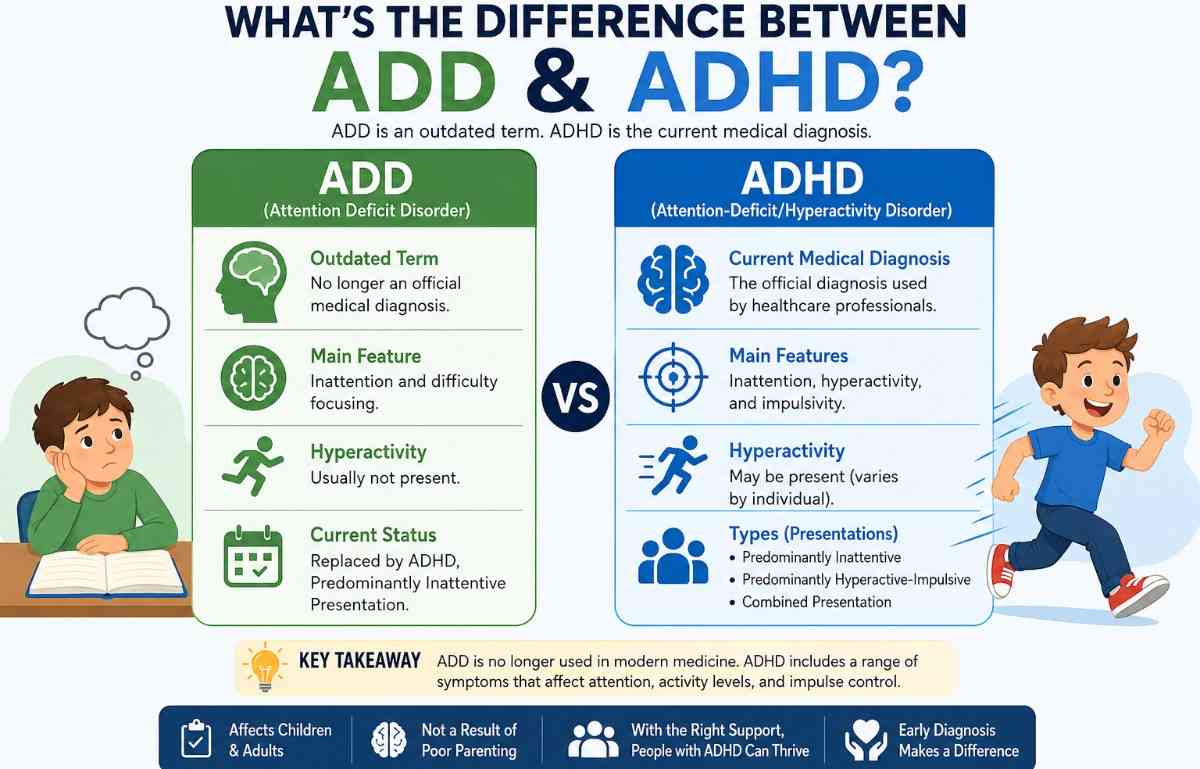
Many people still use the term ADD (Attention Deficit Disorder) when talking about attention-related difficulties, while others use ADHD (Attention-Deficit/Hyperactivity Disorder). This often creates confusion. Are ADD and ADHD the same condition? Is one more serious than the other? Can someone have ADD without hyperactivity?
The short answer is that ADD is an outdated medical term, while ADHD is the current and official diagnosis used by healthcare professionals today.
Understanding the difference between ADD and ADHD is important because it helps parents, teachers, caregivers, and adults recognize symptoms accurately and seek appropriate support. ADHD affects millions of children and adults worldwide and can influence academic performance, workplace productivity, relationships, emotional regulation, and daily functioning.
In this guide, we’ll explain what ADD and ADHD mean, how medical terminology has evolved, the different types of ADHD, symptoms, causes, diagnosis, treatment options, and practical coping strategies.
What Is ADD?
ADD (Attention Deficit Disorder) was a term commonly used in the past to describe individuals who experienced attention and concentration difficulties without significant hyperactive behavior.
People diagnosed with ADD often struggled with:
- Staying focused
- Following instructions
- Completing tasks
- Organization
- Forgetfulness
- Daydreaming
Unlike individuals with hyperactivity, they might appear quiet, withdrawn, or easily distracted rather than overly energetic.
However, the term ADD is no longer used as an official medical diagnosis.
What Is ADHD?
ADHD (Attention-Deficit/Hyperactivity Disorder) is a neurodevelopmental disorder that affects attention, impulse control, and, in some individuals, activity levels.
ADHD can affect:
- Children
- Teenagers
- Adults
- Men and women
Symptoms can vary significantly from person to person.
Modern medical guidelines classify ADHD into different presentations based on symptom patterns.
The Evolution from ADD to ADHD
The terminology surrounding attention disorders has changed over time.
| Year | Terminology |
|---|---|
| 1980 | Attention Deficit Disorder (ADD) introduced |
| 1987 | ADHD became the official diagnosis |
| 1994 | ADHD categorized into subtypes |
| Present | ADHD categorized into presentations |
Today, healthcare professionals use the term ADHD regardless of whether hyperactivity is present.
Individuals previously diagnosed with ADD are now typically classified as having ADHD, Predominantly Inattentive Presentation.
ADD vs ADHD
| Feature | ADD | ADHD |
|---|---|---|
| Official Medical Diagnosis | No | Yes |
| Current Use in Medicine | Outdated | Current |
| Hyperactivity Present | Usually absent | May or may not be present |
| Inattention | Common | Common |
| Impulsivity | May occur | Common |
| Included in DSM-5 | No | Yes |
| Diagnosis by Doctors Today | No | Yes |
| Affects Children | Yes | Yes |
| Affects Adults | Yes | Yes |
| Treatment Approach | Same as ADHD | Standard treatment available |
Key Takeaway: ADD is not a separate disorder. What many people call ADD today is usually ADHD, Predominantly Inattentive Presentation.
Types of ADHD
1. Predominantly Inattentive Presentation
This type is what many people historically referred to as ADD.
Common symptoms include:
- Difficulty paying attention
- Frequent daydreaming
- Losing items
- Forgetfulness
- Poor organization
- Trouble following instructions
- Easily distracted
People with this presentation may not appear disruptive and therefore may go undiagnosed for years.
2. Predominantly Hyperactive-Impulsive Presentation
This presentation involves excessive activity and impulsive behaviors.
Symptoms may include:
- Constant movement
- Fidgeting
- Interrupting conversations
- Difficulty sitting still
- Excessive talking
- Impatience
Children are more commonly diagnosed with this presentation.
3. Combined Presentation
This is the most common type of ADHD.
Individuals experience symptoms of both:
- Inattention
- Hyperactivity-impulsivity
These symptoms significantly affect daily functioning.
Symptoms of ADHD
Symptoms often vary by age, gender, and ADHD presentation.
Inattention Symptoms
People may:
- Make careless mistakes
- Lose focus easily
- Forget appointments
- Misplace belongings
- Struggle with time management
- Avoid lengthy tasks
- Have difficulty listening
- Appear absent-minded
Hyperactivity Symptoms
People may:
- Fidget frequently
- Feel restless
- Talk excessively
- Have difficulty remaining seated
- Move constantly
- Feel driven by an internal motor
Impulsivity Symptoms
Common signs include:
- Interrupting others
- Acting without thinking
- Difficulty waiting turns
- Emotional outbursts
- Risk-taking behaviors
- Impulsive spending
Related Articles:
- What Is Hyperfocus? Symptoms, Causes & How to Manage It
- Why You Can’t Concentrate? Causes, Exercises & Practical Strategies
- Emotional Exhaustion: Causes, Symptoms, Recovery & Prevention
ADD vs ADHD Symptoms Comparison
| Symptom | Historical ADD | ADHD |
|---|---|---|
| Easily Distracted | Yes | Yes |
| Forgetfulness | Yes | Yes |
| Poor Organization | Yes | Yes |
| Daydreaming | Common | Common |
| Hyperactivity | Rare | May occur |
| Excessive Talking | Rare | Common |
| Restlessness | Rare | Common |
| Impulsiveness | Mild | Common |
Why Was ADD Removed?
Researchers discovered that attention problems and hyperactivity were not entirely separate disorders.
Many individuals displayed a mixture of symptoms that changed over time.
As scientific understanding improved, experts recognized that:
- Attention deficits and hyperactivity often coexist.
- Symptoms can evolve throughout life.
- Brain mechanisms overlap significantly.
Therefore, the diagnosis was unified under ADHD.
Causes of ADHD
Scientists do not believe ADHD has a single cause.
Instead, multiple factors appear to contribute.
1. Genetics
ADHD often runs in families.
Children with a parent or sibling who has ADHD have a higher likelihood of developing it.
2. Brain Structure and Function
Research suggests differences in brain regions responsible for:
- Attention
- Planning
- Self-control
- Executive functioning
3. Neurotransmitter Differences
Dopamine and norepinephrine play essential roles in attention and motivation.
Imbalances in these chemicals may contribute to ADHD symptoms.
4. Environmental Factors
Potential contributors include:
- Premature birth
- Low birth weight
- Prenatal exposure to tobacco
- Prenatal alcohol exposure
- Lead exposure
ADHD in Children
Children often display ADHD differently than adults.
Common signs include:
- Difficulty sitting still
- Classroom disruptions
- Forgetting homework
- Frequent mistakes
- Emotional outbursts
- Difficulty following directions
Some children primarily struggle with inattentive symptoms and may be overlooked because they are not disruptive.
ADHD in Adults
Many adults are surprised to learn they have ADHD because symptoms can appear differently with age.
Common adult symptoms include:
- Chronic procrastination
- Difficulty managing time
- Poor organization
- Forgetfulness
- Relationship struggles
- Impulsive spending
- Job performance challenges
- Restlessness
Adults often develop coping strategies that mask symptoms for years before diagnosis.
ADHD in Women and Girls
Women and girls are frequently underdiagnosed.
Reasons include:
- Less obvious hyperactivity
- More inattentive symptoms
- Quiet daydreaming
- Internalized struggles
- Better masking behaviors
Common signs may include:
- Chronic overwhelm
- Forgetfulness
- Emotional sensitivity
- Difficulty prioritizing tasks
- Mental exhaustion
Early recognition can improve quality of life significantly.
How ADHD Is Diagnosed?
There is no single test for ADHD.
Diagnosis typically involves:
1. Medical History
A healthcare professional reviews:
- Symptoms
- Developmental history
- Family history
2. Behavioral Assessment
Questionnaires and rating scales may be completed by:
- Parents
- Teachers
- Caregivers
- Adults seeking evaluation
3. Symptom Evaluation
Clinicians determine whether symptoms:
- Are persistent
- Occur in multiple settings
- Affect daily functioning
4. Rule-Out Process
Other conditions may produce similar symptoms, including:
- Anxiety disorders
- Depression
- Sleep disorders
- Learning disabilities
- Thyroid disorders
ADHD Treatment Options
Treatment plans are individualized.
Most successful approaches combine multiple strategies.
1. Medication
Common medication categories include:
Stimulants
Examples include medications containing:
- Methylphenidate
- Amphetamine compounds
These are often considered first-line treatments.
Non-Stimulants
Some individuals benefit from non-stimulant medications when stimulants are not appropriate.
Medication decisions should always be made with a qualified healthcare professional.
2. Behavioral Therapy
Therapy can help individuals:
- Develop routines
- Improve organization
- Manage emotions
- Build coping skills
3. Parent Training
Parents learn techniques for:
- Positive reinforcement
- Consistent routines
- Effective communication
- Behavioral management
4. School Accommodations
Children may benefit from:
- Extra time on assignments
- Structured schedules
- Reduced distractions
- Organizational support
5. ADHD Coaching
Coaches help individuals:
- Set goals
- Manage time
- Create systems
- Improve productivity
Natural and Lifestyle Strategies for ADHD
Lifestyle interventions cannot cure ADHD but may help reduce symptoms.
1. Regular Exercise
Physical activity may improve:
- Attention
- Mood
- Executive functioning
- Stress management
2. Consistent Sleep
Poor sleep can worsen ADHD symptoms.
Helpful habits include:
- Fixed bedtime routines
- Limited screen exposure before bed
- Consistent wake times
3. Balanced Nutrition
Healthy eating patterns may support overall brain health.
Focus on:
- Fruits
- Vegetables
- Lean proteins
- Whole grains
- Healthy fats
4. Mindfulness Practices
Meditation and mindfulness may improve:
- Self-awareness
- Emotional regulation
- Attention control
5. Structured Routines
Predictable schedules reduce cognitive overload and improve daily functioning.
Common Myths About ADD and ADHD
Myth 1: ADD and ADHD Are Different Disorders
Reality: ADD is simply an older term for what is now classified under ADHD.
Myth 2: ADHD Only Affects Children
Reality: ADHD frequently continues into adulthood.
Myth 3: People with ADHD Are Lazy
Reality: ADHD is a neurodevelopmental condition, not a character flaw.
Myth 4: Everyone with ADHD Is Hyperactive
Reality: Many individuals primarily experience inattentive symptoms.
Myth 5: ADHD Is Caused by Poor Parenting
Reality: Research strongly supports biological and genetic influences.
When to Seek Professional Help?
Consider consulting a healthcare professional if attention-related symptoms:
- Interfere with school performance
- Affect work productivity
- Cause relationship difficulties
- Lead to emotional distress
- Persist for months or years
Early diagnosis and intervention can improve long-term outcomes.
The Bottom Line:
The biggest difference between ADD and ADHD is that ADD is an outdated term, while ADHD is the official medical diagnosis used today.
People who were once described as having ADD are generally classified as having ADHD, Predominantly Inattentive Presentation. ADHD exists on a spectrum and can include varying levels of inattention, hyperactivity, and impulsivity.
Understanding these distinctions can help individuals, families, educators, and healthcare providers recognize symptoms earlier and pursue effective treatment strategies. With proper support, therapy, lifestyle adjustments, and medical guidance when needed, people with ADHD can thrive in school, work, relationships, and everyday life.
FAQs
Is ADD still a real diagnosis?
No. ADD is no longer an official diagnosis. Healthcare professionals now use ADHD as the standard diagnostic term.
Can someone have ADHD without being hyperactive?
Yes. People with ADHD, Predominantly Inattentive Presentation may have little or no hyperactivity but still struggle with focus, organization, and attention.
Is ADD less serious than ADHD?
Not necessarily. Inattentive symptoms can significantly affect school, work, relationships, and daily life, even without hyperactivity.
What type of ADHD was formerly called ADD?
The condition formerly known as ADD is now generally classified as ADHD, Predominantly Inattentive Presentation.
Can adults have ADHD?
Yes. ADHD often continues into adulthood, and many people are not diagnosed until later in life.
Can ADHD be cured?
There is currently no cure for ADHD, but symptoms can often be effectively managed with medication, therapy, lifestyle changes, and support strategies.
Do girls and boys show ADHD differently?
Often, yes. Boys are more likely to show hyperactive behaviors, while girls may have more inattentive symptoms, which can make diagnosis more challenging.
What are the most common signs of inattentive ADHD?
Common signs include forgetfulness, difficulty concentrating, losing items, poor organization, daydreaming, and trouble completing tasks.
Can ADHD affect academic performance?
Yes. ADHD can make it difficult to focus, follow instructions, manage time, stay organized, and complete assignments.
Can ADHD affect relationships?
Yes. Symptoms such as forgetfulness, impulsivity, emotional dysregulation, and communication difficulties can sometimes create challenges in personal relationships.
Is medication necessary for everyone with ADHD?
No. Treatment plans vary by individual. Some people benefit from medication, while others may use behavioral therapy, coaching, lifestyle modifications, or a combination of approaches.
What type of ADHD was formerly called ADD?
What was once called ADD is generally known today as ADHD, Predominantly Inattentive Presentation.
Sources / References:
- American Psychiatric Association (DSM-5)
- National Institute of Mental Health (NIMH) – ADHD
- Centers for Disease Control and Prevention (CDC) – ADHD Information
- National Health Service (NHS) – ADHD Overview
- Mayo Clinic – ADHD Symptoms and Causes
- MedlinePlus – ADHD
Also Read:
- Anxiety Shaking: Causes, Symptoms, Treatment & How to Stop It
- Social Anxiety Disorder: Symptoms, Causes & Treatment
- What is Zoning Out? Causes, Symptoms & How to Reduce It
About the Author:
Kirti Solanki is a health and wellness content writer dedicated to creating evidence-based, reader-friendly articles on nutrition, parenting, mental health, pregnancy, and lifestyle topics. She researches information from reputable medical organizations, peer-reviewed studies, and trusted healthcare resources to provide accurate and practical guidance for readers. Her goal is to simplify complex health topics into clear, actionable content that supports informed decision-making.
Disclaimer:
This guide is for educational and informational purposes only and should not be considered medical advice, diagnosis, or treatment. Always consult a qualified physician, psychologist, psychiatrist, or other licensed healthcare professional regarding any medical or mental health concerns. Never ignore professional medical advice or delay seeking treatment because of information you have read in this guide.