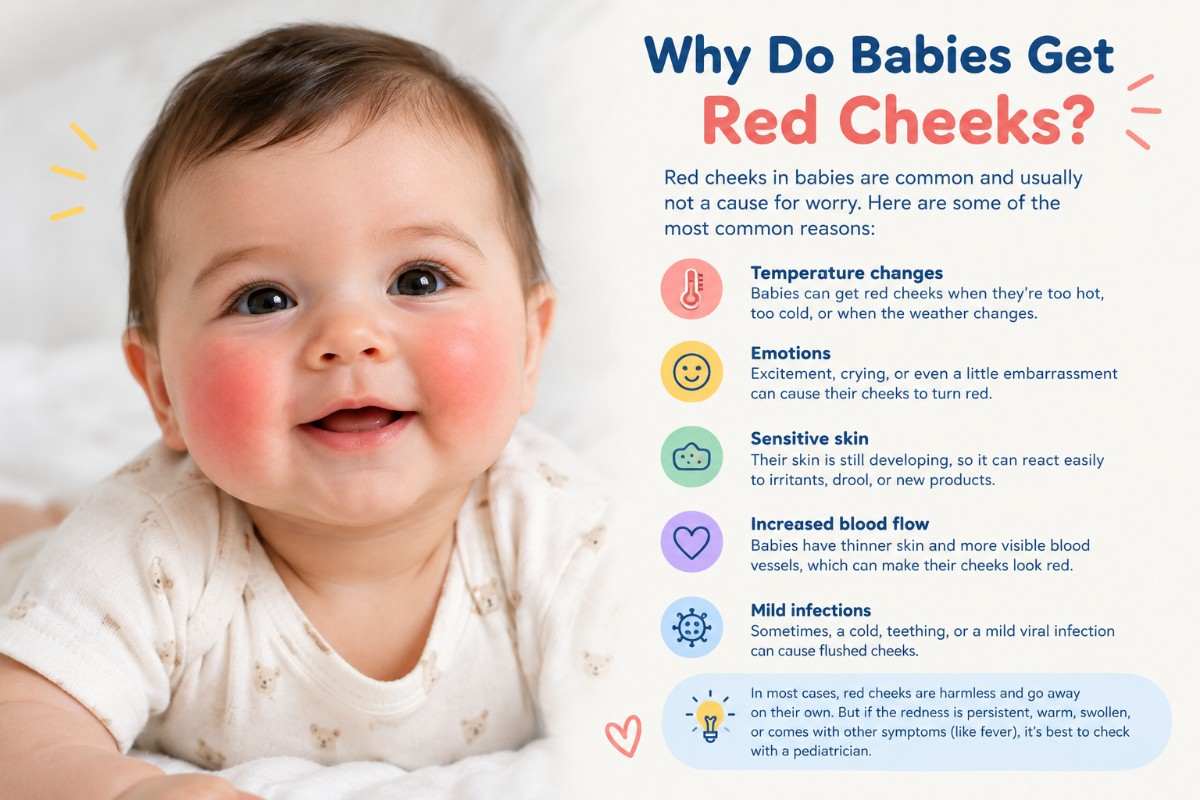
A baby’s rosy cheeks can look adorable, but when the redness appears suddenly or seems more intense than usual, parents may wonder whether something is wrong. Babies can get red cheeks because of warmth, crying, sensitive skin, drooling, eczema, or a common childhood infection. In many cases, the redness is temporary and improves without treatment. However, red cheeks accompanied by fever, swelling, a spreading rash, or unusual behavior may need medical attention.
The key is to look at more than the color of your baby’s cheeks. Their age, temperature, skin texture, other symptoms, and overall behavior can help you understand what might be causing the redness.
In this guide, we explain the common reasons babies develop red cheeks, how to soothe irritated skin safely, and when parents should contact a healthcare professional.
Why Do Babies Get Red Cheeks?
Babies have delicate skin that can react easily to heat, moisture, friction, and irritants. Sometimes, their cheeks become red after crying, feeding, sleeping in a warm room, or spending time outside. In other cases, the redness is related to a skin condition or infection.
If your baby is feeding normally, breathing comfortably, behaving as usual, and has no concerning symptoms, temporary redness may not be a cause for alarm. Persistent or unexplained redness deserves closer attention, especially in very young infants.
10 Common Causes of Red Cheeks in Babies
1. Overheating or Warm Weather
One common reason for red cheeks is excess warmth. Babies can become warm when dressed in too many layers, wrapped in thick blankets, or exposed to hot weather.
Their cheeks may look flushed, and their skin may feel warmer than usual. The redness may improve after moving them to a comfortably cool environment and removing unnecessary layers.
What parents can do: Keep the room comfortably cool, dress your baby appropriately for the temperature, and avoid direct sunlight during hot weather. If your baby seems unusually hot, check their temperature with a thermometer rather than relying on touch alone.
2. Crying or Emotional Distress
Have you noticed your baby’s cheeks turning red after a long crying episode? This can happen because crying temporarily increases blood flow to the face.
The redness usually fades as your baby settles down. If the cheeks return to their usual appearance and your baby seems comfortable, the change is generally less concerning.
What parents can do: Comfort your baby, check whether they are hungry or need a diaper change, and make sure they are not too warm. If the redness persists after your baby settles or comes with other symptoms, consider seeking medical advice.
3. Drooling and Teething
Drooling is common during infancy and may increase around the time teeth begin to emerge. When saliva repeatedly touches the cheeks, chin, and area around the mouth, it can irritate the skin and cause redness.
The affected skin may appear rough, dry, or slightly bumpy. Although teething can occur at the same time, red cheeks alone do not confirm that a baby is teething.
What parents can do: Gently pat away saliva with a soft, clean cloth instead of rubbing the skin. Change damp bibs regularly and ask your pediatrician whether a simple, fragrance-free protective ointment is appropriate.
4. Eczema
A common skin condition in babies
Eczema, also called atopic dermatitis, can cause dry, itchy, irritated patches on a baby’s cheeks. The skin may feel rough, become flaky, or look inflamed. Some babies develop symptoms on their arms, legs, scalp, or other parts of the body as well.
Eczema can flare up when the skin is exposed to irritating products, excessive heat, or other individual triggers. It is not contagious, but scratching and ongoing irritation can make the skin worse.
What parents can do: Use gentle, fragrance-free skin-care products and avoid harsh soaps or scented wipes. Apply a suitable moisturizer recommended for your baby’s age. Contact a healthcare professional if the skin is persistently itchy, cracked, weeping, or not improving.
5. Dry or Sensitive Skin
A baby’s skin is still developing and may become dry or irritated more easily than adult skin. Frequent washing, cold or dry weather, hot baths, and scented products may contribute to facial redness.
Dry skin may feel tight or rough, and small flaky patches may appear on the cheeks.
What parents can do: Wash your baby’s face gently with lukewarm water, avoid scrubbing, and use a mild, fragrance-free moisturizer if needed. Avoid introducing several new products at once, as this can make it harder to identify an irritant.
6. Contact Dermatitis
Contact dermatitis occurs when the skin reacts to something that touches it. Possible triggers include fragranced lotions, soaps, detergents, wipes, or materials that rub against the face.
The redness may appear where the skin contacts the irritating substance. It can be accompanied by dryness, itching, bumps, or swelling.
What parents can do: Stop using a suspected new product and gently rinse the affected skin. Avoid applying adult skincare products, essential oils, or medicated creams without professional guidance. Seek medical advice if the rash spreads or does not improve.
7. Slapped Cheek Syndrome
Slapped cheek syndrome is a viral illness caused by parvovirus B19. It is known for producing a distinctive bright-red rash on one or both cheeks, making them look as though they have been slapped.
Some children initially develop mild cold-like symptoms, a fever, a runny nose, or a sore throat. A rash may then appear on the cheeks and sometimes spread to the body and limbs. The illness often improves on its own, although the rash can last for a while.
What parents can do: Contact your pediatrician if you suspect this infection, particularly if your baby has a fever or is very young. Seek medical advice promptly if your child has an underlying blood disorder or weakened immune system. Pregnant people who have been exposed should contact their healthcare professional.
8. Baby Acne
Baby acne can develop during the first weeks or months of life. It usually appears as small red or pink bumps on the cheeks, forehead, chin, or other areas of the face.
The surrounding skin may look red, especially when the baby is warm or upset. Baby acne is generally harmless and often clears without treatment.
What parents can do: Clean your baby’s face gently with water and avoid squeezing the bumps. Do not apply acne medicines, oily products, or adult facial treatments unless your healthcare professional recommends them.
9. Heat Rash
Heat rash occurs when sweat becomes trapped in the skin. It is more likely in hot, humid weather or when a baby is overdressed.
Although it often affects areas such as the neck, chest, and skin folds, small red bumps may also appear on the face. The skin may look irritated, and your baby may seem uncomfortable.
What parents can do: Move your baby to a cooler environment, remove excess clothing, and keep the skin clean and dry. Avoid thick ointments on areas affected by heat rash unless advised by a healthcare professional.
10. Other Viral Infections or Fever
Some viral infections can cause facial flushing or a rash that includes the cheeks. Depending on the illness, your baby may also have a fever, runny nose, cough, poor appetite, tiredness, or a rash elsewhere on the body.
A red rash does not identify a specific infection on its own. For example, some childhood illnesses cause a rash after a fever, while others begin with cold-like symptoms.
What parents can do: Check your baby’s temperature, monitor feeding and wet diapers, and pay attention to their alertness and breathing. Contact a healthcare professional if your baby has a fever, seems unwell, or develops a new unexplained rash.
How to Tell Whether Your Baby’s Red Cheeks Are Normal
The appearance of the redness and your baby’s other symptoms can offer helpful clues. However, these observations cannot replace a medical examination when one is needed.
| What you notice | Possible explanation |
|---|---|
| Red cheeks after crying | Temporary facial flushing |
| Red cheeks after being dressed warmly | Overheating |
| Redness with drool around the mouth | Saliva irritation |
| Dry, rough, itchy cheek patches | Eczema or dry skin |
| Small red bumps on the face | Baby acne or heat rash |
| Bright-red cheeks with a spreading rash | Slapped cheek syndrome or another infection |
| Red cheeks with fever or poor feeding | Illness that needs medical assessment |
These are general clues, not a way to diagnose your baby at home.
How to Treat Red Cheeks in Babies at Home
If your baby is otherwise well and the redness appears mild, a few simple skin-care measures may help.
- Keep your baby comfortably cool: Avoid overdressing and remove unnecessary layers when the environment is warm.
- Clean the face gently: Use lukewarm water and a soft cloth. Avoid scrubbing or rubbing irritated skin.
- Pat away drool: Keep the cheeks and chin as dry as possible without wiping aggressively.
- Choose gentle skincare: Use fragrance-free products suitable for your baby’s age.
- Moisturize dry skin: A simple baby-appropriate moisturizer may help if the cheeks are dry or flaky.
- Avoid irritating products: Do not use adult acne treatments, exfoliants, essential oils, or strongly scented lotions.
- Observe the pattern: Notice whether the redness occurs after feeding, crying, bathing, or exposure to heat.
- Take a photograph if helpful: A photo can help your pediatrician understand how the redness changes over time.
Do not apply steroid creams, antibiotic creams, or antifungal medicines to your baby’s face unless a healthcare professional recommends them.
When Should You Worry About Red Cheeks in Babies?
Red cheeks are not always harmless. Sometimes, they are accompanied by signs that need prompt medical attention.
Seek urgent medical care if your baby has:
- A fever under 3 months of age: A temperature of 38°C (100.4°F) or higher in a baby younger than 3 months requires urgent medical assessment.
- Difficulty breathing: Fast or labored breathing, grunting, or difficulty feeding because of breathing problems requires emergency attention.
- Sudden facial swelling: Swelling of the lips, tongue, or throat, particularly with breathing difficulties, may indicate a serious allergic reaction.
- A rash that does not fade when pressed: Red, purple, or brown spots that do not fade under pressure can indicate a serious condition.
- Unusual sleepiness or poor responsiveness: Seek emergency care if your baby is difficult to wake or is not responding normally.
- Signs of dehydration: Significantly fewer wet diapers, a dry mouth, or difficulty feeding needs prompt assessment.
These warning signs should not be ignored, even if the redness on the cheeks appears mild.
Contact your pediatrician if the redness persists, repeatedly returns without an obvious reason, becomes painful, develops blisters, or is accompanied by worsening skin irritation.
Why Are My Baby’s Cheeks Red but They Have No Fever?
Red cheeks without a fever can result from crying, warmth, dry skin, drooling, eczema, or contact with an irritating product.
If your baby is feeding normally, breathing comfortably, and behaving as usual, you can observe whether the redness fades after addressing possible triggers. If it persists, worsens, or develops into a rash, consult your pediatrician.
Remember that the absence of a fever does not rule out every infection or skin condition.
How Long Do Red Cheeks Last in Babies?
The duration depends on the underlying cause.
- Temporary flushing: Often fades after your baby cools down or stops crying.
- Drool irritation: May improve over several days once moisture and friction are reduced.
- Dry skin or eczema: May persist or recur until the skin condition is properly managed.
- Baby acne: May take several weeks or months to clear.
- Slapped cheek syndrome: The rash often fades within one to three weeks, although it may recur temporarily.
If the redness does not improve, keeps returning, or is accompanied by other symptoms, ask your healthcare professional to assess it.
FAQ’s
Why do babies get red cheeks suddenly?
Babies may develop red cheeks suddenly due to crying, overheating, drooling, skin irritation, or a viral infection. Check for other symptoms and seek medical advice if the redness persists or worsens.
Are red cheeks normal in babies?
Yes, red cheeks are often harmless and may occur after crying, feeding, or exposure to warmth. Persistent redness or redness accompanied by other symptoms should be assessed by a healthcare professional.
Can teething cause red cheeks in babies?
Teething may increase drooling, which can irritate the skin and make the cheeks red. However, red cheeks alone are not a reliable sign of teething.
Do red cheeks mean a baby has a fever?
No, red cheeks do not always indicate a fever. Use a thermometer to check your baby’s temperature rather than relying on facial redness or skin warmth.
Can red cheeks be a sign of an infection?
Yes, some infections, including slapped cheek syndrome, can cause bright-red cheeks. Fever, a spreading rash, or other symptoms may help indicate an infection.
Why does my baby have one red cheek?
One red cheek may result from pressure, friction, drooling, or localized skin irritation. Seek medical advice if the redness becomes painful, swollen, hot, or increasingly severe.
Should I apply moisturizer to my baby’s red cheeks?
A gentle, fragrance-free moisturizer may help if the skin is dry. Avoid medicated creams unless recommended by your baby’s healthcare professional.
Can breast milk cause red cheeks?
Milk or saliva that remains on the skin may contribute to irritation. If redness repeatedly follows feeding or occurs with other allergy symptoms, seek medical advice.
Can red cheeks be a sign of an allergy?
Yes, an allergic reaction can cause redness or hives. Sudden swelling, breathing difficulty, or other severe symptoms require emergency care.
Why Do Babies Get Red Cheeks in Winter?
Babies may develop red cheeks in winter due to cold air, dry skin, wind, or sudden temperature changes. A gentle, fragrance-free moisturizer may help soothe irritation.
Why Do Babies Get Red Cheeks When Breastfeeding?
Babies may get red cheeks during breastfeeding due to warmth, skin contact, pressure, or milk irritation. Seek medical advice if redness occurs with swelling, hives, or breathing difficulties.
Conclusion
Red cheeks in babies are often caused by everyday factors such as warmth, crying, drooling, or sensitive skin. Eczema, baby acne, heat rash, and viral infections are other possible explanations.
The best approach is to observe your baby’s overall behavior, check for accompanying symptoms, and keep their skin care gentle. Avoid assuming that every red cheek is caused by teething or that redness without fever is always harmless.
Sources / References:
Disclaimer:
This article is for educational purposes only and does not replace professional medical advice, diagnosis, or treatment. Consult a qualified healthcare professional about concerns regarding your baby’s health.
Also Read: