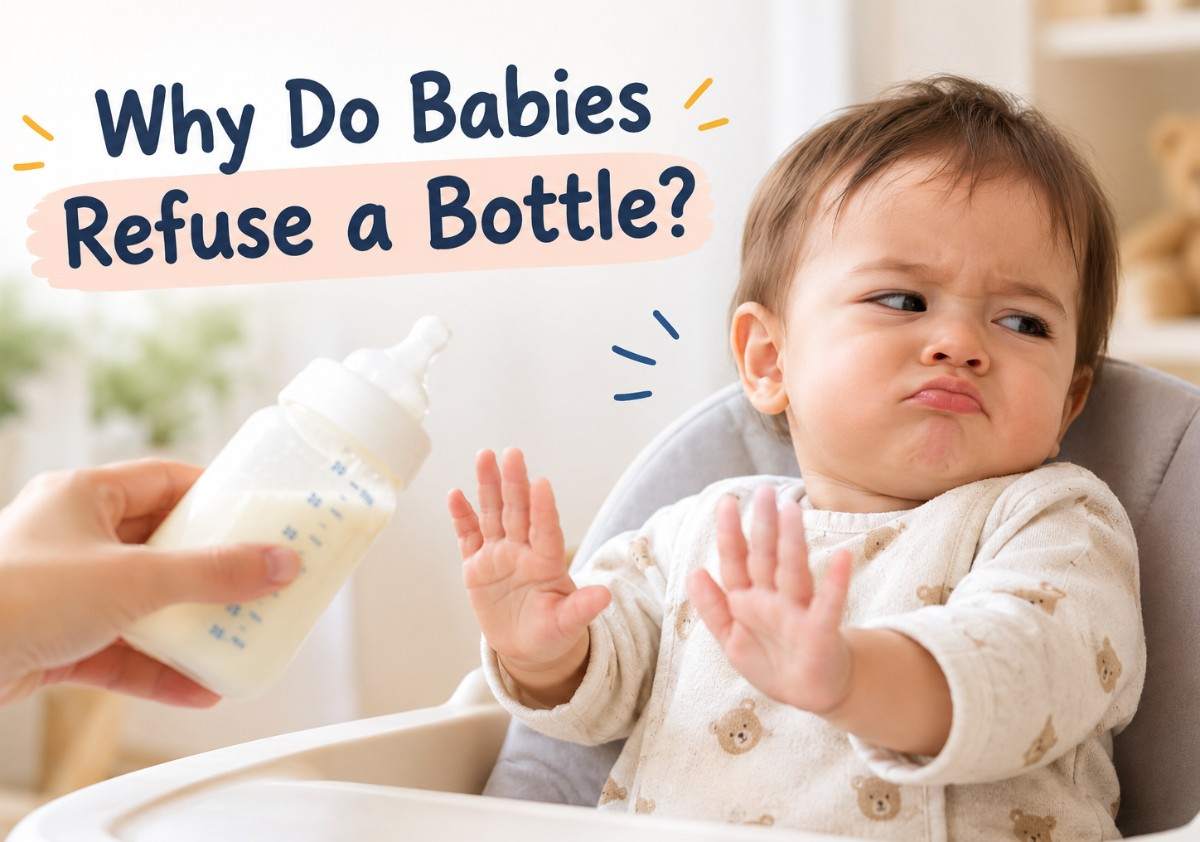
A baby who suddenly cries, turns away, or refuses to drink from a bottle can leave parents feeling worried and frustrated. You may have prepared expressed breast milk or infant formula, checked the temperature, and tried different feeding positions, yet your little one still refuses to drink.
Babies may refuse a bottle because they prefer breastfeeding, dislike the bottle nipple or milk flow, are not hungry, feel uncomfortable, or are adjusting to a new feeding routine. Sometimes, bottle refusal can also be related to teething, illness, or feeding difficulties.
The good news is that bottle refusal does not automatically mean something is wrong. Many babies need time, patience, and a gentle introduction to a different way of feeding. However, it is important to make sure your baby is getting enough milk and staying hydrated.
In this guide, we will explore 10 common reasons babies refuse a bottle, practical ways to encourage feeding, and signs that mean your baby may need medical attention.
Why Do Babies Refuse a Bottle?
Babies can reject a bottle for several reasons, and the cause may be different for every child. Some breastfed babies prefer the familiar feeling of breastfeeding, while others may dislike the nipple shape, find the milk flow uncomfortable, or simply not feel hungry when the bottle is offered. Research on bottle refusal among breastfed babies also suggests that feeding preferences and individual temperament can play a role.
Understanding when the refusal happens can help you identify what your baby needs. For example, a baby who refuses every bottle from the beginning may have a different challenge from one who suddenly stops feeding after weeks of drinking comfortably.
10 Common Reasons Why Babies Refuse a Bottle
1. Your Baby Prefers Breastfeeding
Breastfeeding provides more than milk. It also offers warmth, closeness, familiar smells, and comfort. A breastfed baby may prefer the familiar experience of nursing and find a bottle unfamiliar.
Breastfeeding and bottle-feeding also involve different sucking techniques. Some babies take time to adjust to the change.
What you can do: Introduce the bottle gently when your baby is calm. Let your baby explore the nipple without forcing it into their mouth, and stop if they become upset.
2. Your Baby Is Not Hungry
Sometimes, the simplest explanation is that your baby is not ready for another feed. Babies have different feeding patterns, and their hunger can vary throughout the day.
Offering a bottle too soon after breastfeeding or when your baby is already full may lead to refusal.
What you can do: Watch for early hunger cues, such as opening the mouth, bringing hands to the mouth, or turning toward the nipple. Avoid forcing your baby to drink when they show signs of fullness.
3. The Bottle Nipple Feels Unfamiliar
Bottle nipples come in different shapes, sizes, and materials. A baby who is accustomed to breastfeeding or another bottle type may resist an unfamiliar nipple.
However, a particular brand is not necessarily the problem. Your baby may simply need time to become comfortable with the new feeding method.
What you can do: Try a suitable alternative nipple if your baby consistently rejects the current one. Introduce changes gradually rather than switching between many bottle types during one feeding session.
4. The Milk Flow Is Too Fast or Too Slow
Milk flow can significantly affect a baby’s feeding experience. If milk flows too quickly, your baby may cough, gulp, pull away, or become distressed. If it flows too slowly, your baby may become frustrated or lose interest.
What you can do: Choose a nipple flow appropriate for your baby’s age and feeding skills. During paced bottle-feeding, hold your baby in a supported, semi-upright position and keep the bottle relatively horizontal so milk does not pour into the mouth too quickly. Never enlarge a nipple opening yourself.
5. Your Baby Dislikes the Milk Temperature
Some babies readily accept milk at a particular temperature but resist it when it feels different from what they usually receive.
Breast milk can also smell or taste slightly different after storage or freezing, which may affect acceptance in some babies.
What you can do: Offer milk at a temperature your baby comfortably accepts. If you warm it, warm the container in warm water and mix gently. Check the temperature before feeding, and never microwave breast milk or formula because uneven heating can cause burns.
6. Someone New Is Offering the Bottle
A baby who usually breastfeeds directly may associate their mother with nursing and resist taking a bottle from them. The baby may be more willing to accept it from another familiar caregiver.
This does not happen with every baby, but it can be worth trying when the usual approach is unsuccessful.
What you can do: Ask another trusted caregiver to offer the bottle while you are out of sight, if that feels comfortable for your family. Keep the environment calm and allow your baby to become familiar with the new routine.
7. Your Baby Is Teething
Teething can make a baby’s gums tender and uncomfortable. Sucking may feel different during this period, causing some babies to feed less enthusiastically or refuse a bottle temporarily.
Drooling, chewing on objects, and tender gums may accompany teething. However, a high fever or significant illness should not automatically be attributed to teething.
What you can do: Offer feeds patiently and give your baby a clean, chilled teething ring if appropriate. If feeding difficulties persist or your baby appears unwell, consult a pediatrician.
8. Your Baby Is Tired, Distracted, or Overstimulated
Older babies become increasingly aware of sounds, movement, lights, and people around them. A tired or overstimulated baby may struggle to settle down for a feed.
Some babies also become upset when a bottle is offered after they are already crying intensely.
What you can do: Choose a quiet room with fewer distractions. Try feeding when your baby is relaxed and showing hunger cues rather than waiting until they are extremely hungry or overtired.
9. Your Baby Is Experiencing Discomfort or Illness
A blocked nose can make feeding difficult because babies need to coordinate sucking, swallowing, and breathing. Other problems, such as ear pain, mouth soreness, oral thrush, reflux-related discomfort, or an infection, may also affect feeding.
If your baby previously accepted bottles but suddenly refuses them, pay attention to other changes in their behavior.
What you can do: Look for symptoms such as nasal congestion, fever, unusual crying, vomiting, or discomfort during feeding. Seek medical advice if refusal is sudden, persistent, or accompanied by signs of illness.
10. Your Baby Has Developed a Negative Feeding Association
Repeatedly pushing a bottle into a baby’s mouth, insisting on finishing a feed, or continuing when the baby is distressed can make feeding stressful.
Over time, a baby may begin resisting the bottle as soon as it appears.
What you can do: Keep feeding calm and responsive. Stop when your baby turns away, closes their mouth, or becomes distressed. Offer another opportunity later rather than turning every feeding attempt into a struggle.
Your baby does not need to finish every bottle. Recognizing hunger and fullness cues helps support a healthier feeding relationship.
How to Get a Baby to Take a Bottle?
If your baby refuses a bottle, the goal is to help them feel comfortable with feeding rather than making them accept it immediately. Small, consistent changes can make the experience easier for both of you.
1. Offer the Bottle Before Your Baby Becomes Very Hungry:
Try offering a bottle when your baby is showing early hunger cues and is still calm. A very hungry baby may become frustrated before learning how to latch onto the bottle nipple.
2. Let Another Caregiver Try:
If you usually breastfeed, ask a trusted caregiver to offer the bottle. Your baby may find it easier to accept a different feeding method from someone who does not usually breastfeed them.
3. Check the Nipple and Milk Flow:
Make sure the nipple is clean, undamaged, and appropriate for your baby’s feeding ability. If your baby coughs, gulps, or struggles with the flow, ask a pediatrician or feeding specialist for guidance.
4. Create a Calm Feeding Environment:
Hold your baby close, reduce noise, and allow time for them to settle. Some babies feed better in a quiet room, while others prefer gentle movement or a familiar caregiver.
5. Let Your Baby Explore the Bottle:
Gently touch the nipple to your baby’s upper lip and wait for them to open their mouth. Allow them to accept it voluntarily instead of pushing it inside.
6. Take a Break When Your Baby Becomes Upset:
If your baby cries, arches their back, or repeatedly turns away, pause the attempt. Comfort them and try again later. A short, positive experience is better than prolonged pressure.
These strategies align with pediatric bottle-introduction guidance, which emphasizes gentle attempts, following hunger cues, and avoiding forced feeding.
What to Do If Your Breastfed Baby Refuses a Bottle?
Bottle refusal can be especially challenging when you need to return to work, attend an appointment, or leave your baby with another caregiver.
Try these steps:
- Start gradually: If possible, introduce bottle-feeding practice before you urgently need your baby to take a full feed from a bottle.
- Use expressed breast milk initially: If your baby is accustomed to breast milk, offering expressed milk may help you determine whether the main difficulty is the bottle rather than the milk itself.
- Keep breastfeeding as needed: Do not withhold breastfeeding to make your baby hungry enough to accept a bottle.
- Ask another caregiver to practise: A familiar partner or family member can offer the bottle while you are away from the immediate feeding area.
- Consider other appropriate feeding methods: Depending on your baby’s age and developmental abilities, a pediatrician or lactation consultant may suggest a suitable cup or another method.
Importantly, do not starve your baby, force the bottle, or add sugar, cereal, or other ingredients to make milk more appealing. If your baby continues refusing feeds, seek professional advice rather than relying on repeated unsuccessful attempts.
How Long Does Bottle Refusal Last?
There is no fixed timeline. Some babies become comfortable with a bottle after a few gentle attempts, while others need more time or professional support.
The duration may depend on your baby’s age, previous feeding experience, nipple preference, and whether discomfort or a feeding difficulty is involved.
If your baby is otherwise feeding well, has their usual wet diapers, and is growing appropriately, occasional bottle refusal may be less concerning. However, do not wait for a particular number of days if your baby is taking too little milk or showing signs of dehydration.
When Should You Worry About Bottle Refusal?
Occasional refusal does not always indicate a medical problem. Persistent refusal, a sudden change in feeding, or refusal accompanied by other symptoms deserves closer attention.
Contact your pediatrician if your baby:
- Consistently refuses bottles or takes substantially less milk than usual.
- Coughs, chokes, or struggles to breathe during feeds.
- Frequently vomits or appears to experience pain when swallowing.
- Has fewer wet diapers than usual.
- Is not gaining weight as expected.
- Seems unusually sleepy, irritable, or unwell.
Seek urgent medical care if your baby has difficulty breathing, is difficult to wake, has signs of severe dehydration, or cannot feed. A temperature of 38°C (100.4°F) or higher in a baby younger than three months also requires urgent medical assessment.
Signs of dehydration can include noticeably fewer wet diapers, a dry mouth, a sunken soft spot on the head, and unusual drowsiness. Do not delay care to continue trying different bottles.
FAQ’s
Why does my baby suddenly refuse a bottle?
Babies may suddenly refuse a bottle because of teething, nasal congestion, illness, changes in milk flow, or discomfort during feeding.
Why does my breastfed baby refuse a bottle?
Breastfed babies may prefer the familiar comfort, smell, and sucking experience of breastfeeding. Gentle practice can help them adjust.
Can teething cause a baby to refuse a bottle?
Yes, tender gums may make sucking uncomfortable. Persistent refusal or other signs of illness should be discussed with a pediatrician.
Should I change the bottle if my baby refuses it?
You can try a different nipple shape or appropriate flow rate, but first consider whether hunger, tiredness, or discomfort may be contributing.
Can a baby be hungry but still refuse a bottle?
Yes. A baby may be hungry but frustrated, tired, uncomfortable, or unwilling to use an unfamiliar nipple.
Why does my baby take a bottle from others but not me?
Some babies associate their mother with breastfeeding and may be more willing to accept a bottle from another familiar caregiver.
Should I force my baby to drink from a bottle?
No. Forcing a bottle can increase feeding stress. Follow your baby’s hunger and fullness cues, and pause when they become distressed.
Can I give my baby expressed breast milk in a bottle?
Yes. Expressed breast milk can be offered in a bottle using safe storage and feeding practices. Some babies may still need time to accept the bottle.
What should I do if my baby refuses both breast and bottle?
Seek prompt medical advice, especially if your baby is taking little or no milk or has fewer wet diapers. Do not delay care if your baby appears unwell or dehydrated.
Why does my baby cry when I offer a bottle?
Your baby may be hungry but frustrated by an unfamiliar nipple, uncomfortable milk flow, tiredness, or a previous stressful feeding experience. Pause, comfort your baby, and try again when they are calm.
Why does my breastfed baby refuse a bottle but breastfeed normally?
Breastfeeding offers familiar sucking patterns, closeness, and comfort. Your baby may prefer this experience and need time to adjust to bottle-feeding.
Should I change the bottle if my baby refuses it?
You can try a different nipple shape or suitable flow rate if your baby repeatedly struggles with the current one. However, avoid making frequent changes without considering other causes, such as illness or feeding difficulties.
Can I give my baby a cup instead of a bottle?
Depending on your baby’s age and development, a cup may be an option. Cup drinking can generally be introduced around six months, but younger infants need an appropriate feeding method and guidance from a healthcare professional if they cannot take milk from a bottle.
Why is my formula-fed baby suddenly refusing a bottle?
Teething, illness, nasal congestion, or an uncomfortable nipple flow may cause sudden bottle refusal.
Why do babies refuse a bottle at night?
Babies may be sleepy, uncomfortable, not hungry, or experiencing teething pain.
Will my baby always refuse a bottle?
No. Many babies gradually accept bottles, while others prefer breastfeeding or cups.
At what age do babies stop wanting bottles?
Many children transition from bottles to cups between 12 and 18 months.
Is it normal for a 13-month-old to still use a bottle?
Yes, but gradually encouraging cup drinking can support healthy feeding habits.
How many bottles should a 1-year-old drink?
There is no fixed number. Focus on balanced meals, appropriate milk intake, and gradually moving from bottles to cups.
Final Thoughts
Bottle refusal can be stressful, particularly when you need your baby to feed while you are away. However, it does not necessarily mean you are doing anything wrong or that your baby will never accept a bottle.
Start by considering your baby’s hunger cues, comfort, nipple preference, and feeding environment. Offer the bottle gently, take breaks when needed, and avoid forcing your baby to drink.
Most importantly, make sure your baby continues receiving enough breast milk or infant formula for their age. If bottle refusal persists or affects feeding and hydration, a pediatrician or lactation consultant can help you identify the cause and find a safe solution.
Sources and References:
Disclaimer:
This guide is for educational purposes only and does not replace professional medical advice, diagnosis, or treatment. Consult your baby’s pediatrician about persistent feeding difficulties or concerns about hydration and growth.
Also Read: