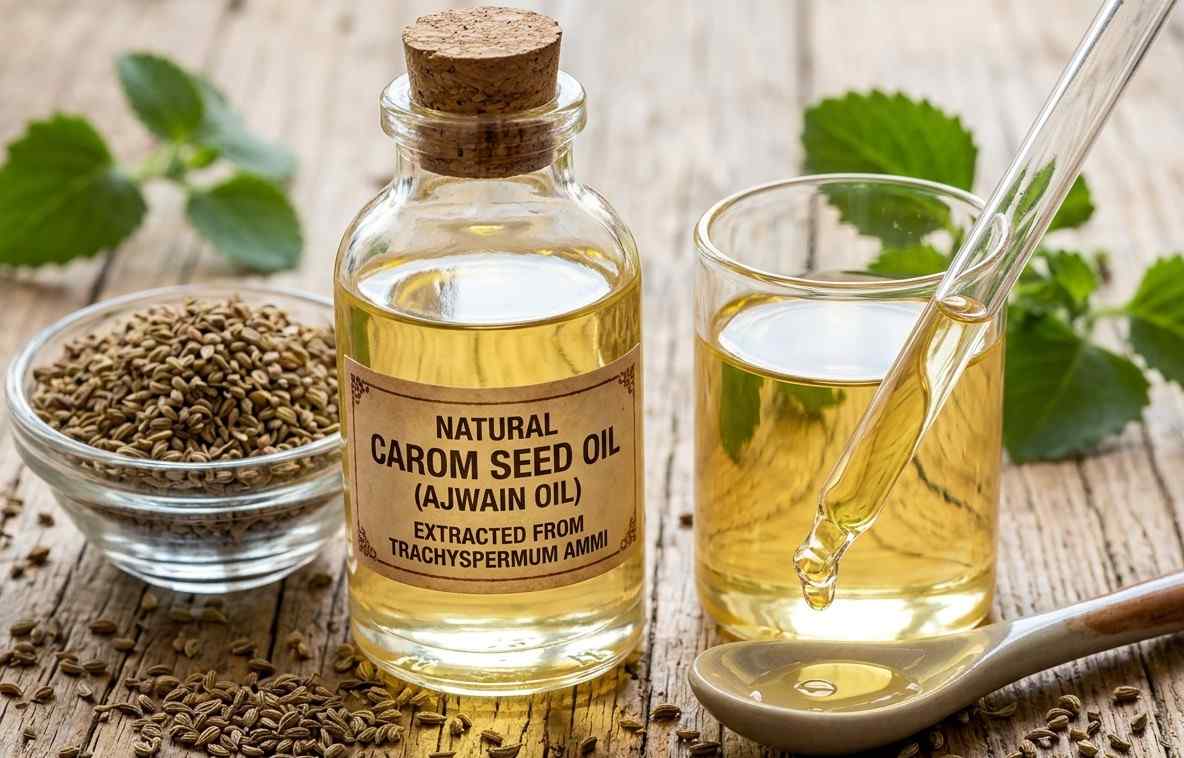
Carom Seed Oil or Ajwain Oil is a powerful essential oil extracted from the tiny but mighty carom seeds, commonly known as ajwain in India. For centuries, ajwain has been a trusted home remedy in Indian kitchens for digestive problems, colds, coughs, and stomach discomfort. But when concentrated into oil form, its therapeutic properties become even more potent.
In this guide, we will explore everything you need to know about Carom Seed Oil — from its science-backed health benefits to side effects, dosage, and safe usage.
What is Carom Seed Oil?
Carom Seed Oil is an essential oil extracted from the seeds of the ajwain plant (Trachyspermum ammi). It is typically obtained through steam distillation and contains high levels of thymol, a natural compound responsible for its strong aroma and powerful medicinal properties.
Carom seeds are widely used in Indian cooking, Ayurvedic medicine, and traditional remedies. The oil derived from these seeds is more concentrated than the seeds themselves and is known for its antibacterial, antifungal, anti-inflammatory, and digestive-supporting properties. The oil has a sharp, warm, and slightly spicy scent. Due to its potency, it is usually diluted before use.
Components of Carom Seed Oil
Carom Seed Oil is not consumed like edible oils such as mustard or coconut oil. Instead, it is used in very small amounts for therapeutic purposes. Its benefits come primarily from its active compounds.
| Component | Approximate Content | Health Role |
|---|---|---|
| Thymol | 35–60% | Antibacterial, antifungal, digestive support |
| Gamma-terpinene | 15–25% | Antioxidant activity |
| Para-cymene | 10–20% | Anti-inflammatory properties |
| Beta-pinene | Trace amounts | Respiratory support |
| Carvacrol | Small amounts | Antimicrobial activity |
| Flavonoids | Present | Antioxidant protection |
| Essential oil compounds | Highly concentrated | Therapeutic effects |
The high thymol content is what makes Carom Seed Oil particularly powerful.
20 Proven Benefits of Carom Seed Oil
- Improves Digestion – Carom Seed Oil stimulates digestive enzymes and helps relieve bloating, gas, and indigestion.
- Relieves Acidity – Its carminative properties help reduce stomach acid and ease heartburn.
- Eases Stomach Pain – The oil relaxes intestinal muscles and reduces abdominal cramps.
- Reduces Gas Formation – It prevents excessive gas buildup in the digestive tract.
- Supports Respiratory Health – The oil acts as a natural decongestant and helps clear blocked airways.
- Relieves Cough and Cold – Its antimicrobial and warming properties help reduce cold symptoms.
- Fights Bacterial Infections – Thymol in the oil has strong antibacterial activity.
- Combats Fungal Infections – Carom Seed Oil inhibits fungal growth on the skin.
- Boosts Immunity – Its antioxidant compounds strengthen the immune response.
- Reduces Inflammation – The oil helps decrease inflammatory reactions in the body.
- Supports Oral Health – It helps fight bacteria that cause bad breath and gum infections.
- Relieves Toothache – Its analgesic properties help reduce dental pain temporarily.
- Improves Skin Health – When diluted, it can help reduce acne and skin infections.
- Relieves Joint Pain – Massaging diluted oil can ease muscle and joint discomfort.
- Promotes Better Circulation – The warming effect stimulates blood flow.
- May Help in Weight Management – Improved digestion and metabolism may support healthy weight goals.
- Reduces Menstrual Discomfort – Its antispasmodic properties can help ease period cramps.
- Acts as a Natural Insect Repellent – The strong aroma repels mosquitoes and insects.
- Supports Detoxification – It may help remove toxins by supporting digestion and circulation.
- Improves Appetite – It stimulates appetite in individuals experiencing digestive weakness.
10 Side Effects of Carom Seed Oil
Although beneficial, Carom Seed Oil is highly concentrated and must be used carefully.
- Skin Irritation – Undiluted oil can cause redness, burning, or irritation on the skin.
- Allergic Reactions – Some individuals may develop itching or rashes.
- Stomach Irritation – Excess internal use may cause nausea or discomfort.
- Heartburn – Overconsumption can worsen acid reflux in sensitive individuals.
- Liver Stress – High doses for prolonged periods may strain the liver.
- Low Blood Pressure Risk – It may slightly lower blood pressure in some individuals.
- Pregnancy Concerns – Strong essential oils may stimulate uterine contractions.
- Breastfeeding Safety Uncertain – There is limited data on its safety during lactation.
- Photosensitivity – Rarely, it may increase skin sensitivity to sunlight.
- Drug Interactions – It may interact with blood pressure or digestive medications.
How to Use Carom Seed Oil?
Carom Seed Oil can be used in several ways depending on the purpose:
- Aromatherapy – Add 1–2 drops to a diffuser for respiratory relief.
- Topical Application – Dilute with a carrier oil such as coconut oil and massage onto the skin.
- Steam Inhalation – Add a drop to hot water and inhale steam for congestion.
- Oral Use – Only under professional supervision and in very small diluted quantities.
Always dilute before applying to the skin.
Other Uses of Carom Seed Oil
Carom Seed Oil is not limited to medicinal use. It is also used for:
- Natural insect repellent sprays
- Herbal toothpaste formulations
- Massage oil blends
- Herbal vapor rubs
- Soap and cosmetic production
- Cleaning solutions due to antibacterial properties
Tips for Consuming Carom Seed Oil
- Always consult a healthcare professional before internal use.
- Never consume undiluted essential oil directly.
- Use only food-grade oil if ingesting.
- Start with the smallest possible dose.
- Avoid long-term continuous consumption.
How to Take Carom Seed Oil?
If advised by a qualified practitioner:
- Mix 1 drop in a teaspoon of honey or warm water.
- Take after meals for digestive support.
- Do not exceed recommended dosage.
Internal use should always be monitored.
How to Make Carom Seed Oil at Home?
While essential oil extraction requires steam distillation equipment, you can prepare a simple infused oil at home.
Method for Infused Carom Oil:
Ingredients:
- 2 tablespoons crushed carom seeds
- 1 cup carrier oil (such as sesame or coconut oil)
Steps:
- Lightly crush the carom seeds.
- Heat the carrier oil on low flame.
- Add the seeds and simmer gently for 5–10 minutes.
- Turn off heat and let it cool.
- Strain and store in a clean glass bottle.
This is not pure essential oil but a milder infused oil.
How Much Carom Seed Oil Can You Use Per Day?
Because it is highly concentrated:
- For internal use: Usually 1 drop per day (only if advised).
- For topical use: 1–2% dilution in carrier oil.
- For aromatherapy: 1–3 drops in diffuser.
Overuse can cause irritation or side effects.
Carom Seed Oil Dosage
Dosage varies depending on age, purpose, and health condition.
General guidance:
- Adults (topical): 2–3 drops diluted in 1 tablespoon carrier oil.
- Adults (internal): 1 drop diluted, not daily for long periods.
- Children: Only under medical supervision and highly diluted.
Never exceed safe therapeutic limits.
Best Time to Use Carom Seed Oil
The best time depends on the purpose:
- For digestion: After meals.
- For respiratory issues: During steam inhalation at night.
- For joint pain: Before bedtime massage.
- For immunity: Morning use under supervision.
Who Should Use Carom Seed Oil?
Carom Seed Oil may benefit:
- Individuals with frequent indigestion or bloating
- People prone to cold and cough
- Those looking for natural antimicrobial support
- Individuals seeking herbal pain relief
- Adults seeking natural respiratory support
Who Should Not Use Carom Seed Oil?
Avoid or use with caution if you are:
- Pregnant or breastfeeding
- Children under 6 years old
- People with liver disease
- Individuals with severe acidity or ulcers
- Those allergic to thyme or related plants
- People taking blood pressure medications
Always consult a healthcare provider before use.
How to Store Carom Seed Oil?
Proper storage ensures potency and safety.
- Keep in a dark glass bottle.
- Store in a cool, dry place.
- Avoid direct sunlight.
- Keep tightly sealed.
- Keep away from children.
Properly stored oil can last 1–2 years.
Precautions and Interactions
Carom Seed Oil is powerful and should be treated with care.
Precautions:
- Always perform a patch test before topical use.
- Do not apply near eyes or mucous membranes.
- Avoid using undiluted on sensitive skin.
- Do not use internally without guidance.
Possible Interactions:
- May interact with antacids.
- May enhance effects of blood pressure medications.
- Could interfere with liver-metabolized drugs.
If you are on medication or have a chronic condition, consult a qualified healthcare professional before use.
Final Thoughts
Carom Seed Oil is a highly potent and therapeutic essential oil rooted deeply in traditional Indian medicine. Its digestive, antimicrobial, respiratory, and anti-inflammatory benefits make it a valuable addition to natural wellness routines.
However, because it is concentrated and strong, it must be used carefully and responsibly. Proper dilution, correct dosage, and professional guidance are essential to avoid side effects. If you are considering incorporating it into your routine, start slow, use small amounts, and always prioritize safety.
FAQ’s
What is Carom Seed Oil used for?
Ajwain Oil is mainly used for digestive support, relieving gas and bloating, easing cough and cold symptoms, reducing inflammation, and fighting bacterial and fungal infections.
Is Carom Seed Oil safe for internal use?
Ajwain Oil can be used internally only in very small, diluted amounts and under professional supervision, as it is highly concentrated and strong.
Can I apply Carom Seed Oil directly to my skin?
No, Ajwain Oil should always be diluted with a carrier oil before applying to the skin to avoid irritation or burning.
How do you use Carom Seed Oil for stomach problems?
It is typically used in a diluted form after meals or applied topically (mixed with carrier oil) on the abdomen for digestive relief.
Is Carom Seed Oil good for cough and cold?
Yes, its warming and antimicrobial properties make it useful for steam inhalation and chest massage (when diluted) to relieve congestion and cough.
Can Carom Seed Oil help with acidity?
Yes, in small diluted amounts, it may help reduce acidity and indigestion, but excessive use can worsen heartburn.
Is Carom Seed Oil safe during pregnancy?
Pregnant women should avoid using Ajwain Oil unless specifically advised by a healthcare professional due to its strong and stimulating nature.
Can children use Carom Seed Oil?
Children should only use it under medical supervision and in highly diluted form, as essential oils can be too strong for young skin and bodies.
Does Carom Seed Oil expire?
Yes, when stored properly in a dark glass bottle away from heat and sunlight, it typically lasts 1–2 years.
Can Carom Seed Oil be used for joint pain?
Yes, when diluted with a carrier oil and massaged onto affected areas, it may help reduce muscle and joint discomfort.
Can I use Carom Seed Oil every day?
Carom Seed Oil can be used daily for short periods if properly diluted, but long-term internal use should only be done under professional guidance because it is highly concentrated.
How long does it take for Carom Seed Oil to work?
For digestive issues, it may provide relief within 15–30 minutes, while benefits for respiratory support or skin concerns may take a few days of consistent, proper use.
What does Carom Seed Oil smell like?
Carom Seed Oil has a strong, sharp, warm, and spicy aroma with a medicinal scent due to its high thymol content.
Is ajwain oil good for hair?
Yes, when diluted with a carrier oil, ajwain (Carom Seed) oil may help reduce scalp infections, dandruff, and itching due to its antifungal and antibacterial properties, but it should always be used in a diluted form to avoid irritation.
Also Read: