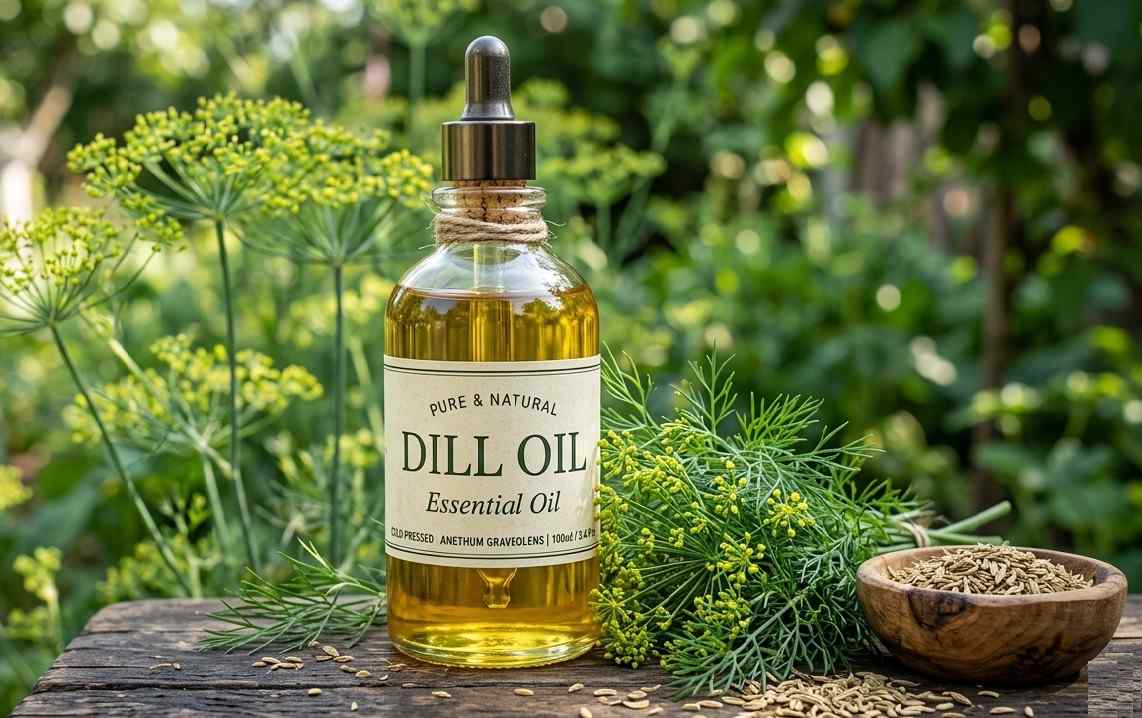
Dill oil is a powerful herbal extract derived from the aromatic dill plant, long valued in traditional medicine and culinary practices. Known for its digestive-supporting, antimicrobial, and calming properties, dill oil has been used for centuries across Asia, Europe, and the Middle East. Whether extracted from dill seeds or fresh dill leaves, this essential oil offers a wide range of therapeutic and practical uses.
In this guide, you will learn what dill oil is, its science-backed health benefits, possible side effects, dosage recommendations, how to use it safely, and how to make dill seed oil and dill leaf oil at home.
What is Dill Oil?
Dill oil is an essential oil extracted from the seeds or fresh leaves of the dill plant (Anethum graveolens). The oil is obtained through steam distillation and contains potent bioactive compounds such as carvone, limonene, dillapiole, and various flavonoids.
There are two primary types of dill oil:
- Dill Seed Oil – Extracted from dried dill seeds and known for strong digestive and carminative properties.
- Dill Leaf Oil (Dill Weed Oil) – Extracted from fresh leaves and stems; milder and often used for culinary and aromatherapy purposes.
Dill essential oil has been widely used in Ayurvedic and traditional herbal systems to support digestion, relieve gas, improve appetite, reduce spasms, and promote relaxation.
Components of Dill Oil
Since dill oil is an essential oil, it does not contain macronutrients like carbohydrates or protein. Instead, it contains volatile plant compounds responsible for its therapeutic effects.
| Nutrient / Compound | Approximate Amount (Per 100 g Approximate Composition) |
|---|---|
| Energy | ~884 kcal |
| Total Fat | 100 g |
| Saturated Fat | Trace |
| Monounsaturated Fat | Trace |
| Polyunsaturated Fat | Trace |
| Carvone | 30–60% |
| Limonene | 15–40% |
| Dillapiole | Variable |
| Flavonoids | Present |
| Vitamin C | Trace (in leaf oil) |
| Antioxidant Compounds | High |
Note: Essential oils are highly concentrated and used in very small amounts.
20 Proven Benefits of Dill Oil
- Improves Digestion – Dill essential oil stimulates digestive enzymes and promotes smooth digestion, reducing bloating and discomfort.
- Relieves Gas – Its carminative properties help expel trapped gas and reduce abdominal pressure.
- Eases Stomach Cramps – The oil relaxes intestinal muscles, helping to relieve spasms and pain.
- Supports Appetite – Dill oil may gently stimulate appetite in individuals with poor digestion.
- Reduces Acidity – It helps neutralize excess stomach acid and soothe heartburn.
- Acts as an Antimicrobial – The essential compounds fight certain bacteria and harmful microbes.
- Supports Oral Health – Dill essential oil may reduce bad breath and oral bacteria when diluted properly.
- Promotes Better Sleep – Its mild calming effect can help relax the nervous system.
- Reduces Stress – Aromatherapy with dill oil may promote emotional relaxation.
- Supports Immune Function – Antioxidant compounds help strengthen the body’s defense system.
- May Help with Hiccups – Traditional remedies use dill essential oil to calm diaphragm spasms.
- Relieves Cough – It may act as a mild expectorant when inhaled.
- Supports Lactation – Traditionally believed to support milk production in nursing mothers.
- May Regulate Menstrual Cycles – Dill essential oil has been used in folk medicine to support hormonal balance.
- Promotes Skin Health – Diluted oil may help reduce minor skin irritation and acne-causing bacteria.
- Acts as an Antioxidant – Protects cells from oxidative damage caused by free radicals.
- Helps Freshen Breath – Its aromatic properties combat unpleasant odors.
- May Reduce Cholesterol – Some traditional practices suggest heart-supporting effects.
- Supports Respiratory Health – Inhalation may help open nasal passages.
- May Aid Mild Detoxification – It may support natural detox processes by stimulating digestion.
10 Side Effects of Dill Oil
- Skin Irritation – Undiluted dill oil may cause redness or burning when applied directly.
- Allergic Reaction – Sensitive individuals may experience rash or itching.
- Photosensitivity – Exposure to sunlight after topical use may increase skin sensitivity.
- Nausea – Excessive internal use can upset the stomach.
- Headache – Strong aroma may trigger headaches in some individuals.
- Hormonal Effects – May influence hormonal balance if overused.
- Low Blood Sugar – It may reduce blood sugar levels in sensitive individuals.
- Drug Interactions – Could interact with diabetes or blood pressure medications.
- Uterine Stimulation – Excessive use may not be safe during pregnancy.
- Digestive Discomfort – Overconsumption may cause loose stools or cramps.
How to Use Dill Oil?
Dill essential oil can be used in multiple ways depending on the purpose:
- Aromatherapy (diffuser or inhalation)
- Topical application (always diluted with carrier oil)
- Culinary flavoring (food-grade dill oil only)
- Massage oil blends
- Herbal digestive remedies
Always dilute essential oil before skin application.
Other Uses of Dill Oil
- Natural air freshener
- Insect repellent
- Food flavor enhancer
- Soap and cosmetic ingredient
- Herbal compress
- Natural preservative in traditional preparations
Tips for Consuming Dill Oil
- Always choose food-grade essential oil for internal use.
- Dilute 1 drop in a teaspoon of honey or carrier oil before consuming.
- Never consume undiluted essential oil.
- Start with the lowest possible dose.
- Avoid long-term internal use without professional guidance.
How to Take Dill Oil?
For digestion:
- 1 drop in warm water or honey after meals.
For bloating:
- Massage diluted oil on the abdomen.
For stress:
- Add 2–3 drops to a diffuser.
For skin:
- Mix 1 drop with 1 tablespoon of carrier oil before applying.
How to Make Dill Oil?
Make Dill Seed Oil (Infused Version)
Ingredients:
- 2 tablespoons crushed dill seeds
- 1 cup carrier oil (olive oil or coconut oil)
Method:
- Slightly crush the dill seeds.
- Warm the carrier oil gently (do not boil).
- Add seeds to the oil.
- Let the mixture sit in a glass jar for 1–2 weeks.
- Strain and store in a dark bottle.
Note: This is infused oil, not essential oil obtained via steam distillation.
Make Dill Leaf Oil (Infused Version)
Ingredients:
- Fresh dill leaves (washed and dried)
- 1 cup carrier oil
Method:
- Chop fresh dill leaves.
- Place them in a dry glass jar.
- Pour warm carrier oil over the leaves.
- Seal and store in a cool, dark place for 1–2 weeks.
- Strain and store properly.
How Much Dill Oil Can You Use Per Day?
For essential oil internal use:
- 1–2 drops per day (maximum, diluted).
For topical use:
- 1–3 drops diluted in 1 tablespoon carrier oil.
For aromatherapy:
- 3–5 drops in diffuser.
Always use cautiously.
Dill Oil Dosage
General adult dosage:
- Internal: 1 drop diluted once daily.
- Topical: 0.5–1% dilution for sensitive skin.
- Aromatic: 2–3 drops per session.
Children should only use under professional supervision.
Best Time to Use Dill Oil
- After meals for digestion.
- Evening for relaxation.
- Before sleep for calming effect.
- During bloating episodes as needed.
Who Should Use Dill Oil?
- Individuals with digestive discomfort.
- Those experiencing bloating or gas.
- People seeking natural relaxation remedies.
- Individuals looking for herbal antimicrobial support.
- Adults wanting natural breath freshening options.
Who Should Not Use Dill Oil?
- Pregnant women without medical supervision.
- Breastfeeding mothers unless advised.
- Infants and young children.
- People with known plant allergies.
- Individuals on diabetes medication.
- Those with hormone-sensitive conditions.
How to Store Dill Oil?
- Store in a dark glass bottle.
- Keep away from sunlight.
- Maintain in a cool, dry place.
- Seal tightly after each use.
- Avoid exposure to heat and moisture.
Proper storage preserves potency for up to 1–2 years.
Precautions and Interactions
- Perform a patch test before topical use.
- Avoid contact with eyes.
- Do not ingest large amounts.
- Consult a doctor if on medication.
- Stop use if irritation occurs.
- Avoid during pregnancy unless advised.
- Keep out of reach of children.
Dill essential oil may interact with:
- Blood sugar-lowering medications
- Hormonal treatments
- Blood pressure medications
Conclusion
Dill oil is a potent herbal extract with powerful digestive, calming, and antimicrobial properties. Whether used in aromatherapy, massage blends, or culinary applications, it offers a natural way to support gut health, relaxation, and overall wellness. However, because it is highly concentrated, it must be used responsibly and in proper dilution.
FAQ’s
What is dill oil used for?
Dill essential oil is mainly used to support digestion, relieve gas and bloating, reduce stomach cramps, promote relaxation, and provide antimicrobial benefits in aromatherapy and topical applications.
Is dill oil safe to ingest?
Only food-grade dill essential oil should be ingested, and it must always be diluted properly; internal use should be limited and preferably done under professional guidance.
Can dill oil help with bloating?
Yes, Dill essential oil is traditionally used as a carminative, meaning it helps reduce gas formation and ease abdominal bloating.
What is the difference between dill seed oil and dill leaf oil?
Dill seed oil is stronger and primarily used for digestive support, while dill leaf oil is milder and often used in aromatherapy and culinary applications.
Can dill oil be applied directly to the skin?
No, Dill essential oil should never be applied directly to the skin without dilution, as it may cause irritation or sensitivity.
Is dill oil safe during pregnancy?
Pregnant women should avoid using Dill essential oil internally and consult a healthcare professional before any use, as it may stimulate uterine activity.
Can dill oil help with sleep?
Yes, when used in aromatherapy, Dill essential oil may promote relaxation and help improve sleep quality due to its mild calming effect.
Does dill oil help with bad breath?
Yes, diluted Dill essential oil may help freshen breath because of its antibacterial and aromatic properties.
Can children use dill oil?
Children should only use Dill essential oil under medical supervision, and essential oils must always be heavily diluted.
How long does dill oil last once opened?
When stored properly in a dark glass bottle away from heat and sunlight, Dill essential oil can last up to 1–2 years.
Can dill oil cause allergies?
Yes, some individuals may experience allergic reactions such as rash, itching, or skin irritation, so a patch test is recommended before topical use.
Is dill oil good for hair?
When diluted with a carrier oil, Dill essential oil may support scalp health due to its antimicrobial properties.
Can dill oil lower blood sugar?
Dill essential oil may influence blood sugar levels, so individuals with diabetes should consult a doctor before use.
What is the best way to use dill oil for digestion?
The most common method is adding 1 diluted drop of food-grade Dill essential oil to warm water or honey after meals.
Can dill oil be used daily?
Yes, but only in small, diluted amounts and not for prolonged periods without professional advice.
Does dill oil have antibacterial properties?
Yes, Dill essential oil contains compounds like carvone and limonene that have natural antimicrobial activity.
Can dill oil help with menstrual discomfort?
Traditionally, Dill essential oil has been used to help regulate cycles and ease mild menstrual cramps, but it should be used cautiously.
What carrier oils work best with dill oil?
Olive oil, coconut oil, almond oil, and jojoba oil are commonly used carrier oils for dilution.
How do I know if my dill oil is pure?
Pure Dill essential oil should list Anethum graveolens as the botanical name, have no added synthetic fragrance, and be stored in a dark glass bottle from a reputable supplier.
What is Dill Oil made from?
Dill essential oil is made from the seeds or fresh leaves of the dill plant (Anethum graveolens) through steam distillation.
How long does it take for Dill Oil to work?
For digestion and bloating, Dill essential oil may start working within 15–30 minutes, while relaxation benefits from aromatherapy can be noticed within a few minutes.
What does Dill Oil smell like?
Dill essential oil has a fresh, herbaceous, slightly sweet, and mildly spicy aroma with subtle earthy notes.
What is Dill Oil good for?
Dill essential oil is good for supporting digestion, relieving gas and stomach cramps, promoting relaxation, freshening breath, and providing mild antimicrobial benefits.
Also Read: