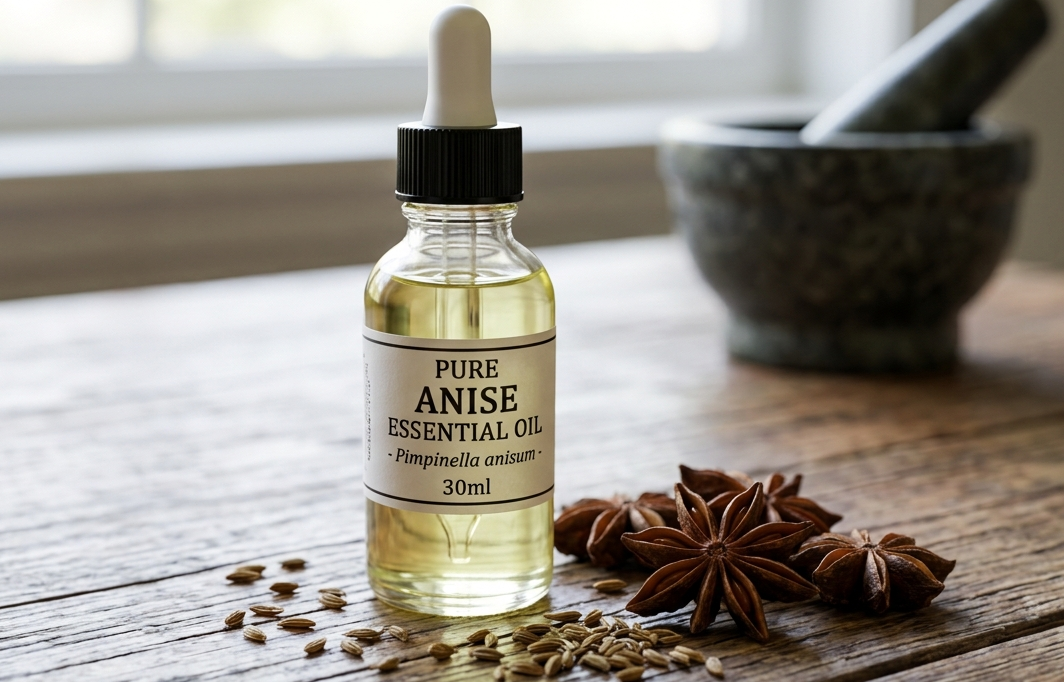
Anise oil is one of the most aromatic and traditionally valued essential oils in the world of natural wellness. Extracted from the seeds of the anise plant, this oil carries a sweet, licorice-like aroma that has been used for centuries in herbal medicine, cooking, perfumery, and therapeutic practices.
In this guide, you will learn everything about anise oil — from its science-backed health benefits to side effects, dosage, usage tips, and precautions.
What is Anise Oil?
Anise oil is a concentrated essential oil extracted from the seeds of the anise plant (Pimpinella anisum). The plant belongs to the Apiaceae family, which also includes fennel, parsley, and coriander. Native to the Mediterranean region and Southwest Asia, anise has been used since ancient Egyptian and Roman times.
The oil is typically obtained through steam distillation of crushed anise seeds. It has a strong, sweet aroma similar to black licorice due to its main active compound, anethole.
Anise oil is widely used for:
- Digestive support
- Respiratory relief
- Hormonal balance
- Antimicrobial purposes
- Aromatherapy
- Culinary flavoring
Its warming and soothing nature makes it a popular choice in traditional herbal systems.
Components of Anise Oil (Per 100 g)
Although essential oils are not consumed in large quantities, here is the approximate nutritional and chemical composition of anise oil:
| Component | Amount |
|---|---|
| Energy | ~884 kcal |
| Total Fat | 100 g |
| Saturated Fat | 10–15 g |
| Monounsaturated Fat | 15–20 g |
| Polyunsaturated Fat | 60–70 g |
| Trans Fat | 0 g |
| Carbohydrates | 0 g |
| Protein | 0 g |
| Dietary Fiber | 0 g |
| Sugars | 0 g |
| Main Active Compound (Anethole) | 80–90% |
| Other Compounds | Estragole, Limonene, Linalool |
Note: Essential oils are highly concentrated and not meant for large internal consumption.
20 Proven Benefits of Anise Oil
- Supports Digestive Health – Oil helps reduce bloating, gas, and indigestion by stimulating digestive enzyme secretion.
- Relieves Gas and Bloating – Its carminative properties help eliminate trapped gas and ease abdominal discomfort.
- Eases Cough and Congestion – Anise oil acts as a natural expectorant, helping loosen mucus in the respiratory tract.
- Soothes Sore Throat – Its antimicrobial and soothing properties may help reduce throat irritation.
- Reduces Menstrual Discomfort – Oil may help ease cramps due to its mild antispasmodic effect.
- Balances Hormones – The phytoestrogen-like activity of anethole may support hormonal balance in women.
- Improves Appetite – Traditionally used to stimulate appetite in individuals recovering from illness.
- Acts as a Natural Antimicrobial – It may help fight certain bacteria and fungi.
- Supports Oral Health – Anise oil is often used in mouthwashes to freshen breath and reduce harmful microbes.
- Promotes Better Sleep – Its calming aroma may help reduce mild stress and encourage restful sleep.
- Relieves Muscle Spasms – The oil’s antispasmodic properties can help reduce cramps and muscle tension.
- Supports Lactation – Traditionally believed to help increase breast milk production, though evidence is limited.
- Helps with Constipation – Mild laxative properties may support bowel movements.
- May Reduce Inflammation – Anise oil contains compounds that may help lower mild inflammation.
- Improves Skin Appearance – When diluted, it may help cleanse and tone the skin.
- Repels Insects – Its strong scent works as a natural insect deterrent.
- Supports Detoxification – Traditionally used to promote urination and toxin elimination.
- May Enhance Mood – Aromatherapy use can promote relaxation and mental clarity.
- Supports Immune Function – Antioxidant compounds may contribute to immune support.
- Aids in Respiratory Comfort – Steam inhalation with diluted oil may ease breathing discomfort.
10 Side Effects of Anise Oil
- Allergic Reactions – Some individuals may experience skin rashes or itching when using oil.
- Skin Irritation – Undiluted application may cause redness and irritation.
- Hormonal Sensitivity – Its estrogen-like effects may not be suitable for hormone-sensitive conditions.
- Nausea – Excessive internal use may cause stomach upset.
- Vomiting – High doses can irritate the digestive system.
- Headache – Strong aroma may trigger headaches in sensitive individuals.
- Seizure Risk – Very high doses may affect the nervous system.
- Drug Interactions – May interact with hormonal medications or sedatives.
- Toxicity Risk – Consuming large quantities can be toxic.
- Respiratory Irritation – Inhaling high concentrations may irritate sensitive airways.
How to Use Anise Oil?
Oil can be used in several ways:
- Aromatherapy: Add 2–3 drops to a diffuser.
- Massage: Dilute with a carrier oil (like coconut or almond oil) before applying to skin.
- Steam Inhalation: Add 1–2 drops to hot water and inhale steam.
- Topical Application: Always dilute before applying.
- Culinary Use: Only food-grade anise oil should be used in cooking in very tiny amounts.
Other Uses of Anise Oil
- Flavoring agent in candies and baked goods
- Ingredient in herbal teas
- Component in perfumes and soaps
- Used in toothpaste and mouthwash
- Natural cleaning products
- Insect repellent sprays
Tips for Consuming Anise Oil
- Always use food-grade oil if ingesting.
- Never consume undiluted essential oil.
- Start with very small amounts.
- Consult a healthcare provider before internal use.
- Avoid prolonged daily internal use.
How to Take Anise Oil?
For internal use, 1 drop diluted in honey or warm water is commonly used in traditional practices. However, internal use should only be done under professional supervision.
For topical use, mix 1–2 drops with one teaspoon of carrier oil.
How to Make Anise Oil at Home?
You can prepare infused anise oil (not essential oil) at home:
Ingredients:
- 1 cup crushed anise seeds
- 1 cup carrier oil (olive oil)
Steps:
- Lightly crush the seeds.
- Place them in a glass jar.
- Pour warm carrier oil over the seeds.
- Seal and keep in a warm place for 2–3 weeks.
- Strain and store in a dark bottle.
Note: True essential oil requires steam distillation equipment.
How Much Anise Oil Can You Use Per Day?
Because oil is highly concentrated, very small amounts are recommended.
For internal use:
- Typically no more than 1 drop per day (under supervision).
For topical use:
- 1–2 drops diluted per application.
Anise Oil Dosage
- Aromatherapy: 2–3 drops in diffuser
- Topical: 1–2% dilution (1–2 drops per teaspoon carrier oil)
- Internal: Only under professional guidance
Never exceed recommended amounts.
Best Time to Use Anise Oil
- For digestion: After meals
- For sleep: 30 minutes before bedtime (aromatherapy)
- For respiratory relief: During congestion episodes
- For menstrual discomfort: During early cycle days
Who Should Use Anise Oil?
- Individuals with mild digestive discomfort
- People experiencing bloating or gas
- Those seeking natural respiratory support
- Adults looking for calming aromatherapy
- Individuals wanting natural insect repellents
Who Should Not Use Anise Oil?
- Pregnant women without medical approval
- Individuals with hormone-sensitive conditions
- Children under 6 years
- People with known allergies to Apiaceae plants
- Individuals with seizure disorders
- Those on hormonal medications
How to Store Anise Oil?
- Store in a dark glass bottle
- Keep away from sunlight
- Keep tightly sealed
- Store in a cool, dry place
- Keep out of reach of children
Proper storage extends shelf life to about 2–3 years.
Precautions and Interactions
- Always dilute before topical use.
- Perform a patch test before skin application.
- Avoid contact with eyes.
- Do not ingest large amounts.
- May interact with birth control pills or hormone therapy.
- Consult a doctor if you have medical conditions.
Final Thoughts
Anise oil is a powerful and aromatic essential oil with centuries of traditional use. From digestive relief to respiratory support and aromatherapy benefits, it offers a wide range of potential advantages. However, like all essential oils, it must be used carefully and in small amounts.
When used responsibly, oil can be a valuable addition to your natural wellness routine. Always prioritize safety, proper dilution, and professional guidance when necessary. If you are considering adding oil to your daily health regimen, start slowly, observe how your body responds, and choose high-quality, pure oil from reputable sources.
FAQ’s
How long does it take for Anise Oil to work?
Oil may start showing effects within 15 to 30 minutes for digestion or respiratory relief when inhaled or properly diluted and applied, though results vary depending on the individual and method of use.
How to use anise oil for lice?
To use oil for lice, mix 2–3 drops with 1–2 tablespoons of a carrier oil such as coconut oil, apply to the scalp and hair, leave it on for 30–60 minutes, then comb with a fine lice comb and wash thoroughly; always perform a patch test first.
What is anise oil used for?
Oil is commonly used to support digestion, relieve gas and bloating, ease cough and congestion, reduce menstrual discomfort, freshen breath, and promote relaxation in aromatherapy.
Is anise oil safe to ingest?
Only food-grade oil should be ingested, and that too in very small, diluted amounts under professional supervision, as essential oils are highly concentrated.
Can anise oil help with bloating?
Yes, oil has carminative properties that may help reduce gas formation and ease bloating when used appropriately.
Does anise oil help with cough?
Oil acts as a natural expectorant and may help loosen mucus, making it useful for mild cough and chest congestion.
Can I apply anise oil directly to the skin?
No, oil should never be applied directly to the skin without dilution, as it may cause irritation; always mix it with a carrier oil.
Is anise oil good for sleep?
Its sweet, calming aroma may help promote relaxation and improve sleep quality when used in a diffuser before bedtime.
Can pregnant women use anise oil?
Pregnant women should avoid using oil without medical advice due to its possible hormonal effects.
Can children use anise oil?
Oil is not recommended for young children unless advised by a healthcare professional.
What does anise oil smell like?
Oil has a sweet, warm, licorice-like aroma that is strong and distinctive.
Is anise oil the same as star anise oil?
No, anise oil comes from Pimpinella anisum, while star anise oil comes from Illicium verum; although they share similar aromas due to anethole, they are different plants.
Can anise oil cause allergies?
Yes, some people may experience allergic reactions such as skin rashes, itching, or irritation.
How long does anise oil last?
When stored properly in a dark, cool place, oil can last about 2–3 years.
Can anise oil help with menstrual cramps?
Its mild antispasmodic properties may help ease menstrual cramps when used appropriately.
Can anise oil improve appetite?
Traditionally, oil has been used to stimulate appetite, especially during recovery from illness.
Is anise oil good for skin?
When diluted properly, it may help cleanse and tone the skin, but sensitive individuals should perform a patch test first.
How should I dilute anise oil for massage?
Mix 1–2 drops of oil with one teaspoon of a carrier oil such as coconut, almond, or olive oil.
Can anise oil be used daily?
It can be used daily in small, properly diluted amounts for short periods, but prolonged internal use should be supervised by a professional.
What is the difference between anise oil and fennel oil?
Both belong to the same plant family and have similar sweet aromas, but they come from different plants and have slightly different chemical compositions and effects.
Also Read: