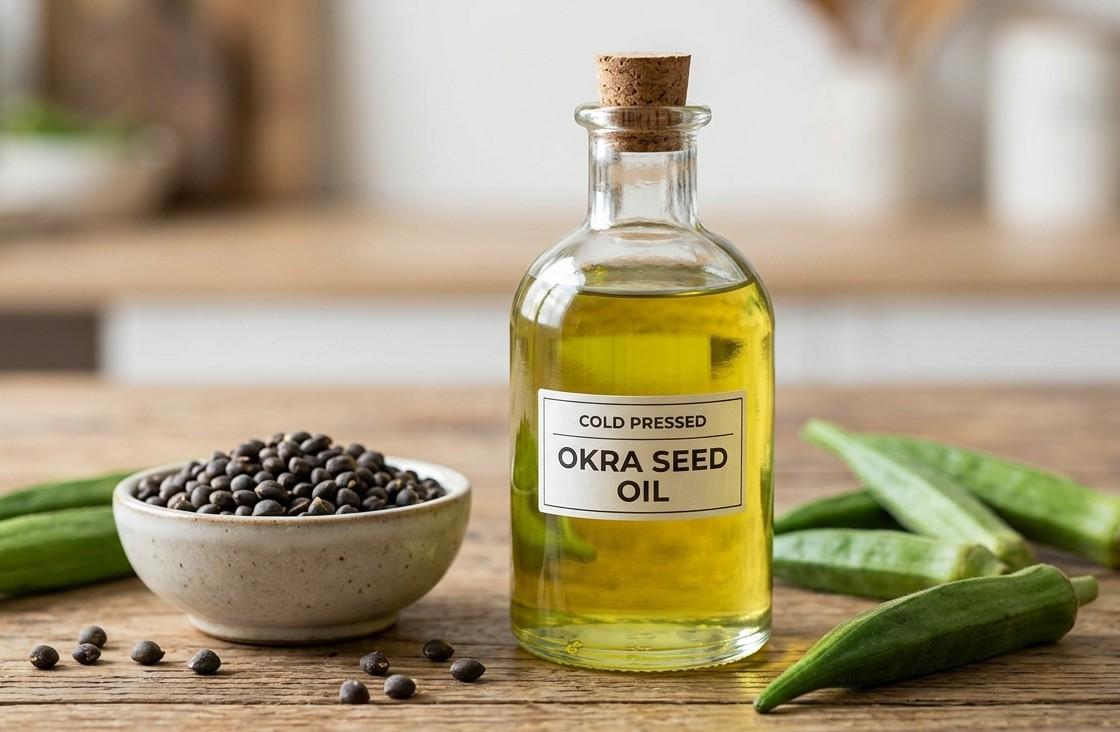
Okra is a vegetable many of us know from our kitchens. Whether added to curries, stir-fries, or soups, it has long been valued for its fiber-rich pods and health-supporting nutrients. But beyond the green vegetable lies a lesser-known treasure — okra seed oil. Extracted from the seeds of the okra plant, this oil is gaining attention for its nutritional richness and cosmetic potential.
In this guide, we’ll explore everything you need to know about okra seed oil — from its nutrition facts and health benefits to dosage, side effects, and how to use it safely.
What is Okra Seed Oil?
Okra seed oil is a plant-based oil extracted from the seeds of the okra plant (Abelmoschus esculentus). While the pod is commonly consumed as a vegetable, the seeds contain a rich concentration of healthy fats, antioxidants, and bioactive compounds.
The oil is typically obtained through cold-pressing or solvent extraction. Cold-pressed okra seed oil is considered superior because it retains more nutrients and antioxidants.
Okra seed oil has a light texture, mild nutty flavor, and golden-yellow color. It is used in:
- Cooking
- Skincare products
- Haircare formulations
- Nutritional supplementation
What makes it special is its high content of unsaturated fatty acids, particularly linoleic acid (omega-6) and oleic acid (omega-9), along with natural antioxidants like tocopherols (vitamin E).
Nutrition Facts of Okra Seed Oil
Below is an approximate nutritional profile of okra seed oil per 100 grams:
| Nutrient | Amount (Approx.) |
|---|---|
| Calories | 884 kcal |
| Total Fat | 100 g |
| Saturated Fat | 20–25 g |
| Monounsaturated Fat (Oleic Acid) | 20–30 g |
| Polyunsaturated Fat (Linoleic Acid) | 40–50 g |
| Omega-6 Fatty Acids | 35–45 g |
| Vitamin E (Tocopherols) | 15–25 mg |
| Phytosterols | Moderate amounts |
| Protein | 0 g |
| Carbohydrates | 0 g |
| Fiber | 0 g |
Note: Values may vary depending on extraction method and seed quality.
20 Proven Benefits of Okra Seed Oil
- Supports Heart Health – The high content of unsaturated fats helps improve cholesterol balance by lowering LDL and supporting HDL levels.
- Rich in Antioxidants – Natural vitamin E and polyphenols protect cells from oxidative stress and free radical damage.
- Improves Skin Hydration – Its lightweight texture deeply moisturizes the skin without clogging pores.
- Promotes Hair Growth – Essential fatty acids nourish hair follicles and strengthen roots.
- Reduces Inflammation – Omega-6 fatty acids and plant compounds may help reduce inflammatory responses in the body.
- Enhances Skin Elasticity – Vitamin E supports collagen integrity, helping maintain firmer-looking skin.
- Supports Brain Function – Healthy fats are essential for optimal cognitive performance and nerve function.
- May Help Balance Cholesterol – Phytosterols in okra seed oil can interfere with cholesterol absorption in the gut.
- Improves Digestive Comfort – When consumed moderately, healthy oils support smooth bowel movement.
- Boosts Immune Function – Antioxidants contribute to stronger immune defense.
- Helps Manage Dry Scalp – Regular scalp massage with okra seed oil may reduce flakiness and dryness.
- Supports Joint Health – Anti-inflammatory compounds may help ease mild joint discomfort.
- Protects Against Premature Aging – Antioxidants slow visible signs of aging like wrinkles and fine lines.
- Provides Energy – As a calorie-dense healthy fat source, it provides sustained energy.
- Supports Hormonal Balance – Healthy fats are necessary for hormone production and regulation.
- Improves Skin Barrier Function – It strengthens the lipid layer of the skin, preventing moisture loss.
- May Help Stabilize Blood Sugar – Healthy fats slow digestion and help reduce blood sugar spikes when consumed with meals.
- Enhances Wound Healing – Vitamin E supports tissue repair and regeneration.
- Natural Emollient for Sensitive Skin – Its mild composition makes it suitable for delicate skin types.
- May Support Liver Health – Antioxidant compounds may help reduce oxidative stress on the liver.
10 Side Effects of Okra Seed Oil
While generally safe when used properly, excessive or improper use may cause side effects.
- Digestive Upset – Consuming too much may cause bloating or diarrhea.
- Allergic Reactions – Individuals allergic to okra may experience itching or swelling.
- Skin Irritation – Sensitive skin types may develop redness if used topically without patch testing.
- Weight Gain – Being calorie-dense, overconsumption may contribute to excess calorie intake.
- Imbalance of Omega-6 – Excess intake without balancing omega-3 may promote inflammation.
- Possible Blood Sugar Changes – It may mildly affect blood glucose levels.
- Interactions with Blood Thinners – Vitamin E content may slightly affect clotting.
- Acne Breakouts – In oily skin types, excessive application may clog pores.
- Nausea – Large amounts on an empty stomach may cause mild nausea.
- Contamination Risk – Poor-quality or improperly stored oil may turn rancid and cause digestive discomfort.
How to Use Okra Seed Oil?
Okra seed oil can be used in multiple ways:
For Cooking
- Use as salad dressing
- Add to smoothies
- Drizzle over cooked vegetables
- Use for low to medium-heat cooking
For Skin
- Apply 2–3 drops on clean face
- Mix with moisturizer
- Use as massage oil
For Hair
- Massage into scalp
- Use as pre-shampoo treatment
- Mix with hair mask
Other Uses of Okra Seed Oil
- Ingredient in natural cosmetics
- Carrier oil in aromatherapy
- Lip balm formulations
- Cuticle treatment
- Beard oil base
Tips for Consuming Okra Seed Oil
- Choose cold-pressed, unrefined oil
- Start with small amounts
- Combine with omega-3 rich foods
- Avoid overheating
- Store in dark glass bottles
How to Take Okra Seed Oil?
You can take okra seed oil:
- 1 teaspoon mixed in warm water
- Added to salad dressing
- Blended into smoothies
- With meals to improve fat absorption
Always begin with small doses to assess tolerance.
How to Make Okra Seed Oil?
Making oil at home is difficult but possible in small batches.
Steps:
- Collect mature okra pods.
- Remove and dry the seeds completely.
- Grind the seeds into coarse powder.
- Use a manual oil press machine to extract oil.
- Filter through muslin cloth.
- Store in airtight dark glass container.
Cold pressing is recommended. Without proper equipment, oil yield will be low.
How Much Okra Seed Oil Can You Use Per Day?
For general health:
- 1 to 2 teaspoons per day is considered moderate.
- Do not exceed 1 tablespoon daily without professional guidance.
Topical use: 2–5 drops per application.
Okra Seed Oil Dosage
| Purpose | Recommended Dosage |
|---|---|
| General health | 1–2 teaspoons daily |
| Skin application | 2–3 drops per use |
| Hair treatment | 1–2 tablespoons weekly |
| Massage | As required (small amount) |
Best Time to Use Okra Seed Oil
- Morning with meals for digestion support
- Before bedtime for skin hydration
- Before shampoo for hair nourishment
- With lunch or dinner to reduce digestive discomfort
Who Should Use Okra Seed Oil?
- People with dry skin
- Individuals seeking heart-friendly oils
- Those looking for plant-based antioxidants
- People with dry or brittle hair
- Adults wanting healthy fat sources
Who Should Not Use Okra Seed Oil?
- Individuals allergic to okra
- People on anticoagulant therapy (consult doctor)
- Those with severe digestive disorders
- People managing strict low-fat diets
- Infants without medical guidance
How to Store Okra Seed Oil?
Proper storage is essential to prevent rancidity.
- Keep in airtight dark glass bottle
- Store in cool, dry place
- Avoid direct sunlight
- Refrigerate after opening (optional)
- Use within 6–12 months
Signs of spoilage include strong odor, bitterness, or cloudy appearance.
Precautions and Interactions
- Consult a healthcare provider if pregnant or breastfeeding.
- Monitor intake if you have diabetes.
- Avoid combining excessive omega-6 oils.
- Stop use if allergic symptoms appear.
- Do not use rancid oil.
If you are taking blood thinners or cholesterol medication, speak to your doctor before regular consumption.
Final Thoughts
Okra seed oil may not be as famous as olive or coconut oil, but it offers impressive nutritional and cosmetic benefits. With its rich content of healthy fats, vitamin E, and plant compounds, it supports heart health, skin vitality, hair nourishment, and overall wellness. However, like any oil, moderation is key. While it can be a valuable addition to your routine, excessive use may lead to unwanted effects.
FAQ’s
How long does it take for okra seed oil to work?
Skin softness may appear within a few days, while hair and internal benefits usually take 2–4 weeks of regular use.
What does okra seed oil smell like?
It has a mild, slightly nutty and earthy scent, especially in cold-pressed form.
How to extract oil from okra seeds?
Dry the seeds, grind them, and use a cold-press machine to extract the oil, then filter and store in a dark glass bottle.
What is okra seed oil good for?
Okra seeds oil is commonly used for supporting heart health, improving skin hydration, nourishing hair, and providing antioxidant protection due to its rich content of healthy fats and vitamin E.
Can I use okra seed oil every day?
Yes, it can be used daily in small amounts, such as 1–2 teaspoons for consumption or a few drops for topical application, as long as you do not experience any side effects.
Is okra seed oil safe for skin?
Yes, it is generally safe for most skin types, especially dry or sensitive skin, but a patch test is recommended before regular use.
Does okra seed oil help with hair growth?
Okra oil may support healthier hair growth by nourishing the scalp and strengthening hair follicles with essential fatty acids.
Is okra seed oil edible?
Yes, cold-pressed okra oil is edible and can be used in salad dressings, smoothies, or low-heat cooking.
Can okra seed oil help lower cholesterol?
Its unsaturated fats and phytosterols may help improve cholesterol balance when used as part of a healthy diet.
Does okra seed oil raise blood sugar levels?
No, healthy fats like those in okra oil may actually help slow digestion and reduce blood sugar spikes when consumed with meals.
Is okra seed oil good for acne-prone skin?
It can help moisturize and soothe skin, but people with oily or acne-prone skin should use it sparingly to avoid clogged pores.
How long does okra seed oil last?
When stored properly in a cool, dark place, okra oil typically lasts 6–12 months.
Can pregnant women use okra seed oil?
Small dietary amounts are generally considered safe, but pregnant or breastfeeding women should consult a healthcare professional before regular use.
Can okra seed oil cause allergies?
Yes, individuals who are allergic to okra or related plants may experience allergic reactions and should avoid its use.
Is okra seed oil better than olive oil?
Okra oil and olive oil have different nutrient profiles; olive oil is higher in monounsaturated fats, while okra seed oil contains more polyunsaturated fats, so the better choice depends on individual dietary needs.
Can children use okra seed oil?
Small amounts in food may be acceptable, but it is best to consult a pediatrician before giving it regularly to children.
How do I know if okra seed oil has gone bad?
If the oil smells sour, tastes bitter, or appears unusually cloudy, it may be rancid and should not be used.
Also Read: