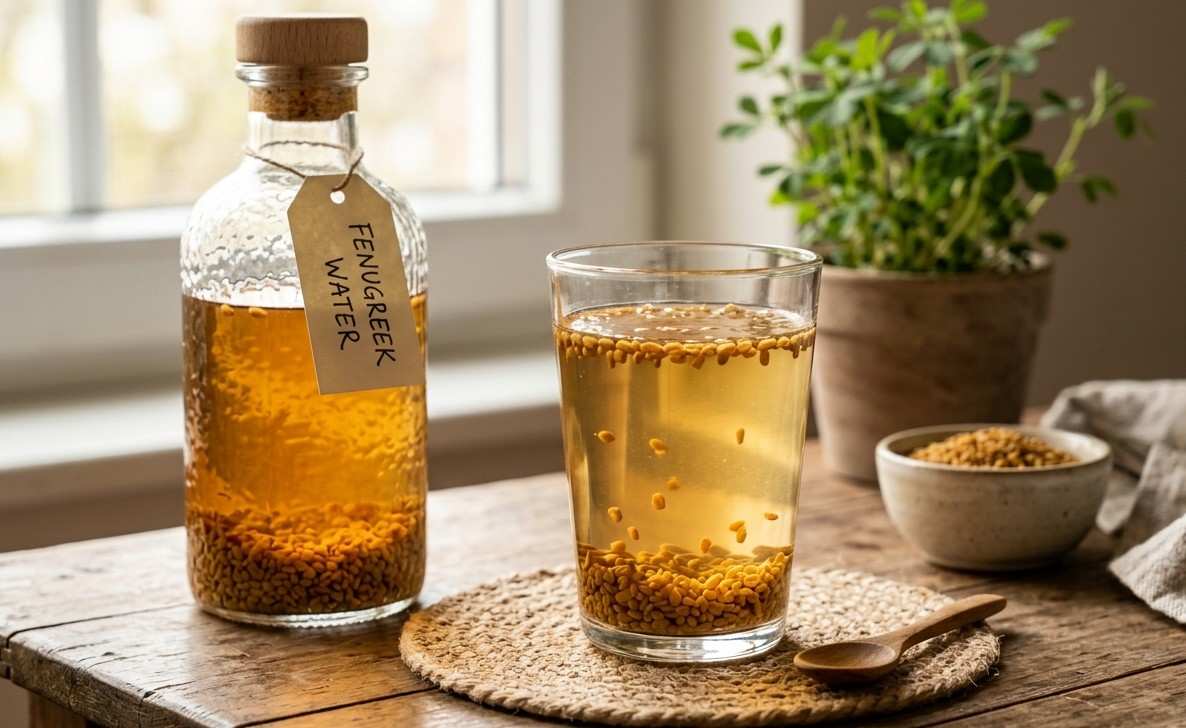
Fenugreek water is one of those traditional remedies that has quietly stood the test of time. In many Indian households, soaking fenugreek seeds overnight and drinking the water in the morning is a simple ritual passed down through generations. Known as “methi water,” this natural drink is valued for digestion, blood sugar balance, weight management, skin health, and overall wellness.
Today, modern research is beginning to support many of these traditional uses. In this guide, you will learn what fenugreek water is, its nutritional profile, proven health benefits, possible side effects, how to prepare it correctly, and who should or should not drink it.
What is Fenugreek Water?
Fenugreek water is a herbal infusion made by soaking fenugreek seeds (Trigonella foenum-graecum) in water for several hours or overnight. The seeds release their soluble fiber, antioxidants, and bioactive compounds into the water, making it mildly bitter but highly nutritious.
Fenugreek seeds have been used in Ayurveda, traditional Chinese medicine, and Middle Eastern herbal practices for centuries. When soaked in water, the seeds swell and develop a gel-like coating due to their high soluble fiber content. This fiber-rich water is what gives fenugreek water many of its digestive and metabolic benefits.
Nutrition Facts of Fenugreek Water
The exact nutritional content of fenugreek water depends on how many seeds are used and how long they are soaked. Below is an approximate nutritional profile based on 1 tablespoon (about 11 grams) of fenugreek seeds soaked in 1 cup of water.
| Nutrient | Approximate Amount (from 1 tbsp seeds) |
|---|---|
| Calories | 35–40 kcal |
| Protein | 2.5–3 g |
| Carbohydrates | 6 g |
| Dietary Fiber | 2.5–3 g |
| Fat | 0.7 g |
| Iron | 3–4 mg |
| Magnesium | 20–25 mg |
| Manganese | 0.1–0.2 mg |
| Vitamin B6 | Small amounts |
| Potassium | 40–50 mg |
| Antioxidants | Flavonoids, polyphenols |
| Active Compounds | Saponins, diosgenin, trigonelline, galactomannan |
Note: Most of the fiber and micronutrients remain in the soaked seeds, but significant soluble compounds dissolve into the water.
20 Science-Backed Benefits of Fenugreek Water
- Supports Blood Sugar Control – Fenugreek seed water contains soluble fiber and compounds like trigonelline that help slow carbohydrate absorption and improve insulin sensitivity.
- Improves Digestive Health – The mucilaginous fiber in fenugreek soothes the digestive tract and helps relieve constipation.
- Reduces Cholesterol Levels – Studies suggest that fenugreek may lower total cholesterol and LDL cholesterol due to its saponin content.
- Aids in Weight Management – The fiber in fenugreek water promotes fullness and reduces appetite, supporting healthy weight loss.
- Enhances Metabolism – Fenugreek may help regulate metabolic processes, improving fat and carbohydrate utilization.
- Boosts Testosterone Levels in Men – Some research shows fenugreek extract may support healthy testosterone levels and physical performance.
- Improves Milk Production in Nursing Mothers – Fenugreek is traditionally used as a galactagogue to increase breast milk supply.
- Reduces Menstrual Discomfort – Anti-inflammatory compounds in fenugreek may ease menstrual cramps and hormonal imbalance.
- Supports Heart Health – By improving lipid profile and blood sugar levels, fenugreek water contributes to cardiovascular wellness.
- Improves Gut Microbiome – The prebiotic fiber in fenugreek nourishes beneficial gut bacteria.
- Reduces Inflammation – Antioxidants and polyphenols in fenugreek combat oxidative stress and inflammation.
- Supports Liver Function – Fenugreek may protect liver cells against oxidative damage.
- Helps Control Acid Reflux – The gel-like consistency of soaked fenugreek can coat and soothe the stomach lining.
- Promotes Healthy Skin – Antioxidant compounds help fight free radical damage that contributes to premature aging.
- May Improve Hair Health – Fenugreek’s protein and iron content support hair strength and growth.
- Supports Hormonal Balance in Women – Diosgenin in fenugreek may influence estrogen activity and help manage symptoms of hormonal fluctuations.
- Improves Exercise Performance – Some studies indicate fenugreek may enhance endurance and muscle recovery.
- May Help Manage PCOS Symptoms – Fenugreek’s insulin-regulating properties may support women with polycystic ovary syndrome.
- Promotes Kidney Health – Antioxidant properties may help reduce oxidative stress in kidney tissues.
- Supports Immune Function – Its micronutrients and antioxidants contribute to overall immune resilience.
10 Side Effects of Fenugreek Water
Although generally safe, fenugreek water may cause side effects in some individuals.
- Digestive Discomfort – Excess consumption can cause bloating, gas, or diarrhea due to high fiber content.
- Low Blood Sugar (Hypoglycemia) – People on diabetes medication may experience excessively low blood sugar levels.
- Allergic Reactions – Individuals allergic to peanuts or chickpeas may react to fenugreek.
- Strong Body Odor – Fenugreek can cause a maple syrup-like smell in sweat and urine.
- Diarrhea – High intake may stimulate bowel movements excessively.
- Hormonal Effects – Because it influences estrogen activity, it may not be suitable for hormone-sensitive conditions.
- Thyroid Interference – Excessive intake may influence thyroid hormone levels.
- Blood Thinning – Fenugreek may enhance the effect of blood-thinning medications.
- Pregnancy Risks – Large amounts may stimulate uterine contractions.
- Drug Interactions – It may interact with diabetes, thyroid, and anticoagulant medications.
How to Make Fenugreek Water?
Method 1: Overnight Soaking Method (Most Popular)
Ingredients:
- 1 tablespoon fenugreek seeds
- 1 cup warm water
Instructions:
- Add fenugreek seeds to a glass of water.
- Soak overnight (8–12 hours).
- Strain and drink the water in the morning on an empty stomach.
- You may chew the soaked seeds if desired.
Method 2: Boiled Fenugreek Water
- Add 1 teaspoon fenugreek seeds to 1 cup of water.
- Boil for 5–10 minutes.
- Strain and drink warm.
Tips for Consuming Fenugreek Water
- Start with small amounts to assess tolerance.
- Drink on an empty stomach for best metabolic effects.
- Use fresh seeds for maximum potency.
- Avoid adding sugar.
- Stay hydrated throughout the day.
- Monitor blood sugar if you have diabetes.
- Do not exceed recommended daily intake.
Other Uses of Fenugreek Water
- Hair rinse for reducing dandruff.
- Face toner for oily skin.
- Natural mouth rinse.
- Soothing wash for minor skin irritation.
- Added to herbal teas.
- Used as a base for detox drinks.
How Much Fenugreek Water Can You Drink in a Day?
For most healthy adults:
- 1 cup per day made from 1 tablespoon seeds is generally safe.
- Beginners may start with 1 teaspoon seeds soaked in water.
- Do not exceed 2 cups daily without medical advice.
Moderation is important because excessive intake may cause digestive or hormonal disturbances.
Best Time to Drink Fenugreek Water
- Morning on an empty stomach for blood sugar control and metabolism.
- Before meals to reduce appetite.
- Evening only if tolerated well, though it may cause digestive discomfort for some people.
The morning is considered the most effective time.
Who Should Drink Fenugreek Water?
- Individuals with mild insulin resistance.
- People trying to manage weight naturally.
- Women with mild menstrual discomfort.
- Nursing mothers (after medical consultation).
- Individuals with mild digestive issues.
- Those seeking natural cholesterol support.
Who Should Avoid Fenugreek Water?
- Pregnant women.
- Individuals with severe hypoglycemia.
- People allergic to legumes.
- Those on anticoagulants.
- Individuals with hormone-sensitive cancers.
- People with thyroid disorders unless supervised.
How to Store Fenugreek Water?
- Fresh preparation is best.
- Refrigerate if storing for up to 24 hours.
- Keep in a glass container.
- Do not store for more than one day.
- Discard if the smell becomes sour.
Precautions and Interactions
- Consult a doctor if taking diabetes medication.
- Monitor blood sugar regularly.
- Avoid combining with other strong herbal supplements without advice.
- Stop use if allergic reactions occur.
- Avoid high doses during pregnancy.
- Inform your healthcare provider before surgery.
Final Thoughts
Fenugreek water is a simple yet powerful herbal drink rooted in traditional medicine and increasingly supported by scientific research. From blood sugar regulation and improved digestion to hormonal balance and heart health, its benefits are wide-ranging. However, like any natural remedy, it should be used mindfully and in moderation.
If you are considering adding fenugreek water to your routine, start small, observe how your body responds, and consult a healthcare professional if you have any medical conditions or are on medication.
FAQ’s
What does Fenugreek Water taste like?
Fenugreek seed water has a mildly bitter, earthy, and slightly nutty taste, which can feel strong at first but becomes more tolerable over time.
What does Fenugreek Water smell like?
Fenugreek seed water has a distinct earthy aroma, and some people notice a maple syrup-like scent due to natural compounds present in the seeds.
Is Fenugreek Water safe for children?
In small amounts and occasionally, fenugreek seed water may be safe for older children, but it is not generally recommended without pediatric advice, especially for toddlers or infants.
What is Fenugreek Water good for?
Fenugreek seed water is commonly used to support digestion, regulate blood sugar levels, improve cholesterol, promote weight management, and help with hormonal balance.
Can I drink fenugreek water every day?
Yes, most healthy adults can drink fenugreek water daily in moderate amounts (about 1 cup per day), but it is best to monitor how your body responds.
How long does fenugreek water take to show results?
Some digestive benefits may be noticed within a few days, while blood sugar, cholesterol, or hormonal improvements may take 2–6 weeks of consistent use.
Is fenugreek water good for weight loss?
Yes, its high soluble fiber content promotes fullness, reduces appetite, and may support gradual weight management when combined with a healthy diet.
Can fenugreek water reduce belly fat?
Fenugreek seed water does not directly target belly fat, but it may support overall fat loss by improving metabolism and controlling cravings.
Is fenugreek water safe during pregnancy?
Pregnant women should avoid consuming fenugreek seed water in large amounts because it may stimulate uterine contractions.
Can I drink fenugreek water at night?
Yes, but some people may experience digestive discomfort, so morning consumption on an empty stomach is generally preferred.
Should I chew the soaked fenugreek seeds?
Yes, chewing the soaked seeds provides additional fiber and nutrients, but it is optional if you find the taste too bitter.
Can fenugreek water help with PCOS?
Fenugreek may support blood sugar balance and hormonal regulation, which can be helpful for women managing PCOS symptoms.
Does fenugreek water increase breast milk supply?
Fenugreek is traditionally used as a galactagogue and may help increase milk production, but nursing mothers should consult a healthcare provider before use.
Can diabetics drink fenugreek water?
Yes, fenugreek seed water may help regulate blood sugar levels, but diabetics should monitor glucose closely and consult their doctor to avoid hypoglycemia.
Does fenugreek water detox the body?
While it supports liver function and digestion, the body naturally detoxifies itself through the liver and kidneys, and fenugreek seed water mainly aids these processes rather than acting as a direct detox agent.
Can fenugreek water cause body odor?
Yes, some people may notice a maple syrup-like smell in sweat or urine due to certain compounds in fenugreek.
How much fenugreek water is too much?
More than 2 cups daily may increase the risk of digestive upset, low blood sugar, or hormonal imbalance.
Is fenugreek water good for skin?
Yes, its antioxidant and anti-inflammatory properties may promote clearer, healthier-looking skin when consumed regularly.
Can I add lemon or honey to fenugreek water?
Yes, adding lemon or a small amount of honey can improve taste, but avoid excess sweeteners if you are managing blood sugar.
Also Read: