Water fasting has gained significant attention in recent years as people search for ways to lose weight, improve metabolic health, and simplify their relationship with food. From wellness enthusiasts to researchers studying longevity, many are curious about whether spending a period consuming only water can truly offer health benefits.
While water fasting is often promoted as a natural detoxification method, the reality is more complex. Scientific research suggests that fasting may trigger several biological processes that support cellular repair and metabolic health. However, it also carries potential risks, especially when done improperly or without medical supervision.
This guide explores what water fasting is, how it works, its potential benefits, possible dangers, who should avoid it, and practical safety considerations. Whether you’re considering a short fast or simply want to understand the science behind fasting, this article provides an evidence-based overview.
What Is Water Fasting?
Water fasting is a type of fasting in which a person consumes only water for a specific period while avoiding all foods, beverages, and calorie-containing substances.
The duration of a water fast can vary widely:
- Short-term water fast: 12–24 hours
- Moderate water fast: 24–72 hours
- Extended water fast: More than 72 hours
During the fasting period, water is the only permitted intake. No juices, smoothies, coffee with additives, tea containing calories, or supplements providing energy are consumed.
Water fasting has historical roots in religious, spiritual, and cultural traditions. Today, it is also studied for potential health effects related to metabolism, inflammation, aging, and disease prevention.
How Does Water Fasting Work?
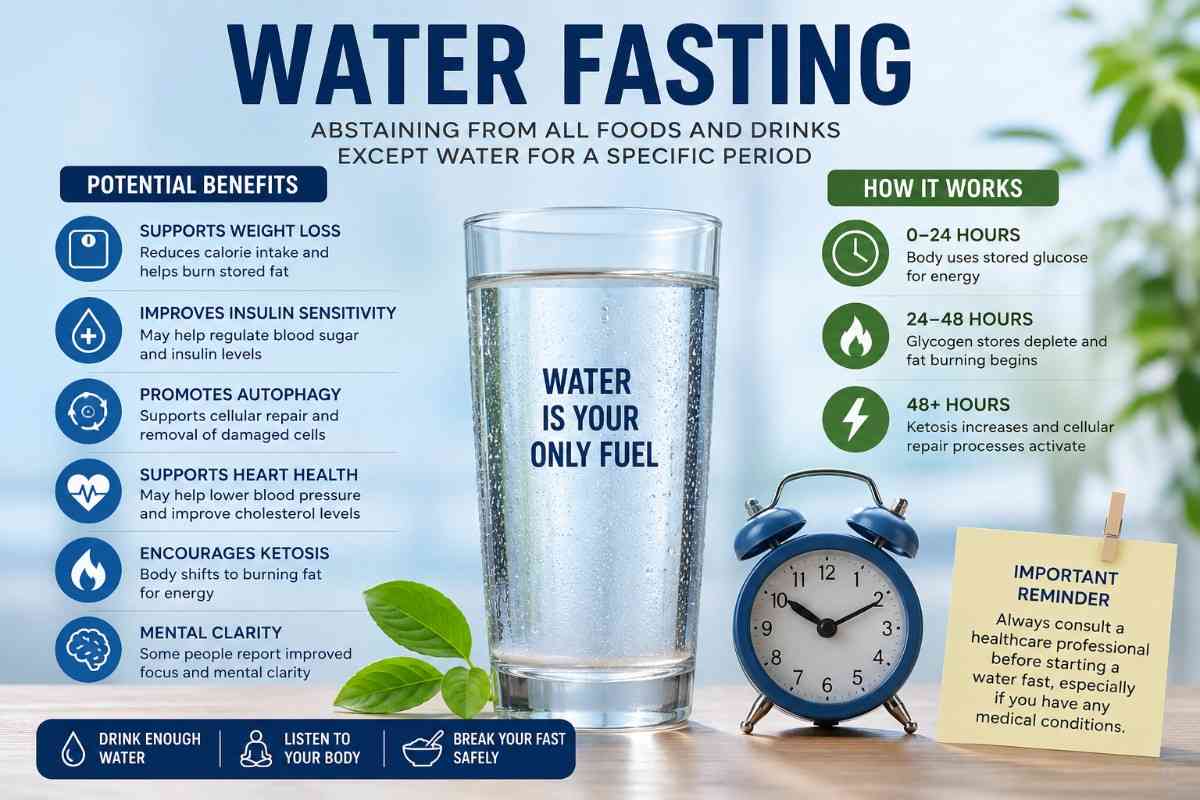
When you stop eating, your body undergoes several metabolic changes.
First 6–24 Hours
The body primarily uses glucose from recently consumed foods for energy.
Glycogen Breakdown
Stored glycogen in the liver begins to provide fuel as blood sugar levels gradually decline.
After 24–48 Hours
Ketosis Begins
As glycogen stores become depleted, the body starts burning stored fat for energy.
The liver converts fat into molecules called ketones, which become an alternative fuel source for the brain and muscles.
After 48–72 Hours
Increased Fat Utilization
Fat burning becomes more significant, and ketone production increases.
Cellular Repair Processes
Scientists have observed increased activity in biological pathways associated with:
- Autophagy
- Cellular maintenance
- Protein recycling
- Stress adaptation
These processes are areas of active scientific research and may contribute to some health benefits associated with fasting.
Related Articles:
- How Long Can You Live Without Food? Survival Limits & Risks
- How Long Can Humans Survive Without Sleep? Risks & Effects
- How Long Can You Live Without Water? Survival Limits & Risks
Proven Health Benefits of Water Fasting
Research continues to investigate the possible benefits of fasting. Some benefits are supported by preliminary evidence, while others require further study.
1. May Promote Weight Loss
- Calorie restriction naturally leads to weight loss during fasting.
- Weight loss initially comes from water and glycogen stores, followed by body fat.
2. May Improve Insulin Sensitivity
- Some studies suggest fasting may help improve how the body responds to insulin.
- Better insulin sensitivity can support healthy blood sugar regulation.
3. May Encourage Ketosis
Water fasting pushes the body into ketosis, where fat becomes the primary fuel source.
4. May Lower Blood Pressure
Research indicates medically supervised fasting may contribute to reductions in blood pressure among certain individuals.
5. May Trigger Autophagy
- Autophagy is the body’s cellular cleanup process that removes damaged cellular components.
- Scientists continue studying its potential role in healthy aging.
6. May Reduce Inflammation Markers
- Some fasting studies report decreases in inflammatory biomarkers.
- Chronic inflammation is associated with numerous health conditions.
7. May Improve Metabolic Flexibility
The body becomes more efficient at switching between carbohydrate and fat metabolism.
8. May Support Heart Health
Fasting may positively affect certain cardiovascular risk factors, including blood pressure and insulin resistance.
9. May Enhance Fat Burning
Lower insulin levels encourage the body to utilize stored fat for energy.
10. May Improve Blood Lipid Profiles
Some studies suggest improvements in cholesterol and triglyceride levels.
11. May Promote Mindful Eating
Many people report becoming more aware of hunger patterns and eating habits.
12. May Improve Discipline Around Food
Structured fasting can help some individuals reduce mindless snacking.
13. May Support Digestive Rest
Temporary fasting gives the digestive system a break from processing food.
14. May Help Reset Eating Patterns
Some individuals use fasting as an opportunity to re-establish healthier dietary habits.
15. May Improve Energy Regulation
Once adapted to ketosis, some people report more stable energy levels.
16. May Reduce Excess Caloric Intake
Periodic fasting naturally decreases overall calorie consumption.
17. May Support Cellular Stress Resistance
Research suggests fasting activates adaptive cellular responses.
18. May Influence Longevity Pathways
Animal studies have linked fasting-related pathways with longer lifespans, although human evidence remains limited.
19. May Improve Metabolic Markers
Fasting may affect blood sugar, insulin, and other metabolic indicators.
20. May Encourage Lifestyle Awareness
Many individuals become more conscious of hydration, nutrition, sleep, and physical activity after fasting experiences.
The Science Behind Autophagy and Water Fasting
One reason water fasting attracts scientific interest is autophagy.
Autophagy literally means “self-eating.” It is a natural process in which cells break down and recycle damaged components.
Researchers believe autophagy may:
- Support cellular maintenance
- Remove dysfunctional proteins
- Promote healthy aging processes
- Help cells adapt to stress
However, much of the current evidence comes from laboratory and animal studies. Human research is ongoing, and many claims surrounding autophagy remain theoretical.
Water Fasting for Weight Loss
Weight loss is among the most common reasons people attempt water fasting.
Short-Term Weight Loss
Initial weight loss often results from:
- Water loss
- Glycogen depletion
- Reduced food volume in the digestive tract
Long-Term Weight Loss
Long-term success depends on lifestyle changes after the fast.
Many individuals regain weight if they return to previous eating habits.
Water fasting should not be viewed as a permanent weight-loss solution but rather as one component of a broader health strategy.
Potential Risks and Side Effects of Water Fasting
Water fasting is not risk-free.
1. Hunger
Strong hunger sensations are common, especially during the first two days.
2. Fatigue
Energy levels may decrease as the body adapts to fasting.
3. Headaches
Changes in blood sugar, hydration, and caffeine withdrawal can trigger headaches.
4. Dizziness
Low blood pressure and reduced blood sugar may cause lightheadedness.
5. Weakness
Many individuals experience temporary physical weakness.
6. Difficulty Concentrating
Mental focus may fluctuate during fasting.
7. Mood Changes
Irritability and emotional changes are commonly reported.
8. Sleep Disturbances
Some people notice disrupted sleep patterns.
9. Dehydration Risk
Surprisingly, fasting can contribute to dehydration because food normally provides water.
10. Electrolyte Imbalance
Extended fasting may reduce levels of:
Electrolyte disturbances can become dangerous.
Serious Risks of Extended Water Fasting
Prolonged fasting increases health risks.
Potential complications include:
- Severe dehydration
- Heart rhythm abnormalities
- Muscle loss
- Nutrient deficiencies
- Fainting
- Low blood pressure
- Reduced immune function
- Organ stress
Extended water fasts should never be undertaken without professional medical supervision.
Who Should Avoid Water Fasting?
Water fasting is not appropriate for everyone.
People who should generally avoid water fasting include:
- Pregnant women
- Breastfeeding mothers
- Children
- Teenagers
- Older adults with frailty
- Individuals with eating disorders
- People with diabetes
- Individuals with kidney disease
- People with liver disease
- Those taking medications requiring food
- Individuals with low body weight
- People recovering from surgery
Always consult a qualified healthcare professional before beginning any fasting regimen.
How to Prepare for a Water Fast?
Preparation can reduce discomfort.
1. Reduce Processed Foods
Gradually limit highly processed foods several days beforehand.
2. Increase Water Intake
Begin proper hydration before the fast starts.
3. Limit Alcohol
Alcohol can worsen dehydration.
4. Reduce Heavy Meals
Smaller meals may help ease the transition.
5. Consider Medical Advice
Consult a healthcare provider if you have any underlying health conditions.
How to Do Water Fasting Safely?
1. Consult Your Healthcare Provider
Before starting a water fast, speak with a healthcare professional, especially if you have diabetes, heart disease, kidney problems, take medications, are pregnant, or are breastfeeding.
2. Prepare Your Body
Reduce processed foods, sugar, alcohol, and large meals 2–3 days before the fast. Focus on fruits, vegetables, lean proteins, and plenty of water.
3. Choose a Fasting Duration
Beginners often start with:
- 12–16 hours
- 24 hours
- 36 hours
Extended fasts lasting more than 48–72 hours should only be done under medical supervision.
4. Drink Plenty of Water
Consume water regularly throughout the day to stay hydrated. Most people drink according to thirst, but hydration needs vary based on activity level, climate, and body size.
5. Avoid Strenuous Exercise
Light walking, stretching, and gentle activities are usually better choices during a water fast. Intense workouts may increase fatigue and dehydration risk.
6. Monitor Your Body
Stop the fast and seek medical advice if you experience:
- Severe dizziness
- Fainting
- Confusion
- Rapid heartbeat
- Severe weakness
- Persistent vomiting
7. Get Adequate Rest
Your body is adapting to a lack of calories, so prioritize sleep and avoid excessive physical stress.
8. Break the Fast Gradually
When ending your fast:
- Start with small portions.
- Choose easy-to-digest foods.
- Avoid overeating immediately.
Good first foods include:
- Fresh fruit
- Vegetable soup
- Steamed vegetables
- Yogurt
- Oatmeal
Simple 24-Hour Water Fast Example
Day Before
- Eat balanced meals.
- Avoid alcohol and excessive junk food.
- Stay hydrated.
Fasting Day
- Drink only water.
- Avoid calorie-containing foods and drinks.
- Rest and perform light activities.
After 24 Hours
- Break the fast with a light meal.
- Gradually return to normal eating.
What Can You Drink During a Water Fast?
Traditional water fasting allows only:
- Plain water
- Filtered water
- Mineral water
- Spring water
Some fasting protocols permit non-caloric beverages, but strict water fasting involves water only.
How to Break a Water Fast Safely?
Ending a fast properly is crucial.
1. Start Slowly
Avoid large meals immediately after fasting.
2. Choose Gentle Foods
Good options include:
- Fruits
- Cooked vegetables
- Soups
- Yogurt
- Light protein sources
3. Eat Small Portions
Gradually increase food intake over several hours or days depending on fast duration.
4. Stay Hydrated
Continue drinking adequate water.
Water Fasting vs Intermittent Fasting
| Feature | Water Fasting | Intermittent Fasting |
|---|---|---|
| Food Intake | None | Restricted timing |
| Difficulty | High | Moderate |
| Duration | Hours to days | Daily schedule |
| Risk Level | Higher | Generally lower |
| Sustainability | Lower | Higher |
Intermittent fasting is often easier to maintain and may offer many similar metabolic benefits.
Common Myths About Water Fasting
Myth 1: Water Fasting Removes All Toxins
The body already has natural detoxification systems, including the liver and kidneys.
Myth 2: Longer Fasts Are Always Better
Extended fasting increases risks and does not necessarily provide greater benefits.
Myth 3: Water Fasting Builds Muscle
Fasting can contribute to muscle loss if prolonged.
Myth 4: Everyone Should Fast
Health status varies significantly, and fasting is not suitable for everyone.
Myth 5: Water Fasting Cures Diseases
Water fasting is not a cure for medical conditions and should not replace medical treatment.
Is Water Fasting Safe?
For healthy adults, short-term fasting may be tolerated under appropriate circumstances.
However, safety depends on factors such as:
- Age
- Medical history
- Medications
- Hydration status
- Fasting duration
The longer the fast, the greater the potential risk.
Medical supervision is strongly recommended for extended fasts.
Final Thoughts
Water fasting is one of the oldest dietary practices in human history and continues to attract interest for its potential effects on weight management, metabolism, and cellular health. Research suggests fasting may influence insulin sensitivity, fat metabolism, blood pressure, and cellular repair mechanisms. However, many claims remain under investigation, and fasting is not without risks.
While short-term water fasting may be manageable for some healthy adults, extended fasting can lead to dehydration, electrolyte imbalances, nutrient deficiencies, and other serious complications. Anyone considering water fasting should approach it cautiously and seek professional medical guidance when necessary.
FAQs
How long can you water fast?
Water fasts can range from 24 hours to several days, but longer fasts increase the risk of dehydration, nutrient deficiencies, and electrolyte imbalances.
Can I lose weight with water fasting?
Yes, water fasting can lead to weight loss, primarily from reduced calorie intake, water loss, and fat burning.
Does water fasting burn fat?
Yes, once glycogen stores are depleted, the body begins using stored fat for energy.
What can I drink during a water fast?
Traditional water fasting allows only plain water, mineral water, or filtered water.
Can I drink coffee during water fasting?
No, strict water fasting does not allow coffee or any other beverages besides water.
Does water fasting cause ketosis?
Yes, the body often enters ketosis after 24–48 hours of fasting when it starts burning fat for fuel.
Is water fasting good for diabetes?
People with diabetes should consult their healthcare provider before fasting, as it may affect blood sugar levels.
Can water fasting lower blood pressure?
Some studies suggest water fasting may reduce blood pressure, but it should not replace prescribed treatments.
Can water fasting help detox the body?
The body naturally detoxifies through the liver and kidneys. Water fasting is not necessary for detoxification.
Does water fasting improve autophagy?
Research suggests fasting may stimulate autophagy, a cellular recycling process, though more human studies are needed.
Can I exercise while water fasting?
Light activities may be tolerated, but intense exercise is generally not recommended during a water fast.
Does water fasting slow metabolism?
Extended fasting may temporarily reduce metabolic rate as the body adapts to lower energy intake.
Can water fasting help with inflammation?
Some studies suggest fasting may reduce certain inflammatory markers, but more research is needed.
Is water fasting better than intermittent fasting?
Intermittent fasting is generally easier to maintain and may provide similar health benefits with fewer risks.
How often can you do a water fast?
Frequency depends on individual health status and fasting duration. Consult a healthcare professional before making water fasting a regular practice.
What are the results of the 3 day water fast?
A 3-day water fast may lead to weight loss, reduced glycogen stores, increased fat burning, and the onset of ketosis as the body begins using stored fat for energy. Some people also report improved mental clarity, while others may experience side effects such as fatigue, dizziness, headaches, and weakness.
Sources / References:
- National Institute on Aging – Fasting Research
- Harvard T.H. Chan School of Public Health – Intermittent Fasting Overview
- Johns Hopkins Medicine – Intermittent Fasting Guide
- Mayo Clinic – Healthy Weight Management
- National Center for Biotechnology Information (NCBI)
- World Health Organization (WHO)
- Academy of Nutrition and Dietetics
Also Read:
- Intermittent Fasting: Methods, 20 Benefits, Side Effects, Diet Plan & How to Do It
- Why Emotional Fasting is Crucial for Mental Health & How to Do It
- Does Fasting for a Month Affect Period Flow? Let’s Talk About It
About the Author:
Kirti Solanki is a health and wellness content writer dedicated to creating evidence-based, reader-friendly articles on nutrition, healthy living, pregnancy, parenting, and natural wellness. Her content focuses on simplifying complex health topics using trusted scientific sources and practical advice to help readers make informed lifestyle decisions.
Disclaimer:
This article is for educational and informational purposes only and should not be considered medical advice, diagnosis, or treatment. Always consult a qualified healthcare professional before starting water fasting or making significant dietary changes, especially if you have an underlying medical condition, take medications, are pregnant, or are breastfeeding. The information presented here is not intended to replace professional medical guidance.