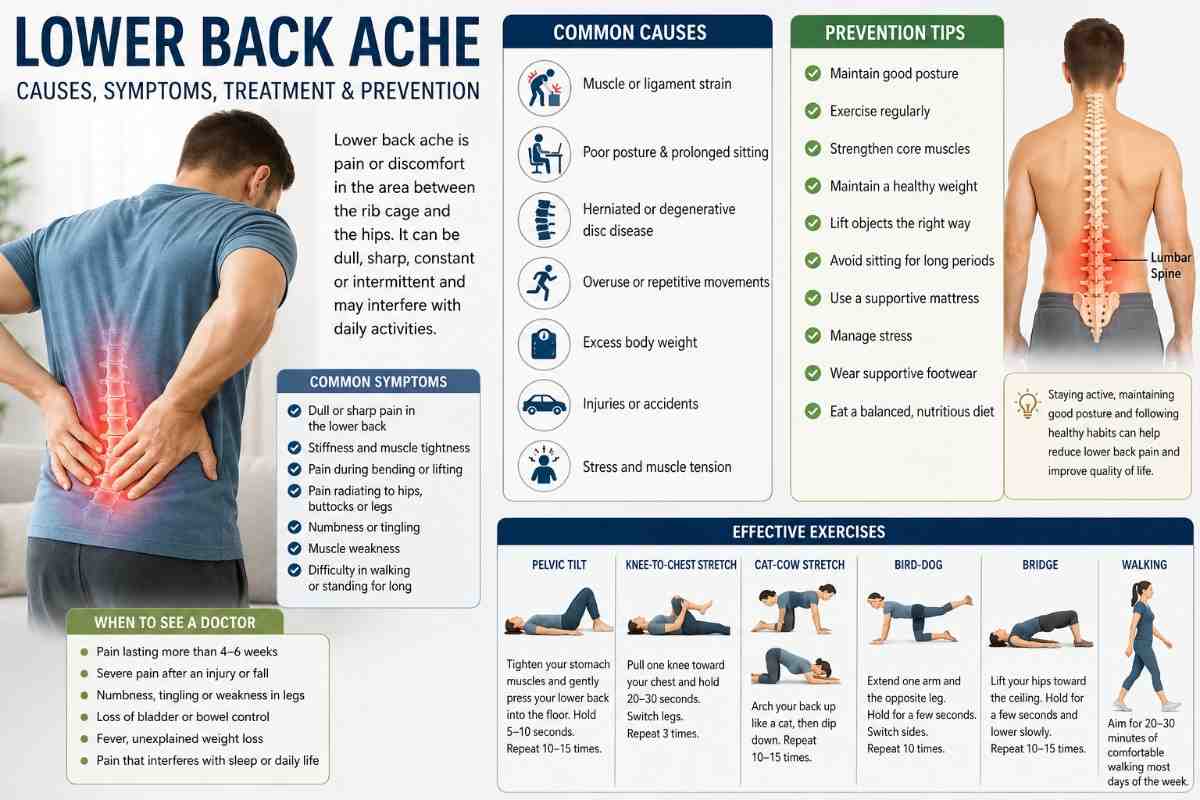
Lower back ache is one of the most common health complaints worldwide, affecting people of all ages. Whether it’s a dull ache after sitting at a desk all day, a sharp pain from lifting something heavy, or stiffness that appears when getting out of bed, lower back pain can interfere with work, exercise, sleep, and everyday activities.
The lower back, also called the lumbar spine, supports much of your body’s weight while allowing movement such as bending, twisting, and walking. Because it performs so much work every day, it is particularly vulnerable to strain and injury. Fortunately, many cases of lower back ache improve with proper self-care, exercise, posture correction, and lifestyle changes. However, some cases require medical evaluation and treatment.
Understanding what causes lower back pain, recognizing its symptoms, and knowing when to seek medical care can help prevent complications and improve recovery. This guide explains everything you need to know about lower back ache, from common causes to treatment options and prevention strategies, using evidence-based information in simple, easy-to-understand language.
What Is Lower Back Ache?
Lower back ache refers to pain, stiffness, or discomfort felt in the lumbar region—the area between the bottom of the rib cage and the hips. The pain may develop suddenly after an injury or gradually over weeks or months due to poor posture, muscle overuse, or age-related changes.
The discomfort can range from mild soreness to severe pain that limits movement. Some people experience pain only in the lower back, while others may feel pain spreading into the hips, buttocks, or legs.
Lower back ache is generally classified by how long it lasts:
| Type | Duration |
|---|---|
| Acute Lower Back Pain | Less than 4 weeks |
| Subacute Lower Back Pain | 4–12 weeks |
| Chronic Lower Back Pain | More than 12 weeks |
Most episodes of acute lower back pain improve within a few weeks with conservative treatment, but recurring pain may indicate an underlying condition that requires medical attention.
Types of Lower Back Ache
Understanding the type of lower back ache can help determine the most appropriate treatment.
1. Acute Lower Back Pain
Acute pain develops suddenly and usually lasts for a few days to several weeks. It often occurs after lifting heavy objects, sudden twisting movements, falls, or sports injuries.
Common characteristics
- Sudden onset
- Sharp or stabbing pain
- Muscle spasms
- Limited movement
- Usually improves with rest and conservative care
2. Chronic Lower Back Pain
Pain lasting longer than three months is considered chronic. It may result from arthritis, spinal degeneration, previous injuries, or ongoing mechanical stress.
Common characteristics
- Persistent discomfort
- Recurring flare-ups
- Morning stiffness
- Reduced flexibility
- Difficulty performing daily activities
3. Mechanical Lower Back Pain
Mechanical pain is the most common type and involves the muscles, ligaments, joints, discs, or bones of the spine.
It usually becomes worse with movement and improves with rest.
4. Radicular Pain (Sciatica)
Sciatica occurs when a spinal nerve becomes compressed or irritated.
Symptoms often include:
- Pain radiating down one leg
- Tingling
- Numbness
- Burning sensation
- Muscle weakness
5. Inflammatory Back Pain
Inflammatory back pain is caused by certain autoimmune conditions affecting the spine.
It typically:
- Begins before age 40
- Improves with activity
- Worsens after prolonged rest
- Causes morning stiffness lasting more than 30 minutes
6. Referred Pain
Sometimes pain felt in the lower back actually originates from another part of the body, such as:
- Kidneys
- Pelvic organs
- Abdomen
- Hip joints
Treating the underlying condition usually resolves the back pain.
Causes of Lower Back Ache
Lower back ache has many possible causes, ranging from simple muscle strain to more complex spinal disorders.
1. Muscle or Ligament Strain
Overstretching muscles or ligaments is the leading cause of lower back ache.
Common triggers include:
- Heavy lifting
- Sudden twisting
- Poor lifting technique
- Overexercising
- Physical labor
2. Poor Posture
Hours of sitting with rounded shoulders or slouching increase pressure on the lumbar spine.
Poor posture while:
- Working at a computer
- Driving
- Watching television
- Using smartphones
can gradually lead to chronic back pain.
3. Herniated Disc
Spinal discs act as cushions between vertebrae.
When a disc bulges or ruptures, it may compress nearby nerves, causing:
- Lower back ache
- Leg pain
- Numbness
- Weakness
4. Degenerative Disc Disease
As people age, spinal discs naturally lose water content and flexibility.
This can cause:
- Chronic back pain
- Stiffness
- Reduced mobility
- Pain during prolonged sitting
5. Osteoarthritis
Wear and tear of spinal joints may lead to inflammation and stiffness.
Symptoms often worsen after activity and improve with gentle movement.
6. Spinal Stenosis
This condition occurs when spaces within the spine become narrower, placing pressure on nerves.
People often notice:
- Leg pain while walking
- Numbness
- Weakness
- Relief when sitting
7. Sciatica
Compression of the sciatic nerve causes pain that travels from the lower back through the buttock and into the leg.
Pain may feel:
- Sharp
- Burning
- Electric-like
- Shooting
8. Osteoporosis
Weak, brittle bones increase the risk of spinal compression fractures, particularly in older adults.
9. Injuries and Accidents
Falls, sports injuries, and motor vehicle accidents may damage muscles, ligaments, discs, or vertebrae.
10. Obesity
Excess body weight increases stress on the lumbar spine and surrounding muscles, making lower back ache more likely.
11. Pregnancy
Hormonal changes, increased body weight, and shifting posture often contribute to temporary lower back ache during pregnancy.
12. Sedentary Lifestyle
Weak core muscles provide less support for the spine, increasing the risk of pain during routine activities.
13. Heavy Physical Work
Jobs requiring repetitive lifting, bending, twisting, or prolonged standing can place continuous stress on the lower back.
14. Emotional Stress
Stress can increase muscle tension, particularly in the neck, shoulders, and lower back, making existing pain feel worse.
15. Medical Conditions
Certain diseases may also cause lower back ache, including:
- Kidney stones
- Kidney infections
- Endometriosis
- Scoliosis
- Ankylosing spondylitis
- Spinal infections
- Tumors (rare)
Related Articles:
- What Persistent Leg Pain While Walking Indicates?
- Varicose Vein Pain: Causes, Signs, Treatment, Remedies & Exercises
- Forehead Pain: Causes, Symptoms, Treatment, Remedies & Exercises
Risk Factors for Lower Back Ache
Several factors increase the likelihood of developing lower back ache.
1. Age
The risk increases after age 30 as spinal discs gradually degenerate.
2. Lack of Exercise
Weak abdominal and back muscles provide less support for the spine.
3. Poor Core Strength
The core muscles stabilize the lower back during movement. Weak muscles increase spinal stress.
4. Obesity
Carrying excess body weight places additional pressure on spinal joints and discs.
5. Smoking
Smoking reduces blood flow to spinal tissues and slows healing, increasing the risk of chronic pain.
6. Occupational Hazards
Jobs involving:
- Heavy lifting
- Repetitive bending
- Long periods of sitting
- Frequent driving
are associated with higher rates of lower back ache.
7. Poor Sleeping Habits
Sleeping on an unsupportive mattress or in awkward positions may worsen lower back discomfort.
8. Improper Footwear
Shoes with poor arch support or excessively high heels can affect spinal alignment.
9. Psychological Factors
Anxiety, depression, and chronic stress may contribute to ongoing pain and slower recovery.
10. Previous Back Injury
Individuals who have experienced one episode of lower back ache are more likely to have future episodes.
Symptoms of Lower Back Ache
Symptoms vary depending on the underlying cause.
Common symptoms include:
- Dull aching pain in the lower back
- Sharp pain during movement
- Muscle tightness
- Morning stiffness
- Pain after prolonged sitting
- Difficulty standing upright
- Reduced flexibility
- Pain when bending or lifting
- Muscle spasms
- Pain spreading to the hips or buttocks
- Pain radiating down one or both legs
- Tingling or numbness
- Weakness in the legs
- Difficulty walking long distances
- Pain that worsens with certain movements
Some people experience intermittent pain, while others have constant discomfort throughout the day.
When to See a Doctor
Most episodes of lower back ache improve within a few weeks with self-care. However, medical evaluation is important if the pain is severe, persistent, or accompanied by concerning symptoms.
Seek medical attention if you experience:
- Severe pain lasting longer than two to four weeks
- Pain after a fall, accident, or major injury
- Numbness or weakness in one or both legs
- Difficulty walking due to pain
- Pain that radiates below the knee
- Loss of bladder or bowel control
- Fever accompanied by back pain
- Unexplained weight loss
- Night pain that does not improve with changing position
- Persistent pain that interferes with sleep or daily activities
Prompt evaluation can help identify serious underlying conditions and ensure appropriate treatment before complications develop.
Diagnosis of Lower Back Ache
A proper diagnosis helps identify the exact cause of lower back ache and guides the most effective treatment plan. While many cases are caused by muscle strain and improve on their own, persistent or severe pain may require medical evaluation.
Your healthcare provider will usually begin by asking about your symptoms, lifestyle, medical history, and any recent injuries. They will also perform a physical examination to assess your posture, spinal movement, muscle strength, reflexes, and nerve function.
Depending on your symptoms, additional tests may be recommended.
1. Physical Examination
During the examination, your doctor may check:
- Your posture and spinal alignment
- Range of motion
- Muscle strength
- Walking pattern (gait)
- Reflexes
- Areas of tenderness
- Flexibility
- Signs of nerve compression
2. X-ray
An X-ray helps detect:
- Bone fractures
- Arthritis
- Bone spurs
- Spinal alignment problems
However, X-rays cannot show muscles, ligaments, or spinal discs.
3. MRI (Magnetic Resonance Imaging)
MRI provides detailed images of:
- Herniated discs
- Spinal cord
- Nerves
- Muscles
- Ligaments
- Soft tissues
It is commonly used when nerve damage or persistent pain is suspected.
4. CT Scan
A CT scan offers detailed images of bones and surrounding structures and may be recommended when MRI is not suitable.
5. Blood Tests
Blood tests can help rule out:
- Infection
- Autoimmune diseases
- Inflammatory disorders
- Certain cancers
6. Nerve Studies
Electromyography (EMG) and nerve conduction studies evaluate how well nerves are functioning and can identify nerve compression.
Treatment Options for Lower Back Ache
Treatment depends on the underlying cause, severity of symptoms, and how long the pain has been present. Most people recover with conservative treatment and do not require surgery.
1. Rest (Short-Term Only)
A day or two of reduced activity may help after an acute injury.
However, prolonged bed rest is generally not recommended because it can weaken muscles and delay recovery.
2. Stay Active
Gentle movement encourages blood flow, reduces stiffness, and helps muscles heal.
Suitable activities include:
- Walking
- Light stretching
- Swimming
- Gentle yoga
3. Heat Therapy
Heat helps relax tight muscles and improves circulation.
You can use:
- Heating pads
- Warm towels
- Warm showers
- Hot water bottles
Heat is often more effective for chronic muscle tension.
4. Cold Therapy
Cold packs reduce inflammation and numb painful tissues, especially within the first 48 hours after an injury.
Apply for 15–20 minutes several times daily.
5. Physical Therapy
A physical therapist can design a personalized exercise program to:
- Strengthen the core
- Improve flexibility
- Correct posture
- Reduce pain
- Prevent recurrence
6. Pain Relief Medications
Depending on your condition, a healthcare provider may recommend:
- Over-the-counter pain relievers
- Anti-inflammatory medications
- Muscle relaxants (short-term use)
- Prescription medications for severe pain
Always use medications as directed by a healthcare professional.
7. Lifestyle Changes
Simple lifestyle improvements can significantly reduce back pain over time.
Examples include:
- Losing excess weight
- Improving posture
- Taking movement breaks
- Quitting smoking
- Sleeping on a supportive mattress
8. Injections
For persistent nerve pain, doctors may recommend steroid injections to reduce inflammation around irritated nerves.
9. Surgery
Surgery is usually considered only when:
- Conservative treatment fails
- There is severe nerve compression
- Significant weakness develops
- Loss of bladder or bowel control occurs
- Structural abnormalities require correction
20 Proven Ways to Relieve and Prevent Lower Back Ache
1. Maintain Good Posture
Keeping your spine properly aligned while sitting, standing, and walking reduces unnecessary strain on the lower back and helps prevent recurring pain.
2. Strengthen Your Core Muscles
Strong abdominal and back muscles support the spine, improve balance, and reduce stress on spinal joints during daily activities.
3. Exercise Regularly
Regular physical activity keeps muscles flexible, improves circulation, supports healthy joints, and lowers the risk of chronic back pain.
4. Lift Heavy Objects Correctly
Always bend your knees, keep the object close to your body, and lift with your legs instead of your back.
5. Maintain a Healthy Weight
Reducing excess body weight decreases pressure on the lumbar spine and lowers the risk of long-term back problems.
6. Stretch Every Day
Gentle stretching improves flexibility, reduces muscle tightness, and helps maintain a healthy range of motion.
7. Avoid Sitting for Long Periods
Stand up, stretch, or walk for a few minutes every 30–60 minutes to prevent stiffness and improve circulation.
8. Improve Your Workspace
Adjust your chair, desk, and computer screen to support proper posture and reduce strain on your spine during work.
9. Wear Supportive Footwear
Shoes with good arch support help maintain proper body alignment and reduce stress on the lower back.
10. Sleep in a Spine-Friendly Position
Sleeping on your back with a pillow under your knees or on your side with a pillow between your knees helps keep your spine aligned.
11. Replace an Old Mattress
A medium-firm mattress often provides better spinal support than one that is too soft or excessively firm.
12. Stay Hydrated
Spinal discs contain a large amount of water, and staying hydrated supports their normal function and overall spinal health.
13. Quit Smoking
Smoking reduces blood flow to spinal tissues and slows healing, increasing the likelihood of chronic back pain.
14. Manage Stress
Stress often causes muscles to tighten, especially around the neck and lower back. Relaxation techniques may help reduce muscle tension.
15. Warm Up Before Exercise
Preparing your muscles before physical activity reduces the risk of strains and injuries.
16. Build Flexibility
Flexible hips, hamstrings, and lower back muscles reduce excessive strain on the lumbar spine.
17. Avoid Carrying Heavy Bags on One Shoulder
Uneven weight distribution places extra stress on the spine and can contribute to muscle imbalance.
18. Practice Safe Exercise Techniques
Using proper form during workouts helps prevent unnecessary spinal injuries.
19. Listen to Your Body
Do not ignore persistent pain. Rest when necessary and seek medical advice if symptoms continue or worsen.
20. Schedule Regular Health Checkups
Routine medical care can identify underlying health conditions before they become serious causes of chronic back pain.
Best Exercises for Lower Back Ache
Exercise is one of the most effective long-term treatments for many types of lower back pain. Begin slowly and stop if pain becomes severe.
1. Pelvic Tilt
This gentle exercise strengthens abdominal muscles and improves spinal stability.
How to do it:
- Lie on your back with knees bent.
- Tighten your abdominal muscles.
- Press your lower back gently into the floor.
- Hold for 5–10 seconds.
- Repeat 10–15 times.
2. Knee-to-Chest Stretch
This stretch helps reduce tension in the lower back.
How to do it:
- Lie on your back.
- Pull one knee toward your chest.
- Hold for 20–30 seconds.
- Switch legs.
- Repeat several times.
3. Cat-Cow Stretch
This yoga-inspired movement improves spinal flexibility.
How to do it:
- Begin on your hands and knees.
- Arch your back upward.
- Slowly lower your abdomen while lifting your head.
- Repeat 10–15 times.
4. Bird-Dog Exercise
This exercise strengthens the lower back and core while improving balance.
How to do it:
- Start on hands and knees.
- Extend one arm and the opposite leg.
- Hold for several seconds.
- Return slowly.
- Alternate sides.
5. Bridge Exercise
The bridge strengthens the glutes, hips, and lower back.
How to do it:
- Lie on your back with knees bent.
- Lift your hips toward the ceiling.
- Hold for a few seconds.
- Lower slowly.
- Repeat 10–15 times.
6. Walking
Walking is one of the safest and most effective exercises for many people with lower back ache.
Aim for 20–30 minutes of comfortable walking most days of the week.
Foods That Support Back Health
A balanced diet supports muscles, bones, and joints while helping reduce inflammation.
| Food | Benefit |
|---|---|
| Fatty fish | Rich in omega-3 fatty acids that support joint health |
| Leafy green vegetables | High in calcium, magnesium, and vitamin K |
| Milk and yogurt | Support strong bones with calcium and protein |
| Eggs | Provide protein and vitamin D |
| Nuts and seeds | Healthy fats and magnesium for muscle function |
| Beans and lentils | Excellent source of plant protein and fiber |
| Citrus fruits | Vitamin C supports collagen production |
| Berries | Rich in antioxidants that help reduce inflammation |
| Whole grains | Provide steady energy and important nutrients |
| Avocados | Healthy fats and potassium for muscle function |
| Olive oil | Contains anti-inflammatory compounds |
| Turmeric | Curcumin may help reduce inflammation |
| Ginger | Traditionally used to support healthy inflammatory responses |
| Water | Helps maintain hydration of spinal discs |
A nutritious diet works best when combined with regular physical activity, good posture, and adequate sleep.
Prevention Tips for Lower Back Ache
Preventing lower back ache is often easier than treating chronic discomfort. Small daily habits can make a significant difference in protecting your spine over time.
- Exercise regularly to strengthen your core and back muscles.
- Stretch before and after physical activity.
- Maintain a healthy body weight.
- Practice proper lifting techniques.
- Avoid prolonged sitting or standing without breaks.
- Keep your workstation ergonomically designed.
- Sleep on a supportive mattress.
- Wear comfortable, supportive shoes.
- Stay hydrated throughout the day.
- Eat a balanced diet rich in calcium, vitamin D, and protein.
- Avoid smoking and limit alcohol consumption.
- Manage stress through relaxation techniques or mindfulness.
- Listen to your body and avoid overexertion.
- Seek medical advice if back pain persists or worsens despite self-care.
By incorporating these habits into your daily routine, you can reduce your risk of future episodes and support long-term spinal health.
FAQs
Can poor posture permanently damage my back?
Poor posture alone usually does not permanently damage the spine, but maintaining poor posture over time can contribute to muscle strain, joint stress, and chronic lower back ache. Improving posture early helps reduce these risks.
Can lower back pain go away on its own?
Yes. Most mild cases improve within a few weeks with rest, gentle movement, and proper self-care.
Is walking good for lower back ache?
Yes. Walking is a low-impact exercise that helps reduce stiffness, improve circulation, and strengthen supporting muscles.
Which sleeping position is best?
Sleeping on your back with a pillow under your knees or on your side with a pillow between your knees helps support spinal alignment.
Can sitting too long cause lower back pain?
Yes. Prolonged sitting increases pressure on the lower back. Stand and stretch every 30–60 minutes.
Is lower back pain common during pregnancy?
Yes. Hormonal changes, weight gain, and posture changes commonly contribute to back pain during pregnancy.
Can stress cause lower back pain?
Yes. Stress can lead to muscle tension, which may trigger or worsen lower back ache.
Is heat or ice better for lower back ache?
Ice is best during the first 24–48 hours after an injury to reduce swelling, while heat is more effective afterward for relaxing muscles and easing stiffness.
Can exercise help relieve lower back ache?
Yes. Gentle exercises, stretching, and core-strengthening workouts can improve flexibility, reduce pain, and help prevent future episodes.
What are 5 red flags of low back pain?
Severe pain after an injury, leg weakness or numbness, loss of bladder or bowel control, unexplained weight loss, and fever with back pain.
How can I tell if my back pain is kidney-related?
Kidney pain is usually higher in the back and may occur with fever, painful urination, nausea, or blood in the urine.
When should women worry about lower back pain?
See a doctor if the pain is severe, lasts over a few weeks, or occurs with fever, numbness, pelvic pain, or bladder or bowel problems.
Which is the best treatment for lower back pain?
Treatment may include staying active, stretching, physical therapy, pain relievers, and maintaining good posture.
How can I tell if my back pain is muscle or spine-related?
Muscle pain is usually sore and improves with rest, while spine-related pain may radiate to the legs or cause numbness and weakness.
What should I avoid with lower back pain?
Avoid prolonged bed rest, heavy lifting, poor posture, sudden twisting, and sitting for long periods.
What can make lower back pain worse?
Poor posture, prolonged sitting, heavy lifting, weak core muscles, obesity, and lack of exercise.
What are the worst exercises for lower back pain?
Heavy deadlifts, full sit-ups, toe touches, high-impact jumps, and deep back bends may worsen lower back ache.
Conclusion
Lower back ache is a common condition that often improves with regular exercise, good posture, healthy weight management, and proper lifting techniques. While most cases respond well to self-care, persistent or severe pain should be evaluated by a healthcare professional. Taking care of your spine through healthy daily habits can help reduce pain, improve mobility, and prevent future episodes.
Sources / References
- World Health Organization (WHO)
- National Institute of Arthritis and Musculoskeletal and Skin Diseases (NIAMS)
- MedlinePlus
- Mayo Clinic
- Cleveland Clinic
- NHS
About the Author
Written by: Kirti Solanki (Health Content Researcher)
Kirti Solanki creates evidence-based health content using trusted medical sources, making complex health topics easy to understand for readers.
Disclaimer
This guide is for informational purposes only and is not a substitute for professional medical advice, diagnosis, or treatment. Always consult a qualified healthcare provider for personalized medical guidance.
Also Read: