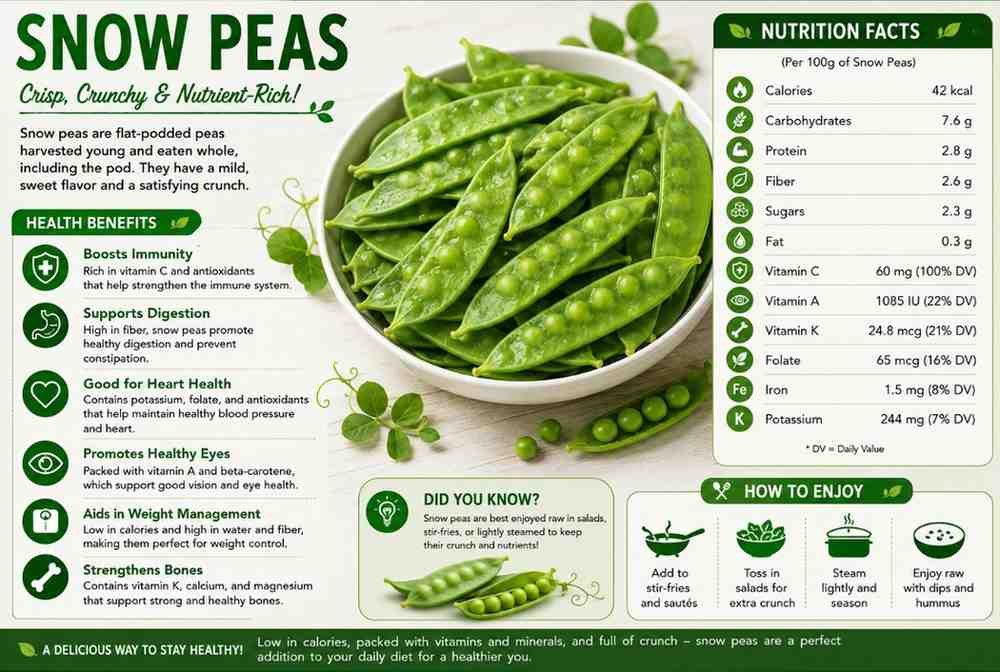
Snow peas are one of those vegetables that can make a simple meal feel fresher without requiring much preparation. Their thin, flat pods are crisp, mildly sweet, and completely edible, which means you can enjoy both the pod and the tiny peas inside. In this guide, we will look at what snow peas are, their nutritional value, potential health benefits, side effects, how to eat and cook them, storage tips, and precautions.
What Are Snow Peas?
Snow peas are edible-podded peas belonging to the legume family. Their botanical name is Pisum sativum. Unlike traditional garden peas, snow peas are harvested while the pods are still young and flat, so the entire pod can be eaten. They are sometimes called Chinese pea pods because they are frequently used in Chinese and other Asian cuisines.
Snow peas have a delicate, slightly sweet flavor and a crisp texture. They can be eaten raw or cooked, although quick cooking is generally preferred because prolonged cooking can make them soft and reduce their fresh crunch. Snow peas are different from sugar snap peas. Snow peas have flat, thin pods with small peas, while snap peas have thicker, rounded pods and a sweeter, more pronounced crunch.
Nutrition Facts of Snow Peas
The following values are approximate nutrition figures for 100 grams of raw edible-podded peas (snow peas). Nutrient content can vary depending on variety, growing conditions, freshness, and preparation. (Nutri Facts)
| Nutrient | Amount per 100 g |
|---|---|
| Calories | 42 kcal |
| Protein | 2.8 g |
| Total Fat | 0.2 g |
| Carbohydrates | 7.55 g |
| Dietary Fiber | 2.6 g |
| Total Sugars | 4 g |
| Calcium | About 43 mg |
| Iron | About 2.1 mg |
| Magnesium | About 24 mg |
| Phosphorus | About 53 mg |
| Potassium | About 200 mg |
| Vitamin C | About 60 mg |
| Vitamin A | Rich source |
| Vitamin K | Present |
| Folate | Present |
| Cholesterol | 0 mg |
Snow peas are particularly notable for their vitamin C and carotenoid content. Vitamin C supports collagen production, antioxidant activity, iron absorption, and normal immune function. (ODSS)
20 Proven Health Benefits of Snow Peas
1. Supports Immune Function: Snow peas provide vitamin C, a nutrient that contributes to normal immune function and antioxidant protection.
2. Helps Support Healthy Digestion: Their dietary fiber can contribute to normal bowel function and help add bulk to the diet.
3. May Support Regular Bowel Movements: Including fiber-rich vegetables such as snow peas in meals can help support regularity when combined with adequate fluid intake.
4. Supports Healthy Skin: Vitamin C is needed to produce collagen, an important structural protein involved in maintaining skin and connective tissues.
5. Provides Antioxidant Nutrients: Snow peas contain vitamin C and carotenoids that contribute to the body’s antioxidant defenses.
6. Supports Eye Health: Carotenoids such as beta-carotene, lutein, and zeaxanthin found in edible-podded peas contribute nutrients associated with healthy vision.
7. Supports Bone Health: Snow peas provide vitamin K and minerals that contribute to maintaining normal bone structure and function, while vitamin K has an established role in bone metabolism.
8. Helps Maintain Healthy Blood Vessels: Their combination of potassium, vitamin C, fiber, and other plant nutrients can contribute to an overall heart-friendly eating pattern.
9. May Support Heart Health: Replacing highly processed foods with vegetables such as snow peas can help create a diet rich in fiber and micronutrients that supports cardiovascular health.
10. May Help With Weight Management: Chinese pea pods are relatively low in calories and provide fiber and water, making them a useful addition to filling meals.
11. Provides Plant-Based Protein: Although snow peas are not a high-protein food, they contribute a small amount of plant protein to the daily diet.
12. Supports Healthy Iron Absorption: The vitamin C in snow peas can improve absorption of non-heme iron from plant-based foods eaten during the same meal.
13. Provides Folate: Snow peas contain folate, a B vitamin needed for normal cell division and DNA synthesis.
14. Provides Potassium: Chinese pea pods contribute potassium, an essential mineral involved in fluid balance, nerve signaling, and muscle function.
15. Naturally Low in Fat: With very little total fat per 100 grams, snow peas can easily fit into many balanced eating patterns.
16. Can Add Nutritional Value to Meals: Adding snow peas to stir-fries, salads, soups, or grain dishes can increase the vegetable and micronutrient content of a meal.
17. Supports a Nutrient-Dense Diet: Their combination of vitamins, minerals, fiber, and relatively few calories makes snow peas a practical nutrient-dense vegetable.
18. May Help Increase Vegetable Variety: Including different vegetables such as snow peas exposes the diet to a broader range of nutrients and plant compounds.
19. Can Support Balanced Meals: Pairing snow peas with whole grains and a protein source can create a more nutritionally complete meal.
20. Provides a Convenient Healthy Snack: Fresh, washed Chinese pea pods can be eaten raw, making them a convenient alternative to highly processed snack foods.
10 Side Effects of Snow Peas
Snow peas are generally well tolerated by most people, but eating large amounts or consuming them when you have a specific sensitivity can cause problems.
1. Gas and Bloating: The fiber and fermentable carbohydrates in peas may cause gas or bloating in sensitive individuals.
2. Digestive Discomfort: Eating a large quantity suddenly may cause abdominal discomfort, especially if your usual diet is low in fiber.
3. Food Allergy: Although pea allergy is not among the most common food allergies, allergic reactions to peas have been reported.
4. Oral Allergy Symptoms: Some people with pollen-related food sensitivities may experience temporary itching or tingling in the mouth after eating certain legumes.
5. Loose Stools: A sudden increase in fiber intake may temporarily cause changes in bowel movements.
6. Abdominal Cramping: Sensitive people may experience cramping after consuming a large serving.
7. Medication-Related Concerns: The vitamin K content means people taking certain anticoagulant medications should discuss consistent intake of vitamin-K-rich foods with their healthcare professional.
8. Choking Risk in Young Children: Whole raw pods can present a choking concern for young children, so preparation should be age-appropriate.
9. Foodborne Contamination: Raw vegetables can carry microorganisms if they are not properly washed and handled.
10. Discomfort From Overconsumption: Eating unusually large amounts may produce more digestive symptoms without providing additional meaningful health advantages.
How to Eat Snow Peas?
Snow peas are versatile and can be enjoyed in several ways.
Raw
Wash them thoroughly under running water and remove any tough string if necessary. They can be eaten as a crunchy snack or added to salads.
In Salads
Slice raw Chinese pea pods diagonally and combine them with cucumber, carrots, cabbage, lettuce, herbs, and a light dressing.
In Stir-Fries
Add Chinese pea pods toward the end of cooking so they remain crisp and bright.
With Hummus or Dips
Raw snow peas can be served similarly to cucumber or carrot sticks with a dip.
In Noodle Dishes
Add thinly sliced Chinese pea pods to noodle dishes for extra crunch and freshness.
With Rice
They work particularly well in fried rice, vegetable rice, and grain bowls.
In Soups
Add Chinese pea pods during the final few minutes of cooking to preserve their texture.
Tips for Consuming Snow Peas
- Choose pods that are bright green, firm, crisp, and free from extensive yellowing or dark spots.
- Wash Chinese pea pods thoroughly before eating.
- Remove tough strings if the variety has them.
- Avoid overcooking because snow peas can quickly become soft.
- Combine them with protein such as tofu, eggs, chicken, fish, beans, or lentils for a more balanced meal.
- Pair them with healthy fats such as olive oil, avocado, seeds, or nuts.
- If you are increasing your fiber intake, begin with moderate portions.
- Eat them raw only when they are fresh and have been properly washed.
- For children, cut and prepare them according to age-appropriate choking-safety recommendations.
- Use fresh Chinese pea pods relatively soon after purchasing them for the best texture.
How to Cook Snow Peas?
Snow peas cook quickly, so they generally do not need lengthy preparation.
1. Sautéing
Heat a small amount of oil in a pan. Add washed Chinese pea pods and sauté over medium-high heat for approximately 2–4 minutes. Add garlic, ginger, black pepper, or a small amount of soy sauce according to your preference.
2. Stir-Frying
Heat the pan well and add Chinese pea pods near the end of the stir-fry. Cook briefly until they become bright green while retaining some crunch.
3. Steaming
Steam snow peas for a few minutes until they become tender-crisp. This is a simple way to cook them without adding much fat.
4. Blanching
Place Chinese pea pods in boiling water briefly, then transfer them to cold water. This helps preserve their bright color and crisp texture.
5. Roasting
Chinese pea pods can be lightly coated with oil and roasted at a moderate-to-high temperature until slightly tender and browned at the edges.
Best Cooking Tip
Avoid cooking Chinese pea pods for too long. Their appeal comes largely from their fresh, crisp texture, and quick cooking usually works better than prolonged boiling.
Other Uses of Snow Peas
1. Salads: Thinly sliced Chinese pea pods add a fresh crunch to green and grain-based salads.
2. Stir-Fries: They are a classic ingredient in vegetable and Asian-inspired stir-fry dishes.
3. Noodles: Chinese pea pods can add color, texture, and nutrients to noodle bowls and pasta-style dishes.
4. Fried Rice: Chopped Chinese pea pods can be mixed into fried rice for additional vegetables and crunch.
5. Sandwiches and Wraps: Thinly sliced raw snow peas can provide texture in wraps and vegetable sandwiches.
6. Grain Bowls: They pair well with rice, quinoa, barley, or other whole grains.
7. Vegetable Platters: Fresh Chinese pea pods can be included alongside carrots, cucumber, peppers, and other raw vegetables.
8. Soups: They can be added to vegetable, chicken, or Asian-style soups near the end of cooking.
9. Side Dishes: Quickly sautéed Chinese pea pods make a simple side dish for lunch or dinner.
10. Garnishing: Thinly sliced Chinese pea pods can be used as an attractive garnish for savory dishes.
How Much Snow Peas Can You Eat in a Day?
There is no universally established daily serving specifically for snow peas.
For most healthy adults, about ½ to 1 cup of snow peas in a meal is a reasonable practical portion, depending on the rest of the diet and individual calorie and fiber needs.
A person who enjoys vegetables regularly may eat more as part of a varied diet. However, suddenly eating large amounts may cause gas, bloating, or digestive discomfort.
Rather than focusing on a strict snow-pea limit, aim for variety across your overall vegetable intake.
Best Time to Eat Snow Peas
There is no medically proven “best” time of day to eat snow peas.
Breakfast
Add chopped snow peas to eggs, savory oats, or vegetable sandwiches.
Lunch
They work well in salads, wraps, rice bowls, and stir-fries.
Evening
A lightly cooked snow-pea side dish can complement dinner.
As a Snack
Raw Chinese pea pods can be eaten between meals when properly washed.
The most important factor is not the time of day but how they fit into your overall eating pattern.
Who Should Eat Snow Peas?
1. Healthy Adults: Most healthy adults can include Chinese pea pods as part of a varied diet.
2. Vegetable Lovers: People who enjoy fresh, crunchy vegetables can use snow peas to increase dietary variety.
3. People Seeking Low-Calorie Vegetables: Snow peas can provide substantial volume with relatively few calories.
4. People Increasing Fiber Intake: Their fiber content can contribute to daily fiber intake when increased gradually.
5. Plant-Based Eaters: Snow peas provide plant protein and several micronutrients while fitting naturally into vegetarian and vegan meals.
6. People Looking for Vitamin C Foods: Snow peas provide vitamin C, which supports collagen production, antioxidant activity, and immune function.
7. People Who Enjoy Quick Meals: Chinese pea pods cook rapidly and can be added to many meals without extensive preparation.
Who Should Not Eat Snow Peas?
Most people do not need to avoid snow peas completely. However, certain individuals should exercise caution.
1. People With Pea Allergy: Anyone with a confirmed pea allergy should avoid snow peas unless specifically advised otherwise by their allergy specialist.
2. People With Previous Legume Reactions: Those who have experienced reactions to legumes should discuss potential cross-reactivity with a healthcare professional rather than assuming all legumes are safe.
3. People With Significant Digestive Sensitivity: Individuals who consistently experience bloating or abdominal discomfort after eating peas may need to reduce their portion or seek dietary advice.
4. People Taking Certain Anticoagulants: Those using vitamin-K-sensitive anticoagulant therapy should maintain a consistent intake of vitamin K and discuss dietary changes with their healthcare professional.
5. Young Children Eating Whole Raw Pods: Whole raw snow peas may require modification to reduce choking risk depending on the child’s age and developmental stage.
6. People With a Previous Severe Food Reaction: Anyone who has experienced serious food-allergy symptoms should not experiment with snow peas without appropriate medical guidance.
How to Store Snow Peas?
1. Refrigerate Promptly: Store fresh snow peas in the refrigerator rather than leaving them at room temperature for extended periods.
2. Keep Them Dry: Excess moisture can encourage deterioration, so avoid washing them until you are ready to use them when possible.
3. Use a Perforated Bag: A breathable produce bag can help balance moisture and airflow during refrigeration.
4. Avoid Crushing the Pods: Store them where heavier foods will not press against them.
5. Check Regularly: Remove pods that become slimy, moldy, or significantly spoiled so deterioration does not spread.
6. Use Fresh Pods Quickly: Snow peas generally taste best when used soon after purchase because their crisp texture declines with storage.
7. Freeze for Longer Storage: If you need to preserve them for longer, blanching before freezing can help maintain quality.
Precautions and Interactions
1. Wash Before Eating: Rinse fresh Chinese pea pods thoroughly under clean running water before consuming them raw or cooking them.
2. Watch for Allergy Symptoms: Stop eating Chinese pea pods and seek medical advice if you develop symptoms suggesting a food allergy.
3. Maintain Consistent Vitamin K Intake: If you take warfarin or another medication affected by vitamin K intake, discuss your usual vegetable consumption with your healthcare professional rather than making sudden major dietary changes.
4. Increase Fiber Gradually: If your current diet is low in fiber, gradually increase snow peas and other high-fiber foods to reduce digestive discomfort.
5. Drink Adequate Fluids: Adequate fluid intake helps support the normal function of dietary fiber.
6. Do Not Assume All Legumes Are Interchangeable: Having an allergy to one legume does not automatically mean you will react to every legume, but multiple legume allergies can occur.
7. Use Proper Food Hygiene: Keep raw vegetables separate from foods that could contaminate them and wash hands and utensils appropriately.
8. Avoid Overcooking: Prolonged cooking can negatively affect the desirable crisp texture and may reduce some heat-sensitive nutrients.
9. Follow Individual Medical Advice: People with kidney disease, digestive disorders, food allergies, or medication-related dietary restrictions should follow advice from their healthcare professional.
10. Remember That Food Is Not Medicine: Chinese pea pods can contribute to a healthy eating pattern, but they should not be used as a substitute for prescribed treatment.
Snow Peas vs. Snap Peas
Snow peas and snap peas are often confused because both have edible pods.
| Feature | Snow Peas | Snap Peas |
|---|---|---|
| Pod shape | Flat and thin | Rounded and plump |
| Peas inside | Small | Larger |
| Texture | Tender and crisp | Very crisp |
| Taste | Mildly sweet | Sweeter |
| Pod | Edible | Edible |
| Common use | Stir-fries, salads | Snacks, salads, stir-fries |
| Can be eaten raw? | Yes | Yes |
Both can be nutritious additions to a balanced diet, but their texture and sweetness are noticeably different.
FAQ’s
Are snow peas healthy?
Yes. Chinese pea pods are nutritious vegetables that provide vitamin C, fiber, vitamin K, folate, potassium, and antioxidant compounds while being relatively low in calories.
Can you eat snow peas raw?
Yes. Fresh Chinese pea pods can be eaten raw after being washed thoroughly. They are crisp, mildly sweet, and suitable for salads or healthy snacks.
Are snow peas good for weight loss?
Chinese pea pods can support a weight-management diet because they are relatively low in calories and provide fiber and water that can help make meals more filling.
Are snow peas high in protein?
Chinese pea pods contain some plant-based protein, but they are not considered a high-protein food. Pair them with beans, tofu, eggs, fish, chicken, or other protein-rich foods.
Do snow peas need to be cooked?
No. Chinese pea pods can be eaten raw or cooked. Quick steaming, sautéing, or stir-frying helps maintain their crisp texture.
Can you eat the whole snow pea?
Yes. The pod and peas inside are edible. Some varieties may have a tough string that should be removed before eating.
Do snow peas cause gas?
They can cause gas, bloating, or mild digestive discomfort in some people, especially when eaten in large amounts or when increasing fiber intake suddenly.
Are snow peas good for digestion?
Yes. Chinese pea pods provide dietary fiber, which can support healthy digestion and regular bowel movements.
Can people with diabetes eat snow peas?
Generally, yes. Chinese pea pods can be included in a balanced diabetes-friendly diet, although portion size and the total carbohydrate content of the meal should be considered.
Are snow peas good during pregnancy?
For most people, properly washed and prepared Chinese pea pods can be part of a healthy pregnancy diet. Good food hygiene is especially important during pregnancy.
Can children eat snow peas?
Yes, but preparation should be appropriate for the child’s age. Whole raw pods may present a choking risk for young children.
Can snow peas be frozen?
Yes. Briefly blanching Chinese pea pods before freezing can help preserve their color, texture, and quality.
Are snow peas keto-friendly?
Chinese pea pods can sometimes fit into a lower-carbohydrate diet when eaten in appropriate portions, but people following a strict ketogenic diet should account for their carbohydrate content.
Can snow peas improve skin health?
Chinese pea pods provide vitamin C, which is needed for collagen production and contributes to normal skin and connective-tissue health.
Are snow peas good for the eyes?
Chinese pea pods contain carotenoids such as beta-carotene, lutein, and zeaxanthin, which are nutrients associated with eye health.
Can I eat Snow Peas every day?
Yes. Most healthy people can eat Chinese pea pods every day as part of a varied diet. A moderate serving such as ½–1 cup can provide fiber, vitamin C, vitamin K, and other nutrients.
What is Snow Peas good for?
Chinese pea pods are good for adding fiber, vitamin C, vitamin K, folate, potassium, and antioxidant compounds to the diet. They can support healthy digestion, immune function, and overall nutrition.
What does Snow Peas taste like?
Chinese pea pods have a mild, fresh, slightly sweet flavor with a crisp and juicy texture. They are generally less sweet and less plump than sugar snap peas.
What are snow peas called in India?
In India, snow peas are commonly called snow peas or Chinese peas. Depending on the region and market, they may also be described as flat peas or Chinese pea pods.
Are snap peas and snow peas the same?
No. Chinese pea pods have flat, thin pods with small peas inside, while snap peas have thicker, rounded pods containing larger peas. Both pods are edible and can be eaten raw or cooked.
What is another name for snow peas?
Snow peas are also commonly known as Chinese pea pods, Chinese peas, and mangetout. The name mangetout comes from French and refers to eating the whole pod.
What is a good replacement for snow peas?
Sugar snap peas are one of the best replacements because they have a similar crisp, edible pod. Green beans, broccoli stems, asparagus, and thinly sliced bell peppers can also work depending on the recipe.
Do snow peas spike blood sugar?
Chinese pea pods are unlikely to cause a sharp blood-sugar rise when eaten in a reasonable portion as part of a balanced meal. They contain carbohydrates along with fiber, but individual blood-glucose responses can vary.
Which is healthier, snow peas or green beans?
Both are nutritious vegetables, and neither is universally healthier. Chinese pea pods provide vitamin C, fiber, vitamin K, and carotenoids, while green beans also provide fiber, vitamin C, vitamin K, folate, and other micronutrients. The best choice is to include both for dietary variety.
Sources / References:
- USDA FoodData Central
- NIH Office of Dietary Supplements – Vitamin C
- NIH Office of Dietary Supplements – Vitamin K
- Cleveland Clinic – Benefits of Peas
- Mayo Clinic – Food Allergy
- AllRecipes – Snow Peas vs. Snap Peas
Disclaimer:
This article is for general educational purposes only and is not a substitute for professional medical advice, diagnosis, or treatment. If you have a food allergy, chronic medical condition, or take medication affected by diet, consult a qualified healthcare professional before making significant dietary changes.
Also Read: