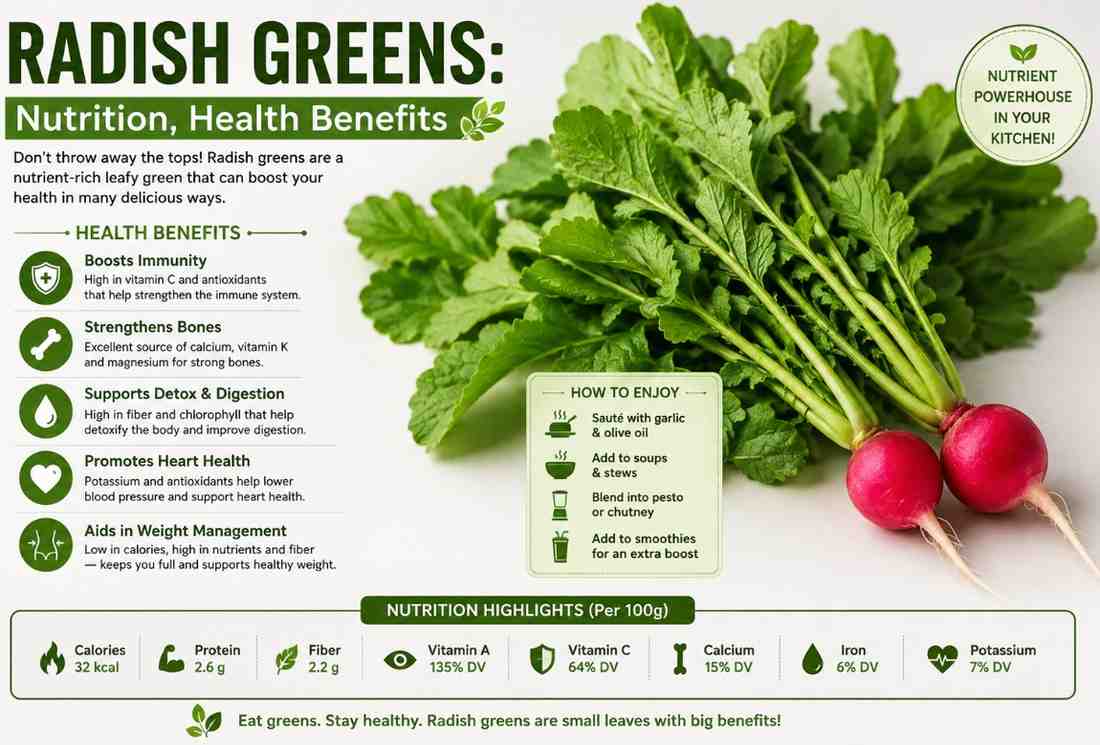
Radish greens are often overlooked and discarded, but these leafy tops are packed with vitamins, minerals, antioxidants, and fiber. While most people enjoy the crunchy radish root, the green leaves are equally nutritious and can be used in salads, soups, curries, stir-fries, pesto, smoothies, and many other healthy recipes.
If you’re looking for a nutrient-rich leafy vegetable to add to your diet, radish greens deserve a place on your plate. This guide covers everything you need to know about radish greens (also called radish tops or radish leaves), including their nutrition facts, health benefits, possible side effects, cooking methods, storage tips, and safety precautions.
What Are Radish Greens?
Radish greens are the edible leaves attached to radish plants (Raphanus sativus). They belong to the Brassicaceae (cruciferous) family, the same family as broccoli, cabbage, kale, mustard greens, and cauliflower.
The leaves have a slightly peppery, earthy, and mildly bitter flavor that becomes milder after cooking. Young, tender leaves are ideal for salads, while mature leaves are better suited for cooked dishes.
Because they are highly nutritious and low in calories, radish greens are considered one of the healthiest leafy vegetables available.
Nutrition Facts of Radish Greens (Per 100 g Approx.)
| Nutrient | Amount |
|---|---|
| Calories | 25 kcal |
| Water | 90–92 g |
| Protein | 2.5 g |
| Carbohydrates | 3.8 g |
| Dietary Fiber | 2.5 g |
| Fat | 0.4 g |
| Vitamin A | High |
| Vitamin C | High |
| Vitamin K | Very High |
| Folate | Moderate |
| Calcium | 250–270 mg |
| Iron | 2–3 mg |
| Potassium | 300–350 mg |
| Magnesium | 30–40 mg |
| Phosphorus | 50–60 mg |
| Manganese | Moderate |
| Antioxidants | Rich Source |
| Glucosinolates | Present |
Values are approximate and may vary depending on variety and growing conditions.
20 Proven Health Benefits of Radish Greens
- Rich in Antioxidants: Radish greens contain antioxidants that help protect cells from oxidative stress and free radical damage.
- Supports Immune Health: Their high vitamin C content helps strengthen the immune system and supports the body’s natural defense mechanisms.
- Promotes Healthy Digestion: Dietary fiber improves bowel movements, supports gut bacteria, and helps prevent constipation.
- Supports Heart Health: Potassium, fiber, and antioxidants contribute to maintaining healthy blood pressure and cardiovascular function.
- May Help Manage Blood Sugar: Fiber and plant compounds may help slow glucose absorption and support healthy blood sugar levels.
- Strengthens Bones: Calcium and vitamin K work together to maintain strong bones and reduce the risk of bone loss.
- Supports Eye Health: Vitamin A and carotenoids help maintain healthy vision and protect the eyes from age-related damage.
- Encourages Healthy Skin: Vitamin C and A support collagen production and contribute to healthy, glowing skin.
- Supports Healthy Hair: Essential vitamins and minerals nourish hair follicles and may promote stronger hair growth.
- May Reduce Inflammation: Natural antioxidants and phytochemicals may help reduce chronic inflammation in the body.
- Supports Healthy Weight Management: Being low in calories and rich in fiber, radish greens help increase fullness and reduce overeating.
- Promotes Healthy Liver Function: Certain plant compounds may support the liver’s natural detoxification processes.
- May Support Kidney Health: Their high water and potassium content may contribute to normal kidney function in healthy individuals.
- Improves Digestive Enzyme Activity: Natural compounds may stimulate digestive enzymes that improve nutrient absorption.
- Supports Healthy Blood Circulation: Iron contributes to normal red blood cell production and oxygen transport.
- May Help Lower Cholesterol: Soluble fiber may help reduce LDL (“bad”) cholesterol levels as part of a healthy diet.
- Supports Brain Function: Vitamins and antioxidants help protect brain cells and support cognitive health.
- May Help Reduce Oxidative Stress: Bioactive plant compounds may lower oxidative damage linked to chronic diseases.
- Supports Healthy Pregnancy Nutrition: Folate contributes to healthy fetal development when consumed as part of a balanced pregnancy diet.
- Provides Essential Daily Nutrients: Radish greens offer multiple vitamins and minerals that support overall health and wellness.
10 Side Effects of Radish Greens
- Digestive Discomfort: Eating large amounts may cause bloating or gas in sensitive individuals.
- Vitamin K Interaction: Their high vitamin K content may interfere with blood-thinning medications such as warfarin.
- Oxalate Content: People prone to kidney stones may need to moderate intake due to naturally occurring oxalates.
- Possible Allergic Reactions: Although uncommon, some individuals may experience allergic symptoms after eating radish greens.
- May Affect Thyroid Function: Excessive consumption of raw cruciferous vegetables may interfere with iodine utilization in susceptible individuals.
- Pesticide Residues: Poorly washed leaves may contain dirt, bacteria, or pesticide residues.
- Digestive Irritation: The peppery compounds may irritate sensitive stomachs when eaten in excess.
- Loose Stools: Excess fiber consumed suddenly may lead to diarrhea in some people.
- Medication Interactions: High-potassium foods may require monitoring in individuals with advanced kidney disease or those taking certain medications.
- Foodborne Illness Risk: Raw greens that are not cleaned properly may increase the risk of foodborne infections.
How to Eat Radish Greens?
Radish greens are versatile and can be enjoyed in many ways:
- Add fresh leaves to salads.
- Blend them into green smoothies.
- Stir them into soups.
- Prepare a pesto using olive oil, garlic, and nuts.
- Sauté with garlic and olive oil.
- Mix into dal or lentil dishes.
- Add to vegetable curries.
- Use in omelets.
- Include in wraps and sandwiches.
- Blend into green sauces.
Tips for Consuming Radish Greens
- Choose fresh, bright green leaves.
- Wash thoroughly under running water.
- Remove damaged or yellow leaves.
- Eat young leaves raw for a milder flavor.
- Cook mature leaves to reduce bitterness.
- Pair with healthy fats to improve absorption of fat-soluble vitamins.
- Combine with vitamin C-rich foods to enhance iron absorption.
- Introduce gradually if you are increasing fiber intake.
- Consume as part of a balanced diet.
- Avoid overcooking to preserve nutrients.
How to Cook Radish Greens?
You can prepare radish greens using several cooking methods:
- Sauté with garlic, onions, and olive oil.
- Steam for 3–5 minutes.
- Add to soups near the end of cooking.
- Stir-fry with mushrooms and vegetables.
- Blend into pesto.
- Cook with lentils or beans.
- Add to pasta dishes.
- Mix into fried rice.
- Bake into savory casseroles.
- Blend into creamy green soups.
Other Uses of Radish Greens
- Natural Compost Ingredient: Radish greens can enrich compost piles with organic matter.
- Livestock Feed: Fresh leaves are sometimes used as nutritious animal fodder.
- Homemade Green Juice: They can be blended into nutrient-rich vegetable juices.
- Garden Mulch: Leftover greens may be composted and used as mulch after decomposition.
- Pesto Ingredient: Their peppery flavor makes an excellent alternative to basil in pesto.
- Soup Thickener: Blended cooked leaves naturally thicken soups.
- Smoothie Addition: They boost the nutritional value of green smoothies.
- Vegetable Stock: Leaves can be simmered to add flavor to homemade vegetable broth.
- Stuffing Ingredient: Chopped greens can enrich stuffing mixtures.
- Savory Baking Ingredient: They can be mixed into breads, muffins, or savory pancakes.
How Much Radish Greens Can You Eat in a Day?
There is no official recommended daily intake specifically for radish greens.
For most healthy adults:
- About 1–2 cups of fresh radish greens (approximately 50–100 grams) per day is generally considered a reasonable serving as part of a varied vegetable intake.
- Start with smaller portions if you are not accustomed to eating high-fiber leafy greens.
- People with medical conditions such as kidney disease or those taking blood thinners should consult their healthcare provider for personalized advice.
Best Time to Eat Radish Greens
There is no single best time, but they fit well into various meals:
- Breakfast in omelets or smoothies.
- Lunch in salads or sandwiches.
- Dinner in soups, curries, or stir-fries.
- Post-workout meals for added vitamins and minerals.
Who Should Eat Radish Greens?
- Health-Conscious Adults: They provide valuable nutrients with very few calories.
- People Seeking Weight Management: Their fiber content helps increase fullness.
- Vegetarians and Vegans: They contribute vitamins, minerals, and plant-based nutrients.
- Individuals Looking to Improve Digestion: Fiber supports healthy bowel function.
- People Wanting Better Bone Health: Calcium and vitamin K support bone maintenance.
- Older Adults: Nutrient density may help meet increased nutritional needs.
- Athletes: Vitamins and minerals support overall wellness and recovery.
- People Increasing Vegetable Intake: Radish greens are an easy way to diversify leafy greens.
Who Should Not Eat Radish Greens?
- People Taking Warfarin: Sudden increases in vitamin K intake should be avoided without medical guidance.
- Individuals with Kidney Disease: Potassium intake may need to be limited.
- People Prone to Kidney Stones: Those advised to limit oxalates should consume them in moderation.
- Individuals with Radish Allergy: They should avoid radish greens completely.
- People with Sensitive Digestion: Large portions may worsen digestive discomfort.
- Individuals with Certain Thyroid Conditions: Excessive raw intake may not be appropriate without medical advice.
- People with Severe Gastrointestinal Disorders: High-fiber foods may require adjustment during symptom flare-ups.
How to Store Radish Greens?
- Separate from the Roots: Remove greens soon after purchase to help keep both the leaves and radishes fresher.
- Wash Only Before Use: Washing before storage can shorten shelf life by adding excess moisture.
- Wrap in Paper Towels: This helps absorb moisture and reduce spoilage.
- Store in a Refrigerator: Keep them in the vegetable crisper drawer.
- Use an Airtight Container: This helps retain freshness while limiting moisture loss.
- Consume Quickly: For the best flavor and nutrition, use within 2–4 days.
- Freeze for Longer Storage: Blanch briefly before freezing for future cooked dishes.
Precautions and Interactions
- Wash Thoroughly: Always remove dirt, bacteria, and pesticide residues before eating.
- Maintain Consistent Vitamin K Intake: If taking blood thinners, avoid sudden dietary changes.
- Moderate Raw Consumption: Eating excessive amounts of raw cruciferous vegetables may not suit everyone.
- Increase Fiber Gradually: This helps reduce bloating and digestive discomfort.
- Monitor Potassium Intake: Individuals with kidney disease should follow medical advice.
- Practice Food Safety: Refrigerate promptly and avoid spoiled leaves.
- Eat as Part of a Balanced Diet: Variety ensures a broader range of nutrients.
- Consult a Healthcare Professional: Seek personalized advice if pregnant, breastfeeding, or managing chronic health conditions.
FAQs
Are radish greens safe to eat?
Yes, radish greens are completely safe to eat when they are fresh and washed thoroughly. Both the leaves and stems are edible.
What do radish greens taste like?
Radish greens have a mildly peppery, earthy, and slightly bitter flavor, similar to mustard greens or arugula. Younger leaves tend to be more tender and milder in taste.
Can you eat radish greens raw?
Yes. Young radish greens can be eaten raw in salads, sandwiches, wraps, smoothies, and pesto.
Are radish greens healthier than radishes?
Radish greens generally contain higher amounts of vitamins A, C, and K, along with more calcium and antioxidants than the radish root.
Are radish greens good for weight loss?
Yes. They are low in calories and high in fiber, which helps keep you full and supports healthy weight management.
Can diabetics eat radish greens?
Yes. Radish greens are low in calories and rich in fiber, making them a healthy vegetable choice for most people with diabetes as part of a balanced diet.
Are radish greens good for digestion?
Yes. Their dietary fiber supports healthy digestion, promotes regular bowel movements, and helps maintain a healthy gut.
Can you eat radish greens every day?
Most healthy adults can enjoy radish greens daily in moderate amounts as part of a varied and balanced diet.
Can I freeze radish greens?
Yes. Blanch the greens for 1–2 minutes, cool them in ice water, drain well, and freeze them in airtight freezer bags for later use.
Are radish greens good for the liver?
Radish leaves contain antioxidants and beneficial plant compounds that may support normal liver function as part of a healthy diet.
Are radish greens high in iron?
Radish leaves contain a moderate amount of iron, along with vitamin C, which can help improve iron absorption from plant-based foods.
Are radish greens good for bones?
Yes. They are rich in calcium and vitamin K, two nutrients that help support strong and healthy bones.
Can pregnant women eat radish greens?
Yes, provided the greens are washed thoroughly and cooked when appropriate. They can contribute valuable nutrients such as folate and vitamin C during pregnancy.
Are radish greens good for the skin?
Yes. Their vitamins A and C help support collagen production and protect skin cells from oxidative stress.
Can dogs eat radish greens?
Dogs can eat small amounts of plain, washed radish leaves occasionally. However, introduce them gradually and consult a veterinarian if your pet has digestive sensitivities or health conditions.
Can radish greens be used in smoothies?
Yes. Fresh radish leaves blend well with fruits, yogurt, spinach, cucumber, lemon, and herbs to make nutrient-rich green smoothies.
Are radish greens keto-friendly?
Yes. Radish leaves are low in carbohydrates and fit well into ketogenic and other low-carb eating plans.
Are radish greens anti-inflammatory?
They contain antioxidants and phytochemicals that may help reduce oxidative stress and support a healthy inflammatory response as part of a balanced diet.
Should you remove radish greens before storing radishes?
Yes. Removing the greens helps prevent moisture loss from the radish root, keeping both the greens and the radishes fresher for longer.
Is Radish Greens Safe for Children?
Yes, radish greens are generally safe for children when they are washed thoroughly and cooked until tender. They provide important nutrients like vitamins A, C, and K, calcium, iron, and fiber. Introduce them in small portions, as their slightly peppery taste may be strong for some children.
What Is Radish Greens Good For?
Radish greens are good for supporting overall health. They are rich in antioxidants, fiber, vitamins A, C, and K, calcium, and iron, which help support immunity, digestion, bone health, heart health, healthy skin, and weight management when included as part of a balanced diet.
Sources / References:
- Harvard T.H. Chan School of Public Health
- USDA FoodData Central
- Academy of Nutrition and Dietetics
- National Institutes of Health Office of Dietary Supplements
- World Health Organization (WHO)
Disclaimer:
This article is intended for educational and informational purposes only and should not be considered medical advice. Always consult a qualified healthcare professional before making significant dietary or health-related changes, especially if you have an existing medical condition, are pregnant, breastfeeding, or take prescription medications.
Also Read: