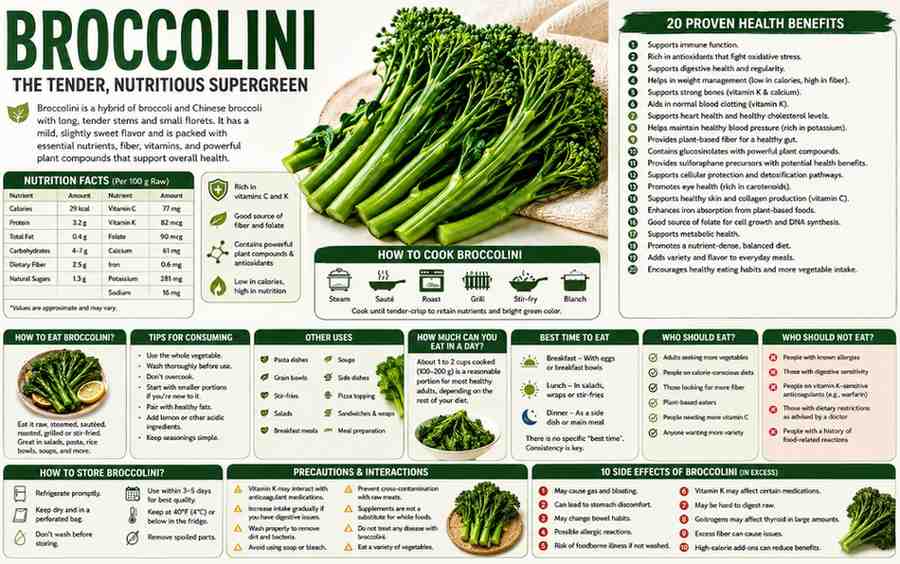
Broccolini is one of those vegetables that can easily be overlooked at the grocery store. It looks a little like baby broccoli, has long tender stems, and comes with small green florets. But there is more to this vegetable than its appearance.
With a mild, slightly sweet and earthy flavor, broccolini is easy to add to stir-fries, salads, grain bowls, pasta, roasted vegetable dishes, and simple side dishes. Unlike traditional broccoli, its thin stems are tender enough to eat, which means very little of the vegetable needs to be discarded.
Broccolini is also a nutrient-dense cruciferous vegetable. It provides fiber, vitamin C, vitamin K, folate, potassium, carotenoids, and naturally occurring glucosinolates. These compounds are being studied for their antioxidant and other biological effects. However, it is important to view broccolini as part of an overall healthy diet rather than as a treatment for any disease.
What Is Broccolini?
Broccolini is a green cruciferous vegetable that is a hybrid of regular broccoli and Chinese broccoli, also known as gai lan. It is sometimes called “baby broccoli,” although this name can be misleading because broccolini is not simply immature broccoli. (Southern Living)
It has slender green stems, small florets, and edible leaves and stems. Its flavor is generally milder and slightly sweeter than traditional broccoli, making it appealing to people who find regular broccoli too strong or bitter.
Broccolini belongs to the Brassicaceae family, the same broad plant family that includes broccoli, cauliflower, kale, cabbage, Brussels sprouts, and other cruciferous vegetables.
One of its biggest culinary advantages is that the stems, florets, and leaves can all be eaten. The entire vegetable can be quickly steamed, sautéed, grilled, roasted, or stir-fried.
Nutrition Facts of Broccolini
Nutrition can vary depending on growing conditions, variety, freshness, and cooking method. The following values are approximate for 100 grams of raw broccolini.
| Nutrient | Approximate Amount per 100 g |
|---|---|
| Calories | 29 kcal |
| Protein | 3.2 g |
| Total Fat | 0.4 g |
| Carbohydrates | About 4–7 g* |
| Dietary Fiber | 2.5 g |
| Natural Sugars | 1.3 g |
| Sodium | 16 mg |
| Vitamin C | About 77 mg |
| Vitamin K | About 82 mcg |
| Calcium | About 61 mg |
| Iron | About 0.6 mg |
| Potassium | About 281 mg |
| Vitamin D | 0 mcg |
| Vitamin B12 | 0 mcg |
*Carbohydrate values can differ between food databases depending on analytical methods and whether fiber is included in the reported total.
Broccolini is particularly notable for its vitamin C and vitamin K content, while also providing fiber and several plant compounds associated with cruciferous vegetables. (NatureWord)
20 Proven Health Benefits of Broccolini
1. Supports Immune Function: Broccolini provides vitamin C, an essential nutrient that contributes to normal immune-system function and antioxidant protection.
2. Provides Antioxidant Compounds: Vitamin C, carotenoids, and other plant compounds in broccolini help the body deal with oxidative stress.
3. Supports Digestive Health: Its dietary fiber can help promote regular bowel movements and support a healthy digestive system.
4. Helps Support a Healthy Diet for Weight Management: Broccolini is relatively low in calories while providing fiber and nutrients, making it useful in balanced, calorie-conscious meals.
5. Supports Bone Health: Broccolini provides vitamin K and calcium, nutrients that play important roles in maintaining healthy bones.
6. Supports Normal Blood Clotting: Vitamin K is essential for the body’s normal blood-clotting process.
7. Supports Heart Health: Its combination of fiber, potassium, vitamin C, and plant compounds can contribute to an overall heart-supportive eating pattern.
8. Helps Increase Vegetable Intake: Because the stems and florets are both edible, broccolini provides an easy way to add more vegetables to everyday meals.
9. Supports Healthy Blood Pressure: Baby broccoli contains potassium, a mineral involved in fluid balance and normal blood-pressure regulation.
10. Provides Plant-Based Fiber: The fiber in broccolini can contribute to satiety and help support healthy digestion.
11. Contains Glucosinolates: Like other cruciferous vegetables, broccolini contains glucosinolates that can break down into biologically active compounds during preparation and digestion.
12. Provides Sulforaphane Precursors: Cruciferous vegetables contain compounds involved in the formation of sulforaphane, a phytochemical that has been extensively studied for its potential biological effects. (PubMed)
13. Supports Healthy Cellular Protection: Cruciferous vegetable compounds have been studied for their ability to influence cellular antioxidant and detoxification pathways.
14. Supports Eye Health: Broccolini contains carotenoids, including beta-carotene and other pigments that contribute to a nutrient-rich diet supportive of eye health. (Cancer.gov)
15. Supports Healthy Skin: Vitamin C is required for normal collagen production, which makes adequate vitamin C important for maintaining healthy skin.
16. Supports Iron Absorption: The vitamin C in broccolini can improve the absorption of non-heme iron from plant-based foods eaten alongside it.
17. Provides Folate: Baby broccoli contributes folate, a B vitamin needed for DNA synthesis and normal cell division.
18. May Support Metabolic Health: Its low-calorie, fiber-containing profile can fit well into eating patterns designed to support healthy blood sugar and overall metabolic health.
19. Supports a Nutrient-Dense Eating Pattern: Broccolini supplies several vitamins and minerals without adding large amounts of calories, making it a useful component of balanced meals.
20. Adds Variety to a Healthy Diet: Eating different vegetables provides a broader range of nutrients and plant compounds, and Baby broccoli is an easy alternative to traditional broccoli and other greens.
10 Side Effects of Broccolini
Broccolini is generally safe for most people when consumed as part of a varied diet. However, eating large quantities or having particular dietary or medical considerations may cause problems.
1. Gas and Bloating: The fiber and fermentable carbohydrates in cruciferous vegetables may cause gas or bloating in some people.
2. Abdominal Discomfort: Eating a very large portion, especially when your digestive system is not accustomed to high-fiber vegetables, may cause stomach discomfort.
3. Changes in Bowel Habits: A sudden increase in fiber can temporarily cause loose stools or constipation depending on the individual’s diet and fluid intake.
4. Allergic Reactions: Although uncommon, people with vegetable or cruciferous-plant allergies may experience an allergic reaction.
5. Foodborne Illness Risk: Raw produce can carry harmful microorganisms, so broccolini should be handled and washed properly before eating.
6. Vitamin K Considerations: People taking certain vitamin-K-sensitive anticoagulant medicines may need to maintain a consistent intake of vitamin-K-rich foods.
7. Digestive Sensitivity: People with sensitive digestion may find raw Baby broccoli more difficult to tolerate than cooked broccolini.
8. Thyroid Concerns With Extreme Intake: Cruciferous vegetables contain compounds known as goitrogens, but normal dietary consumption is generally not considered a reason for most people to avoid them.
9. Excessive Fiber Intake: Eating unusually large amounts can add substantial fiber to the diet and may worsen digestive symptoms in susceptible individuals.
10. Added-Fat Problems: Baby broccoli itself is low in calories, but cooking it with large amounts of butter, oil, cheese, or creamy sauces can substantially increase the calorie and saturated-fat content of the meal.
How to Eat Broccolini?
Broccolini is extremely versatile. You can eat it raw if you enjoy its crunchy texture, although lightly cooking it is often more pleasant for the stems.
Before eating, rinse it under cool running water and trim only the toughest ends of the stems. There is usually no need to separate the florets from the stems. Try Baby broccoli:
- Raw with hummus or another vegetable dip.
- Lightly steamed with lemon juice.
- Sautéed with garlic and olive oil.
- Roasted with herbs and spices.
- Grilled as a side dish.
- Stir-fried with other vegetables.
- Added to pasta.
- Mixed into grain bowls.
- Served with eggs or tofu.
- Added to soups and vegetable dishes.
Tips for Consuming Broccolini
- Use the Whole Vegetable: The stems are tender and edible, so avoid throwing away most of the stalk.
- Wash Before Preparing: Rinse fresh broccolini thoroughly under running water before cutting or cooking it. (U.S. Food and Drug Administration)
- Do Not Overcook It: Overcooking can make the stems soft and dull the vegetable’s fresh flavor.
- Start With Smaller Portions: If you rarely eat cruciferous vegetables, gradually increase your intake to reduce the chance of digestive discomfort.
- Pair It With Healthy Fats: A small amount of olive oil, avocado, nuts, or seeds can make a simple Baby broccoli dish more satisfying.
- Add Lemon or Other Acidic Ingredients: Lemon juice, vinegar, or a light dressing can brighten its mild, earthy flavor.
- Keep Seasonings Simple: Garlic, black pepper, ginger, chili, lemon, sesame, and herbs all work well.
How to Cook Broccolini?
There is no single “best” cooking method. The ideal method depends on the texture and flavor you prefer.
1. Steaming
Steam broccolini for a few minutes until the stems become tender but remain slightly crisp. Light steaming is also an attractive option if you want to preserve heat-sensitive nutrients and some of the enzyme activity involved in forming sulforaphane. (EatingWell)
2. Sautéing
Heat a small amount of olive oil in a pan, add Baby broccoli, and sauté with garlic for several minutes. Add a splash of water and cover briefly if the stems need additional softening.
3. Roasting
Toss Baby broccoli with a little olive oil, pepper, and your preferred seasonings. Roast until the edges become lightly browned and the stems are tender.
4. Grilling
Grilling gives broccolini a smoky flavor. Lightly coat it with oil and grill until the stems are tender and the edges are slightly charred.
5. Stir-Frying
Cut the thicker stems lengthwise if needed and stir-fry them with mushrooms, peppers, carrots, tofu, chicken, or other ingredients.
6. Blanching
Briefly boil Baby broccoli and then transfer it to cold water. This method can help maintain a bright green appearance and crisp-tender texture.
Other Uses of Broccolini
1. Pasta Dishes: Chopped Baby broccoli can be combined with pasta, garlic, olive oil, beans, or lean protein for a quick meal.
2. Grain Bowls: Add roasted or steamed broccolini to rice, quinoa, barley, or other grains for extra vegetables and fiber.
3. Stir-Fries: Its thin stems make broccolini particularly convenient for fast stir-fry recipes.
4. Salads: Thinly sliced raw or lightly blanched Baby broccoli can add crunch and a mild vegetable flavor to salads.
5. Breakfast Meals: Sautéed broccolini pairs well with eggs, omelets, frittatas, and savory breakfast bowls.
6. Sandwiches and Wraps: Chopped cooked broccolini can add texture and nutrients to wraps and vegetable sandwiches.
7. Pizza Topping: Roasted Baby broccoli works well as a vegetable topping for homemade pizza.
8. Soup: Chopped Baby broccoli can be added to vegetable, bean, chicken, or noodle soups.
9. Side Dish: Simply steamed broccolini with lemon and olive oil can make an easy side dish for lunch or dinner.
10. Meal Preparation: Cooked Baby broccoli can be portioned into meal-prep containers alongside grains, beans, lean protein, or other vegetables.
How Much Broccolini Can You Eat in a Day?
There is no officially established daily serving specifically for broccolini.
For most healthy adults, about 1 to 2 cups of cooked or roughly 100 to 200 grams of broccolini in a meal can be a reasonable portion, depending on the rest of the diet.
You do not need to eat broccolini every day to benefit from it. Variety is more important than relying heavily on one vegetable. If you are not accustomed to high-fiber foods, start with a smaller serving and gradually increase it.
Best Time to Eat Broccolini
There is no scientifically established “best time” to eat broccolini.
Breakfast
Add sautéed broccolini to eggs or a savory breakfast bowl.
Lunch
Include it in salads, grain bowls, wraps, or stir-fries.
Dinner
Broccolini works particularly well as a vegetable side dish with fish, chicken, tofu, beans, or whole grains.
Around Exercise
There is no special requirement to eat broccolini before or after exercise. However, it can be part of a balanced meal containing carbohydrates and protein.
The most important factor is regularly eating a variety of vegetables, rather than consuming Baby broccoli at a particular hour.
Who Should Eat Broccolini?
1. Adults Seeking More Vegetables: Baby broccoli is a nutrient-dense option for people who want to increase their vegetable intake.
2. People Following Calorie-Conscious Diets: Its relatively low calorie content makes it easy to include in meals without adding many calories.
3. People Looking for More Fiber: Broccolini can contribute useful dietary fiber to a balanced eating pattern.
4. People Who Enjoy Cruciferous Vegetables: Those who already enjoy broccoli, kale, cabbage, or cauliflower may appreciate its similar nutritional profile and milder flavor.
5. People Following Plant-Based Diets: Baby broccoli can provide vitamin C, vitamin K, folate, potassium, and other nutrients in vegetarian and vegan meals.
6. People Wanting More Vitamin C: Baby broccoli is a particularly useful vegetable source of vitamin C.
7. People Wanting More Variety: It can replace or complement broccoli and other green vegetables in everyday recipes.
Who Should Not Eat Broccolini?
Most people do not need to avoid Baby broccoli. However, certain individuals should take extra care.
1. People With a Known Allergy: Anyone who has experienced an allergic reaction to broccolini or related cruciferous vegetables should avoid it and seek professional advice.
2. People With Significant Digestive Sensitivity: Individuals who consistently experience bloating or discomfort after cruciferous vegetables may need smaller portions or better-cooked versions.
3. People Taking Vitamin-K-Sensitive Anticoagulants: People taking medications such as warfarin should discuss consistent vitamin K intake with their healthcare professional rather than suddenly making large changes in broccolini consumption.
4. People With Individual Food Restrictions: Anyone following a medically prescribed diet should consider whether Baby broccoli fits their specific dietary requirements.
5. People With a History of Food-Related Reactions: If a healthcare professional has advised you to avoid particular vegetables, follow that individualized advice.
How to Store Broccolini?
1. Refrigerate Promptly: Keep fresh Baby broccoli refrigerated rather than leaving it at room temperature for extended periods.
2. Keep It Dry: Excess moisture can accelerate deterioration, so avoid storing wet broccolini in a tightly sealed container.
3. Use a Perforated Bag: A breathable produce bag can help protect the vegetable while allowing some airflow.
4. Do Not Wash Too Early: If you are not eating it immediately, consider storing it unwashed and rinsing it shortly before use.
5. Use It Quickly: Baby broccoli is relatively delicate, so using it within several days generally provides better flavor and texture.
6. Remove Spoiled Pieces: If some parts become slimy, moldy, or strongly discolored, discard them rather than trying to salvage questionable portions.
The FDA recommends keeping perishable fresh produce refrigerated at 40°F (4°C) or below and refrigerating produce promptly. (U.S. Food and Drug Administration)
Precautions and Interactions
1. Anticoagulant Medication: Baby broccoli contains vitamin K, so people taking warfarin should maintain a consistent intake and discuss major dietary changes with their healthcare provider.
2. Digestive Problems: Increase your intake gradually if you are not used to fiber-rich foods.
3. Wash Properly: Rinse fresh broccolini under running water before eating or cooking it.
4. Avoid Household Cleaners: Do not use bleach, soap, or household cleaning products to wash Baby broccoli; running water and appropriate food-handling practices are recommended.
5. Prevent Cross-Contamination: Keep raw produce separate from raw meat, poultry, and seafood during food preparation.
6. Be Careful With Supplements: Eating Baby broccoli is not equivalent to taking concentrated broccoli or sulforaphane supplements, and supplements may have different effects and interactions.
7. Do Not Treat Disease With Broccolini: Nutritional benefits do not make broccolini a substitute for prescribed medicines or medical treatment.
8. Maintain Dietary Variety: Do not rely on Baby broccoli as your only vegetable; eating a wide range of vegetables provides broader nutritional diversity.
Broccolini vs. Broccoli: What’s the Difference?
| Feature | Broccolini | Broccoli |
|---|---|---|
| Appearance | Long, thin stems with small florets | Thick stalk with a large central head |
| Flavor | Mild, slightly sweet and earthy | More pronounced broccoli flavor |
| Stems | Tender and highly edible | Edible but often thicker |
| Origin | Hybrid of broccoli and Chinese broccoli | Traditional broccoli |
| Cooking | Cooks relatively quickly | Usually requires slightly longer cooking |
| Common Uses | Grilling, roasting, stir-frying, sautéing | Soups, roasting, steaming, salads, casseroles |
Is Broccolini Healthier Than Broccoli?
Not necessarily.
Both vegetables offer valuable nutrients and plant compounds. Broccolini may be more appealing if you prefer tender stems and a milder flavor, while broccoli provides its own strong nutritional profile. The best choice is often the one you enjoy eating regularly. In a healthy diet, there is room for both.
Final Thoughts
Broccolini is a simple but highly useful vegetable that deserves a place in a varied diet. Its tender stems, small florets, mild flavor, and quick cooking time make it particularly convenient for everyday meals.
Nutritionally, it provides fiber, vitamin C, vitamin K, potassium, folate, carotenoids, and glucosinolates. Research on cruciferous vegetables has also made compounds such as sulforaphane a major area of scientific interest, although evidence in humans does not support exaggerated claims that Baby broccoli can prevent or cure disease.
FAQ’s
Is Broccolini safe for children?
Yes, Baby broccoli is generally safe for children when properly washed and cooked until tender. Cut it into age-appropriate pieces to reduce choking risk, especially for younger children.
What is Broccolini good for?
Baby broccoli is a nutrient-dense vegetable that provides fiber, vitamin C, vitamin K, folate, potassium, and beneficial plant compounds. It can support a healthy digestive system and contribute to a balanced, vegetable-rich diet.
What is another name for Broccolini?
Broccolini is sometimes called baby broccoli or tenderstem broccoli. However, it is not simply immature broccoli; it is a hybrid of regular broccoli and Chinese broccoli.
What is broccoli called in India?
Broccoli is commonly called (Broccoli) in Hindi and is also commonly referred to as broccoli in English throughout India. In some Indian markets, it may be described as a green cauliflower or “hari phool gobhi,” although this is not its official botanical name.
Is Broccolini expensive?
Baby broccoli can be more expensive than regular broccoli because it is less widely produced and may be sold as a specialty vegetable. Prices vary considerably depending on the season, location, availability, and retailer.
Which is healthier, asparagus or Broccolini?
Both are nutritious vegetables, but neither is universally healthier. Broccolini generally provides more vitamin C and vitamin K, while asparagus is a good source of folate and can provide useful fiber. Including both as part of a varied diet is a good approach.
Can you eat the stems of Broccolini?
Yes. The stems of Baby broccoli are tender and completely edible, making it possible to eat almost the entire vegetable.
Can you eat Broccolini raw?
Yes, Baby broccoli can be eaten raw after being washed properly. However, cooking can make the stems softer and easier to chew and digest.
What does Broccolini taste like?
Baby broccoli has a mild, slightly sweet and earthy flavor. Its taste is generally less strong and bitter than traditional broccoli.
Is Broccolini good for weight loss?
Baby broccoli can be a useful food for a weight-management diet because it is relatively low in calories and provides dietary fiber, which can contribute to fullness.
Is Broccolini high in fiber?
Yes. Baby broccoli provides dietary fiber, which supports normal digestion and can contribute to a balanced, fiber-rich diet.
Is Broccolini good for digestion?
Baby broccoli can support digestive health because it contains dietary fiber. However, eating large amounts may cause gas or bloating in people who are sensitive to cruciferous vegetables.
Is Broccolini good for the immune system?
Baby broccoli provides vitamin C, which contributes to normal immune-system function and antioxidant protection.
Is Broccolini good for the heart?
Baby broccoli can fit well into a heart-healthy eating pattern because it provides fiber, potassium, vitamin C, and other plant compounds while being naturally low in calories.
Can I eat Broccolini every day?
Yes, most healthy people can include Baby broccoli regularly as part of a varied diet. It is better to eat a variety of vegetables rather than relying on one vegetable every day.
Does Broccolini cause gas?
It can. Like other cruciferous vegetables, Baby broccoli contains fiber and fermentable carbohydrates that may cause gas or bloating in some people.
Is Broccolini good for skin?
Baby broccoli provides vitamin C, which is required for normal collagen production and supports healthy skin as part of an adequate, balanced diet.
Is Broccolini keto-friendly?
Baby broccoli can generally fit into a low-carbohydrate or ketogenic eating pattern because it is relatively low in carbohydrates and provides fiber. Portion size and total daily carbohydrate intake still matter.
Can people with diabetes eat Broccolini?
Baby broccoli can be included in a diabetes-friendly eating pattern because it is a non-starchy vegetable containing fiber and relatively few calories. Individual meal planning should take overall carbohydrate intake into account.
Is Broccolini safe during pregnancy?
Baby broccoli is generally considered a nutritious vegetable during pregnancy when properly washed, handled, and cooked as appropriate. Pregnant individuals should follow their healthcare professional’s dietary and food-safety advice.
Can you freeze Broccolini?
Yes. For better texture and quality, blanching Baby broccoli briefly before freezing can help preserve its color and texture.
How long does Broccolini last in the refrigerator?
Fresh Baby broccoli generally keeps best for several days when refrigerated properly. Store it dry and use it relatively quickly for the best flavor and texture.
Is Broccolini the same as baby broccoli?
Broccolini is sometimes marketed as baby broccoli, but it is not simply immature broccoli. It is a hybrid of broccoli and Chinese broccoli.
Does Broccolini contain vitamin K?
Yes. Baby broccoli provides vitamin K, an important nutrient involved in normal blood clotting and bone health. People taking warfarin should maintain a consistent vitamin K intake and follow their healthcare provider’s advice.
Can I eat Broccolini stems and leaves?
Yes. The stems and leaves are edible and can be cooked along with the florets, making Baby broccoli a low-waste vegetable.
What vegetables can I substitute for Broccolini?
Broccoli, Chinese broccoli, asparagus, green beans, and tenderstem broccoli can work as substitutes depending on the recipe and desired texture.
Is Broccolini a superfood?
“Superfood” is a marketing term rather than a scientific classification. Baby broccoli is nevertheless a nutrient-dense vegetable that can make a valuable contribution to a balanced diet.
Sources / References:
- National Cancer Institute – Cruciferous Vegetables and Cancer Prevention
- Food Standards Australia New Zealand – Australian Food Composition Database: Broccolini
- PubMed – Review of Sulforaphane From Cruciferous Vegetables
- FDA – Selecting and Serving Produce Safely
- FDA – Food Storage Safety
Disclaimer:
This article is for general educational purposes only and does not replace professional medical or dietary advice. People taking medication or managing a medical condition should consult a qualified healthcare professional before making significant dietary changes.
Also Read: