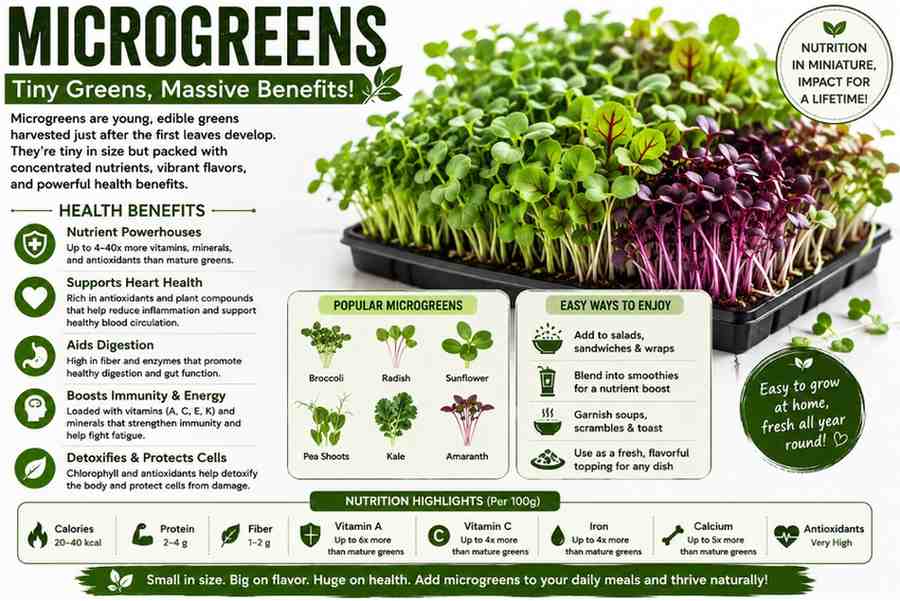
Microgreens have become one of the most popular superfoods among health-conscious individuals, chefs, and nutrition enthusiasts. Although they are tiny in size, these young vegetable greens are packed with vitamins, minerals, antioxidants, and plant compounds that may support overall health. Their vibrant colors, fresh flavor, and impressive nutritional value make them an excellent addition to salads, sandwiches, smoothies, and many other dishes.
Unlike sprouts, microgreens are grown in soil or another growing medium and harvested after the first true leaves develop. They are easy to grow at home and can be produced from a wide variety of vegetables and herbs, including broccoli, radish, kale, cabbage, mustard, pea shoots, sunflower, basil, cilantro, and beet.
In this guide, you’ll learn what microgreens are, their nutritional value, and the science-backed health benefits they offer.
What Are Microgreens?
Microgreens are young edible seedlings of vegetables and herbs that are harvested approximately 7 to 21 days after germination, once the first true leaves appear. They are larger than sprouts but much smaller than baby greens.
These tiny greens are known for their intense flavor, vibrant colors, and concentrated nutrients. Depending on the variety, microgreens may taste sweet, peppery, earthy, spicy, or mildly bitter.
Some of the most popular microgreens include:
- Broccoli Microgreens
- Radish Microgreens
- Sunflower Microgreens
- Pea Shoots
- Kale Microgreens
- Cabbage Microgreens
- Beet Microgreens
- Mustard Microgreens
- Arugula Microgreens
- Basil Microgreens
- Cilantro Microgreens
- Amaranth Microgreens
Because they are harvested at an early stage, many microgreens contain higher concentrations of certain vitamins, minerals, and antioxidants than their mature counterparts.
Nutrition Facts of Microgreens
The exact nutrition depends on the variety of microgreens. However, most provide an excellent source of vitamins, minerals, fiber, and beneficial plant compounds while being naturally low in calories.
| Nutrient | Amount (Approx. per 100 g)* | Health Benefits |
|---|---|---|
| Calories | 25–35 kcal | Low-calorie food |
| Protein | 2–4 g | Supports muscle growth and repair |
| Carbohydrates | 3–6 g | Provides energy |
| Dietary Fiber | 2–3 g | Supports digestion |
| Fat | Less than 1 g | Naturally low in fat |
| Vitamin A | High | Supports vision and immunity |
| Vitamin C | High | Powerful antioxidant |
| Vitamin E | Moderate to High | Protects cells from oxidative stress |
| Vitamin K | Very High | Supports bone and blood health |
| Folate | Moderate | Supports cell growth |
| Potassium | Moderate | Helps regulate blood pressure |
| Calcium | Moderate | Supports strong bones |
| Magnesium | Moderate | Supports muscle and nerve function |
| Iron | Moderate | Helps oxygen transport |
| Zinc | Small amounts | Supports immune function |
| Polyphenols | High | Help fight inflammation |
| Antioxidants | High | Protect against free radical damage |
*Values vary depending on the type of microgreens and growing conditions.
20 Proven Health Benefits of Microgreens
- Rich in Antioxidants: Microgreens contain powerful antioxidants that help protect cells from oxidative stress and reduce damage caused by free radicals.
- Supports Heart Health: Their antioxidants, potassium, and bioactive compounds may help maintain healthy cholesterol levels and support cardiovascular health.
- Boosts Immune Function: High levels of vitamins A, C, and E help strengthen the immune system and improve the body’s natural defenses.
- Promotes Healthy Digestion: The dietary fiber in microgreens supports regular bowel movements and promotes a healthy digestive system.
- Supports Eye Health: Vitamin A and carotenoids found in many Vegetable confetti contribute to healthy vision and may lower the risk of age-related eye problems.
- May Help Reduce Inflammation: Many varieties contain polyphenols and other plant compounds that help reduce chronic inflammation in the body.
- Supports Healthy Blood Sugar Levels: Certain microgreens, especially broccoli microgreens, may help improve insulin sensitivity as part of a balanced diet.
- Promotes Healthy Skin: Vitamin C and E help support collagen production, skin repair, and protection against environmental damage.
- Strengthens Bones: The high vitamin K content supports bone mineralization and helps maintain strong, healthy bones.
- Supports Brain Health: Antioxidants and anti-inflammatory compounds may help protect brain cells and support cognitive function.
- May Lower the Risk of Chronic Diseases: Regular consumption of antioxidant-rich foods like Vegetable confetti may contribute to a lower risk of certain chronic conditions.
- Supports Healthy Weight Management: Low in calories but rich in nutrients, Vegetable confetti help increase nutrient intake without significantly increasing calorie consumption.
- Helps Maintain Healthy Blood Pressure: Potassium and magnesium help support normal blood pressure and cardiovascular function.
- Supports Healthy Cholesterol Levels: Some studies suggest that certain microgreens may help improve lipid profiles when included in a balanced diet.
- Provides Essential Vitamins and Minerals: Microgreens deliver a concentrated source of vitamins, minerals, and phytonutrients needed for overall health.
- Supports Healthy Hair Growth: Vitamins A, C, E, and iron contribute to healthy hair follicles and may support stronger hair.
- May Improve Liver Health: Antioxidant compounds may help protect liver cells from oxidative stress and support normal liver function.
- Supports Healthy Metabolism: B vitamins, minerals, and plant nutrients assist various metabolic processes involved in energy production.
- May Help Protect Against Cellular Aging: Antioxidants help reduce oxidative damage that contributes to premature cellular aging.
- Easy Way to Increase Vegetable Intake: Adding Vegetable confetti to meals is a convenient way to boost daily vegetable consumption and improve overall diet quality.
10 Side Effects of Microgreens
- Risk of Bacterial Contamination: Vegetable confetti grown or handled improperly may harbor harmful bacteria, so always buy from trusted sources or grow them hygienically.
- Possible Allergic Reactions: Some people may experience allergic reactions to certain microgreen varieties, especially if they are allergic to the mature plant.
- May Interact with Blood Thinners: Vitamin K-rich microgreens can affect the action of blood-thinning medications such as warfarin, so intake should remain consistent.
- Digestive Discomfort: Eating large amounts of Vegetable confetti at once may cause bloating, gas, or mild stomach discomfort in sensitive individuals.
- Risk of Mold Growth: Improperly stored microgreens can develop mold, making them unsafe to consume.
- May Cause Foodborne Illness: Raw Vegetable confetti may increase the risk of foodborne illness if contaminated during cultivation or storage.
- Can Trigger Mustard Family Sensitivity: Mustard, radish, and arugula microgreens may cause irritation or digestive discomfort in people sensitive to cruciferous vegetables.
- Oxalate Content in Some Varieties: Certain microgreens, such as beet Vegetable confetti , contain oxalates, which may not be suitable for individuals prone to kidney stones.
- Possible Pesticide Exposure: Conventionally grown microgreens may contain pesticide residues if not produced using safe farming practices.
- Not Suitable for Everyone in Large Amounts: Excessive consumption may not provide additional health benefits and should be part of a balanced diet rather than the only source of vegetables.
How to Eat Microgreens?
Microgreens are highly versatile and can be enjoyed fresh or lightly cooked. Their delicate texture and vibrant flavor make them a nutritious addition to many meals. Some of the best ways to eat microgreens include:
- Add them to fresh salads.
- Sprinkle over soups just before serving.
- Layer them into sandwiches and wraps.
- Mix into burgers and tacos.
- Top avocado toast with fresh microgreens.
- Blend into green smoothies.
- Stir into scrambled eggs or omelets after cooking.
- Add to grain bowls and Buddha bowls.
- Mix into pasta dishes before serving.
- Garnish pizzas after baking.
- Add to sushi rolls.
- Mix into cottage cheese or yogurt bowls.
- Use as a topping for baked potatoes.
- Sprinkle over grilled vegetables.
- Add to fresh spring rolls.
Tips for Consuming Microgreens
- Purchase fresh, crisp microgreens from reputable growers.
- Wash gently under cool running water before eating unless labeled pre-washed.
- Eat them as fresh as possible for maximum nutrient retention.
- Refrigerate immediately after purchase.
- Avoid eating slimy or foul-smelling microgreens.
- Rotate different varieties for a wider range of nutrients.
- Pair them with healthy fats like olive oil or avocado to improve the absorption of fat-soluble vitamins.
- Add them after cooking rather than cooking them for long periods.
- Consume them within a few days of harvest for the best flavor and nutrition.
- Include them as part of a balanced diet rich in fruits, vegetables, whole grains, and lean proteins.
How to Cook Microgreens?
Although microgreens are most nutritious when eaten raw, they can also be incorporated into cooked meals with minimal heating.
Here are some simple ideas:
- Stir into soups just before serving.
- Fold into scrambled eggs after cooking.
- Add to omelets as a filling.
- Mix into pasta immediately before serving.
- Sprinkle over risotto.
- Add to stir-fries during the final minute of cooking.
- Mix into mashed potatoes.
- Stir into cooked quinoa or rice.
- Use as a topping for grilled chicken or fish.
- Garnish roasted vegetables.
Tip: Avoid prolonged cooking because excessive heat may reduce the levels of vitamin C and other heat-sensitive nutrients.
Other Uses of Microgreens
- Natural Plate Garnish: Vegetable confetti enhance the appearance and flavor of restaurant-style dishes.
- Smoothie Ingredient: They can be blended into smoothies for an extra nutritional boost.
- Juicing: Certain microgreens can be added to fresh vegetable juices.
- Healthy Sandwich Filling: They provide crunch and nutrients in sandwiches and wraps.
- Pizza Topping: Fresh Vegetable confetti make a flavorful topping after baking.
- Salad Base: They can be used alone or mixed with leafy greens to create nutrient-rich salads.
- Soup Garnish: A handful of fresh Vegetable confetti adds color and freshness to soups.
- Homemade Pesto: Basil or pea microgreens can be blended into pesto sauces.
- Indoor Gardening: Vegetable confetti are easy to grow indoors throughout the year.
- Decorative Food Presentation: Their bright colors make meals more visually appealing.
How Much Microgreens Can You Eat in a Day?
There is no official recommended daily intake for microgreens.
For most healthy adults:
- ½ to 1 cup (approximately 25–50 grams) daily is generally considered a practical serving as part of a balanced diet.
- People who are new to microgreens can start with smaller portions and gradually increase their intake.
- Variety is important, so rotate different types of microgreens rather than eating the same variety every day.
Best Time to Eat Microgreens
Microgreens can be eaten at any time of the day.
Some ideal times include:
- With breakfast in omelets or avocado toast.
- At lunch in salads or wraps.
- As part of a healthy dinner.
- After exercise in protein bowls or smoothies.
- As a nutritious snack with sandwiches.
Because they are low in calories and rich in nutrients, they fit well into most eating patterns.
Who Should Eat Microgreens?
- Health-Conscious Adults: Vegetable confetti provide concentrated nutrients that support overall wellness.
- People Trying to Lose Weight: Their low calorie content and high nutrient density make them an excellent addition to weight-management diets.
- Vegetarians and Vegans: They contribute valuable vitamins, minerals, and antioxidants to plant-based diets.
- Athletes: Their nutrient profile may support recovery and overall performance when included in a balanced eating plan.
- Older Adults: Microgreens provide vitamins that help support healthy aging and bone health.
- Busy Professionals: They are an easy way to increase vegetable intake without extensive meal preparation.
- People with Low Vegetable Intake: Vegetable confetti help increase daily consumption of nutrient-rich greens.
- Home Gardeners: Growing Vegetable confetti provides a convenient source of fresh greens year-round.
Who Should Not Eat Microgreens?
- People with Severe Plant Allergies: Individuals allergic to specific vegetables or herbs should avoid the corresponding Vegetable confetti.
- People Taking Warfarin: Those using blood-thinning medication should consult their healthcare provider before making significant changes to vitamin K intake.
- Individuals with Weakened Immune Systems: Raw microgreens may pose a higher risk of foodborne illness, so medical advice is recommended.
- Pregnant Women Using Untrusted Sources: Pregnant individuals should consume only properly grown, fresh, and hygienically handled microgreens.
- People with Kidney Stone Risk: Those advised to limit oxalates should moderate varieties naturally higher in oxalates.
- People with Active Food Poisoning Symptoms: Avoid raw greens until fully recovered and follow medical advice.
- Individuals with Digestive Sensitivities: Introduce Vegetable confetti gradually if prone to digestive discomfort.
How to Store Microgreens?
- Refrigerate Immediately: Store Vegetable confetti in the refrigerator soon after purchase or harvest.
- Keep Them Dry: Excess moisture encourages spoilage and mold growth.
- Use a Breathable Container: Store them in their original clamshell or a container lined with paper towels.
- Avoid Washing Before Storage: Wash only the portion you plan to eat.
- Replace Damp Paper Towels: Fresh paper towels help absorb excess moisture.
- Keep Away from Ethylene-Producing Fruits: Fruits like apples and bananas may speed up spoilage.
- Consume Within a Week: Most microgreens are best eaten within 5–7 days.
- Discard Spoiled Greens: Throw away any Vegetable confetti that become slimy, discolored, or develop an unpleasant odor.
Precautions and Interactions
- Wash Before Eating: Rinse Vegetable confetti carefully to reduce the risk of contamination.
- Buy from Trusted Growers: Choose reputable suppliers that follow safe growing practices.
- Monitor Vitamin K Intake: Keep intake consistent if you take blood-thinning medications.
- Avoid Moldy Products: Never consume microgreens showing visible mold or spoilage.
- Practice Good Hygiene When Growing at Home: Clean trays, tools, and water sources help reduce contamination.
- Store at Proper Refrigeration Temperatures: Keep refrigerated below 4°C (40°F).
- Consult Your Healthcare Provider: Seek medical advice if you have chronic medical conditions or dietary restrictions.
- Introduce Gradually: Begin with small servings if you have never eaten Vegetable confetti before.
How to Grow Microgreens at Home?
Growing microgreens at home is simple, affordable, and requires very little space. Most varieties are ready to harvest within 7–21 days, making them one of the fastest crops you can grow indoors.
What You’ll Need:
- Microgreen seeds (broccoli, radish, kale, sunflower, pea, mustard, etc.)
- A shallow growing tray or container with drainage holes
- Seed-starting mix, potting soil, or coconut coir
- Spray bottle or watering can
- Clean water
- A sunny windowsill or LED grow light
- Scissors for harvesting
Step 1: Choose Your Seeds
Select high-quality seeds specifically labeled for growing microgreens. Popular beginner-friendly options include:
- Broccoli
- Radish
- Sunflower
- Pea
- Kale
- Mustard
- Arugula
Step 2: Prepare the Growing Tray
Fill a shallow tray with 1–2 inches (2.5–5 cm) of moist potting mix or coconut coir. Level the surface gently without packing the soil too tightly.
Step 3: Sow the Seeds
Spread the seeds evenly across the surface. They should be close together but not piled on top of each other.
Lightly press the seeds into the growing medium to improve contact.
Step 4: Mist with Water
Use a spray bottle to mist the seeds thoroughly without soaking the soil. Keep the growing medium consistently moist but not waterlogged.
Step 5: Cover for Germination
Cover the tray with a lid or another empty tray for 2–4 days. This creates a dark, humid environment that encourages quick germination.
Step 6: Provide Light
Once the seeds sprout, remove the cover and place the tray where it receives:
- 4–6 hours of indirect sunlight daily, or
- 12–16 hours under an LED grow light
Rotate the tray every day if using natural sunlight to encourage even growth.
Step 7: Water Carefully
Water from the bottom whenever possible by placing the tray in a shallow container of water for a few minutes. Bottom watering helps reduce the risk of mold.
If watering from the top, use a gentle mist to avoid damaging the seedlings.
Step 8: Harvest the Microgreens
Most microgreens are ready in 7–21 days, when they are about 2–4 inches (5–10 cm) tall and have developed their first true leaves.
Use clean scissors to cut the stems just above the soil line.
Step 9: Wash and Enjoy
Rinse the harvested Vegetable confetti gently under cool water, pat them dry, and use them immediately in salads, sandwiches, wraps, smoothies, soups, or as a garnish.
Tips for Successfully Growing Microgreens
- Use fresh, high-quality seeds with good germination rates.
- Keep the soil moist but never soggy.
- Ensure good air circulation to reduce mold growth.
- Avoid overcrowding the seeds.
- Clean trays and tools before each growing cycle.
- Maintain a temperature between 18–24°C (65–75°F) for optimal growth.
- Harvest before the plants become too large or develop tough stems.
- Grow different varieties to enjoy a range of flavors and nutrients.
Common Mistakes to Avoid
- Overwatering the growing medium.
- Using poor-quality or old seeds.
- Providing insufficient light after germination.
- Allowing poor airflow, which can encourage mold.
- Harvesting too early before the first true leaves appear.
- Waiting too long to harvest, resulting in tougher, less flavorful greens.
With proper care, you can enjoy a fresh supply of homegrown microgreens year-round, adding nutritious, flavorful greens to your meals in as little as one to three weeks.
Why Microgreens Are Considered a Superfood?
Microgreens are often referred to as a superfood because they offer an exceptional concentration of nutrients in a very small serving. Research has shown that many varieties contain significantly higher levels of vitamins and antioxidants than their mature vegetables. While they should not replace whole vegetables entirely, they are an excellent complement to a balanced diet.
Their versatility is another advantage. Whether sprinkled over soups, mixed into salads, blended into smoothies, or used as a garnish, Vegetable confetti can enhance both the nutritional value and flavor of meals.
Additionally, many Vegetable confetti are easy to grow indoors year-round, making fresh, nutrient-rich greens accessible even in limited spaces.
FAQ’s
What are microgreens good for?
Vegetable confetti are rich in vitamins, minerals, and antioxidants that support heart health, immunity, digestion, and overall wellness.
What are microgreens also known as?
Microgreens are also known as young vegetable greens, edible seedlings, or vegetable confetti.
What are the names of microgreens in India?
Popular microgreens in India include methi (fenugreek), sarson (mustard), dhaniya (coriander), mooli (radish), palak (spinach), chaulai (amaranth), and matar (pea) microgreens.
Are microgreens healthier than regular vegetables?
Many microgreens contain higher concentrations of certain vitamins, minerals, and antioxidants than their mature counterparts, but both are healthy and should be included in a balanced diet.
Can you eat microgreens every day?
Yes. Most healthy adults can safely enjoy Vegetable confetti daily as part of a varied, balanced diet.
Do microgreens need to be washed before eating?
Yes. Unless they are labeled as pre-washed, rinse Vegetable confetti gently under cool running water before consuming them.
What do microgreens taste like?
The flavor depends on the variety. They can taste mild, sweet, nutty, peppery, spicy, earthy, or slightly bitter.
Can I eat microgreens raw?
Yes. Vegetable confetti are most commonly eaten raw to preserve their delicate texture and heat-sensitive nutrients.
Can microgreens be cooked?
Yes. They can be lightly added to soups, stir-fries, omelets, pasta, and other cooked dishes, but avoid prolonged heating.
Are microgreens safe during pregnancy?
Properly grown and hygienically handled Vegetable confetti may be safe, but pregnant women should choose trusted sources and consult their healthcare provider if they have concerns.
Are microgreens the same as sprouts?
No. Sprouts are germinated seeds eaten with their roots, while Vegetable confetti are harvested after developing their first true leaves and are typically grown in soil or another growing medium.
Which microgreens are the healthiest?
Broccoli, kale, red cabbage, radish, sunflower, pea shoots, mustard, beet, and watercress Vegetable confetti are among the most nutrient-dense varieties.
Can microgreens help with weight loss?
Vegetable confetti are low in calories and rich in nutrients, making them a healthy addition to a balanced weight-management diet.
Are microgreens high in protein?
Most Vegetable confetti contain small amounts of protein, while sunflower microgreens and pea shoots provide relatively higher protein compared to many other varieties.
Can diabetics eat microgreens?
Yes. People with diabetes can generally enjoy Vegetable confetti as part of a healthy eating plan, but they should continue following their healthcare provider’s dietary advice.
Do microgreens contain fiber?
Yes. Vegetable confetti provide dietary fiber, which supports healthy digestion and helps promote fullness.
Are microgreens good for heart health?
Vegetable confetti contain antioxidants, potassium, and other beneficial plant compounds that may support heart health when included in a balanced diet.
How long do microgreens last?
Fresh Vegetable confetti usually stay fresh for 5–7 days when refrigerated and stored properly.
Can children eat microgreens?
Yes. Fresh, clean Vegetable confetti can be included in children’s meals in age-appropriate portions as part of a balanced diet.
Do microgreens contain vitamins?
Yes. Most Vegetable confetti are rich in vitamins A, C, E, and K, along with folate and other essential nutrients.
Can microgreens lower cholesterol?
Some research suggests that certain varieties, such as broccoli and red cabbage Vegetable confetti, may help support healthy cholesterol levels as part of a heart-healthy diet.
Are microgreens gluten-free?
Yes. Most vegetable and herb Vegetable confetti are naturally gluten-free. However, people with celiac disease should ensure there is no cross-contamination during production.
What is the difference between microgreens and baby greens?
Vegetable confetti are harvested shortly after sprouting when the first true leaves appear, while baby greens are allowed to grow larger before harvest.
Can I freeze microgreens?
Freezing is not recommended because it can damage their texture and reduce freshness. They are best eaten fresh.
Sources / References:
- United States Department of Agriculture (USDA FoodData Central)
- National Institutes of Health (NIH)
- Academy of Nutrition and Dietetics
- Cleveland Clinic
- Mayo Clinic
- FoodData Central (USDA)
- World Health Organization (WHO)
Disclaimer:
This article is for educational and informational purposes only and should not be considered medical advice. Always consult a qualified healthcare professional before making significant dietary changes, especially if you are pregnant, breastfeeding, taking medications, or have an underlying medical condition.
Also Read: