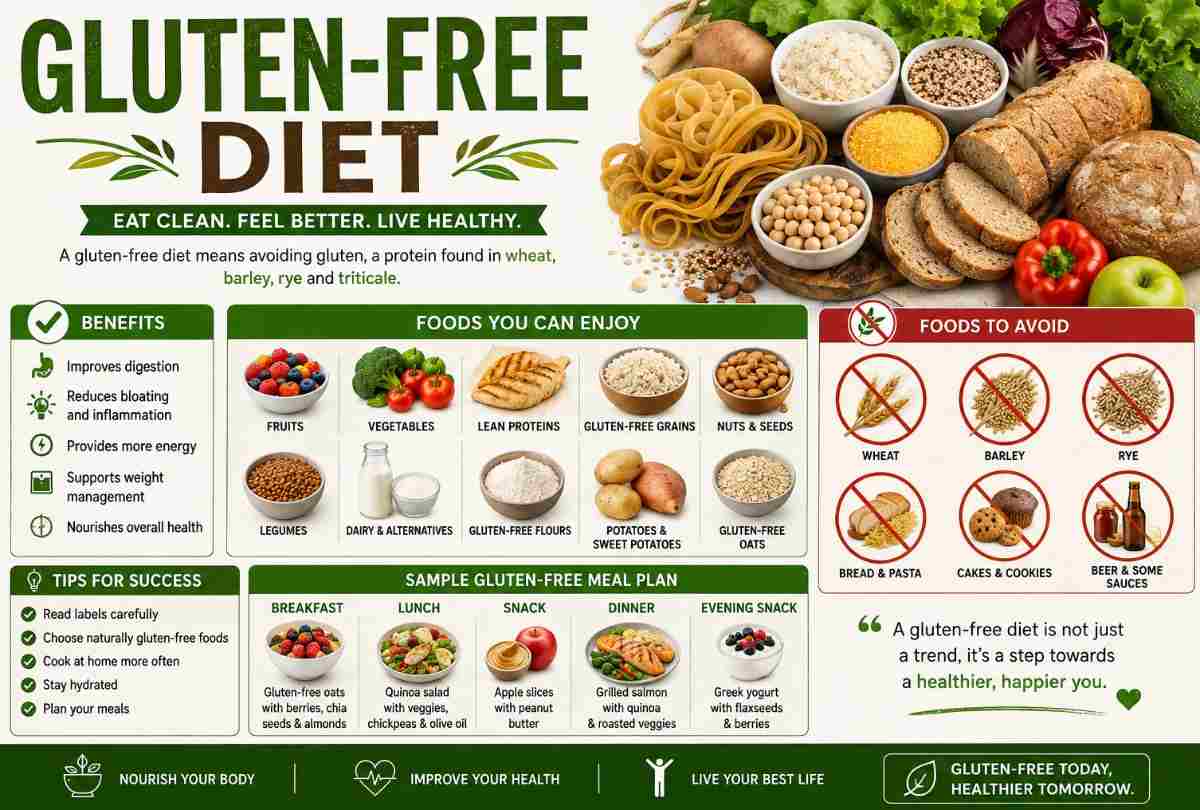
A gluten-free diet has become increasingly popular, but going gluten-free is not simply about replacing regular bread with gluten-free bread. For people with celiac disease, avoiding gluten is an essential part of treatment. For others with certain gluten-related conditions, reducing or avoiding gluten may also be recommended by a healthcare professional.
At the same time, a gluten-free diet is often misunderstood as a guaranteed weight-loss or “healthier” diet. It is not automatically healthier, and some packaged gluten-free foods can be higher in sugar, fat, or calories and lower in fiber than their conventional counterparts.
This guide explains what a gluten-free diet is, which foods are naturally gluten-free, what to avoid, possible benefits and drawbacks, and practical tips for following it safely.
What Is a Gluten-Free Diet?
A gluten-free diet is an eating pattern that eliminates gluten, a group of proteins naturally found in certain grains, particularly wheat, barley, and rye.
Gluten gives dough its elasticity and helps many baked foods maintain their structure. It can therefore be found in bread, pasta, cereals, baked goods, and many processed foods.
For someone with celiac disease, eating gluten triggers an immune response that damages the small intestine. A strict gluten-free diet can help relieve symptoms and allow intestinal damage to heal. People diagnosed with celiac disease generally need to follow a gluten-free diet for life. However, someone who simply wants to eat healthier does not necessarily need to eliminate gluten.
Who May Need a Gluten-Free Diet?
A gluten-free diet is most clearly indicated for people with celiac disease.
It may also be considered for some people with other medically recognized gluten-related problems, but the reason for avoiding gluten should ideally be established with a healthcare professional.
If you suspect that gluten is causing digestive symptoms, it is important not to remove gluten before being evaluated for celiac disease. Eating gluten-free before testing can affect diagnostic results.
What Foods Contain Gluten?
The main gluten-containing grains are:
- Wheat
- Barley
- Rye
- Triticale, a wheat-rye hybrid
- Spelt
- Durum
- Semolina
- Emmer
These grains can appear in many familiar foods, including:
- Bread
- Regular pasta
- Cakes
- Cookies
- Crackers
- Pastries
- Wheat-based cereals
- Some sauces and gravies
- Some soups
- Malt-containing foods and beverages
- Many processed snack foods
Gluten can also appear in unexpected packaged foods through ingredients, flavorings, thickeners, starches, and other additives.
Gluten-Free Foods You Can Eat
A gluten-free diet does not mean eating only specialty gluten-free products. Many nutritious foods are naturally gluten-free.
1. Fruits
Fresh fruits are naturally gluten-free and can provide fiber, vitamins, minerals, and antioxidants.
Examples include:
- Apples
- Bananas
- Oranges
- Berries
- Mangoes
- Papaya
- Pineapple
- Watermelon
- Grapes
- Peaches
2. Vegetables
Most fresh vegetables are naturally gluten-free.
Good choices include:
- Spinach
- Broccoli
- Cauliflower
- Carrots
- Bell peppers
- Tomatoes
- Cucumbers
- Potatoes
- Sweet potatoes
- Green beans
Be careful with packaged or prepared vegetables that contain sauces, seasonings, or other additives.
3. Rice
Rice is naturally gluten-free and can be used as an alternative to wheat-based grains.
Brown rice, white rice, wild rice, and other plain rice varieties can fit into a gluten-free eating pattern.
4. Potatoes
Plain potatoes and sweet potatoes are naturally gluten-free.
They can be baked, boiled, roasted, or mashed. The concern usually comes from added ingredients such as flour, certain sauces, or seasonings.
5. Quinoa
Quinoa is naturally gluten-free and provides protein, fiber, and several minerals.
It can be used in salads, bowls, soups, and as an alternative to couscous or other wheat-based grains.
6. Buckwheat
Despite its name, buckwheat is not wheat and is naturally gluten-free.
However, people with celiac disease should check packaging because cross-contact can occur during processing.
7. Corn
Plain corn and corn-based foods made without gluten-containing ingredients can be part of a gluten-free diet.
Corn tortillas, cornmeal, and popcorn are examples, but flavored or processed products should be checked carefully.
8. Legumes
Beans, lentils, chickpeas, and peas are naturally gluten-free.
They can also provide plant-based protein and fiber.
9. Nuts and Seeds
Almonds, walnuts, cashews, chia seeds, flaxseeds, pumpkin seeds, and sunflower seeds can fit into a gluten-free diet when they are free from gluten-containing coatings or flavorings.
10. Meat, Fish, and Eggs
Plain fresh meat, poultry, fish, and eggs are naturally gluten-free.
The main concern is how they are prepared. Breaded meats, marinades, sauces, and processed meat products may contain gluten.
Gluten-Free Foods List
| Food Group | Gluten-Free Choices |
|---|---|
| Fruits | Apples, bananas, berries, mangoes, oranges |
| Vegetables | Spinach, broccoli, carrots, potatoes |
| Grains | Rice, quinoa, corn, buckwheat |
| Protein | Eggs, plain chicken, fish, meat |
| Legumes | Lentils, chickpeas, beans, peas |
| Nuts | Almonds, walnuts, cashews |
| Seeds | Chia, flax, pumpkin, sunflower |
| Dairy | Plain milk, yogurt, cheese when gluten-free |
| Oils | Olive oil, coconut oil, avocado oil |
| Beverages | Water, plain tea, coffee, many fresh juices |
Foods to Avoid on a Gluten-Free Diet
If you need to strictly avoid gluten, particularly because of celiac disease, foods containing wheat, barley, rye, or their derivatives should be avoided unless specifically processed and labeled as gluten-free.
Common foods to watch include:
- Wheat bread
- Regular pasta
- Wheat flour
- Semolina
- Couscous
- Crackers
- Cakes
- Cookies
- Wheat-based breakfast cereals
- Regular pastries
- Many breaded foods
- Malt-containing products
- Some sauces and gravies
- Some processed soups
- Some flavored snacks
Reading ingredient labels is particularly important because gluten may be present in foods where you would not expect it.
Naturally Gluten-Free vs. Packaged Gluten-Free Foods
There is an important difference between naturally gluten-free foods and specially manufactured gluten-free products.
A bowl of plain rice with vegetables and grilled chicken is naturally gluten-free. A gluten-free cookie, on the other hand, is a processed food that has been formulated without gluten.
A product being labeled gluten-free does not automatically mean it is highly nutritious.
A healthy gluten-free diet should be built primarily around naturally gluten-free foods such as vegetables, fruits, legumes, nuts, seeds, lean proteins, and gluten-free whole grains.
10 Potential Benefits of a Gluten-Free Diet
1. Helps Manage Celiac Disease
For people with celiac disease, removing gluten is the primary dietary treatment and can help prevent further intestinal damage.
2. May Reduce Digestive Symptoms
People with celiac disease can experience symptoms such as abdominal discomfort, bloating, diarrhea, and other digestive problems. A properly followed gluten-free diet can improve symptoms.
3. Supports Intestinal Healing
Strict gluten avoidance can allow the damaged small intestine to heal in people with celiac disease.
4. Can Improve Nutrient Absorption in Celiac Disease
When intestinal damage improves, the body’s ability to absorb nutrients can also improve.
5. Encourages More Careful Food Choices
Following a gluten-free diet often requires more attention to ingredients, food preparation, and portion choices.
6. Can Increase Whole-Food Intake
A well-planned gluten-free diet may encourage greater use of naturally gluten-free foods such as fruits, vegetables, beans, nuts, seeds, rice, and quinoa.
7. Helps People Identify Hidden Gluten Sources
Learning how to read ingredient labels can make it easier to recognize wheat, barley, rye, and other potentially problematic ingredients.
8. May Help People With Certain Gluten-Related Conditions
Some individuals with medically identified gluten-related problems may benefit from avoiding gluten under professional guidance.
9. Can Encourage More Home Cooking
Preparing meals at home can make it easier to control ingredients and reduce accidental exposure to gluten.
10. Can Support a Balanced Eating Pattern
When based on whole foods rather than highly processed gluten-free replacements, the diet can provide a wide variety of nutrients.
Is a Gluten-Free Diet Healthy?
It can be healthy, but gluten-free does not automatically mean healthy.
A gluten-free diet can be nutritionally balanced when it includes vegetables, fruits, legumes, nuts, seeds, lean proteins, dairy or suitable alternatives, and naturally gluten-free whole grains.
However, simply replacing ordinary cookies, bread, crackers, and pasta with gluten-free versions does not necessarily improve overall nutrition.
Some people who remove gluten without professional guidance may consume less fiber, iron, calcium, and other nutrients.
Is a Gluten-Free Diet Good for Weight Loss?
A gluten-free diet is not a weight-loss diet.
Some people may lose weight after changing their eating habits, but this can happen because they eat fewer processed foods or reduce their overall calorie intake rather than because gluten itself causes weight gain.
In fact, some gluten-free packaged foods can be relatively high in calories, sugar, or fat.
If weight management is your goal, focus on overall dietary quality, portion sizes, physical activity, sleep, and sustainable eating habits rather than simply eliminating gluten.
Possible Risk and Side Effects of a Gluten-Free Diet
1. Nutritional Gaps
Removing wheat-based foods without replacing their nutrients appropriately can reduce intake of fiber, iron, calcium, and other nutrients.
2. Higher Food Costs
Specialty gluten-free products can cost more than comparable conventional foods.
3. More Label Reading
Strict gluten avoidance requires careful attention to ingredient lists and food preparation.
4. Limited Choices When Eating Out
Restaurants may use wheat-based ingredients or shared preparation surfaces, making gluten avoidance more difficult.
5. Risk of Cross-Contact
Even a naturally gluten-free food can become contaminated when it comes into contact with gluten-containing foods during preparation, storage, processing, or serving.
6. Overreliance on Processed Gluten-Free Foods
Replacing every conventional food with a gluten-free packaged alternative may result in a diet that is still highly processed.
7. Social Challenges
Family meals, parties, travel, and restaurant dining can require additional planning.
What Is Cross-Contact?
Cross-contact happens when a gluten-free food comes into contact with gluten-containing food.
For someone with celiac disease, this can be an important concern.
Examples include:
- Using the same toaster for wheat bread and gluten-free bread
- Sharing cutting boards
- Using the same knife for regular and gluten-free spreads
- Cooking gluten-free pasta in water used for regular pasta
- Using contaminated serving utensils
- Preparing gluten-free food on a flour-covered countertop
NIDDK recommends taking steps to prevent cross-contact when preparing and storing gluten-free foods.
How to Start a Gluten-Free Diet?
Step 1: Know Why You Are Going Gluten-Free
If you suspect celiac disease or another gluten-related condition, speak with a healthcare professional before removing gluten.
Step 2: Learn the Main Gluten-Containing Grains
Remember the basic group: wheat, barley, rye, and triticale.
Step 3: Build Meals Around Naturally Gluten-Free Foods
Start with vegetables, fruits, rice, potatoes, beans, eggs, fish, meat, nuts, seeds, and other naturally gluten-free foods.
Step 4: Learn to Read Labels
Check ingredient lists and look for gluten-free labeling when appropriate.
In the United States, FDA regulations require foods carrying a “gluten-free” claim to contain less than 20 parts per million of gluten.
Step 5: Prevent Cross-Contact
Keep gluten-free ingredients and cooking equipment separate when necessary.
Step 6: Work With a Dietitian if Needed
A registered dietitian can help create a balanced diet and identify nutritional gaps, especially after a celiac disease diagnosis.
7-Day Gluten-Free Meal Plan
Here is a simple, balanced 7-day gluten-free meal plan built around naturally gluten-free foods. Portions can be adjusted according to your age, activity level, calorie needs, and health goals.
| Day | Breakfast | Mid-Morning Snack | Lunch | Evening Snack | Dinner |
|---|---|---|---|---|---|
| Day 1 | Vegetable omelet + fruit | Apple + almonds | Brown rice + grilled chicken + mixed vegetables | Yogurt + berries | Grilled fish + quinoa + salad |
| Day 2 | Gluten-free oats + banana + chia seeds | Orange | Chickpea salad + rice + yogurt | Roasted chickpeas | Vegetable soup + baked potato + grilled chicken |
| Day 3 | Greek yogurt + berries + gluten-free granola | Pear + walnuts | Quinoa bowl + beans + vegetables | Carrot and cucumber sticks + hummus | Brown rice + grilled fish + steamed broccoli |
| Day 4 | Scrambled eggs + avocado + fruit | Handful of mixed nuts | Lentil curry + rice + cucumber salad | Apple + peanut butter | Chicken + roasted sweet potato + vegetables |
| Day 5 | Smoothie with banana, berries, yogurt, and chia seeds | Boiled egg + fruit | Rice bowl + grilled paneer/tofu + vegetables | Roasted makhana | Quinoa + chickpeas + mixed vegetable salad |
| Day 6 | Gluten-free oats + apple + cinnamon | Berries + walnuts | Grilled fish/chicken + brown rice + vegetables | Yogurt + seeds | Lentil soup + baked sweet potato + salad |
| Day 7 | Vegetable omelet + gluten-free toast + fruit | Banana + almonds | Chickpea quinoa salad + yogurt | Hummus + vegetable sticks | Grilled chicken/paneer + rice + steamed vegetables |
Simple Tips for Following This Plan
- Choose certified or clearly labeled gluten-free oats, bread, and packaged foods when needed.
- Focus mainly on naturally gluten-free foods such as vegetables, fruits, rice, potatoes, legumes, eggs, meat, fish, nuts, and seeds.
- Check sauces, seasonings, marinades, soups, and processed foods for hidden gluten.
- If you have celiac disease, take precautions to prevent cross-contact during cooking and food preparation.
- Drink plenty of water throughout the day.
- Adjust portions according to your individual nutritional needs.
Note: This is a general meal-plan example, not a personalized medical diet. If you have celiac disease, food allergies, diabetes, kidney disease, or another medical condition, consider getting an individualized plan from a qualified healthcare professional or registered dietitian.
Gluten-Free Diet for Beginners: Simple Tips
- Focus on naturally gluten-free foods first.
- Read labels carefully.
- Learn alternative names for wheat and other gluten-containing ingredients.
- Keep gluten-free foods separate when necessary.
- Be cautious with sauces, marinades, soups, and processed foods.
- Ask restaurant staff about ingredients and preparation methods.
- Choose certified or clearly labeled gluten-free products when appropriate.
- Include several sources of dietary fiber.
- Make sure your diet provides adequate iron, calcium, and other nutrients.
- Consider working with a registered dietitian if you have celiac disease.
Is Oatmeal Gluten-Free?
Oats are naturally free of gluten, but they can become contaminated with wheat, barley, or rye during growing, processing, or manufacturing.
For people with celiac disease, NIDDK recommends discussing oats with a healthcare professional and choosing gluten-free oats when they are included in the diet.
Gluten-Free Diet vs. Wheat-Free Diet
These terms are not identical.
A wheat-free diet eliminates wheat but may still include barley or rye.
A gluten-free diet eliminates gluten from wheat, barley, rye, and related sources.
Therefore, a food can be wheat-free without being gluten-free.
Gluten-Free Diet vs. Low-Carb Diet
A gluten-free diet and a low-carbohydrate diet have different goals.
A gluten-free diet focuses on eliminating gluten.
A low-carb diet focuses on reducing carbohydrate intake.
Foods such as rice, potatoes, corn, fruit, and quinoa can be gluten-free while still providing carbohydrates.
Should Everyone Avoid Gluten?
No.
There is no general requirement for healthy people without celiac disease or another gluten-related condition to eliminate gluten. NIDDK notes that gluten-free foods are not automatically healthier and that unnecessary gluten avoidance may make it harder to obtain adequate vitamins, minerals, and fiber.
If you experience repeated digestive symptoms after eating wheat or gluten-containing foods, talk with a healthcare professional rather than self-diagnosing.
Important Precautions
If you think you may have celiac disease, do not start a gluten-free diet before speaking with your doctor about testing. Removing gluten beforehand can affect test results and make diagnosis more difficult.
People already diagnosed with celiac disease should take gluten avoidance seriously and pay attention to cross-contact.
If symptoms continue despite following a gluten-free diet, consult your doctor or dietitian. Persistent symptoms may have several possible causes and do not necessarily mean that more foods need to be eliminated.
FAQ’s
Is rice gluten-free?
Yes, plain rice is naturally gluten-free, including white, brown, and wild rice.
Are potatoes gluten-free?
Yes. Plain potatoes are naturally gluten-free, but sauces, seasonings, or preparation methods may add gluten.
Is gluten-free food healthier?
Not automatically. A gluten-free diet can be healthy when it emphasizes nutritious whole foods rather than heavily processed gluten-free products.
Can a gluten-free diet improve digestion?
For people with celiac disease, removing gluten can improve symptoms such as bloating, diarrhea, and abdominal discomfort.
Does gluten-free mean wheat-free?
Not exactly. A wheat-free food may still contain barley or rye, while a gluten-free diet requires avoiding gluten from wheat, barley, rye, and related sources.
Can I eat corn on a gluten-free diet?
Yes. Plain corn is naturally gluten-free, although processed corn products should be checked for gluten-containing ingredients or cross-contact.
Can I eat bread on a gluten-free diet?
Yes, if the bread is specifically made and labeled gluten-free. Regular wheat bread is not suitable.
Can I eat pasta on a gluten-free diet?
Yes. Gluten-free pasta made from rice, corn, quinoa, chickpeas, or other gluten-free ingredients can be eaten.
Is a gluten-free diet necessary for everyone?
No. People without celiac disease or another gluten-related condition generally do not need to eliminate gluten.
Should I stop eating gluten before a celiac disease test?
No. Speak with your healthcare professional before removing gluten because doing so beforehand can affect some celiac disease tests.
Can a gluten-free diet cause nutritional deficiencies?
It can if the diet is poorly planned. Removing fortified wheat products without replacing nutrients may reduce intake of fiber, iron, calcium, and other nutrients.
Is gluten-free the same as low-carb?
No. Gluten-free describes the absence of gluten, while low-carb focuses on limiting carbohydrates. Rice, potatoes, fruits, and quinoa can all be gluten-free while containing carbohydrates.
Which foods are high in gluten?
Foods commonly high in gluten include wheat-based bread, pasta, cereals, crackers, cakes, cookies, pastries, couscous, semolina, and foods made with wheat flour. Barley, rye, and triticale also contain gluten.
Are eggs high in gluten?
No, eggs are naturally gluten-free. Plain eggs do not contain gluten. However, gluten can be introduced through breading, sauces, seasonings, or other ingredients used when preparing eggs.
The Bottom Line
A gluten-free diet can be an essential medical diet for people with celiac disease and may be appropriate for some people with other gluten-related conditions. But it is not automatically healthier and should not be viewed as a guaranteed weight-loss strategy.
The healthiest approach is to build your meals around naturally gluten-free whole foods such as vegetables, fruits, legumes, nuts, seeds, lean proteins, rice, quinoa, and other suitable grains. If you need to follow a strict gluten-free diet, learning to read labels and prevent cross-contact is especially important.
If you suspect that gluten is causing your symptoms, speak with a healthcare professional before eliminating gluten, particularly if celiac disease is a possibility.
Sources / References
- National Institute of Diabetes and Digestive and Kidney Diseases (NIDDK)
- U.S. Food and Drug Administration
Disclaimer
This article is for general educational purposes and does not replace professional medical advice, diagnosis, or treatment. If you suspect celiac disease or another gluten-related condition, consult a qualified healthcare professional before changing your diet.
Also Read: