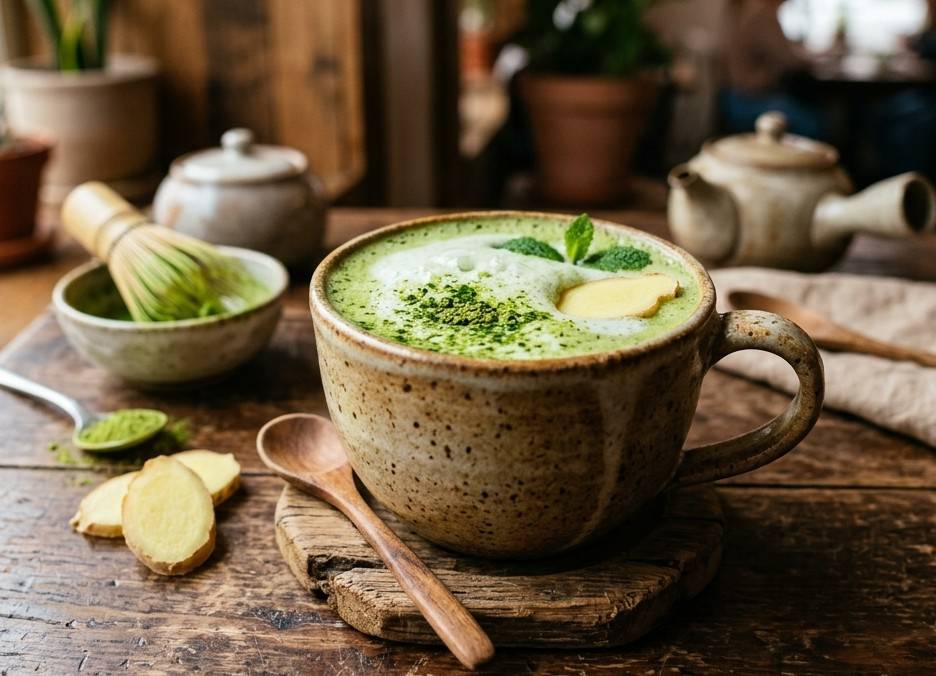
Matcha Ginger Tea combines finely ground green tea powder with fresh or powdered ginger to create a flavorful drink with caffeine, antioxidants, and naturally occurring plant compounds. Matcha provides catechins such as EGCG, along with caffeine and L-theanine, while ginger contributes compounds such as gingerols and shogaols.
Because matcha is made from powdered tea leaves that are consumed rather than simply steeped and discarded, it can provide a concentrated source of green tea compounds. Research on green tea and matcha suggests potential benefits related to antioxidant activity, alertness, cognition, and cardiometabolic health, although many proposed benefits still require more human research.
Ginger is traditionally used for digestive discomfort and nausea, and research suggests it may help with some types of nausea. However, ginger can also cause heartburn, gas, diarrhea, or stomach discomfort in some people.
What Is Matcha Ginger Tea?
Matcha Ginger Tea is a beverage made by whisking matcha green tea powder into warm water and adding fresh ginger, ginger juice, or ginger powder.
Matcha comes from the leaves of Camellia sinensis, the same plant used to produce other types of tea. Unlike conventional green tea, matcha is consumed as a fine powder suspended in water. Matcha contains caffeine, L-theanine, catechins, chlorophyll, and other naturally occurring compounds.
Ginger, scientifically known as Zingiber officinale, adds a warm, spicy flavor and contains bioactive compounds called gingerols and related compounds. The combination produces a drink that is:
- Naturally caffeinated
- Rich in plant compounds
- Low in calories when prepared with water
- Spicy and refreshing
- Suitable as an alternative to coffee or sugary beverages
Nutritional Facts of Matcha Ginger Tea
The exact nutritional values depend on the amount and type of matcha, ginger, sweetener, and milk used. The following is an approximate profile for 1 cup of Matcha Ginger Tea made with water, 1 teaspoon of matcha powder, and fresh ginger, without added sugar.
| Nutrient | Approximate Amount |
|---|---|
| Calories | 5–15 kcal |
| Protein | 0.3–0.7 g |
| Carbohydrates | 1–2 g |
| Fiber | 0.5–1 g |
| Fat | 0.1–0.3 g |
| Natural caffeine | Approximately 25–40 mg |
| Sugar | Less than 1 g |
| Polyphenols | Present |
| Catechins | Present |
| EGCG | Present |
| L-theanine | Present |
| Ginger bioactive compounds | Present |
20 Health Benefits of Matcha Ginger Tea
1. Provides Antioxidants: Matcha supplies catechins and other polyphenols with antioxidant activity that can help protect cells from oxidative stress.
2. Supports Mental Alertness: The caffeine in matcha can increase alertness and help reduce feelings of tiredness, particularly when consumed in moderate amounts.
3. May Support Attention: Research on caffeine and L-theanine suggests that their combination may support attention and certain aspects of cognitive performance.
4. May Support Memory and Cognitive Function: Research on green tea has found associations with cognitive performance, although long-term effects require additional research.
5. Supports a Healthy Antioxidant Intake: Drinking matcha can increase dietary exposure to tea polyphenols, including catechins such as EGCG.
6. May Support Cardiovascular Health: Green tea consumption has been studied for cardiovascular effects, with research suggesting possible modest benefits for some cardiovascular risk factors.
7. May Help Support Healthy Cholesterol Levels: Studies of green tea have found small reductions in total and LDL cholesterol, although results vary and much of the research involves green tea products rather than matcha specifically.
8. May Support Healthy Metabolism: Green tea catechins and caffeine have been investigated for modest effects on body weight and metabolism, but Matcha Ginger Tea should not be considered a weight-loss treatment.
9. May Support Digestive Comfort: Ginger has traditionally been used for digestive complaints and may help some people with nausea and gastrointestinal discomfort.
10. May Help With Nausea: Ginger has been studied for several forms of nausea, including some pregnancy-related nausea, although individual results vary.
11. May Support Healthy Inflammatory Responses: Matcha contains polyphenols with antioxidant and anti-inflammatory activity, although evidence for clinical anti-inflammatory effects in humans remains developing.
12. Can Be a Lower-Calorie Beverage: When prepared with water and without sugar, Matcha Ginger Tea provides relatively few calories compared with many sweetened coffee and tea drinks.
13. May Help Replace Sugary Drinks: Choosing unsweetened Matcha Ginger Tea instead of sugar-sweetened beverages can reduce added sugar intake.
14. May Provide a Gentle Energy Boost: Its caffeine content can provide stimulation without requiring a high-calorie energy drink or heavily sweetened beverage.
15. Provides L-Theanine: Matcha naturally contains L-theanine, an amino acid that has been studied for its relationship with relaxation, attention, and the effects of caffeine.
16. May Support Mood and Mental Performance: Human research on green tea constituents suggests that caffeine and L-theanine may influence alertness, mood, and aspects of mental performance.
17. May Support Healthy Dietary Patterns: Unsweetened tea can fit easily into balanced eating patterns as a low-calorie beverage containing naturally occurring plant compounds.
18. Adds Ginger to the Diet: Adding fresh ginger provides ginger-derived compounds while contributing flavor without requiring large amounts of sugar or artificial flavoring.
19. May Support Overall Wellness: Replacing highly sweetened beverages with unsweetened tea can be one practical part of a healthy lifestyle.
20. Offers a Convenient Functional Beverage: Matcha Ginger Tea combines naturally occurring tea compounds and ginger in one easy-to-prepare drink, making it a convenient addition to a balanced diet.
10 Side Effects of Matcha Ginger Tea
Matcha Ginger Tea is generally well tolerated by many healthy adults when consumed in moderate amounts, but it is not suitable for everyone.
1. Caffeine-Related Jitters: Drinking too much matcha may cause nervousness, restlessness, or shakiness in caffeine-sensitive individuals.
2. Sleep Disturbances: Consuming Matcha Ginger Tea late in the day may interfere with sleep because matcha contains caffeine.
3. Increased Heart Rate: Excessive caffeine may cause a noticeable increase in heart rate or palpitations in sensitive individuals.
4. Stomach Discomfort: Matcha or ginger may cause stomach discomfort in some people, particularly when consumed in large quantities.
5. Heartburn: Ginger can cause heartburn in some people, especially at higher amounts.
6. Gas and Bloating: Ginger may cause gas or bloating in some individuals.
7. Diarrhea: Larger amounts of ginger may contribute to loose stools or diarrhea in sensitive people.
8. Headaches: Excessive caffeine can contribute to headaches in some people, particularly those who are sensitive to caffeine.
9. Possible Medication Interactions: Green tea products can interact with certain medications, while ginger may also raise medication-related concerns, particularly with blood-thinning medicines.
10. Excessive Caffeine Intake: Drinking several caffeinated beverages in addition to Matcha Ginger Tea can push total daily caffeine intake too high for some individuals.
How to Make Matcha Ginger Tea?
Ingredients:
- 1 teaspoon matcha powder
- ½–1 teaspoon freshly grated ginger
- 1 cup warm water
- 1–2 teaspoons lemon juice, optional
- Honey, optional
Method:
- Heat water until hot but not vigorously boiling.
- Add the grated ginger to the water and let it steep for about 5 minutes.
- Strain the ginger if you prefer a smoother drink.
- Place the matcha powder in a cup.
- Add a small amount of warm water and whisk until the matcha becomes smooth and lightly frothy.
- Add the remaining ginger-infused water.
- Stir or whisk thoroughly.
- Add lemon juice or a small amount of honey if desired.
- Drink while warm.
Simple Iced Matcha Ginger Tea
Prepare the tea using the same method, allow it to cool, and pour it over ice. You can add lemon slices or a small amount of unsweetened milk for a different flavor.
Other Uses of Matcha Ginger Tea
Matcha Ginger Tea can be used in several ways beyond drinking it as a traditional hot tea.
1. Iced Tea
Chill the prepared tea and serve it over ice for a refreshing beverage.
2. Smoothies
A small amount of prepared Matcha Ginger Tea can be blended into fruit or vegetable smoothies.
3. Matcha Ginger Latte
Combine matcha and ginger with warm unsweetened dairy or plant-based milk.
4. Breakfast Beverage
It can be consumed alongside breakfast as a caffeinated alternative to coffee.
5. Post-Meal Drink
Some people enjoy ginger-containing beverages after meals because ginger has traditionally been used to support digestive comfort.
6. Flavoring Ingredient
Strongly brewed Matcha Ginger Tea can be incorporated into homemade drinks, chia puddings, or other recipes.
How Much Matcha Ginger Tea Can You Drink a Day?
For many healthy adults, 1 cup per day is a reasonable starting amount, particularly if you are new to matcha or sensitive to caffeine.
Some adults may tolerate 1–2 cups per day, depending on the strength of the matcha and their total caffeine intake from coffee, tea, chocolate, energy drinks, and other sources.
The FDA cites 400 mg of caffeine per day as an amount not generally associated with negative effects for most healthy adults, although individual sensitivity varies considerably.
Matcha caffeine content varies by serving size and preparation, so the caffeine in the rest of your diet should also be considered.
Pregnant or breastfeeding individuals, children, adolescents, and people who are particularly sensitive to caffeine should discuss appropriate caffeine intake with a healthcare professional.
Tips for Consuming Matcha Ginger Tea
- Start with a small amount of matcha if you are sensitive to caffeine.
- Choose high-quality culinary or ceremonial-grade matcha from a reputable source.
- Use warm rather than boiling water to prepare matcha.
- Avoid adding large amounts of sugar or flavored syrups.
- Fresh ginger can provide a stronger and fresher flavor than powdered ginger.
- Drink it earlier in the day if caffeine affects your sleep.
- Avoid consuming very concentrated amounts simply because you want faster results.
- Consider your total daily caffeine intake from all sources.
- If ginger causes heartburn, reduce the quantity or discontinue it.
- Store matcha in an airtight container away from heat, moisture, and direct sunlight.
- Stop using the beverage if you develop an unusual reaction.
- If you take regular medication, ask your doctor or pharmacist whether green tea or ginger could interact with it.
Best Time to Drink Matcha Ginger Tea
The morning or early afternoon is generally the most practical time to drink Matcha Ginger Tea because it contains caffeine.
Morning
Morning consumption can provide caffeine and may support alertness and concentration during the first part of the day.
Before Work or Study
The combination of caffeine and L-theanine in green tea has been investigated for effects on attention and cognitive performance.
After Breakfast
Drinking it after breakfast may be preferable for people who experience stomach discomfort from caffeinated beverages on an empty stomach.
Early Afternoon
An early afternoon serving can be an alternative to another cup of coffee, provided it does not interfere with your sleep.
Avoid Late Evening
Because matcha contains caffeine, drinking it close to bedtime may make it harder for some people to fall asleep.
Who Should Drink Matcha Ginger Tea?
Matcha Ginger Tea may be appropriate for:
- Healthy adults who enjoy caffeinated beverages
- People looking for an alternative to coffee
- Adults who want an unsweetened, low-calorie beverage
- People who enjoy ginger-flavored drinks
- Individuals looking to include more tea polyphenols in their diet
- Adults who tolerate caffeine well
It should be considered part of a healthy diet rather than a substitute for medical treatment.
Who Should Not Drink Matcha Ginger Tea?
Certain people should limit it, avoid it, or discuss it with a healthcare professional first.
1. People Sensitive to Caffeine
Those who develop anxiety, insomnia, palpitations, or headaches after caffeine may need to avoid or reduce matcha.
2. Pregnant Individuals
Because matcha contains caffeine and caffeine intake during pregnancy needs to be moderated, pregnant individuals should discuss their total caffeine intake with their healthcare provider.
3. Breastfeeding Individuals
Caffeine can pass into breast milk, so excessive caffeine intake may affect some infants.
4. Children and Adolescents
Caffeinated beverages are generally not appropriate as routine drinks for young children, and caffeine intake should be carefully limited in adolescents.
5. People With Certain Medical Conditions
People with conditions affected by caffeine, gastrointestinal sensitivity, or other medical concerns should ask their healthcare provider before regularly consuming it.
6. People Taking Certain Medications
Anyone taking regular medication should check for possible interactions before consuming large amounts of matcha or ginger.
Precautions and Interactions
Matcha Ginger Tea is a beverage, but both of its main ingredients contain biologically active compounds.
1. Medication Interactions
Green tea can interact with certain medications. For example, high amounts of green tea have been shown to reduce blood levels of nadolol, while green tea extract can interact with some other medicines.
Ginger may also interact with medications, and concerns have been raised about possible interactions with blood thinners.
If you take prescription medication, particularly blood thinners or medicines with a narrow therapeutic range, consult a healthcare professional before making concentrated herbal beverages a daily habit.
2. Do Not Confuse Matcha With Green Tea Extract
Matcha powder and concentrated green tea extracts are not equivalent. Some safety concerns involving liver injury have primarily been reported with concentrated green tea extract products rather than ordinary brewed green tea beverages.
3. Watch Your Total Caffeine
Remember that caffeine comes from many sources. If you drink Matcha Ginger Tea alongside coffee, black tea, energy drinks, cola, or other caffeinated products, your total daily intake can increase quickly.
4. Use Moderate Amounts of Ginger
More ginger is not necessarily better. Large amounts can cause heartburn, gas, stomach discomfort, or diarrhea in some people.
5. Talk to Your Healthcare Provider When Necessary
If you are pregnant, breastfeeding, taking medication, preparing for surgery, or managing a medical condition, seek individualized advice before consuming concentrated amounts of matcha or ginger.
Final Thought
Matcha Ginger Tea is a flavorful beverage that combines the catechins, caffeine, and L-theanine naturally found in matcha with the characteristic gingerols and spicy flavor of ginger. Research suggests that green tea compounds may support antioxidant activity, alertness, attention, and some cardiometabolic measures, while ginger has evidence for helping with certain types of nausea and digestive discomfort.
For most healthy adults, enjoying a moderate serving earlier in the day can be a practical way to include tea in a balanced diet. However, Matcha Ginger Tea is not a cure or treatment for disease, and people who are pregnant, caffeine-sensitive, taking medication, or managing a health condition should consider their individual circumstances.
FAQ’s
What is Matcha Ginger Tea made from?
Matcha Ginger Tea is made by combining matcha green tea powder with fresh ginger, ginger powder, or ginger juice and warm water.
Does Matcha Ginger Tea contain caffeine?
Yes. Matcha naturally contains caffeine, although the exact amount depends on the quantity and type of matcha used.
What is Matcha Ginger Tea good for?
Matcha Ginger Tea may support antioxidant intake, alertness, concentration, digestion, and nausea relief while providing naturally occurring plant compounds from matcha and ginger.
Can I drink Matcha Ginger Tea every day?
Yes, many healthy adults can enjoy it daily in moderate amounts, provided they tolerate caffeine and ginger well.
Is Matcha Ginger Tea good for digestion?
Ginger may support digestive comfort and has been studied for nausea, although individual responses can vary.
Can Matcha Ginger Tea help with nausea?
Ginger may help reduce certain types of nausea, but Matcha Ginger Tea should not be considered a treatment for persistent or severe nausea.
Does Matcha Ginger Tea help with weight loss?
Matcha contains caffeine and catechins that have been studied for metabolism and body weight, but Matcha Ginger Tea alone cannot reliably cause weight loss.
Is Matcha Ginger Tea good to drink in the morning?
Yes. Morning is a suitable time because the caffeine in matcha may promote alertness and energy.
Can I drink Matcha Ginger Tea at night?
It is generally better to avoid it close to bedtime because its caffeine content may interfere with sleep, particularly in caffeine-sensitive people.
Can I drink Matcha Ginger Tea on an empty stomach?
Some people tolerate it well, but others may experience stomach discomfort or nausea from caffeinated matcha or ginger. Having it after food may be more comfortable if you are sensitive.
Can pregnant women drink Matcha Ginger Tea?
Pregnant women should monitor their total caffeine intake and discuss suitable amounts with their healthcare provider because matcha contains caffeine.
Can children drink Matcha Ginger Tea?
Because matcha contains caffeine, it is generally not recommended as a routine beverage for young children. Parents should consult a healthcare professional about caffeine intake for children.
Can Matcha Ginger Tea help with energy?
Yes. Matcha provides caffeine, which can temporarily increase alertness and reduce feelings of tiredness.
Does Matcha Ginger Tea help with inflammation?
Matcha and ginger contain compounds with antioxidant and anti-inflammatory activity, but drinking this tea should not be considered a treatment for inflammatory diseases.
Can I add honey to Matcha Ginger Tea?
Yes. Honey can be added for sweetness, although using large amounts increases the drink’s sugar and calorie content.
Can I drink Matcha Ginger Tea with lemon?
Yes. Lemon can be added to Matcha Ginger Tea to provide a fresh citrus flavor.
What does Matcha Ginger Tea taste like?
Matcha Ginger Tea typically has an earthy, slightly bitter matcha flavor combined with the warm, spicy taste of ginger.
Is Matcha Ginger Tea better than coffee?
They are different beverages rather than one being universally better. Matcha provides caffeine along with tea compounds such as catechins and L-theanine, while coffee generally contains more caffeine per serving.
How long does it take for Matcha Ginger Tea to work?
The effects of Matcha Ginger Tea can vary depending on the purpose; caffeine may increase alertness within about 15–45 minutes, while ginger may provide digestive or nausea-related benefits over a variable period.
How should Matcha Ginger Tea be stored?
Store prepared Matcha Ginger Tea in a covered container in the refrigerator and consume it within 1–2 days for the best quality, while unopened matcha powder should be kept tightly sealed in a cool, dry, dark place.
Sources / References:
Disclaimer:
This guide is for general educational purposes only and does not replace professional medical advice, diagnosis, or treatment. Consult a qualified healthcare professional before making significant dietary changes, especially if you are pregnant, breastfeeding, taking medication, or have a medical condition.
Also Read: