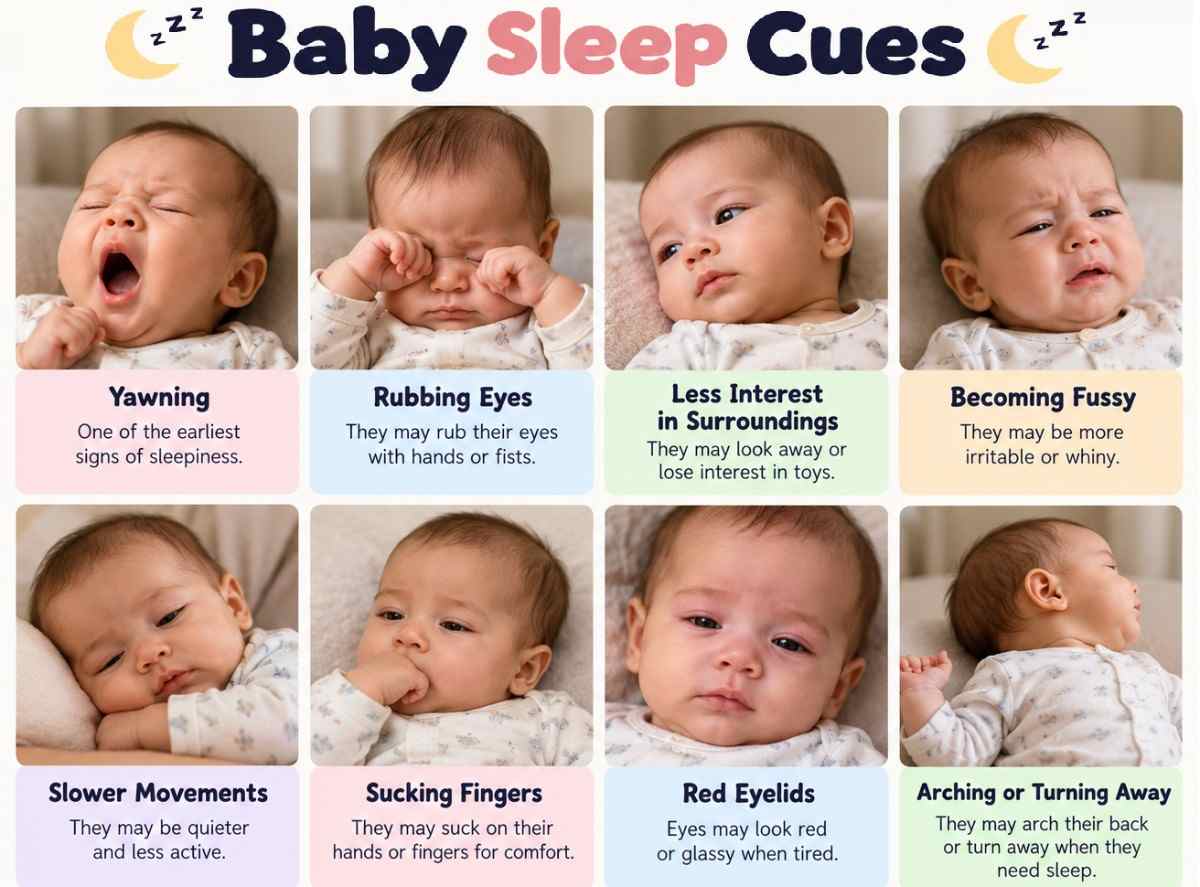
Understanding baby sleep cues can help parents recognize when their little one is tired and ready for a nap or bedtime. Babies cannot tell you that they need sleep, but they often communicate it through small changes in their eyes, facial expressions, movements, and behavior.
You may notice your baby yawning, rubbing their eyes, becoming quieter, looking away, or getting fussy. Recognizing these early signs can make it easier to settle your baby before they become overtired.
Every baby is different, and sleep cues can change as your baby grows. Learning your baby’s individual patterns takes time, but it can make daily naps and bedtime feel more manageable.
What Are Baby Sleep Cues?
Baby sleep cues are the physical and behavioral signs that indicate a baby may be getting tired and ready to sleep. These signs help parents understand when their baby needs rest rather than more play, feeding, or stimulation.
Some sleep cues are subtle, such as reduced eye contact or slower movements. Others, such as crying and irritability, may appear when a baby has already become very tired.
Responding to these signals early can help parents create a calmer transition from playtime to sleep. However, sleep cues are not always exact. Hunger, discomfort, overstimulation, and illness can sometimes cause similar behaviors.
10 Common Baby Sleep Cues to Watch For
Image suggestion for this section: A parent observing a sleepy baby rubbing their eyes in a calm nursery.
1. Yawning
Yawning is one of the most recognizable signs that your baby may be getting sleepy. If your baby starts yawning repeatedly while playing or interacting with you, it may be time to reduce stimulation and prepare for a nap.
One yawn alone does not always mean your baby is ready to sleep. Look for other signs, such as slower movements, heavy eyelids, or reduced interest in toys.
2. Rubbing the Eyes
When babies become tired, they may rub their eyes, touch their faces, or press their hands against their eyelids. These movements can indicate that your baby needs a break from activity.
If eye rubbing happens alongside yawning or fussiness, try moving your baby to a quiet environment and beginning your usual sleep routine.
3. Becoming Quiet or Less Active
A baby who was recently kicking, babbling, or playing may suddenly become quieter. They might move less, stop reaching for toys, or appear less interested in their surroundings.
This change in activity can be an early sign of tiredness. Instead of introducing another activity to keep your baby entertained, offer a calmer environment and see whether they are ready to rest.
4. Looking Away From People or Toys
Babies often turn their heads away, avoid eye contact, or stop looking at toys when they need a break. This behavior may indicate tiredness or overstimulation.
For example, your baby might look away while you are talking, playing, or introducing a new toy. Pause the interaction and give your baby a chance to settle.
Looking away does not always mean your baby wants to sleep. Sometimes, they simply need less stimulation before they are ready to interact again.
5. Heavy Eyelids or Glazed Eyes
Drooping eyelids, slow blinking, and a distant or glazed look can indicate that your baby is becoming sleepy. Your baby may appear awake but less responsive to voices, faces, or movement.
These signs are a good reason to start preparing for sleep rather than waiting until your baby begins crying.
6. Fussiness and Whimpering
Some babies become mildly fussy when they are tired. They may whimper, make unhappy sounds, squirm, or seem difficult to entertain.
Before assuming that your baby needs sleep, check whether they are hungry, need a diaper change, feel too hot or cold, or seem uncomfortable. If their basic needs are met and other sleep cues are present, try soothing them for a nap.
7. Pulling at the Ears or Hair
Some tired babies pull at their ears, tug their hair, or touch their faces more frequently. These behaviors may occur alongside other signs of sleepiness.
However, ear pulling is not a reliable sleep cue on its own. If your baby repeatedly pulls at an ear and also has a fever, unusual crying, feeding difficulties, or signs of pain, contact a healthcare professional.
8. Becoming Clingy or Wanting More Comfort
A sleepy baby may want to be held more often, seek physical closeness, or become upset when you put them down. They may settle more easily when you gently rock, cuddle, or speak softly to them.
Needing comfort is normal, especially in young babies who are still developing their sleep patterns. Responding calmly can help your baby feel secure as they transition toward sleep.
9. Losing Interest in Feeding or Play
A baby who is becoming sleepy may pause during play, become less engaged with toys, or start dozing during a feed.
However, do not automatically assume that a baby who stops feeding is tired. Hunger and sleepiness can overlap, particularly in newborns. Follow your baby’s feeding needs and seek professional advice if your baby regularly feeds poorly or is difficult to wake for feeds.
10. Crying or Becoming Very Irritable
Crying, intense fussiness, and difficulty settling can be signs that your baby is tired. These are often less subtle than early cues and may appear after your baby has been awake for a while.
Crying does not always mean overtiredness. Babies also cry because of hunger, discomfort, illness, or a need for comfort.
If your baby is crying, first check their needs and help them calm down. Then look for other signs that they may be ready for sleep.
Baby Early Sleep Cues vs. Late Sleep Cues
One of the most helpful things parents can learn is the difference between early and late sleep cues. Recognizing early signs gives you a chance to prepare your baby for sleep before they become very upset.
| Early sleep cues | Late sleep cues |
|---|---|
| Becoming quieter | Crying intensely |
| Looking away | Persistent irritability |
| Slower movements | Difficult-to-soothe fussiness |
| Heavy eyelids | Arching or squirming with distress |
| Losing interest in play | Becoming increasingly restless |
Early and late cues can vary from one baby to another. Some babies show only a few signs before falling asleep, while others become fussy quite quickly.
Parenting tip: Start a calming sleep routine when you notice two or more signs of tiredness rather than waiting for your baby to cry.
Baby Sleep Cues by Age
Sleep cues change as babies develop. A newborn may become sleepy after a relatively short period of being awake, while an older baby may stay alert for longer. These are general patterns, not strict rules.
Newborn Sleep Cues (0–3 Months)
Newborns may show tiredness through yawning, drooping eyelids, reduced movement, looking away, or becoming fussy. They often sleep in short stretches throughout the day and night and wake frequently for feeds.
During these early months, it is normal for sleep patterns to be irregular. Watch your baby’s behavior rather than expecting a fixed nap schedule.
Baby Sleep Cues at 3–6 Months
Babies in this age group may develop more recognizable patterns of tiredness. You might notice eye rubbing, less interest in play, staring into space, or fussiness around nap time.
A consistent, gentle wind-down routine may help your baby transition from activity to rest.
Baby Sleep Cues at 6–9 Months
Older babies may show sleepiness by rubbing their eyes, yawning, becoming clingy, or losing interest in their surroundings. Some may also become more active or irritable when tired.
Teething discomfort, new developmental skills, and changes in routine can affect sleep during this period.
Baby Sleep Cues at 9–12 Months
Babies approaching their first birthday may have more predictable naps, although their needs still vary. They may become quieter, rest their heads against you, rub their eyes, or fuss when they need sleep.
Separation anxiety and increasing curiosity can sometimes make it harder for babies to settle, even when they are tired.
The most useful approach at every age is to observe your baby’s individual pattern and adjust as their needs change.
How to Respond When Your Baby Shows Sleep Cues
When you recognize that your baby is becoming tired, you do not need a complicated routine. A few calm, consistent steps may be enough to help them settle.
- Reduce stimulation: Put away noisy toys, lower bright lights, and move to a quieter space.
- Check basic needs: Consider whether your baby is hungry, needs a diaper change, or seems uncomfortable.
- Offer comfort: Hold your baby, cuddle them, or use gentle rocking while you are awake and attentive.
- Begin a simple routine: You might change your baby’s diaper, sing quietly, or speak in a soothing voice.
- Prepare a safe sleep space: Place your baby on their back in an appropriate crib or bassinet with a firm, flat mattress and fitted sheet.
- Allow time to settle: Some babies fall asleep quickly, while others need additional comfort and patience.
You do not have to get every nap exactly right. Responding consistently to your baby’s signals is more helpful than trying to follow a perfect schedule.
What Happens If You Miss Your Baby’s Sleep Cues?
Missing a sleep cue occasionally is normal. You may be busy feeding your baby, changing a diaper, or looking after other children when your baby starts showing signs of tiredness.
If your baby stays awake beyond their comfortable period, they may become more irritable, cry more frequently, or have difficulty settling. However, not every unsettled baby is overtired, and these behaviors can have other causes.
If you think you have missed your baby’s early cues:
- Pause stimulating activities.
- Check for hunger, discomfort, or a dirty diaper.
- Hold and soothe your baby calmly.
- Move to a quiet environment.
- Try again when your baby appears ready to settle.
Avoid blaming yourself when sleep does not go as planned. Babies’ needs change, and learning their cues takes practice.
False Baby Sleep Cues: Signs Your Baby May Not Be Tired
Sometimes, babies show behaviors that look like sleep cues but do not necessarily mean they are ready to sleep. These are often called false sleep cues. They may occur because of hunger, overstimulation, discomfort, or a need for a short break.
Recognizing these signs can help parents avoid confusing tiredness with other needs.
5 Common False Baby Sleep Cues
1. Rubbing the Eyes: Eye rubbing may indicate tiredness, but it can also happen because of irritation or discomfort.
2. Yawning Occasionally: An occasional yawn does not always mean your baby is ready for a nap. Look for other signs of sleepiness.
3. Looking Away: Babies may turn away from people or toys because they need a break from stimulation, not necessarily sleep.
4. Fussiness: Fussiness can signal hunger, gas, a wet diaper, or discomfort rather than tiredness.
5. Becoming Quiet: A quiet baby may simply be observing their surroundings or resting between activities.
How to Tell False Sleep Cues From Real Sleep Cues
Look for several signs occurring together, such as repeated yawning, drooping eyelids, reduced activity, and less interest in play. Consider your baby’s usual sleep patterns and check for hunger or discomfort before starting a nap routine.
Remember that no single behavior can reliably confirm whether your baby is tired. Respond to your baby’s needs and seek medical advice if your baby is unusually sleepy, difficult to wake, or feeding poorly.
Baby Sleep Cues vs. Hunger Cues
Sleepiness and hunger can look similar, particularly in newborns. A baby may fuss, suck on their hands, become restless, or cry when they need either food or sleep.
| Possible sleep cue | Possible hunger cue |
|---|---|
| Yawning repeatedly | Turning toward the breast or bottle |
| Drooping eyelids | Opening the mouth and searching for food |
| Looking away and becoming less engaged | Bringing hands to the mouth |
| Becoming quieter before a nap | Rooting or making sucking movements |
| Slowing down during play | Becoming increasingly interested in feeding |
These signs can overlap, and no single behavior reliably tells you what your baby needs. Respond to early feeding cues, follow your baby’s feeding plan, and do not delay a needed feed just because your baby looks sleepy.
If a newborn is unusually sleepy, difficult to wake for feeds, or feeding poorly, seek prompt medical advice.
How to Create a Baby Sleep Routine
A simple routine can help your baby associate certain activities with sleep. It does not guarantee that your baby will sleep through the night, but it can make the transition to bedtime more familiar.
Consider this gentle routine:
- Quiet time: Reduce active play as your baby begins showing signs of tiredness.
- Feeding: Offer a feed when appropriate, following your baby’s hunger cues.
- Diaper change: Make sure your baby is comfortable.
- Soothing: Try a cuddle, gentle singing, or a quiet voice.
- Safe sleep: Place your baby on their back in their own safe sleep space.
During the day, natural light and normal household activity can help distinguish daytime from nighttime. At night, dim lighting and quiet interactions can make feeds and diaper changes less stimulating. NHS+1
Safe Sleep Rules Every Parent Should Know
Recognizing sleep cues is important, but creating a safe sleep environment is essential. Parents and caregivers should follow these precautions:
- Always place your baby on their back for naps and nighttime sleep.
- Use a firm, flat, non-inclined sleep surface with a fitted sheet.
- Keep pillows, loose blankets, stuffed toys, and other soft items out of the baby’s sleep area.
- Keep your baby’s sleep space in your room, ideally for at least the first six months, while using a separate sleep surface.
- Avoid overheating your baby or covering their head during sleep.
- If your baby falls asleep in your arms, move them to a safe sleep surface before you fall asleep yourself.
These precautions apply even when your baby seems especially comfortable sleeping on their side, stomach, or on a soft surface.
When Should You Contact a Doctor?
Most variations in baby sleep behavior are normal. However, some signs should not be dismissed as ordinary tiredness.
Contact your baby’s healthcare professional if your baby regularly has difficulty feeding, seems unusually sleepy, or has a significant change in their usual behavior.
Seek urgent medical care if your baby is difficult to wake, has trouble breathing, appears blue or grey around the lips, or has other serious symptoms. A temperature of 100.4°F (38°C) or higher in a baby younger than three months requires immediate medical evaluation.
If you are unsure whether your baby is tired, hungry, or unwell, a healthcare professional can help you understand what to look for.
FAQ’s
What are the early signs of baby sleep cues?
Early baby sleep cues include yawning, heavy eyelids, looking away, reduced activity, and losing interest in toys or play.
How do I know when my baby is ready to sleep?
Your baby may be ready to sleep when they become quieter, rub their eyes, yawn, or show less interest in their surroundings.
What are late sleep cues in babies?
Late sleep cues include intense fussiness, persistent crying, restlessness, and difficulty settling down.
Can babies show sleep cues without yawning?
Yes, babies may show tiredness through drooping eyelids, reduced movement, looking away, or becoming irritable without yawning.
Do baby sleep cues change with age?
Yes, sleep cues and sleep patterns change as babies grow. Newborns may show subtle signs, while older babies may have more recognizable routines.
Should I put my baby to sleep as soon as I notice sleep cues?
You can begin a calming sleep routine when you notice early cues. Check your baby’s comfort and hunger needs before settling them.
Is it normal for babies to fight sleep?
Yes, babies may resist sleep because of overstimulation, discomfort, hunger, or developmental changes. Persistent difficulties may warrant advice from a healthcare professional.
Can a newborn be too sleepy?
Yes, unusual sleepiness can sometimes indicate a problem. Seek prompt medical advice if your newborn is difficult to wake for feeds or is feeding poorly.
Should I wait until my baby cries before putting them to sleep?
No. Crying may be a late sign of tiredness. When possible, begin settling your baby when you notice earlier sleep cues.
How do I know if my baby is overtired?
An overtired baby may be very fussy, cry more than usual, become restless, or struggle to settle. These signs can also have other causes.
Can hunger look like a sleep cue?
Yes. Fussiness, hand-sucking, and restlessness can occur with either hunger or tiredness. Look for additional signs and respond to your baby’s feeding needs.
How long should my baby stay awake between naps?
There is no single wake period that suits every baby. Age, individual sleep needs, and the baby’s behavior all matter. Use sleep cues alongside your baby’s usual pattern rather than following a rigid timetable.
Why Is My Baby Restless When Falling Asleep?
Babies may become restless due to overtiredness, hunger, gas, discomfort, or overstimulation. A calm bedtime routine may help them settle.
What Is the 5-3-3 Rule for Baby Sleep?
The 5-3-3 rule is an informal sleep approach involving intervals of five hours, three hours, and three hours. It is not an official medical guideline and may not suit every baby, especially newborns who need frequent feeds.
Final Thoughts
Learning baby sleep cues is a gradual process. Your baby may yawn one day, become unusually quiet the next, or show tiredness through fussiness and reduced interest in play.
Pay attention to these small changes, respond to your baby’s basic needs, and develop a calming routine that works for your family. You do not need to interpret every signal perfectly. With time, you will become more familiar with your baby’s individual patterns.
Sources / References:
- Centers for Disease Control and Prevention (CDC)
- World Health Organization (WHO)
- American Academy of Pediatrics
- MedlinePlus
- NHS
Disclaimer:
This article is for educational purposes only and does not replace professional medical advice. Consult your baby’s healthcare professional if you have concerns about feeding, sleep, or development.
Also Read: