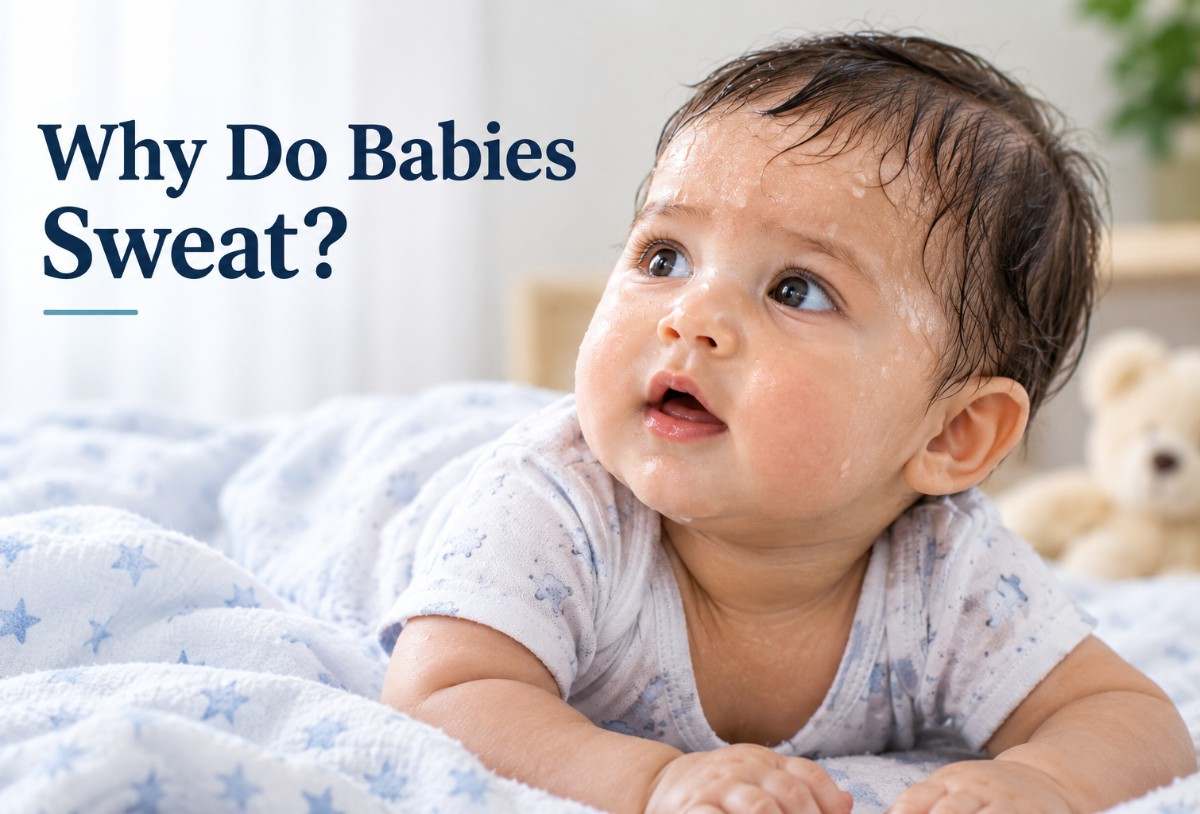
Have you ever noticed your baby’s head becoming sweaty during sleep, while breastfeeding, or even when the rest of their body feels comfortable? It can be surprising for parents, especially when their little one is still too young to move around much.
Babies can sweat for several normal reasons, including warm surroundings, too many clothing layers, feeding, and sleep. However, excessive or persistent sweating, particularly when accompanied by breathing difficulties, poor feeding, or unusual tiredness, should not be ignored.
Babies are still developing their ability to regulate body temperature, so understanding when sweating is normal and when it needs medical attention can help parents care for them confidently.
In this guide, we will explore why babies sweat, why their heads may become especially sweaty, what causes night sweating, and how to keep your baby comfortable and safe.
Why Do Babies Sweat?
Babies sweat because their bodies produce perspiration to help regulate temperature. Like adults, they have sweat glands that release moisture onto the skin. As this moisture evaporates, it helps cool the body.
However, babies are not as effective as older children and adults at controlling their body temperature. Their small bodies can become too warm when exposed to hot weather, warm rooms, thick clothing, or excessive bedding.
Sweating may be completely normal in these situations, but it is important to look at the circumstances and your baby’s overall behavior rather than judging the situation by sweat alone.
10 Common Reasons Why Babies Sweat
The following causes range from everyday situations to symptoms that may require medical evaluation.
1. Warm Room Temperature
A warm bedroom or poorly ventilated room can cause your baby to sweat. This is particularly common in hot and humid weather when heat builds up around the body.
What to do: Keep the room comfortably cool, use lightweight clothing, and check your baby’s chest or tummy for signs of overheating.
2. Too Many Clothing Layers
Parents often dress babies in extra layers because they worry their little ones might feel cold. However, thick clothing, fleece outfits, heavy blankets, and warm sleepwear can trap heat.
If your baby’s neck or chest feels hot and their skin is sweaty, remove an unnecessary layer and reassess their comfort.
3. Sweating During Sleep
Some babies develop a sweaty head, neck, or back while sleeping. This may happen because of a warm sleeping environment, excessive bedding, or clothing that does not allow heat to escape.
Occasional sweating without other symptoms may not indicate a health problem. However, regularly soaking through clothing or bedding deserves medical attention, especially if other symptoms are present.
Important: Do not use thick blankets or overdress your baby to prevent sweating. Follow safe-sleep recommendations and keep the sleep space free of loose bedding.
4. Sweating While Breastfeeding or Bottle-Feeding
Feeding requires effort and close physical contact. Your baby may also absorb warmth from your body while breastfeeding or from being held against you during bottle-feeding.
A little moisture around the head can occur, particularly in a warm room. However, heavy sweating during feeds, especially with fast or difficult breathing, tiring easily, or struggling to finish a feed, should be assessed promptly by a pediatrician.
5. An Immature Temperature-Regulation System
Young babies have developing systems for maintaining a stable body temperature. They may become too warm more easily than older children, particularly in hot environments.
Their ability to respond to heat also differs from that of adults. Therefore, parents should not rely on sweating alone to determine whether a baby is overheating.
6. Hot and Humid Weather
High temperatures and humidity can make it difficult for sweat to evaporate effectively. As a result, your baby’s skin may feel damp or sticky.
During hot weather, keep your baby out of direct sunlight, choose light and breathable clothing, and check them regularly. Babies younger than six months should be kept out of direct sunlight as much as possible.
7. Crying or Physical Activity
Crying, kicking, stretching, and active play can increase your baby’s activity and body heat. Some babies may become sweaty around the head or hairline during these moments.
If the sweating settles once your baby calms down and cools off, it may simply reflect the activity. Persistent sweating even when your baby is calm and comfortable should be discussed with a healthcare professional.
8. Fever or Infection
A baby may feel sweaty or clammy when they have a fever. Sweating can also occur as their temperature changes during an illness.
Touch alone cannot reliably tell you whether your baby has a fever. Use a digital thermometer and watch for other signs, such as poor feeding, unusual sleepiness, irritability, or reduced wet diapers.
Seek urgent medical advice if a baby younger than three months has a temperature of 38°C (100.4°F) or higher. A fever in a very young infant needs prompt medical assessment, even if the baby otherwise appears well.
9. Certain Medical Conditions
Occasionally, excessive sweating may be associated with an underlying medical condition. For example, some babies with heart problems may sweat heavily during feeding and may also show signs such as rapid breathing, tiring easily, or poor weight gain.
Sweating by itself does not mean your baby has a heart condition. The pattern, severity, accompanying symptoms, and medical history help a clinician decide whether further evaluation is needed.
10. Sweating Around the Head and Scalp
The head is a common place for parents to notice sweat because moisture can collect around the hairline, forehead, and back of the head.
A damp scalp may result from warm surroundings, feeding, sleep, or a hat that traps heat. Check whether your baby’s chest or tummy also feels hot and adjust clothing or room temperature when needed.
If the head sweats heavily and repeatedly without an obvious reason, or sweating occurs with breathing difficulties, poor feeding, or poor growth, arrange a medical assessment.
Why Do Babies Sweat So Much on Their Heads?
Head sweating is one of the most common concerns parents notice in babies. Your baby’s hair may feel damp after a nap, or you may notice sweat on the forehead during breastfeeding.
Several factors can explain this:
- Heat buildup: A warm room or too many clothing layers can make the scalp sweaty.
- Close contact: Your baby’s head may become warm when resting against your arm, chest, or pillow.
- Feeding and movement: Physical effort during feeding, crying, or kicking may increase body heat.
- Individual differences: Babies can vary in how much they sweat and where sweating is most noticeable.
Sweating on the head alone is not enough to diagnose a medical condition. Pay attention to whether it happens occasionally or repeatedly and whether your baby has other symptoms.
If your baby frequently develops a very sweaty head despite comfortable surroundings, mention it to your pediatrician, particularly if feeding or breathing seems difficult.
Why Does My Baby Sweat While Sleeping?
Baby night sweating can worry parents because it is not always easy to tell whether a child is simply warm or experiencing something else.
Common explanations include:
- A bedroom that is too warm.
- Thick pajamas or sleepwear.
- Excessive bedding or blankets.
- A warm sleep surface or clothing that traps moisture.
- A fever associated with an illness.
How to Reduce Night Sweating
- Check the room: Keep the sleeping environment comfortably cool. The NHS recommends a room temperature of 16–20°C as a general guide for baby sleep.
- Choose suitable sleepwear: Use lightweight clothing or an appropriately sized baby sleep bag suitable for the room temperature.
- Avoid extra layers: Do not add heavy blankets or excessive clothing.
- Check the chest or tummy: These areas are more useful for assessing warmth than the hands and feet, which can naturally feel cooler.
- Monitor the pattern: If your baby repeatedly sweats heavily during sleep, even in a comfortable environment, seek medical advice.
The goal is not to eliminate every drop of sweat but to help your baby maintain a comfortable temperature while following safe-sleep guidance.
Why Does My Baby Sweat While Breastfeeding?
Breastfeeding is a common time for parents to notice a sweaty forehead or damp hairline. Your baby may be pressed close to your body, which transfers warmth, and feeding itself requires effort.
To help your baby stay comfortable:
- Feed in a comfortably cool room.
- Dress your baby in lightweight clothing.
- Avoid wrapping the baby in thick blankets during feeds.
- Take note of whether the sweating stops after feeding.
Occasional mild sweating without other symptoms may be related to warmth or exertion. However, repeated heavy sweating during feeding warrants attention if your baby also breathes rapidly, pauses frequently to catch their breath, tires unusually quickly, feeds poorly, or gains weight inadequately.
These symptoms do not establish a diagnosis, but they can indicate a problem that needs prompt evaluation.
Is It Normal for Newborn Babies to Sweat?
Newborns can sweat, but their temperature-regulation systems are still developing. They are particularly vulnerable to overheating, and their responses to heat differ from those of older children.
A newborn who becomes mildly sweaty in a warm room may simply need fewer clothing layers. However, newborns also need special attention because they cannot tell you when they feel uncomfortable.
Watch for these signs:
- A hot chest or tummy.
- Damp hair or clothing.
- Flushed skin.
- Unusual irritability or difficulty settling.
- Poor feeding or unusual sleepiness.
If your newborn feels unusually hot, check their temperature with a digital thermometer rather than relying on touch alone. A temperature of 38°C (100.4°F) or above in a baby younger than three months requires urgent medical assessment.
When to Worry about Baby Sweating?
Sweating is not always harmless, especially when it is persistent, unusually heavy, or accompanied by other changes in your baby’s health.
1) Usually less concerning:
Mild sweating in a warm room, during feeding, or after active movement that settles when your baby cools down, with normal breathing, feeding, and behavior.
2) Contact your pediatrician:
Repeated heavy sweating without an obvious cause, persistent night sweating, poor weight gain, reduced feeding, or sweating during feeds that seems excessive.
3) Seek urgent medical care:
Difficulty breathing, blue or grey lips, being unusually difficult to wake, a seizure, or signs of severe illness. A baby under three months with a temperature of 38°C (100.4°F) or higher also needs urgent assessment.
If your baby has severe breathing difficulty, blue or grey lips, or is unresponsive, contact your local emergency service immediately. Do not wait to see whether the sweating stops.
How to Keep Your Baby Comfortable and Prevent Overheating
Simple changes can help reduce sweating caused by environmental heat.
- Dress appropriately: Choose lightweight, breathable clothing and avoid unnecessary layers.
- Keep the room comfortable: Use a fan to circulate air if appropriate, but do not direct strong airflow straight at your baby.
- Avoid direct sunlight: Keep young babies out of direct sun, especially during the hottest part of the day.
- Use safe sleep practices: Place your baby on their back on a firm, flat sleep surface and keep loose blankets, pillows, and other soft items out of the sleep space.
- Check for overheating: Feel your baby’s chest or tummy and remove a layer if the skin is hot or sweaty.
- Continue normal milk feeds: Breast milk or correctly prepared infant formula provides the fluid your baby needs. Do not give extra water to a young infant unless a healthcare professional advises it.
- Observe changes: Note when the sweating occurs, how long it lasts, and whether it happens during feeding, sleep, or ordinary activity.
These steps can help you identify environmental triggers while protecting your baby from excessive heat.
FAQ’s
Why do babies sweat so much?
Babies may sweat because of warm weather, excessive clothing, feeding, crying, or sleeping. Persistent heavy sweating without an obvious cause should be discussed with a pediatrician.
Why does my baby’s head sweat while sleeping?
A baby’s head may become sweaty because of trapped heat, warm surroundings, or close contact with bedding or a caregiver. Repeated excessive sweating needs medical evaluation.
Why does my baby sweat around the neck?
Sweat can collect around the neck because skin folds and clothing trap heat and moisture. Gently clean and dry the area and avoid overdressing your baby.
Does baby sweating mean a fever?
No. Babies can sweat when they are warm without having a fever. Use a digital thermometer to check their temperature if you suspect an illness.
Can teething cause sweating in babies?
Sweating is not a reliable sign of teething. Check for environmental heat or illness rather than assuming sweating is caused by emerging teeth.
Why does my baby sweat even when the room is cool?
Sweating in a cool room may have several explanations, including feeding, activity, illness, or an underlying medical condition. Repeated unexplained sweating should be assessed by a pediatrician.
Should I give my baby water if they sweat a lot?
Babies under six months generally should not be given additional water unless advised by a healthcare professional. Breast milk or correctly prepared infant formula provides the fluid they need. Seek medical advice if you suspect dehydration.
Should I worry if my baby sweats but has no fever?
Not necessarily. Warm surroundings and clothing are common explanations. However, recurring heavy sweating without an obvious cause, particularly during feeds or sleep, deserves medical evaluation.
Why does my baby’s head sweat in winter?
Babies may sweat due to thick clothing, blankets, or indoor heating. Persistent sweating should be discussed with a pediatrician.
Why does my baby’s head sweat while feeding?
Close contact and feeding effort can cause sweating. Heavy sweating with rapid breathing or feeding difficulties needs medical attention.
At what age does excessive sweating start?
Babies can sweat from early infancy. Persistent or unexplained excessive sweating should be checked by a pediatrician.
Which body parts sweat most in babies?
Babies commonly sweat on their head, forehead, neck, back, hands, and feet.
Can newborns sweat through clothes?
Yes, newborns can sweat enough to dampen clothing, especially when overdressed or too warm.
Why is my baby sweaty but not hot?
Sweating may follow feeding, crying, or activity. Repeated unexplained sweating warrants medical advice.
How much sweating is too much for a baby?
Repeatedly soaked clothes or bedding, especially with other symptoms, may indicate excessive sweating and needs medical evaluation.
Why is my 4-month-old sweating on their hands and feet?
Warmth or normal variations in sweating may explain it. Persistent excessive sweating should be discussed with a pediatrician.
Is sweating good for babies?
Sweating helps regulate body temperature, but excessive sweating may indicate overheating or a health concern.
Conclusion
Babies sweat for many reasons, and mild sweating during sleep, feeding, or warm weather is often related to temperature and physical contact. Because babies are still developing their ability to regulate body heat, choosing suitable clothing and maintaining a comfortable sleeping environment are especially important.
However, persistent heavy sweating, particularly during feeding or alongside breathing difficulties, poor feeding, or poor weight gain, should not be dismissed as normal. Pay attention to your baby’s overall behavior, check their temperature when necessary, and consult a pediatrician whenever you are concerned.
Sources / References:
Disclaimer:
This article is for educational purposes only and is not a substitute for professional medical advice, diagnosis, or treatment. Consult a qualified pediatrician about your baby’s symptoms or health concerns.
Also Read: