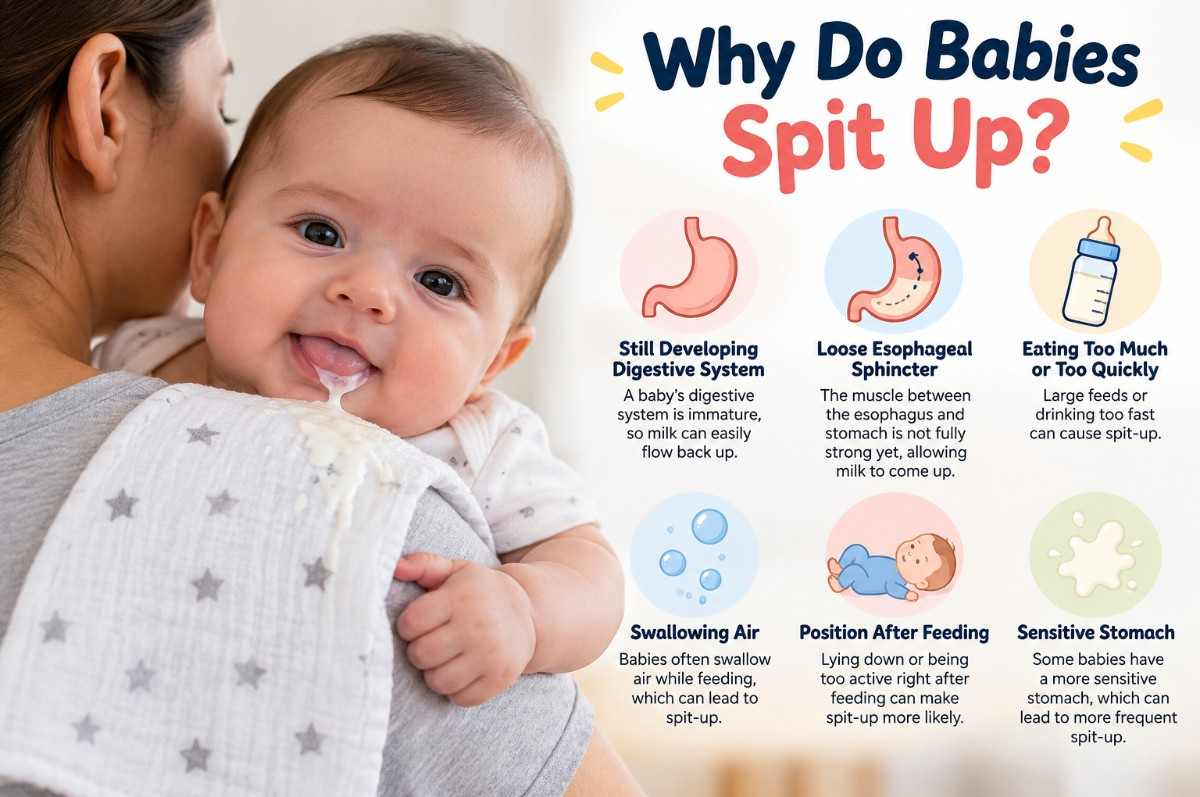
Seeing your baby spit up milk after feeding can be worrying, especially for new parents. You may wonder whether your baby is getting enough milk, whether something is wrong with digestion, or whether you should change your feeding routine.
The good news is that baby spitting up is common and usually a normal part of infant development. Many babies bring up a small amount of breast milk or formula during or shortly after feeding. This often happens because the muscle that keeps food inside the stomach is still developing. Most babies gradually outgrow the problem as they grow older.
This guide explains why babies spit up, how to reduce it safely, what parents should avoid, and which warning signs should never be ignored.
What Is Baby Spitting Up?
Baby spitting up, also called infant reflux or gastroesophageal reflux (GER), occurs when milk or stomach contents flow back up through the esophagus, the tube connecting the mouth to the stomach.
It usually looks like milk gently dribbling out of your baby’s mouth during or after a feed. Sometimes, a little milk may come out while your baby burps.
Spitting up is different from vomiting. Normal spit-up generally happens without much effort, whereas vomiting often involves forceful contractions that push stomach contents out.
A baby who spits up occasionally but feeds well, seems comfortable, has regular wet diapers, and gains weight appropriately is often experiencing normal infant reflux.
Why Do Babies Spit Up?
Several factors can contribute to spitting up in infants.
1. An Immature Stomach Valve
A muscle between the esophagus and stomach helps prevent stomach contents from flowing backward. In young babies, this muscle is still developing and may allow milk to return to the mouth more easily.
2. A Small Stomach
Babies have small stomachs, and their feeding needs change as they grow. When the stomach becomes too full, milk may come back up.
3. Swallowing Air During Feeding
Some babies swallow air while breastfeeding or drinking from a bottle. This can contribute to burping and may bring a little milk up with it.
4. Drinking Too Much Milk at Once
If a baby takes more milk than their stomach can comfortably hold, spitting up may become more frequent.
5. Movement After Feeding
Bouncing, vigorous play, or changing a baby’s position suddenly after a feed may make it easier for milk to come back up.
6. Gastroesophageal Reflux Disease (GERD)
Occasionally, reflux causes more than simple spit-up. When reflux leads to troublesome symptoms or complications, such as feeding difficulties, persistent distress, or poor weight gain, a healthcare professional may consider gastroesophageal reflux disease (GERD).
Not every baby who spits up has GERD, and frequent crying alone does not establish the diagnosis.
Is It Normal for Babies to Spit Up After Every Feed?
Spitting up after many feeds can still be normal, particularly during the first few months of life. The important thing is to look at your baby’s overall health rather than judging the problem only by how often it happens.
Spitting up is generally less concerning when your baby:
- Feeds comfortably and shows interest in feeding.
- Has regular wet diapers.
- Appears content between feeds.
- Continues gaining weight as expected.
- Brings up milk without forceful vomiting or signs of pain.
If your baby spits up after nearly every feed and you are concerned about the amount, feeding, or growth, discuss it with your pediatrician. Frequent spit-up should not automatically be dismissed as normal.
Baby Spitting Up vs. Vomiting: What’s the Difference?
Understanding the difference can help you decide when to seek medical advice.
| Feature | Normal spitting up | Vomiting |
|---|---|---|
| How it happens | Milk dribbles or flows gently out of the mouth | Stomach contents are expelled with more force |
| Effort involved | Usually little effort | May involve gagging or forceful contractions |
| Baby’s behavior | Often comfortable afterward | May appear distressed or unwell |
| Timing | Commonly during or after feeding | May occur after feeding or at other times |
| Possible concern | Usually normal if growth and feeding are good | May need assessment, especially if forceful or repeated |
These are general differences, not a way to diagnose your baby at home. Forceful or projectile vomiting in a young infant requires prompt medical assessment. Green vomit, blood in vomit, or other serious symptoms require urgent attention.
How to Reduce Baby Spitting Up
You may not be able to prevent every episode, but a few safe feeding practices can help reduce spit-up.
1. Check Your Baby’s Feeding Amount
Avoid encouraging your baby to finish a bottle when they show signs of fullness. Overfeeding can make reflux worse.
If you suspect your baby is taking too much milk at once, ask your pediatrician or a feeding specialist whether smaller, more frequent feeds would be appropriate. Do not reduce your baby’s overall milk intake without suitable guidance.
2. Burp Your Baby During Feeds
Pause occasionally to burp your baby, particularly if they seem uncomfortable or swallow a lot of air while feeding.
For bottle-fed babies, you can try burping during natural pauses. Breastfed babies may also benefit from a gentle burping break.
Not every baby burps each time, so do not force it.
3. Hold Your Baby Upright After Feeding
Hold your baby upright against your chest for around 20–30 minutes after feeding, if practical, while remaining awake and attentive.
Support your baby’s head and neck, and avoid positions that compress the stomach. If you feel sleepy, place your baby in their safe sleep space rather than risking falling asleep while holding them.
4. Review Bottle-Feeding Technique
If you use a bottle, make sure the nipple flow is appropriate for your baby’s age and feeding ability. A flow that is too fast may make feeding difficult.
Try paced bottle-feeding if recommended by your healthcare professional. This allows your baby to take breaks and helps you notice signs of fullness.
5. Avoid Vigorous Movement After Feeding
Give your baby some quiet time after a feed. Avoid bouncing, active play, or unnecessary position changes immediately afterward.
You can still cuddle and comfort your baby gently.
6. Ask for Breastfeeding Support if Needed
If your baby repeatedly gulps, struggles to latch, coughs during feeds, or seems uncomfortable while nursing, a lactation consultant or pediatrician can assess feeding technique and milk flow.
Do not assume that breastfeeding is causing a problem simply because your baby spits up.
These measures may help, but they will not eliminate all reflux.
What Is the Best Sleeping Position for a Baby Who Spits Up?
This is one of the most important safety questions for parents.
Always place your baby on their back for every sleep, including naps, even if they frequently spit up.
Use a firm, flat, level sleep surface designed for infants. Do not place your baby on their stomach or side to prevent reflux, and do not elevate the head of the crib or use wedges, pillows, or sleep positioners.
Healthy babies generally have protective mechanisms that help them manage reflux while sleeping on their backs. Back sleeping remains the recommended position because it reduces the risk of sleep-related infant death.
If your baby spits up while sleeping, check that they are breathing comfortably and keep following safe-sleep guidance. Do not routinely use inclined sleepers or other positioning products to manage reflux.
When Does Baby Spitting Up Stop?
Spitting up often starts during the first weeks of life. It may become more noticeable during the first several months, particularly as feeding volumes increase.
For many babies, reflux improves as the digestive system matures and they develop better head control, sit upright, and begin eating complementary foods when developmentally ready. Most outgrow ordinary infant reflux by around 12 months, although the timing varies.
If spitting up begins for the first time after six months, persists beyond the first year, or becomes more troublesome instead of improving, arrange a medical assessment.
When Should You Worry About Baby Spitting Up?
Although ordinary spit-up is common, certain symptoms can indicate a more serious problem.
Seek urgent medical care if your baby has:
- Green vomit or vomit containing blood.
- Forceful or projectile vomiting, especially in a young infant.
- Breathing difficulty, blue or grey lips, or an episode of choking with color change.
- A swollen or tender abdomen.
- Repeated vomiting with an inability to keep feeds down.
- Markedly fewer wet diapers, unusual sleepiness, or other signs of dehydration.
Contact your pediatrician promptly if your baby:
- Refuses feeds or struggles to swallow.
- Is not gaining weight or is losing weight.
- Frequently cries or appears uncomfortable during feeding.
- Has blood in their stool.
- Has persistent coughing, choking, or worsening spit-up.
- Develops a fever or seems unusually unwell.
For a baby younger than three months, a temperature of 38°C (100.4°F) or higher needs urgent medical assessment. Seek emergency help for severe breathing difficulty, blue or grey lips, or unresponsiveness.
These warning signs should not be managed with home remedies alone.
Can Baby Spitting Up Be Caused by a Milk Allergy?
Sometimes, symptoms that look like reflux may be related to cow’s milk protein allergy or another feeding issue.
A milk protein allergy may cause additional symptoms, such as blood in the stool, diarrhea, eczema, feeding difficulties, or poor weight gain. These symptoms can overlap with other conditions, so they do not confirm an allergy on their own.
If you suspect an allergy, speak with your baby’s healthcare professional before changing formula or removing dairy from your diet while breastfeeding. They can help determine whether a supervised dietary trial or a different formula is appropriate.
Should You Give Medicine for Baby Spitting Up?
Most healthy babies with ordinary reflux do not need medication. If your baby is comfortable, feeding well, and gaining weight normally, simple feeding adjustments and time are often sufficient.
If reflux causes persistent discomfort, feeding problems, or poor growth, your pediatrician may investigate the cause and discuss suitable treatment.
Do not give your baby antacids, acid-reducing medicines, herbal remedies, or other treatments for reflux without medical advice. Do not thicken feeds or add cereal to a bottle unless your healthcare professional specifically recommends an appropriate method for your baby.
FAQ’s
Why do babies spit up after feeding?
Babies often spit up because their digestive systems are still developing. A small amount of milk may flow back from the stomach into the mouth after feeding.
How can I prevent my baby from spitting up?
Burp your baby during feeds, avoid overfeeding, use an appropriate bottle nipple, and hold your baby upright for 20–30 minutes after feeding while you are awake.
Is baby spitting up the same as vomiting?
No. Spitting up usually involves milk flowing gently out of the mouth, while vomiting is generally more forceful. Projectile vomiting requires prompt medical assessment.
Why does my baby spit up curdled milk?
Milk can look curdled after mixing with stomach acid. This is usually normal, but seek medical advice if it occurs with pain, poor feeding, or poor weight gain.
Can overfeeding cause baby spitting up?
Yes. Feeding more milk than your baby’s stomach can comfortably hold may increase spit-up. Follow your baby’s hunger and fullness cues.
Should I feed my baby again after spitting up?
If your baby spits up a small amount and still shows hunger cues, you can generally continue feeding. Avoid forcing additional milk if your baby seems full.
Is it safe for a baby to sleep after spitting up?
Yes. Always place your baby on their back on a firm, flat sleep surface, even if they have reflux. Do not elevate the mattress or use sleep positioners.
Can breastfed babies spit up?
Yes. Both breastfed and formula-fed babies can experience reflux. Occasional spit-up is usually harmless if the baby is feeding and growing well.
Is it normal for a newborn to spit up through the nose?
A small amount of milk can occasionally come through a newborn’s nose because the mouth and nasal passages are connected at the back of the throat. If this happens frequently or causes choking, breathing problems, or feeding difficulties, consult your pediatrician.
Can tummy time make my baby spit up?
Tummy time soon after a feed may put pressure on the stomach and encourage milk to come back up. When possible, schedule tummy time before feeding or wait until your baby has had time to settle. Tummy time should only take place while your baby is awake and supervised.
Can I lay my baby on their side after feeding?
For sleep, no. Always place your baby on their back on a firm, flat sleep surface. You may hold your baby upright after feeding while you are awake and supervising them, but do not use side-sleeping or inclined positioning to manage reflux.
Is Baby Spitting Up Curdled Milk Good or Bad?
Spitting up curdled milk is usually normal because milk mixes with stomach acid. Consult a pediatrician if it occurs with pain, blood, or poor weight gain.
Why Does My Baby Spit Up but Still Want to Eat?
Your baby may still be hungry after spitting up. Follow hunger cues and consult a pediatrician if feeding or weight gain is affected.
Does Spit-Up Count as a Burp?
No. A burp releases swallowed air, while spit-up brings milk back up from the stomach.
How Do I Know If My Baby Has Reflux?
Occasional spit-up is usually normal. Persistent discomfort, feeding problems, or poor weight gain may indicate a problem requiring medical evaluation.
How Much Spit-Up Is Too Much?
Small amounts are usually normal. Repeated forceful vomiting, dehydration, or poor weight gain needs medical attention. Green or bloody vomit requires urgent care.
Final Thoughts
Baby spitting up can make feeding time messy and sometimes stressful, but it is usually a normal part of infancy. An immature digestive system, a full stomach, and swallowed air can all contribute to milk coming back up after feeding.
Gentle burping, appropriate feeding practices, and holding your baby upright after feeds may help. Most importantly, always put your baby to sleep on their back and watch for warning signs such as green vomit, projectile vomiting, breathing problems, or poor weight gain.
Sources / References:
Disclaimer:
This article is for educational purposes only and does not replace professional medical advice, diagnosis, or treatment. Consult your baby’s healthcare professional if you have concerns about feeding, reflux, or your baby’s health.
Also Read: