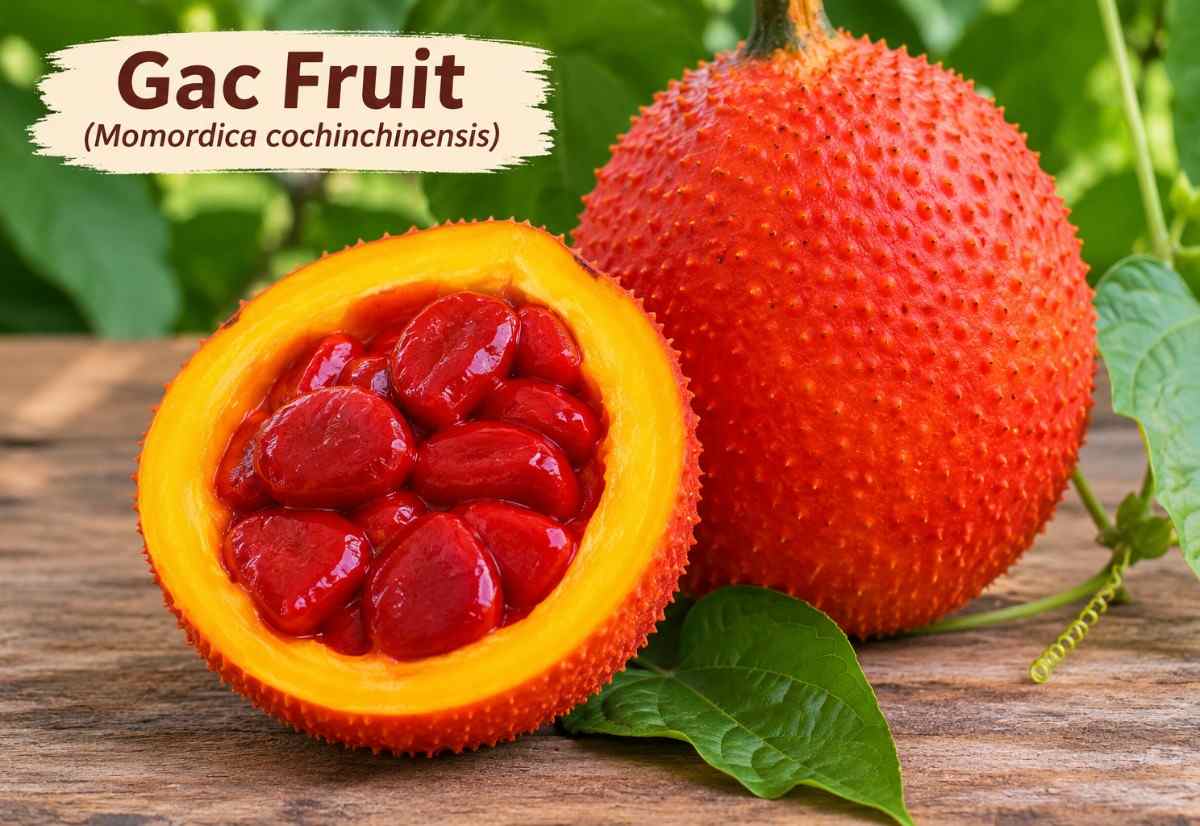
Gac fruit is an unusual tropical fruit known for its bright red-orange colour and impressive concentration of natural plant compounds. Often called the fruit of heaven, it is particularly popular in Vietnam and other parts of Southeast Asia, where it is traditionally used in cooking and special festive dishes.
What makes gac fruit interesting is its high concentration of carotenoids, especially lycopene and beta-carotene. These compounds are known for their antioxidant properties and their role in supporting eye health, skin health, and normal immune function.
Although gac fruit is not as widely available as mangoes, papayas, or oranges, it has attracted attention for its nutritional value. It can be consumed as cooked fruit pulp, mixed with rice, or used in juices and food products.
Let’s explore its nutrition facts, potential health benefits, side effects, and ways to include it in your diet.
What Is Gac Fruit?
Gac fruit, scientifically known as Momordica cochinchinensis, is a tropical fruit belonging to the cucumber and melon family, Cucurbitaceae. It grows on a climbing vine and is native to Southeast Asia, particularly Vietnam.
The fruit has a round or oval shape with a thick, spiky orange-red outer skin. When opened, it contains a yellowish pulp and large seeds covered with a bright red, oily membrane called the aril.
The red aril is the most nutritionally interesting part of gac fruit because it contains high concentrations of lycopene and beta-carotene.
Gac fruit has a mild, slightly sweet flavour and is commonly cooked with sticky rice in Vietnam to prepare a traditional dish called xoi gac. It is also used in juices, purees, powders, and nutritional food products.
Unlike many familiar fruits, gac is not usually eaten like an apple or orange. Its pulp and red aril are generally separated from the seeds and prepared before consumption.
Why is Gac Fruit Special?
- It contains naturally occurring lycopene and beta-carotene.
- Its red aril is particularly rich in carotenoid pigments.
- It provides plant compounds with antioxidant activity.
- It contains naturally occurring fatty acids.
- It has a traditional role in Southeast Asian cooking.
Nutrition Facts of Gac Fruit
Gac fruit contains carotenoids, fatty acids, carbohydrates, and other plant compounds. Its nutritional composition varies depending on ripeness and the part consumed.
| Nutrient or compound | Role in the body |
|---|---|
| Carbohydrates | Provide energy |
| Dietary fibre | Supports digestion |
| Protein | Helps maintain body tissues |
| Lycopene | Antioxidant compound |
| Beta-carotene | Supports vitamin A production |
| Alpha-carotene | Antioxidant carotenoid |
| Lutein | Supports eye health |
| Zeaxanthin | Supports normal vision |
| Vitamin E compounds | Protect cells from oxidative damage |
| Potassium | Supports muscle and nerve function |
| Oleic acid | Monounsaturated fatty acid |
| Linoleic acid | Essential omega-6 fatty acid |
Note: Complete standardized per-100-gram nutrition values for gac fruit are limited, so exact quantities are not included.
20 Proven Health Benefits of Gac Fruit
- Rich in Antioxidants: Contains lycopene and beta-carotene that help protect cells against oxidative stress.
- Supports Eye Health: Beta-carotene helps the body produce vitamin A, which supports normal vision.
- Supports Immunity: Vitamin A plays an important role in maintaining normal immune function.
- Promotes Healthy Skin: Its carotenoids help protect skin cells from oxidative damage.
- Supports Heart Health: Lycopene and unsaturated fatty acids may contribute to cardiovascular health.
- Supports Healthy Ageing: Antioxidants help protect cells from damage associated with ageing.
- Supports Skin Maintenance: Vitamin A contributes to normal skin growth and maintenance.
- May Support Inflammation Balance: Some gac compounds have shown anti-inflammatory activity in laboratory studies.
- Provides Eye-Protective Carotenoids: Lutein and zeaxanthin contribute to normal eye function.
- Provides Provitamin A: Its beta-carotene can be converted into vitamin A by the body.
- Supports Cell Growth: Vitamin A contributes to normal cell growth and development.
- May Support Brain Health: Its antioxidants may help protect cells against oxidative stress.
- Supports Mucous Membranes: Vitamin A helps maintain healthy respiratory and digestive tract linings.
- Provides Healthy Fatty Acids: Its red aril contains oleic acid and linoleic acid.
- Supports Reproductive Health: Vitamin A contributes to normal reproductive function.
- Supports Bone Development: Vitamin A plays a role in normal bone growth and development.
- Contributes to Digestive Health: Its edible portions may provide dietary fibre.
- Supports Skin Cell Renewal: Vitamin A helps maintain normal skin cell development.
- Helps Protect Cells: Lycopene and other antioxidants help limit oxidative cellular damage.
- Adds Nutritional Variety: Gac provides carotenoids and fatty acids that complement a balanced diet.
10 Side Effects of Gac Fruit
Gac fruit is traditionally eaten as food, but excessive consumption and concentrated supplements may cause problems in some people.
- Digestive Discomfort: Large portions may cause bloating or stomach discomfort.
- Allergic Reactions: Sensitive individuals may experience itching, swelling, or skin rashes.
- Nausea: Excessive consumption of concentrated preparations may cause nausea.
- Excessive Carotenoid Intake: High-dose carotenoid supplements may increase carotenoid levels in the body.
- Skin Discolouration: Excessive beta-carotene intake over time may cause yellow-orange skin discolouration.
- Medication Interactions: Concentrated supplements may have interactions that have not been adequately studied.
- Pregnancy Concerns: The safety of medicinal doses during pregnancy is not well established.
- Blood Sugar Concerns: Sweetened gac juices may affect blood glucose levels.
- Food Contamination: Improperly stored or prepared fruit may cause foodborne illness.
- Supplement Risks: Unverified gac supplements may contain inconsistent ingredients or concentrated extracts.
How to Eat Gac Fruit?
Gac fruit is commonly used in Southeast Asian cooking. Its edible red aril and pulp can be prepared in several ways.
- Fresh Pulp: Separate the edible portions from the seeds before preparation.
- Gac Juice: Blend prepared pulp with water or other fruits.
- Gac Sticky Rice: Prepare traditional Vietnamese xoi gac.
- Gac Smoothie: Mix gac pulp with banana, mango, or pineapple.
- Gac Puree: Blend the pulp for use in different recipes.
- Gac Powder: Add food-grade powder according to package instructions.
- Gac Soup: Include prepared pulp in suitable savoury dishes.
- Gac Products: Use commercially prepared gac oils, concentrates, or purees.
Tip: Gac carotenoids are fat-soluble, so eating the fruit with a meal containing some healthy fat may help their absorption.
Tips for Consuming Gac Fruit
- Choose Ripe Fruits: Select mature fruits without signs of spoilage.
- Wash Properly: Clean the outer skin before cutting.
- Remove Seeds: Separate the edible aril and pulp.
- Start Small: Try a small portion if eating gac for the first time.
- Combine With Healthy Fats: Include nuts, seeds, or other healthy fat sources in the meal.
- Avoid Added Sugar: Choose unsweetened gac preparations.
- Check Product Quality: Buy powders and extracts from reputable manufacturers.
- Store Properly: Refrigerate fresh pulp or freeze it for longer storage.
- Follow Serving Instructions: Use packaged products according to their labels.
- Maintain Dietary Variety: Do not rely on gac as your only source of antioxidants or vitamins.
Other Uses of Gac Fruit
Apart from eating it as a fruit, gac has several culinary and commercial applications.
- Natural Food Colouring: Its red aril gives foods a natural red-orange colour.
- Traditional Cuisine: It is used to prepare Vietnamese sticky rice called xoi gac.
- Skincare Products: Gac oil is included in some cosmetic formulations.
- Nutritional Supplements: Its carotenoid-rich extracts are used in some supplements.
- Juice Production: Its pulp is processed into fruit drinks and beverages.
- Food Processing: Gac is used in purees, powders, and concentrates.
- Scientific Research: Researchers study its carotenoids and other bioactive compounds.
- Traditional Practices: Different fruit parts have been used in traditional Southeast Asian preparations, although many medicinal claims remain unproven.
How Much Gac Fruit Can You Eat in a Day?
There is no scientifically established daily serving recommendation for gac fruit.
If you are trying it for the first time, begin with approximately 1–2 tablespoons of prepared edible pulp or aril. Increase the amount gradually if you tolerate it well.
Your portion may depend on your dietary needs, preparation method, and overall health. Avoid excessive consumption of concentrated gac supplements.
Best Time to Eat Gac Fruit
There is no proven best time to eat gac fruit. You can enjoy it at different times of the day.
- Morning: Add it to breakfast smoothies or fruit bowls.
- Afternoon: Enjoy a small serving as a snack.
- Lunch: Include it in rice dishes or other meals.
- Dinner: Add prepared pulp to suitable recipes.
Eating gac with a meal containing healthy fats may help your body absorb its carotenoids.
Who Should Eat Gac Fruit?
Gac fruit can be included in a balanced diet by people who enjoy tropical fruits and want more plant-based nutrients.
- People Interested in Eye Health: Its beta-carotene contributes to normal vision.
- Antioxidant Seekers: It provides lycopene and other carotenoids.
- Skin Health Enthusiasts: Its provitamin A content supports normal skin maintenance.
- People Following Balanced Diets: It adds nutritional variety to everyday meals.
- Plant-Based Food Lovers: Its edible aril provides naturally occurring fatty acids.
- Southeast Asian Food Lovers: It is a useful ingredient in traditional Vietnamese recipes.
- People Exploring New Fruits: It offers a different flavour and nutritional profile.
Who Should Not Eat Gac Fruit?
Some people should avoid gac fruit or consult a healthcare professional before consuming concentrated products.
- People With Gac Allergies: Those with a known allergy should avoid it.
- People With Related Fruit Allergies: Individuals allergic to related plants should seek medical advice before trying it.
- Pregnant Women: Avoid medicinal doses and concentrated supplements without medical approval.
- Breastfeeding Women: Consult a healthcare professional before using gac extracts.
- People Taking Medications: Check for possible interactions before using concentrated supplements.
- People With Sensitive Digestion: Start with a small portion or avoid it if symptoms develop.
- People With Diabetes: Check the added sugar content of packaged gac products.
- People Considering High-Dose Supplements: Seek professional advice before using concentrated extracts.
How to Store Gac Fruit?
Proper storage helps maintain the freshness and quality of gac fruit.
- Whole Fruit: Keep uncut fruit in a cool, dry place.
- Refrigeration: Refrigerate ripe fruit if you are not using it immediately.
- Airtight Containers: Store prepared pulp in clean, sealed containers.
- Fresh Pulp: Refrigerate and use promptly, ideally within a few days.
- Freezing: Freeze edible pulp in small portions for longer storage.
- Labelling: Mark frozen containers with the preparation date.
- Gac Powder: Store in a sealed container away from moisture.
- Avoid Heat: Keep dried products away from direct sunlight and excessive heat.
- Check Freshness: Discard fruit showing mould, unusual smells, or spoilage.
Precautions and Interactions
Keep these precautions in mind when consuming gac fruit or using its supplements.
- Avoid Unknown Seeds: Consume only properly identified edible portions.
- Use Supplements Carefully: Long-term safety data for concentrated extracts are limited.
- Check Ingredients: Read labels for added sugar and preservatives.
- Consider Medications: Ask your doctor or pharmacist about possible supplement interactions.
- Avoid Excessive Supplements: High-dose beta-carotene supplements may be harmful, particularly for smokers and people with a history of smoking.
- Pregnancy Precautions: Seek medical advice before using concentrated gac products during pregnancy.
- Watch for Allergies: Stop consumption if you experience itching, swelling, or rashes.
- Maintain Variety: Include different fruits and vegetables in your diet.
- Choose Trusted Brands: Purchase products with clear ingredient and quality information.
- Do Not Replace Treatment: Gac fruit is not a proven cure or treatment for any disease.
FAQ’s
What is gac fruit also known as?
Gac Fruit is also known as Baby Jackfruit, Spiny Bitter Gourd, Cochinchin Gourd, Sweet Gourd, and Momordica Fruit. It is sometimes called the Fruit of Heaven in Vietnam.
What is gac fruit good for?
Gac fruit provides lycopene and beta-carotene, which support antioxidant protection, eye health, and normal immune function.
What does gac fruit taste like?
Gac fruit has a mild, slightly sweet flavour with a soft, creamy texture.
Why is gac fruit called the fruit of heaven?
It is known by this name because of its bright red colour, nutritional value, and traditional importance in Southeast Asia.
Is gac fruit rich in vitamin A?
Gac fruit is rich in beta-carotene, which the body converts into vitamin A.
Is gac fruit good for your eyes?
Yes, its beta-carotene, lutein, and zeaxanthin support normal eye health and vision.
Can you eat gac fruit raw?
The edible pulp and red aril can be prepared for consumption, although gac is traditionally used in cooked dishes.
Is gac fruit safe during pregnancy?
Gac fruit as food may be consumed in moderation, but pregnant women should consult their healthcare provider before using concentrated supplements.
Is gac fruit available in India?
Gac fruit is uncommon in India but may be available through specialty tropical fruit suppliers.
Does gac fruit contain lycopene?
Yes, its bright red aril is particularly rich in lycopene, a natural antioxidant.
Can gac fruit improve skin health?
Its beta-carotene contributes to vitamin A intake, which helps maintain healthy skin.
Can gac fruit be eaten daily?
Yes, moderate food portions can be included in a balanced diet. However, no official daily serving recommendation exists.
What is the most nutritious part of gac fruit?
The bright red aril surrounding the seeds is particularly rich in lycopene and beta-carotene.
Where can I buy gac fruit?
You can find gac fruit through specialty tropical fruit sellers, exotic fruit farms, and online suppliers.
What is the Indian name for gac fruit?
Gac fruit is known by regional names such as Madhurapaval, Kakrol, and Kantola.
Which country is gac fruit originally from?
Gac fruit is native to Southeast Asia and is particularly popular in Vietnam.
Where can I find a gac plant for sale?
You can find gac plants through online nurseries, exotic fruit growers, and specialist plant suppliers.
How to plant gac fruit?
Plant gac seeds in well-drained soil, provide sunlight and regular watering, and support the climbing vine with a trellis.
Is gac fruit safe for children?
Yes, properly prepared gac fruit can be eaten in age-appropriate portions. Avoid giving children concentrated gac supplements without medical advice.
Conclusion
Gac fruit is a tropical fruit valued for its high carotenoid content, particularly lycopene and beta-carotene. It also provides fatty acids and other beneficial plant compounds.
You can enjoy it in smoothies, juices, sticky rice, and other recipes. Including gac in a balanced diet can add nutritional variety, but more human research is needed to confirm its specific health benefits.
Sources / References:
Disclaimer:
This article is for informational and educational purposes only. It is not a substitute for professional medical advice, diagnosis, or treatment. Consult a qualified healthcare professional before using concentrated gac supplements.
Also Read: