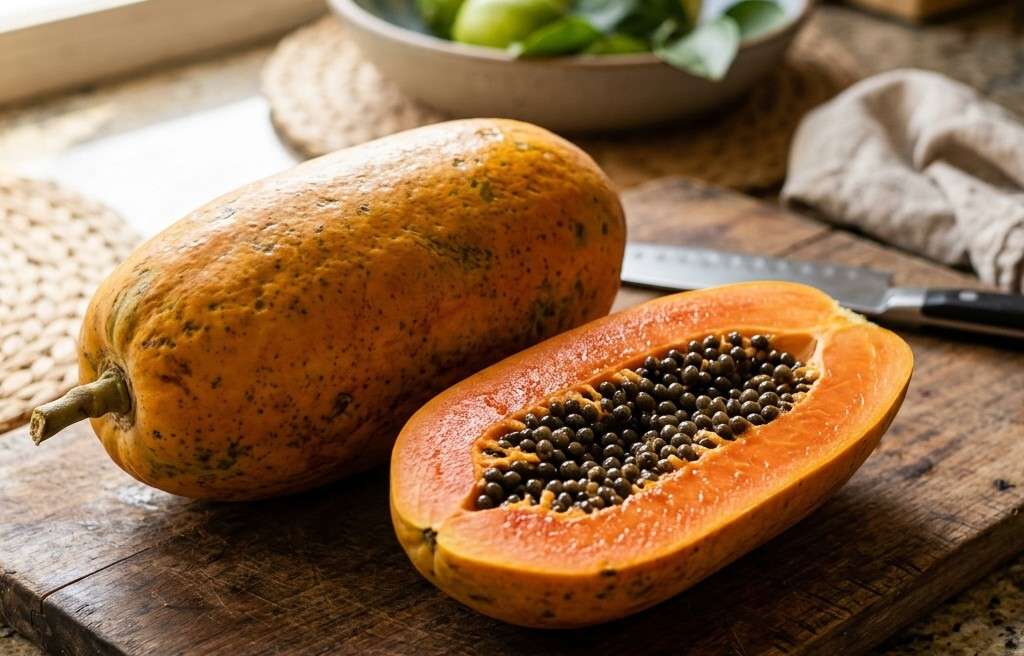
Papaya is one of the most loved tropical fruits, known for its sweet taste, vibrant orange color, and powerful health benefits. Often called the “fruit of angels,” papaya is not just delicious—it’s packed with nutrients, enzymes, and antioxidants that support overall well-being. Whether eaten fresh, blended into smoothies, or used in skincare, papaya has earned its place in both kitchens and traditional medicine systems around the world.
This guide covers everything you need to know about papaya—from its nutritional profile and science-backed health benefits to side effects, usage tips, and storage methods.
What is Papaya?
Papaya is a soft, fleshy fruit that grows on the Carica papaya plant, native to Central America and now cultivated widely in tropical and subtropical regions. The fruit is typically oval or pear-shaped, with green skin that turns yellow or orange as it ripens. Inside, it contains a sweet orange pulp and small black seeds.
Papaya is famous for containing papain, a natural digestive enzyme that helps break down proteins. This makes it especially beneficial for digestion and gut health.
Nutrition Facts of Papaya (per 100g)
| Nutrient | Amount |
|---|---|
| Calories | 43 kcal |
| Water | 88% |
| Protein | 0.5 g |
| Carbohydrates | 11 g |
| Sugar | 8 g |
| Fiber | 1.7 g |
| Vitamin C | 60.9 mg (101% DV) |
| Vitamin A | 950 IU |
| Folate | 37 mcg |
| Potassium | 182 mg |
| Magnesium | 10 mg |
| Calcium | 20 mg |
Papaya is low in calories but extremely rich in vitamins, especially vitamin C and A.
Top 20 Proven Health Benefits of Papaya
- Improves Digestion – Papain enzyme helps break down proteins and supports gut health.
- Boosts Immunity – High vitamin C strengthens the immune system.
- Promotes Heart Health – Antioxidants reduce oxidative stress and improve heart function.
- Supports Weight Loss – Low in calories and high in fiber, keeping you full longer.
- Enhances Skin Health – Vitamins A and C help maintain glowing, youthful skin.
- Reduces Inflammation – Contains anti-inflammatory compounds like chymopapain.
- Aids in Diabetes Management – Low glycemic index helps control blood sugar levels.
- Improves Eye Health – Rich in beta-carotene, preventing vision issues.
- Prevents Constipation – Fiber content promotes regular bowel movements.
- Supports Liver Health – Helps detoxify the liver naturally.
- Reduces Risk of Cancer – Lycopene and antioxidants may lower cancer risk.
- Improves Hair Health – Nutrients nourish hair follicles and reduce dandruff.
- Promotes Healthy Pregnancy – Provides folate, essential for fetal development (ripe papaya only).
- Boosts Energy Levels – Natural sugars provide instant energy.
- Helps in Wound Healing – Vitamin C aids tissue repair.
- Supports Kidney Health – Helps detoxify and maintain kidney function.
- Reduces Menstrual Pain – Papain helps regulate menstrual flow.
- Improves Brain Function – Antioxidants protect brain cells.
- Supports Bone Health – Contains magnesium and calcium.
- Improves Respiratory Health – Vitamin A supports lung function.
10 Side Effects of Papaya
- Allergic Reactions – Some people may be allergic to papaya latex.
- Pregnancy Risks – Unripe papaya may cause uterine contractions.
- Digestive Issues – Excess consumption may lead to diarrhea.
- Low Blood Sugar – May reduce blood sugar too much in diabetics.
- Skin Irritation – Latex content may irritate sensitive skin.
- Drug Interactions – Can interfere with blood-thinning medications.
- Nausea – Overeating may upset the stomach.
- Yellowing of Skin – Excess beta-carotene may cause harmless discoloration.
- Breathing Issues – Rare allergic reactions may affect breathing.
- Kidney Concerns – High potassium intake may affect those with kidney disorders.
How to Eat Papaya?
Papaya is versatile and easy to include in your diet:
- Eat it fresh by cutting it in half and scooping out the flesh
- Add to smoothies for a tropical flavor
- Mix into fruit salads
- Pair with yogurt or oatmeal
- Use as a topping for desserts
- Blend into juices or shakes
- Add lime juice for enhanced taste
Tips for Consuming Papaya
- Always choose ripe papaya for better taste and safety
- Avoid unripe papaya, especially during pregnancy
- Eat in moderation (1–2 cups per day)
- Combine with protein-rich foods for better digestion
- Wash thoroughly before cutting
- Remove seeds before eating
Other Uses of Papaya
Papaya is not just a fruit—it has multiple uses:
- Skincare: Used in face masks for glowing skin
- Hair Care: Helps reduce dandruff and nourish scalp
- Meat Tenderizer: Papain softens tough meat
- Medicinal Uses: Used in traditional remedies for digestion
- Papaya Seeds: Sometimes used for detox purposes
How Much Papaya Can You Eat in a Day?
A healthy serving size is about 1 to 2 cups (140–280 grams) per day. This provides sufficient nutrients without causing side effects.
Papaya Dosage
- Adults: 1–2 cups daily
- Children: ½–1 cup
- For digestion: Small portion after meals
- For skin benefits: Regular moderate intake
Best Time to Eat Papaya
- Morning (empty stomach): Best for digestion and detox
- Midday snack: Provides energy
- Avoid eating late at night as it may affect digestion in some people
Who Should Eat Papaya?
Papaya is beneficial for:
- People with digestive issues
- Individuals trying to lose weight
- Those with weak immunity
- People with skin or hair concerns
- Athletes needing quick energy
- Individuals with constipation
Who Should Not Eat Papaya?
Avoid or limit papaya if you:
- Are pregnant (especially unripe papaya)
- Have latex allergy
- Take blood-thinning medications
- Have kidney disease
- Experience frequent digestive issues
How to Store Papaya?
- Unripe papaya: Keep at room temperature until it ripens
- Ripe papaya: Store in the refrigerator for up to 2–3 days
- Cut papaya: Keep in an airtight container in the fridge
- Freezing: Can be frozen for smoothies
Precautions and Interactions
- Avoid combining papaya with blood-thinning medications
- Monitor intake if diabetic
- Do not consume unripe papaya during pregnancy
- Check for allergies before regular use
- Consult a doctor if you have chronic health conditions
Conclusion
Papaya is a nutrient-rich fruit that offers a wide range of health benefits—from improving digestion and boosting immunity to enhancing skin and heart health. Its natural sweetness and versatility make it easy to include in daily meals. However, like any food, it should be consumed in moderation, keeping individual health conditions in mind.
FAQ’s
What does papaya taste like?
Papaya has a mildly sweet, soft, and buttery taste. Ripe papaya is juicy with a melon-like flavor, while unripe papaya is bland and slightly bitter.
Can I eat papaya every day?
Yes, papaya can be eaten daily in moderate amounts (about 1–2 cups). It provides essential vitamins and supports digestion.
Is papaya good for weight loss?
Yes, papaya is low in calories and high in fiber, which helps keep you full and supports healthy weight management.
Can diabetics eat papaya?
Yes, diabetics can eat papaya in controlled portions. It has a low glycemic load and can fit into a balanced diet.
Is papaya safe during pregnancy?
Ripe papaya is generally safe in small amounts, but unripe papaya should be avoided as it may trigger uterine contractions.
Can papaya improve digestion?
Yes, papaya contains the enzyme papain, which helps break down proteins and improves digestion.
Is papaya good for skin?
Yes, papaya is rich in vitamins A and C, which help brighten skin, reduce acne, and slow aging.
Can I eat papaya at night?
It is better to eat papaya during the day or in the morning, as it may cause mild digestive discomfort at night for some people.
Does papaya help relieve constipation?
Yes, the fiber and enzymes in papaya promote regular bowel movements and relieve constipation.
Can papaya cause allergies?
Some people may experience allergic reactions, especially those sensitive to latex.
Are papaya seeds edible?
Yes, papaya seeds are edible in small amounts. They have a peppery taste and are sometimes used for digestion and detox.
How do I know if papaya is ripe?
A ripe papaya has yellow-orange skin, feels slightly soft when pressed, and has a sweet aroma.
Can papaya reduce belly fat?
Papaya alone won’t target belly fat, but it supports overall weight loss due to its low calories and high fiber.
Is papaya good for hair growth?
Yes, the nutrients in papaya help nourish the scalp and may promote healthier hair.
Can children eat papaya?
Yes, papaya is safe and healthy for children when given in small, age-appropriate portions.
Does papaya detox the body?
It supports natural detoxification by aiding digestion and promoting liver health.
Can papaya lower cholesterol?
Yes, the fiber and antioxidants in papaya may help reduce bad cholesterol levels.
Is papaya good for acidity?
Yes, it can help soothe acidity and improve digestion.
Can I drink water after eating papaya?
It’s best to wait 15–20 minutes before drinking water to avoid digestive discomfort.
How much papaya is too much?
Eating more than 2–3 cups daily may cause digestive issues like diarrhea or stomach upset.
What is papaya good for?
Good for digestion, immunity, and healthy skin.
Which is healthier, papaya or pineapple?
Papaya is lower in sugar and better for digestion; both are healthy.
Why eat papaya for 30 days?
May improve digestion, skin, and immunity when eaten regularly.
How much sugar is in papaya?
About 8g per 100g, relatively low among fruits.
Is papaya good for fatty liver?
Yes, it may support liver health due to antioxidants.
Also Read: