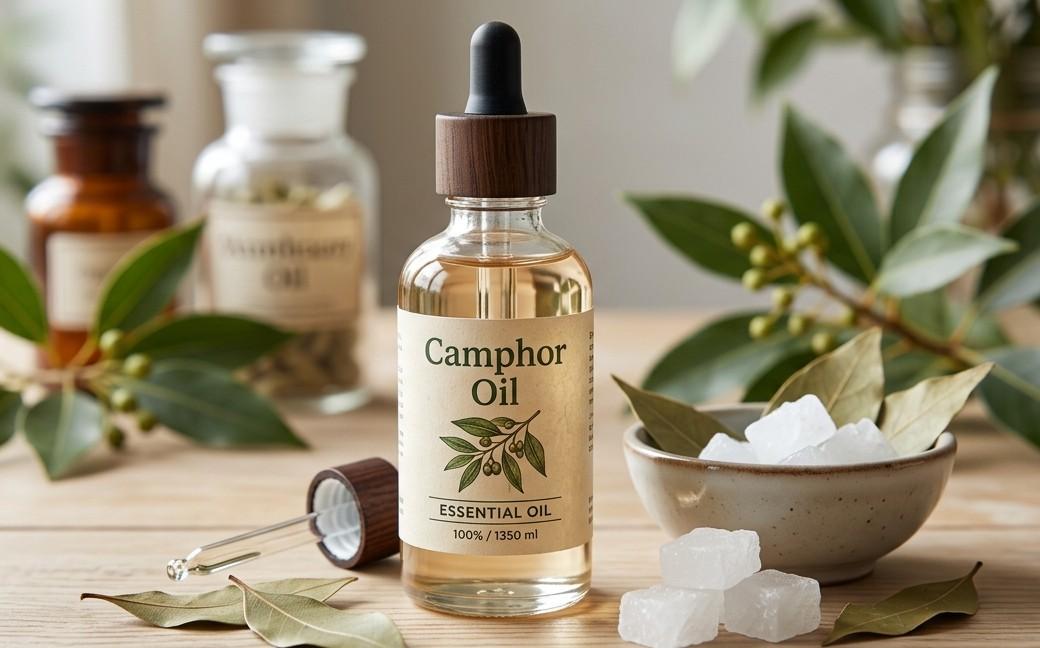
Camphor Oil is a powerful essential oil known for its strong aroma, cooling sensation, and wide range of therapeutic uses. From traditional remedies to modern skincare and pain relief applications, Camphor essential oil has been valued for centuries across Asian and Ayurvedic practices. Whether used for muscle pain, respiratory support, skin concerns, or spiritual rituals, this oil carries both benefits and precautions.
In this guide, you will learn everything about Camphor Oil, including its science-backed benefits, side effects, dosage guidelines, usage tips, and safety precautions.
What is Camphor Oil?
Camphor Oil is an essential oil extracted from the wood of the camphor tree (Cinnamomum camphora). This evergreen tree is native to parts of Asia, especially India, China, and Japan. The oil is obtained through steam distillation of camphor wood, roots, and branches.
Camphor itself is a waxy, white crystalline substance with a strong, penetrating fragrance. When distilled, it produces camphor essential oil, which contains active compounds responsible for its medicinal effects.
Traditionally, camphor oil has been used in:
- Ayurveda
- Chinese medicine
- Religious rituals
- Pain relief balms
- Chest rubs
- Skin treatments
It provides a cooling sensation when applied to the skin and acts as a natural stimulant, anti-inflammatory, antimicrobial, and decongestant.
There are different grades of camphor essential oil, including white, yellow, and brown camphor oil. White camphor oil is considered the safest for therapeutic and cosmetic use.
Components of Camphor Oil (Per 100 g)
Although camphor essential oil is not consumed as food and contains no macronutrients like proteins or carbohydrates, it contains bioactive compounds responsible for its effects.
| Component | Amount (Approximate %) |
|---|---|
| Camphor | 40–60% |
| Safrole | 0–5% |
| Cineole | 5–15% |
| Limonene | 5–10% |
| Terpineol | 2–10% |
| Pinene | 1–5% |
| Alcohol Content | Trace |
| Calories | 0 kcal |
| Carbohydrates | 0 g |
| Protein | 0 g |
| Fat | 0 g |
Note: These values vary depending on extraction method and purity.
20 Proven Benefits of Camphor Oil
- Pain Relief: Camphor essential oil helps relieve muscle pain, joint stiffness, and inflammation by improving blood circulation and creating a cooling effect.
- Reduces Arthritis Symptoms: Its anti-inflammatory properties help reduce swelling and discomfort in arthritis and rheumatic conditions.
- Relieves Cough: Camphor oil works as a natural decongestant that clears mucus and eases breathing.
- Treats Cold and Flu: When used in steam inhalation or chest rubs, it helps relieve nasal congestion and sinus pressure.
- Soothes Skin Irritation: Camphor essential oil reduces itching, redness, and irritation caused by rashes or insect bites.
- Treats Fungal Infections: Its antifungal properties help combat athlete’s foot and nail fungus.
- Improves Blood Circulation: It stimulates nerve endings and enhances circulation when applied topically.
- Reduces Acne: Camphor oil’s antimicrobial properties help kill acne-causing bacteria.
- Heals Minor Burns: When diluted properly, it can soothe minor burns and reduce inflammation.
- Relieves Muscle Cramps: The oil relaxes tight muscles and reduces spasms.
- Eases Back Pain: Camphor essential oil massage can help reduce lower back stiffness and tension.
- Reduces Itching: It provides instant relief from itching due to eczema or dryness.
- Treats Scalp Infections: Its antibacterial action helps maintain a healthy scalp environment.
- Reduces Dandruff: Camphor essential oil helps control dandruff when mixed with carrier oils.
- Promotes Hair Growth: By improving scalp circulation, it may support healthier hair growth.
- Acts as a Natural Insect Repellent: The strong aroma keeps mosquitoes and insects away.
- Improves Mental Alertness: The scent of camphor essential oil can stimulate the brain and reduce mental fatigue.
- Relieves Stress: Aromatherapy with camphor essential oil may calm nervous tension.
- Supports Respiratory Health: It helps open airways and improve airflow.
- Used in Spiritual Practices: Camphor essential oil is traditionally used in rituals for purification and air cleansing.
10 Side Effects of Camphor Oil
- Skin Irritation: Undiluted camphor essential oil can cause redness, burning, and irritation.
- Allergic Reactions: Some people may experience itching or rash after application.
- Toxic if Ingested: Camphor oil is toxic when swallowed and can cause poisoning.
- Seizures Risk: High doses may trigger seizures, especially in children.
- Nausea and Vomiting: Ingestion can cause stomach upset and vomiting.
- Breathing Issues: Excess inhalation may irritate airways.
- Dizziness: Strong aroma may cause lightheadedness.
- Liver Toxicity: Prolonged internal use may affect liver function.
- Unsafe for Babies: It should not be applied to infants due to toxicity risk.
- Eye Irritation: Direct contact with eyes may cause severe burning.
How to Use Camphor Oil?
1. Topical Application:
Always dilute camphor essential oil with a carrier oil such as coconut oil or almond oil before applying to the skin. Use 2–3 drops per tablespoon of carrier oil.
2. Steam Inhalation:
Add 1–2 drops to hot water and inhale the steam for respiratory relief.
3. Massage Oil:
Mix with sesame or mustard oil for muscle and joint massage.
4. Aromatherapy:
Use a diffuser to spread the fragrance in a room.
5. Hair Treatment:
Mix a few drops with coconut oil and apply to the scalp.
Other Uses of Camphor Oil
- Ingredient in balms and ointments
- Used in moth repellents
- Room fresheners
- Used in religious ceremonies
- Added in pain relief sprays
- Used in cold rub formulations
Tips for Consuming Camphor Oil
Camphor essential oil is generally not recommended for internal consumption unless prescribed by a qualified healthcare professional. Always ensure it is labeled as food-grade if intended for internal use.
Never self-medicate with camphor essential oil internally.
How to Take Camphor Oil?
Internal use is rare and must be supervised by a medical expert. In traditional medicine, extremely small, controlled doses may be used.
For external use:
- Dilute properly
- Use small quantities
- Avoid broken skin
How to Make Camphor Oil at Home?
Ingredients:
- Natural camphor crystals
- Coconut oil or sesame oil
Steps:
- Crush camphor crystals into powder.
- Heat carrier oil gently.
- Add camphor powder and stir until dissolved.
- Let it cool.
- Store in an airtight glass bottle.
Ensure proper ventilation during preparation.
How Much Camphor Oil Can You Use Per Day?
For topical use:
- 2–5 drops diluted in carrier oil
- Use 1–2 times daily
For inhalation:
- 1–2 drops in steam
Never exceed recommended amounts.
Camphor Oil Dosage
Topical Dilution Ratio:
- Adults: 2% dilution (2 drops per teaspoon carrier oil)
- Elderly or sensitive skin: 1% dilution
Inhalation:
- 1 drop per bowl of hot water
Avoid oral dosage unless prescribed.
Best Time to Use Camphor Oil
- At night for pain relief and muscle relaxation
- During cold or congestion symptoms
- After workout for muscle recovery
- Before meditation for aromatherapy
Who Should Use Camphor Oil?
- Adults with muscle pain
- People with cold or cough
- Individuals with joint stiffness
- Those seeking natural insect repellent
- People using aromatherapy
Who Should Not Use Camphor Oil?
- Pregnant women
- Breastfeeding mothers
- Infants and young children
- People with seizure disorders
- Individuals with sensitive skin
- Those with liver disease
Always consult a doctor if unsure.
How to Store Camphor Oil?
- Store in dark glass bottle
- Keep away from heat and sunlight
- Close lid tightly
- Keep out of reach of children
- Store in a cool, dry place
Proper storage increases shelf life up to 2 years.
Precautions and Interactions
- Do not apply on open wounds.
- Avoid contact with eyes.
- Do not mix with other strong essential oils without guidance.
- Do not ingest unless medically supervised.
- Perform patch test before first use.
- Keep away from flames, as camphor is flammable.
Drug Interactions:
- May interact with seizure medications.
- Avoid combining with strong stimulant oils.
- Consult healthcare provider if taking chronic medications.
Final Thoughts
Camphor Oil is a traditional remedy with powerful therapeutic properties. From relieving muscle pain and congestion to improving scalp health and acting as a natural insect repellent, its versatility makes it a valuable addition to natural wellness routines.
However, it is equally important to use it responsibly. Camphor essential oil is potent and can cause side effects if misused. Proper dilution, correct dosage, and medical consultation are essential for safe usage.
FAQ’s
What is camphor oil mainly used for?
Oil is mainly used for relieving muscle pain, joint stiffness, cough, cold, nasal congestion, skin irritation, and as a natural insect repellent.
Is camphor oil safe for skin?
Yes, camphor essential oil is safe for skin when properly diluted with a carrier oil, but applying it undiluted may cause irritation or burning.
Can camphor oil be applied directly to the skin?
No, camphor essential oil should always be diluted with a carrier oil such as coconut or almond oil before applying to the skin.
Can camphor oil help with cough and cold?
Yes, camphor essential oil works as a natural decongestant and can help relieve cough, chest congestion, and blocked nose when used in steam inhalation or chest rubs.
Is camphor oil safe to ingest?
Oil is generally not safe for internal consumption unless prescribed and supervised by a qualified healthcare professional.
Can camphor oil help with hair growth?
Camphor essential oil may support hair growth by improving blood circulation in the scalp and reducing dandruff when mixed with carrier oils.
Is camphor oil safe for children?
Camphor essential oil is not recommended for infants and young children due to the risk of toxicity and potential breathing complications.
Can camphor oil reduce acne?
Yes, camphor essential oil has antimicrobial properties that may help reduce acne-causing bacteria, but it must be diluted and patch-tested first.
What happens if you inhale too much camphor oil?
Excessive inhalation may cause dizziness, nausea, or irritation of the respiratory tract.
Is camphor oil good for joint pain?
Yes, camphor essential oil is commonly used in massage oils and balms to relieve joint pain and inflammation due to its warming and circulation-boosting effects.
Can pregnant women use camphor oil?
Pregnant and breastfeeding women should avoid using camphor essential oil unless advised by a healthcare professional.
How long does camphor oil last?
When stored properly in a cool, dark place, camphor essential oil can last up to two years.
Can camphor oil cause allergies?
Yes, some individuals may experience allergic reactions such as redness, itching, or rash, which is why a patch test is recommended.
Is camphor oil flammable?
Yes, camphor essential oil is flammable and should be kept away from open flames and high heat sources.
Can I use Camphor Oil every day?
Yes, if properly diluted and used in small amounts on limited areas of the skin.
How long does it take for Camphor Oil to work?
It works within minutes for pain and congestion, but some conditions may need regular use.
What does Camphor Oil smell like?
It has a strong, sharp, cooling, and medicinal scent.
What is Camphor Oil good for?
It helps with muscle pain, joint stiffness, cough, cold, itching, dandruff, and insect repellent.
What is the difference between camphor and camphor oil?
Camphor is a solid crystalline substance, while camphor essential oil is the distilled essential oil from the camphor tree.
What is another name for camphor oil?
It is also called camphor essential oil or white camphor oil.
What is the Indian name for camphor?
It is called Kapoor in Hindi.
Can you mix camphor oil and coconut oil?
Yes, camphor essential oil can be safely mixed with coconut oil for topical use.
Also Read: