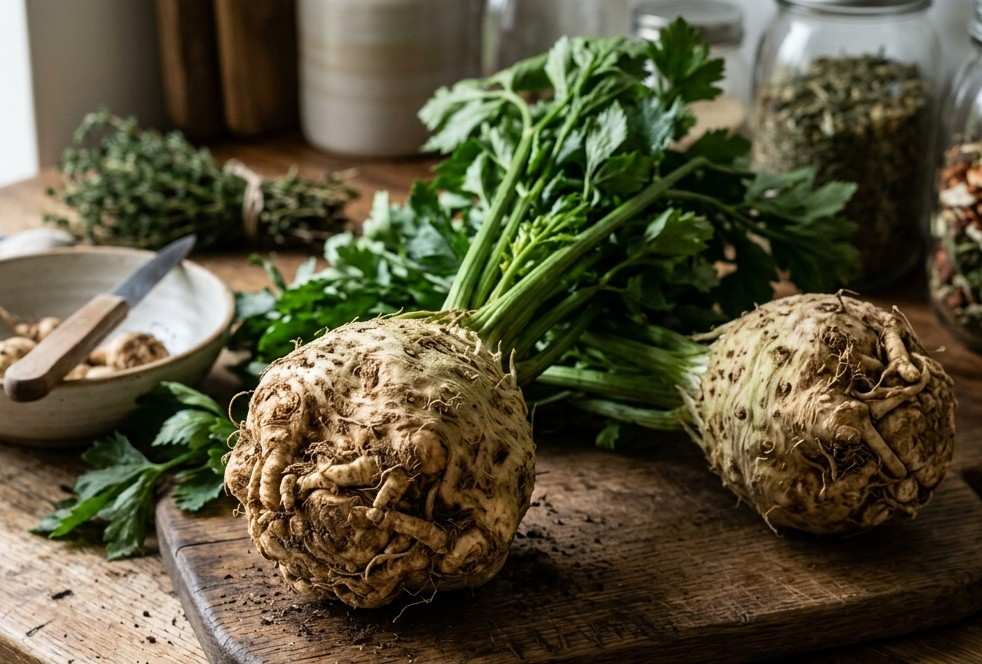
Celeriac, also known as celery root, is a nutritious root vegetable that has been enjoyed in European and Mediterranean cuisine for centuries. Although it may look rough and unattractive on the outside, celeriac is packed with vitamins, minerals, antioxidants, and fiber that can support overall health. Its mild celery-like flavor and creamy texture make it a versatile ingredient in soups, salads, roasted dishes, and healthy side meals.
In recent years, celeriac has gained popularity among health-conscious people because it is low in calories yet rich in nutrients. From improving digestion to supporting heart health, this unique root vegetable offers a wide range of benefits. In this detailed guide, you will learn everything about celeriac, including its nutrition facts, science-backed health benefits, side effects, uses, storage tips, and much more.
What is Celeriac?
Celeriac is a root vegetable scientifically known as Apium graveolens var. rapaceum. It belongs to the parsley family and is closely related to celery. Unlike regular celery, celeriac is grown mainly for its large edible root rather than its stalks.
The vegetable has a rough brown exterior with white flesh inside. Its flavor is slightly nutty, earthy, and similar to celery with hints of parsley. Celeriac can be eaten raw or cooked and is commonly used in soups, purees, salads, stews, and roasted dishes. Celeriac is especially popular in European cuisine and is considered an excellent low-carb substitute for potatoes in many recipes.
Nutrition Facts of Celeriac
Below is the approximate nutritional value of 100 grams of raw celery root:
| Nutrient | Amount |
|---|---|
| Calories | 42 kcal |
| Carbohydrates | 9.2 g |
| Protein | 1.5 g |
| Fat | 0.3 g |
| Dietary Fiber | 1.8 g |
| Sugar | 1.6 g |
| Vitamin C | 8 mg |
| Vitamin K | 41 mcg |
| Vitamin B6 | 0.2 mg |
| Potassium | 300 mg |
| Phosphorus | 115 mg |
| Calcium | 43 mg |
| Magnesium | 20 mg |
| Iron | 0.7 mg |
| Sodium | 100 mg |
20 Proven Health Benefits of Celeriac
- Supports Digestion – The fiber content in celery root helps improve bowel movements and supports a healthy digestive system.
- Boosts Immunity – Vitamin C and antioxidants in celeriac strengthen the immune system and help the body fight infections.
- Promotes Heart Health – Potassium in celery root may help regulate blood pressure and support cardiovascular health.
- Aids Weight Loss – Celeriac is low in calories and high in fiber, making it a filling food for weight management.
- Improves Bone Strength – Vitamin K and phosphorus contribute to stronger bones and better bone density.
- Supports Healthy Skin – Antioxidants and vitamin C help protect the skin from damage and support collagen production.
- Helps Control Blood Sugar – The fiber in celery root may slow sugar absorption and support stable blood glucose levels.
- Reduces Inflammation – Natural antioxidants in celery root may help lower inflammation in the body.
- Supports Brain Function – Certain plant compounds in celery root may help protect brain cells and support cognitive health.
- Improves Hydration – Celeriac contains a high amount of water that contributes to hydration.
- Promotes Healthy Muscles – Potassium and magnesium support proper muscle function and recovery.
- Supports Kidney Health – Celery root has natural diuretic properties that may help flush excess fluids from the body.
- Enhances Energy Levels – B vitamins in celery root help convert food into usable energy.
- Supports Healthy Cholesterol Levels – Fiber may help reduce unhealthy cholesterol levels in the body.
- May Reduce Oxidative Stress – Antioxidants help protect cells from free radical damage.
- Improves Gut Health – Fiber supports beneficial gut bacteria and overall intestinal health.
- Supports Healthy Metabolism – Nutrients in celeriac assist the body’s metabolic processes.
- Helps Maintain Healthy Blood Pressure – The potassium content may support balanced blood pressure levels.
- May Support Detoxification – Its fiber and water content may help the body naturally remove waste products.
- Provides Low-Carb Nutrition – Celeriac can be a healthier low-carb alternative to potatoes and other starchy vegetables.
10 Side Effects of Celeriac
- Allergic Reactions – Some people allergic to celery or related plants may experience allergic reactions to celery root.
- Digestive Discomfort – Eating large amounts may cause bloating, gas, or stomach discomfort in sensitive individuals.
- May Affect Blood Clotting – High vitamin K content may interfere with blood-thinning medications.
- Possible Kidney Issues – Excessive intake may not be suitable for people with certain kidney disorders due to potassium content.
- Can Cause Skin Sensitivity – Some compounds in celeriac may increase sensitivity to sunlight in rare cases.
- May Trigger Oral Allergy Syndrome – Certain individuals may experience itching or irritation in the mouth after eating raw celeriac.
- Risk of Contamination – Improperly cleaned celery root may contain dirt or bacteria because it grows underground.
- Potential Interaction with Diuretics – Natural diuretic effects may interact with water pills or similar medications.
- May Lower Blood Pressure Too Much – Excess consumption combined with blood pressure medicine may lead to very low blood pressure.
- Possible Digestive Irritation When Raw – Raw celery root may be difficult to digest for some people with sensitive stomachs.
How to Eat Celeriac?
Celeriac is a versatile vegetable that can be enjoyed in many different ways. Before eating, wash the root thoroughly, peel the rough outer skin, and cut it into desired shapes.
Popular ways to eat celery root include:
- Raw in salads or slaws
- Mashed like potatoes
- Roasted with herbs and olive oil
- Added to soups and stews
- Used in purees
- Mixed into casseroles
- Turned into fries or chips
- Grated into coleslaw
- Added to vegetable juices
- Used as a low-carb potato substitute
Tips for Consuming Celeriac
- Choose firm and heavy celeriac roots without soft spots.
- Wash thoroughly to remove dirt trapped in the rough skin.
- Peel the outer layer completely before cooking.
- Soak cut pieces in lemon water to prevent discoloration.
- Pair with herbs like thyme, parsley, or rosemary for better flavor.
- Roast with olive oil for a sweeter taste.
- Start with small portions if eating raw for the first time.
- Combine with potatoes or cauliflower for creamy mashed dishes.
- Store properly to maintain freshness.
- Eat as part of a balanced diet for maximum benefits.
Other Uses of Celeriac
- Soup Base Ingredient – Celery root adds depth and creaminess to soups and broths.
- Low-Carb Potato Substitute – It is commonly used instead of potatoes in healthy recipes.
- Vegetable Purees – Celeriac can be blended into smooth and flavorful purees.
- Healthy Snack Chips – Thin slices can be baked into crunchy vegetable chips.
- Flavor Enhancer – Its mild celery flavor enhances stews and casseroles.
- Salad Ingredient – Raw grated celery root is widely used in salads and slaws.
- Juicing Vegetable – Celeriac can be included in vegetable juices for added nutrients.
- Roasted Side Dish – Roasted celery root makes a nutritious side dish for meals.
- Vegetarian Recipes – It is often used in plant-based and vegan dishes.
- Meal Prep Ingredient – Celery root stores well and works well in weekly meal planning.
How Much Celeriac Can You Eat in a Day?
A healthy adult can generally consume about 1 to 2 cups of celeriac per day as part of a balanced diet. Moderation is important because excessive intake may cause digestive discomfort or excessive potassium intake in sensitive individuals.
The ideal amount depends on age, health condition, activity level, and overall diet.
There is no official recommended dosage for celeriac because it is a food rather than a supplement. However, moderate daily consumption is considered safe for most people.
- Raw celeriac: ½ to 1 cup daily
- Cooked celeriac: 1 to 2 cups daily
- Celeriac juice: Small servings of around 100–150 ml
People with medical conditions should consult a healthcare professional before consuming large amounts regularly.
Best Time to Eat Celeriac
Celeriac can be eaten at any time of the day depending on personal preference and dietary goals.
- Morning: In juices or breakfast vegetable dishes for nutrients and energy.
- Lunch: In salads, soups, or roasted vegetable meals.
- Evening: As mashed celery root or healthy side dishes for dinner.
- Pre-workout: Light roasted celery root may provide energy from complex carbohydrates.
- Weight-loss diets: Consuming celery root during meals may help increase fullness.
Who Should Eat Celeriac?
- People Trying to Lose Weight – Its low-calorie and high-fiber content may support weight management.
- Individuals with Digestive Issues – Moderate fiber intake may help improve digestion.
- Athletes and Active Individuals – Potassium and minerals support muscle function and hydration.
- People Seeking Low-Carb Foods – Celeriac works well as a healthier substitute for potatoes.
- Older Adults – Nutrients like vitamin K and phosphorus may support bone health.
- Vegetarians and Vegans – Celery root provides important vitamins and minerals for plant-based diets.
- People Looking for Heart-Healthy Foods – Potassium and fiber may benefit cardiovascular health.
- Individuals Seeking Immune Support – Vitamin C and antioxidants help support immunity.
Who Should Not Eat Celeriac?
- People Allergic to Celery – Those with celery allergies may also react to celery root.
- Individuals Taking Blood Thinners – High vitamin K content may interfere with medication effectiveness.
- People with Severe Kidney Problems – Potassium levels may be unsuitable for certain kidney conditions.
- Individuals with Sensitive Digestion – Large amounts may cause bloating or discomfort.
- People with Oral Allergy Syndrome – Raw celeriac may trigger mouth irritation in sensitive individuals.
- Those Sensitive to FODMAP Foods – Celery root may cause digestive symptoms in some individuals following low-FODMAP diets.
- Pregnant Women with Food Allergies – Women with celery-related allergies should avoid celery root unless approved by a doctor.
How to Store Celeriac?
- Store in the Refrigerator – Keep whole celery root in the vegetable drawer of the refrigerator.
- Use Plastic Wrap for Freshness – Wrapping helps reduce moisture loss.
- Keep Away from Excess Moisture – Too much moisture may cause spoilage.
- Store Cut Pieces Properly – Place peeled pieces in airtight containers.
- Use Lemon Water for Peeled Pieces – This helps prevent browning.
- Avoid Long Room Temperature Storage – Celery root lasts longer when chilled.
- Freeze for Long-Term Storage – Blanched celery root can be frozen for several months.
- Check for Soft Spots Regularly – Remove spoiled sections immediately.
Precautions and Interactions
- Monitor Medication Interactions – Vitamin K may interact with blood-thinning medicines.
- Eat in Moderation – Excessive intake may cause digestive discomfort.
- Wash Thoroughly Before Use – Proper cleaning reduces contamination risks.
- Consult a Doctor for Kidney Conditions – Potassium content may require monitoring.
- Be Careful with Allergies – Individuals allergic to celery should avoid celeriac.
- Introduce Slowly into the Diet – Gradual consumption may help prevent digestive issues.
- Use Caution During Pregnancy if Allergic – Seek medical advice if unsure about safety.
- Avoid Spoiled Celeriac – Soft, moldy, or foul-smelling roots should not be consumed.
Conclusion
Celeriac is a highly nutritious and versatile root vegetable that deserves more attention in healthy diets. Despite its rough appearance, it provides impressive health benefits, including improved digestion, heart support, weight management, immune protection, and better bone health. Its low-calorie and low-carb nature also make it an excellent substitute for starchy vegetables.
Like any food, celery root should be consumed in moderation and prepared properly. While most people can safely enjoy it, those with allergies, kidney problems, or medication interactions should take precautions.
FAQ’s
Can I eat Celeriac every day?
Yes, Celery root can be eaten daily in moderate amounts as part of a balanced diet.
Is Celeriac safe for pregnant women?
Yes, Celery root is generally safe during pregnancy when eaten in normal food amounts, unless there is a celery allergy.
Is Celeriac safe for children?
Yes, cooked celery root is usually safe and nutritious for children when served in age-appropriate portions.
What is Celeriac good for?
Celery root may support digestion, heart health, immunity, weight management, and bone strength.
What does Celeriac taste like?
Celery root has a mild earthy, nutty, and slightly celery-like flavor.
What is celeriac called in India?
Celeriac is commonly known as celery root in India and is not widely used in traditional Indian cuisine.
Is celeriac healthier than potatoes?
Celery root is lower in calories and carbohydrates than potatoes while still providing important nutrients and fiber.
What is the Indian name for celery?
Celery is commonly called “Ajmod” or “Ajwain leaf” in some parts of India.
Can you eat celeriac raw?
Yes, Celery root can be eaten raw in salads, slaws, and grated vegetable dishes.
Is celeriac good for weight loss?
Yes, Celery root is low in calories and high in fiber, which may help you feel full longer.
Can diabetics eat celeriac?
Yes, Celery root may be suitable for diabetics in moderation because it contains fiber and has fewer carbohydrates than potatoes.
How do you clean celeriac?
Wash the root thoroughly under running water and peel off the rough outer skin before use.
Can you freeze celeriac?
Yes, Celery root can be blanched and frozen for longer storage.
Is celeriac a superfood?
Celery root is considered a nutrient-dense vegetable because it contains antioxidants, vitamins, minerals, and fiber.
Does celeriac help digestion?
Yes, the fiber in Celery root may support healthy digestion and regular bowel movements.
Can you eat celeriac leaves?
Yes, the leaves are edible and can be used in soups, stocks, and garnishes.
Is celeriac keto-friendly?
Yes, Celery root is often used in low-carb and keto-friendly recipes because it contains fewer carbs than potatoes.
How long does celeriac last in the fridge?
Whole Celery root can last about 2 to 3 weeks in the refrigerator when stored properly.
Can celeriac cause allergies?
Yes, people allergic to celery may also experience allergic reactions to Celery root.
What are the best ways to cook celeriac?
Popular methods include roasting, boiling, mashing, pureeing, and adding it to soups or stews.
Also Read: