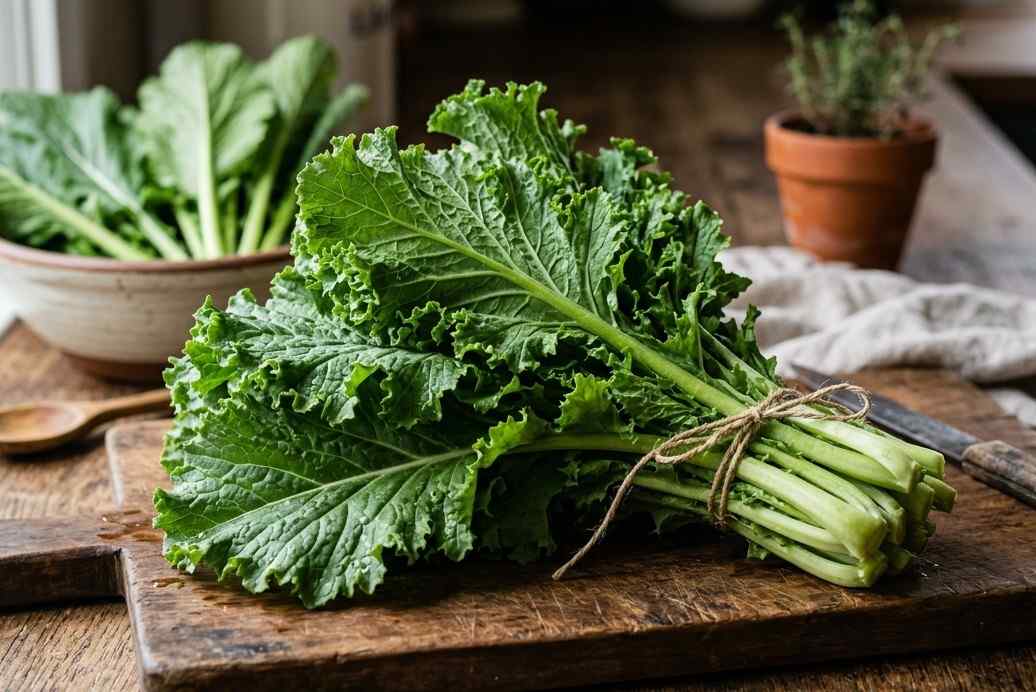
Mustard greens are leafy green vegetables known for their peppery flavor, vibrant green leaves, and impressive nutritional profile. They belong to the cruciferous vegetable family, which also includes cabbage, kale, broccoli, and cauliflower. Popular in many cuisines around the world, mustard greens are widely used in Indian, Southern American, African, and Asian dishes.
These nutrient-rich greens are packed with vitamins, minerals, antioxidants, and plant compounds that may support heart health, digestion, immunity, and overall wellness. Whether cooked into curries, sautéed as a side dish, or blended into soups, mustard greens can be a healthy addition to a balanced diet.
What is Mustard Greens?
Mustard greens are the edible leaves of the mustard plant, scientifically known as Brassica juncea. They are characterized by broad green leaves and a slightly spicy, pungent taste similar to mustard sauce or horseradish.
The leaves can vary in texture and flavor depending on the variety. Young leaves are usually mild and tender, while mature leaves become stronger and more peppery. Mustard greens are commonly eaten cooked, though baby leaves may also be consumed raw in salads.
These greens have been cultivated for thousands of years and are especially popular in Indian cuisine as “sarson ka saag,” a traditional Punjabi dish.
Nutrition Facts of Mustard Greens
Below is the approximate nutritional value of 1 cup (about 56 grams) of raw mustard greens.
| Nutrient | Amount |
|---|---|
| Calories | 15 |
| Protein | 1.6 g |
| Carbohydrates | 2.6 g |
| Fiber | 1.8 g |
| Fat | 0.2 g |
| Vitamin A | 118% DV |
| Vitamin C | 65% DV |
| Vitamin K | 120% DV |
| Folate | 12% DV |
| Calcium | 6% DV |
| Potassium | 4% DV |
| Magnesium | 5% DV |
| Iron | 5% DV |
| Manganese | 8% DV |
Mustard greens are low in calories yet extremely high in essential vitamins and antioxidants.
20 Proven Health Benefits of Mustard Greens
- Supports Eye Health: Leaf mustard are rich in vitamin A, lutein, and zeaxanthin that may help protect the eyes from age-related damage.
- Boosts Immunity: The high vitamin C content in mustard greens helps strengthen the immune system and supports infection defense.
- Promotes Healthy Digestion: Dietary fiber in Leaf mustard may improve bowel movements and support digestive health.
- Supports Bone Strength: Vitamin K and calcium found in Leaf mustard help maintain strong and healthy bones.
- Improves Heart Health: Antioxidants and fiber in mustard greens may help reduce cholesterol and support cardiovascular wellness.
- Helps Reduce Inflammation: Plant compounds in Leaf mustard possess anti-inflammatory properties that may benefit overall health.
- Supports Weight Management: Low calories and high fiber content make mustard greens a filling food suitable for weight control diets.
- May Lower Cholesterol Levels: Leaf mustard may help bind bile acids, which can support lower cholesterol levels.
- Promotes Healthy Skin: Vitamins A and C contribute to collagen production and healthier skin appearance.
- Supports Brain Function: Antioxidants and folate in Leaf mustard may support cognitive health and mental performance.
- May Reduce Cancer Risk: Cruciferous vegetables like mustard greens contain glucosinolates that may help protect against certain cancers.
- Improves Blood Circulation: Iron and vitamin K support proper blood health and circulation.
- Supports Liver Detoxification: Sulfur-containing compounds in Leaf mustard may assist natural detoxification processes.
- Helps Control Blood Sugar: Fiber and antioxidants may support better blood sugar regulation.
- Supports Healthy Pregnancy: Folate in mustard greens contributes to healthy fetal development during pregnancy.
- Promotes Healthy Hair: Vitamins and minerals in Leaf mustard may support stronger hair growth and scalp health.
- Strengthens the Immune Barrier: Antioxidants help protect cells from oxidative stress and environmental damage.
- Supports Respiratory Health: Traditional medicine often uses mustard greens to help support respiratory comfort.
- May Improve Mood: Folate and magnesium may contribute to better mood balance and mental wellness.
- Provides Natural Energy: Iron and B vitamins in Leaf mustard help support energy production and reduce fatigue.
10 Side Effects of Mustard Greens
- May Cause Digestive Discomfort: Eating large amounts of Leaf mustard may lead to bloating, gas, or stomach upset.
- Can Interfere with Blood Thinners: High vitamin K content may affect medications such as warfarin.
- May Trigger Allergic Reactions: Some individuals may experience allergic symptoms after consuming Leaf mustard.
- Could Affect Thyroid Function: Excessive intake of raw mustard greens may interfere with thyroid hormone production due to goitrogens.
- May Increase Kidney Stone Risk: Oxalates present in Leaf mustard may contribute to kidney stone formation in sensitive individuals.
- Can Cause Loose Stools: Excess fiber intake from mustard greens may result in diarrhea in some people.
- May Lead to Nutrient Imbalance: Extremely high consumption could affect mineral absorption over time.
- Could Cause Bitter Taste Sensitivity: Some people may find mature Leaf mustard excessively pungent or bitter.
- May Interact with Certain Medications: Mustard greens may interact with medications related to blood pressure or blood clotting.
- Can Contain Pesticide Residues: Poorly washed Leaf mustard may expose consumers to contaminants or bacteria.
How to Eat Mustard Greens?
Mustard greens are highly versatile and can be enjoyed in several delicious ways:
- Add fresh baby Leaf mustard to salads.
- Sauté the leaves with garlic and olive oil.
- Use them in soups and stews.
- Blend them into green smoothies.
- Prepare traditional Indian sarson ka saag.
- Add chopped greens to omelets and scrambled eggs.
- Mix them into pasta dishes.
- Use them in stir-fries with vegetables and tofu.
- Steam them as a healthy side dish.
- Include them in wraps and sandwiches.
Cooking Leaf mustard often reduces bitterness and improves digestibility.
Tips for Consuming Mustard Greens
- Wash thoroughly before use to remove dirt and pesticides.
- Cook mature leaves to reduce bitterness.
- Pair mustard greens with healthy fats for better nutrient absorption.
- Start with small portions if you are not used to high-fiber foods.
- Avoid overcooking to preserve vitamins and minerals.
- Combine with lemon juice to improve iron absorption.
- Choose fresh, crisp leaves without yellow spots.
- Store properly to maintain freshness and nutrient quality.
Other Uses of Mustard Greens
- Used in Traditional Medicine: Leaf mustard have been used in folk remedies for digestion and respiratory support.
- Added to Detox Diets: Many detox meal plans include Leaf mustard because of their nutrient density.
- Used in Green Juices: Leaf mustard are commonly blended into vegetable juices and wellness drinks.
- Included in Animal Feed: Certain mustard plant varieties are used as livestock feed.
- Used in Composting: Leftover mustard greens can enrich compost with organic matter.
- Added to Fermented Foods: Leaf mustard are sometimes fermented into pickled dishes.
- Used in Culinary Garnishing: Young mustard leaves may be used as garnishes in gourmet meals.
- Included in Weight Loss Recipes: Their low-calorie profile makes them popular in diet-focused meals.
- Used in Cultural Dishes: Leaf mustard play an important role in many traditional regional cuisines.
- Used in Seasonal Farming: Farmers often grow Leaf mustard as cool-season crops.
How Much Mustard Greens Can You Eat in a Day?
A healthy serving of mustard greens is generally about 1 to 2 cups per day, depending on individual nutritional needs and overall diet.
Cooked Leaf mustard are more concentrated, so smaller portions may still provide substantial nutrients. Eating moderate amounts regularly is usually considered safe for most healthy adults.
People with thyroid conditions, kidney stones, or those taking blood-thinning medications should consult a healthcare professional before consuming large amounts.
Common dietary recommendations include:
- Raw mustard greens: 1 cup daily
- Cooked mustard greens: ½ to 1 cup daily
- Juice or smoothie form: ½ cup occasionally
Moderation is important because excessive consumption may increase the risk of digestive discomfort or nutrient interactions.
Best Time to Eat Mustard Greens
The best time to eat Leaf mustard depends on personal preference and dietary goals.
- Morning: Added to smoothies or breakfast dishes for nutrients and energy.
- Lunch: Helps support digestion and keeps meals filling.
- Dinner: Cooked Leaf mustard can make a light and nutritious evening side dish.
- Post-workout: Provides vitamins and minerals useful for recovery.
Cooked Leaf mustard are often easier to digest in the evening compared to raw greens.
Who Should Eat Mustard Greens?
- People Seeking Weight Loss: The low-calorie and high-fiber nature of Leaf mustard may support weight management.
- Individuals with Weak Immunity: Vitamin C and antioxidants help support immune health.
- People with Digestive Concerns: Fiber may improve digestion and bowel regularity.
- Older Adults: Nutrients like calcium and vitamin K may support bone health in aging adults.
- Vegetarians and Vegans: Leaf mustard provide important vitamins, minerals, and plant nutrients.
- Athletes and Active Individuals: Nutrients in mustard greens may support energy and recovery.
- Pregnant Women: Folate in Leaf mustard supports healthy fetal development when consumed moderately.
- People with High Cholesterol: Fiber and antioxidants may contribute to better heart health.
- Individuals with Nutrient Deficiencies: Leaf mustard contain several essential vitamins and minerals.
- People Looking for Healthy Meal Options: They are nutritious, versatile, and easy to include in balanced meals.
Who Should Not Eat Mustard Greens?
- People Taking Blood Thinners: High vitamin K content may interfere with anticoagulant medications.
- Individuals with Kidney Stones: Oxalates in Leaf mustard may increase stone risk in susceptible people.
- People with Thyroid Disorders: Excessive raw intake may affect thyroid function.
- Individuals with Mustard Allergies: Allergic reactions may occur in sensitive individuals.
- People with Sensitive Digestion: Large servings may cause bloating or digestive discomfort.
- Those with Severe IBS Symptoms: High fiber content may aggravate symptoms in some cases.
- Individuals on Restricted Potassium Diets: People with kidney disease may need to monitor potassium intake.
- People with Certain Medication Interactions: Some medications may interact with compounds in mustard greens.
- Infants in Large Quantities: Excess nitrate-rich vegetables may not be suitable in very large amounts for infants.
- People Sensitive to Bitter Foods: Strong flavors may not be tolerated well by everyone.
How to Store Mustard Greens?
- Refrigerate Immediately: Store Leaf mustard in the refrigerator soon after purchase to maintain freshness.
- Use a Plastic Bag: Keep the leaves in a perforated plastic bag to reduce moisture loss.
- Avoid Washing Before Storage: Wash only before use to prevent spoilage.
- Keep Away from Excess Moisture: Too much moisture may cause the leaves to wilt quickly.
- Wrap in Paper Towels: Paper towels can absorb excess moisture and extend shelf life.
- Store in the Crisper Drawer: The vegetable drawer helps maintain ideal humidity levels.
- Use Within a Week: Fresh mustard greens taste best when consumed within 5–7 days.
- Freeze for Long-Term Storage: Blanch and freeze Leaf mustard for extended use.
- Discard Wilted Leaves: Remove spoiled or slimy leaves to protect the remaining greens.
- Keep Separate from Ethylene-Producing Fruits: Fruits like apples and bananas may speed up spoilage.
Precautions and Interactions
- Consult a Doctor if on Blood Thinners: Vitamin K may interfere with anticoagulant medications.
- Avoid Excessive Raw Consumption: Large amounts of raw Leaf mustard may affect thyroid health.
- Wash Thoroughly Before Eating: Proper cleaning reduces the risk of contamination and pesticides.
- Monitor Fiber Intake: Sudden high fiber intake may cause digestive discomfort.
- Use Caution with Kidney Conditions: Oxalates and potassium may be problematic for some kidney patients.
- Introduce Gradually into the Diet: Gradual intake helps the digestive system adjust.
- Be Careful with Allergies: Individuals allergic to mustard plants should avoid mustard greens.
- Cook Properly for Better Digestion: Cooking may reduce bitterness and improve digestibility.
- Avoid Spoiled Greens: Wilted or slimy leaves may contain harmful bacteria.
- Consult Healthcare Providers During Pregnancy: Pregnant women should consume Leaf mustard as part of a balanced diet.
Conclusion
Mustard greens are among the most nutritious leafy vegetables available. Rich in vitamins A, C, and K along with antioxidants, fiber, and beneficial plant compounds, these greens may support heart health, digestion, immunity, bone strength, and overall wellness.
They are versatile, flavorful, and easy to include in daily meals. However, moderation is important, especially for individuals with certain medical conditions or medication interactions.
FAQ’s
What are mustard greens good for?
Leaf mustard are good for supporting immunity, digestion, heart health, bone strength, and healthy skin because they are rich in vitamins, minerals, fiber, and antioxidants.
Can you eat mustard greens raw?
Yes, young and tender Leaf mustard can be eaten raw in salads, smoothies, and sandwiches, though mature leaves are often cooked to reduce bitterness.
Are mustard greens healthy?
Yes, Leaf mustard are considered very healthy due to their low calorie content and high levels of vitamins A, C, and K.
What do mustard greens taste like?
Leaf mustard have a peppery, spicy, and slightly bitter flavor similar to mustard sauce or horseradish.
Are mustard greens better cooked or raw?
Both forms are nutritious, but cooking may improve digestion and reduce bitterness while raw greens retain more vitamin C.
Can mustard greens help with weight loss?
Yes, Leaf mustard are low in calories and high in fiber, which may help increase fullness and support weight management.
Are mustard greens good for diabetes?
Leaf mustard may help support healthy blood sugar levels because they contain fiber and antioxidants.
How long do mustard greens last in the fridge?
Fresh Leaf mustard usually last about 5–7 days when stored properly in the refrigerator.
Can you freeze mustard greens?
Yes, Leaf mustard can be blanched and frozen for longer storage.
Are mustard greens the same as spinach?
No, Leaf mustard and spinach are different leafy vegetables with different flavors, textures, and nutrient profiles.
What is mustard greens called in India?
Mustard greens are commonly called “sarson” in India and are famously used in the dish sarson ka saag.
Can pregnant women eat mustard greens?
Yes, pregnant women can eat Leaf mustard in moderation as they contain folate and other important nutrients.
Do mustard greens contain iron?
Yes, Leaf mustard contain iron, which helps support healthy blood circulation and energy production.
Are mustard greens good for the liver?
Leaf mustard contain antioxidants and sulfur compounds that may support natural liver detoxification processes.
Can I eat Mustard Greens every day?
Yes, Leaf mustard can be eaten daily in moderate amounts as part of a balanced diet because they are rich in vitamins, minerals, and fiber.
Is Mustard Greens safe for children?
Yes, properly washed and cooked Leaf mustard are generally safe for children when served in age-appropriate portions.
What is another name for mustard greens?
Mustard greens are also known as mustard leaves, leaf mustard, or “sarson” in India.
Which is healthier, mustard greens or spinach?
Both are healthy, but mustard greens contain more vitamin C and a peppery flavor, while spinach is milder and rich in iron and folate.
Also Read: