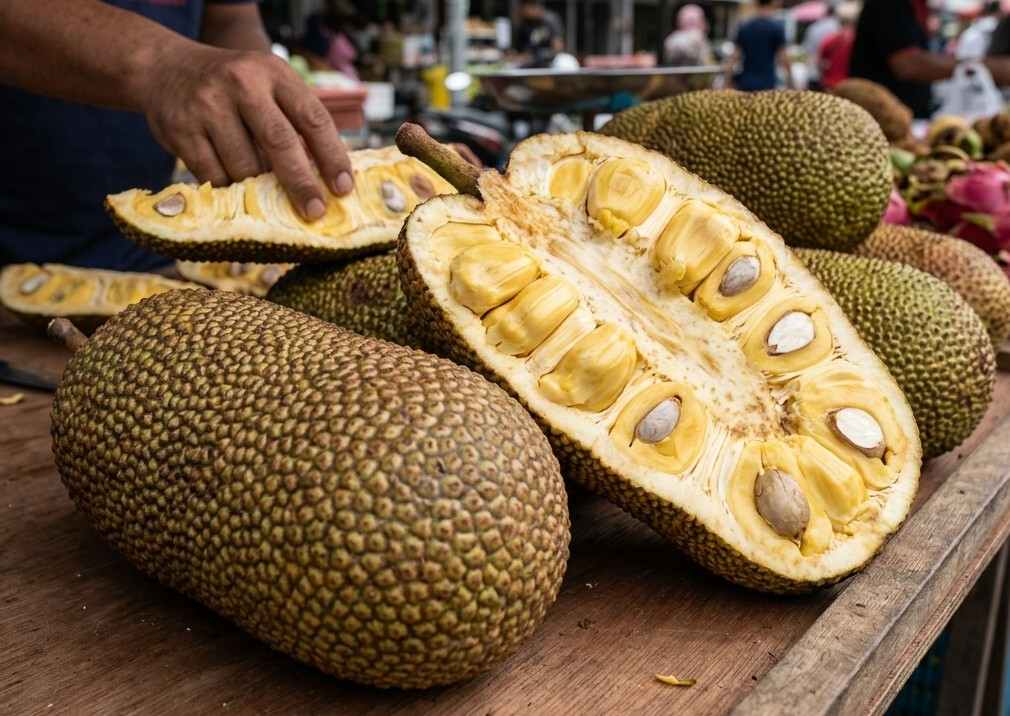
Cempedak is a tropical fruit known for its strong aroma, soft golden-yellow flesh, and naturally sweet flavor. It is closely related to jackfruit and belongs to the Moraceae family. Scientifically, it is commonly known as Artocarpus integer, although the name Artocarpus champeden is also found in older literature. Cempedak is especially popular in parts of Southeast Asia and is eaten both fresh and cooked.
The fruit is more than just a flavorful tropical treat. Its edible flesh provides carbohydrates, dietary fiber, vitamin C, minerals, and plant compounds such as phenolics. Cempedak seeds are also edible when properly cooked and contain carbohydrates, protein, and fiber.
Cempedak can be eaten fresh when ripe, while young fruit can be prepared in savory dishes. In some regions, the ripe flesh is also fried, dried, candied, or preserved.
What Is Cempedak?
Cempedak, also known as Chempedak, is a tropical fruit that grows on the cempedak tree, Artocarpus integer. It is native to parts of South and Southeast Asia and is cultivated particularly in countries such as Malaysia, Indonesia, Thailand, and surrounding regions.
The fruit has a rough, greenish to yellow-brown outer skin and contains numerous soft, fragrant edible fruit bulbs. The ripe flesh is usually yellow or orange-yellow and has a sweet, aromatic taste that can remind people of a combination of jackfruit and other strongly scented tropical fruits.
Cempedak is unusual because several parts of the fruit can be used. The ripe flesh is eaten fresh, young fruit can be cooked, and the seeds can be boiled or roasted after proper preparation. Cempedak seeds can also be processed into flour.
Nutrition Facts of Cempedak
The nutritional composition of chempedak varies according to cultivar, maturity, growing conditions, and whether fresh or processed fruit is being measured.
| Nutrient/Component | Approximate Information |
|---|---|
| Calories | Varies with variety and serving size |
| Carbohydrates | Major macronutrient |
| Dietary fiber | Present in the edible flesh |
| Protein | Small amount in the flesh; higher proportion in seeds |
| Fat | Generally low in fresh flesh |
| Vitamin C | Present; published data report about 6.2 mg/100 g in one analysis |
| Calcium | Present |
| Magnesium | Present |
| Iron | Present |
| Phenolic compounds | Present |
| Antioxidant compounds | Present |
| Natural sugars | Glucose, fructose, and sucrose are reported |
| Water | High in fresh ripe fruit |
20 Proven Health Benefits of Cempedak
1. Supports Digestive Health
Cempedak provides dietary fiber, which can support normal bowel function and contribute to a healthy digestive system.
2. Provides Vitamin C
Cempedak contains vitamin C, a nutrient involved in normal immune function, collagen formation, and antioxidant protection.
3. Contains Antioxidant Compounds
Phenolic compounds and other phytochemicals in cempedak can contribute antioxidant activity that helps protect cells from oxidative stress.
4. May Support Immune Function
Vitamin C and other nutrients found in chempedak contribute to normal immune-system function when included as part of a balanced diet.
5. Helps Provide Dietary Fiber
Eating cempedak can contribute to daily fiber intake, which is important for digestive and overall dietary health.
6. May Promote Fullness
The combination of fruit carbohydrates and dietary fiber may help make cempedak more filling than foods containing mostly refined sugars.
7. Provides Natural Carbohydrates
The naturally occurring carbohydrates and sugars in ripe chempedak provide the body with an accessible source of energy.
8. Supports Normal Skin Health
Vitamin C contributes to collagen production, making vitamin-C-containing fruits such as cempedak useful components of a balanced diet for normal skin health.
9. Provides Plant-Based Phytochemicals
Cempedak contains phenolic compounds and other plant chemicals that are being investigated for their biological activities.
10. Contributes to Mineral Intake
Cempedak provides minerals such as calcium, magnesium, and iron in varying amounts.
11. Supports a Varied Diet
Adding less-common fruits such as chempedak can increase the variety of plant foods in the diet and expose the body to different nutrients and phytochemicals.
12. May Support Gut Health
The dietary fiber in cempedak can support normal bowel activity and provide substrate for beneficial gut microorganisms.
13. Provides Phenolic Compounds
Research has identified phenolic compounds in chempedak, adding to its nutritional interest as a phytochemical-rich tropical fruit.
14. Supports Antioxidant Defense
Antioxidant compounds from fruits can complement the body’s own antioxidant defense systems by helping counter oxidative molecules.
15. Can Be Used as a Nutrient-Rich Snack
Fresh cempedak can be enjoyed as a fruit snack instead of highly processed sweet foods, although portion size still matters.
16. May Support Normal Bowel Regularity
Its fiber content can contribute to regular bowel movements when consumed with sufficient fluids and an overall fiber-rich diet.
17. Provides Nutrients Alongside Natural Sugars
Unlike foods made primarily from refined sugar, fresh chempedak provides carbohydrates together with fiber, vitamin C, minerals, and plant compounds.
18. Cempedak Seeds Provide Additional Nutrients
Properly cooked chempedak seeds contain carbohydrates, protein, and fiber and can be used as an additional food source.
19. May Contribute to Cardiovascular-Friendly Eating
Choosing fiber-containing fruits such as cempedak can fit into an overall eating pattern that supports cardiovascular health, although chempedak itself should not be considered a treatment for heart disease.
20. Adds Phytochemical Diversity
The different phenolics and other compounds found in chempedak make it an interesting addition to a varied diet containing many different fruits and vegetables.
10 Side Effects of Cempedak
1. Digestive Discomfort
Eating a large amount of cempedak may cause bloating, gas, abdominal discomfort, or changes in bowel habits because of its fiber and carbohydrate content.
2. Allergic Reactions
People with a fruit allergy or sensitivity to related plant foods may experience itching, swelling, hives, or other allergic symptoms.
3. Blood Sugar Concerns
Ripe chempedak contains natural sugars and carbohydrates, so people managing diabetes should consider portion size and their overall carbohydrate intake.
4. Excess Calories
Large servings, especially when cempedak is fried or prepared with added sugar, can substantially increase calorie intake.
5. Gas and Bloating
Some people may experience increased gas or bloating after eating larger portions of sweet tropical fruit.
6. Possible Food Intolerance
Some individuals may develop digestive symptoms even without having a true food allergy.
7. Fried Cempedak Is Higher in Fat
Deep-fried chempedak contains considerably more fat and calories than fresh fruit.
8. Added Sugar Can Increase Calorie Intake
Candied or syrup-preserved chempedak can contain substantially more added sugar than fresh fruit.
9. Uncooked Seeds Should Be Avoided
Cempedak seeds should be properly cooked before eating rather than consumed raw.
10. Excessive Intake May Cause Discomfort
Eating very large quantities at once may increase digestive discomfort and add a substantial carbohydrate load.
How to Eat Cempedak?
Ripe cempedak is commonly eaten by opening the fruit and removing the edible yellow flesh from around the seeds. The flesh can be eaten fresh as a snack or dessert. Chempedak can also be:
- Added to fruit salads.
- Blended into smoothies.
- Used in desserts.
- Dried into fruit snacks.
- Cooked or fried.
- Preserved or made into sweet preparations.
- Used in savory dishes when young and unripe.
The seeds are also traditionally boiled or roasted and eaten after their outer covering is removed.
Tips for Consuming Cempedak
- Start Small: If you have never eaten cempedak before, begin with a small serving to see how your digestive system responds.
- Choose Ripe Fruit: Look for mature fruit with a pleasant aroma and appropriately developed flesh.
- Wash the Fruit: Clean the outer surface before cutting it open.
- Remove the Seeds: Separate the edible flesh from the seeds unless you plan to cook the seeds properly.
- Eat Fresh: Fresh chempedak is generally a better everyday choice than heavily fried or sugar-preserved preparations.
- Watch Portions: Cempedak is naturally sweet, so moderate servings are sensible.
- Pair With Other Foods: Combining fruit with yogurt, nuts, or another protein-containing food can make a snack more balanced.
- Cook Seeds Properly: Boil or roast chempedak seeds thoroughly before eating them.
Other Uses of Cempedak
- Fresh Fruit: Ripe chempedak flesh is commonly eaten fresh because of its sweet flavor and soft texture.
- Fried Fruit: In some regions, pieces of ripe chempedak are coated with flour and fried as a snack or dessert.
- Dried Fruit: Cempedak can be dried to extend its shelf life and create a concentrated fruit snack.
- Young Fruit: Immature chempedak can be cooked and used in savory dishes, curries, soups, and pickles.
- Seeds: Properly cooked seeds can be eaten as a starchy, nutty food.
- Seed Flour: Chempedak seeds can be processed into flour for food applications.
- Candied Fruit: The edible flesh can be preserved as a sweetened product.
- Pectin Source: Research has investigated chempedak rind as a potential source of pectin for food applications.
- Functional Food Research: Chempedak seeds and other parts of the plant are being investigated for their bioactive compounds and potential food applications.
- Traditional Uses: Various parts of the plant have been used traditionally in Southeast Asian communities, although traditional uses should not be confused with proven medical treatments.
How Much Cempedak Can You Eat in a Day?
There is no officially established medical dosage for fresh cempedak. For most healthy adults, a practical serving is around ½ to 1 cup of fresh cempedak flesh, depending on the rest of the diet and individual carbohydrate needs.
People who are monitoring blood glucose, calories, or carbohydrate intake may prefer a smaller portion. Fresh cempedak is generally preferable to versions that are deep-fried or heavily sweetened.
Best Time to Eat Cempedak
There is no scientifically proven best time to eat cempedak.
You can enjoy fresh cempedak as a:
- Morning or midday snack.
- Dessert after a balanced meal.
- Pre-activity snack when carbohydrates are useful.
- Part of a fruit-based breakfast.
If chempedak causes bloating or digestive discomfort, eating a smaller serving with or after a meal may be more comfortable than consuming a large amount on an empty stomach.
Who Should Eat Cempedak?
- Healthy Adults: Most healthy adults can include moderate amounts of fresh chempedak as part of a varied diet.
- People Seeking More Fruit Variety: Chempedak offers a different combination of nutrients and phytochemicals from commonly eaten fruits.
- People Needing More Fiber: Its edible flesh contributes dietary fiber to the diet.
- Active Individuals: The natural carbohydrates in ripe chempedak can provide a convenient source of energy.
- People Who Enjoy Tropical Fruits: Cempedak can be a nutritious option when eaten fresh and in reasonable portions.
- Vegetarians and Vegans: Fresh chempedak and properly prepared seeds can fit into plant-based eating patterns.
Who Should Not Eat Cempedak?
- People With a Known Allergy: Anyone with a known allergy to chempedak should avoid it and seek medical advice if accidental exposure causes symptoms.
- People With Previous Fruit Reactions: Those who have experienced unexplained reactions to similar tropical fruits should be cautious when trying chempedak.
- People With Significant Digestive Sensitivity: Individuals who develop substantial bloating or digestive symptoms from high-fiber or sweet fruits may need smaller portions.
- People With Poorly Controlled Blood Sugar: Those managing diabetes should account for cempedak’s carbohydrate and sugar content within their meal plan.
- People Following a Calorie-Restricted Diet: Large portions or fried preparations may make calorie control more difficult.
- People With Food-Related Medical Restrictions: Anyone following a medically prescribed diet should check whether chempedak fits their individual dietary plan.
How to Store Cempedak?
- Whole Fruit: Keep an uncut ripe chempedak in a cool, dry location for short-term storage.
- Refrigeration: Once cut, place the edible flesh in a clean airtight container and refrigerate it.
- Short Shelf Life: Fresh cempedak has a relatively short shelf life, so it is best consumed soon after ripening.
- Freezing: Separated fruit flesh can be frozen for longer storage, although texture may change after thawing.
- Drying: Drying is another traditional preservation method that can extend usability.
- Avoid Contamination: Use clean utensils and containers when handling cut fruit.
- Check Before Eating: Discard fruit that develops mold, an unusual appearance, or an unpleasant fermented smell.
Precautions and Interactions
- Allergy Precaution: Stop eating chempedak and seek appropriate medical care if symptoms such as facial swelling, breathing difficulty, or widespread hives occur.
- Diabetes Management: Count chempedak as part of your carbohydrate intake if you have diabetes or are monitoring blood glucose.
- Portion Size: Avoid consuming very large amounts at one time because excessive fruit intake may cause digestive discomfort.
- Seed Safety: Eat cempedak seeds only after appropriate cooking.
- Fried Preparations: Limit deep-fried chempedak if you are trying to reduce excess calories or dietary fat.
- Added Sugar: Be cautious with candied, syrup-preserved, or heavily sweetened chempedak products.
- Medication Interactions: There is insufficient human evidence to establish clinically meaningful medication interactions with ordinary servings of fresh chempedak.
- Plant Extracts: Concentrated chempedak extracts should not be treated as equivalent to eating the fruit because their safety and dosing may differ.
- Pregnancy and Breastfeeding: Normal food portions may be appropriate for many people, but there is limited specific clinical research on concentrated chempedak preparations during pregnancy or breastfeeding.
- Medical Conditions: People with diabetes, significant digestive disorders, or known food allergies should discuss dietary changes with an appropriate healthcare professional.
Cempedak vs Jackfruit
Cempedak and jackfruit are closely related tropical fruits, but they are not the same fruit. Chempedak generally has a smaller fruit, softer flesh, a more intense aroma, and a distinctive sweet flavor. Both belong to the Artocarpus genus and can be eaten at different stages of maturity.
Chempedak is particularly interesting nutritionally because research has identified fiber, vitamin C, minerals, carbohydrates, and various phenolic compounds in its edible portions.
FAQ’s
What does cempedak taste like?
Chempedak has a sweet, aromatic flavor with a soft texture and is often compared with jackfruit but has a stronger aroma.
Is cempedak good for you?
Yes, chempedak provides carbohydrates, dietary fiber, vitamin C, minerals, and various plant compounds that can contribute to a balanced diet.
Can you eat cempedak seeds?
Yes, chempedak seeds can be eaten after they are thoroughly boiled or roasted; raw seeds should not be consumed.
Is cempedak good for digestion?
Chempedak contains dietary fiber that can support normal digestion and bowel regularity when eaten in moderate amounts.
Is cempedak high in sugar?
Ripe chempedak contains naturally occurring sugars, so people managing blood glucose should pay attention to serving size.
Can diabetics eat cempedak?
People with diabetes may be able to enjoy a small portion, but its carbohydrates and natural sugars should be included in their overall meal plan.
Can you eat cempedak every day?
Most healthy adults can eat a moderate serving of chempedak regularly as part of a varied and balanced diet.
Is cempedak the same as jackfruit?
No, chempedak and jackfruit are different fruits, although they are closely related and belong to the same botanical genus.
Is cempedak good for weight loss?
Fresh chempedak can fit into a weight-management diet when eaten in moderate portions, but it is not a weight-loss treatment.
Can pregnant women eat cempedak?
Fresh chempedak can generally be consumed as a food in moderate amounts, but there is limited pregnancy-specific research, particularly on concentrated preparations.
What is cempedak used for?
Chempedak is eaten fresh and is also used in fried foods, desserts, preserves, savory dishes, dried products, and seed-based foods.
Can cempedak be eaten raw?
Yes, ripe chempedak flesh can be eaten raw after the fruit is opened and the edible flesh is separated from the seeds.
Does cempedak have health benefits for the skin?
Chempedak provides vitamin C and antioxidant compounds that can contribute to overall nutritional support for normal skin health.
Can cempedak cause allergies?
Yes, although uncommon, chempedak may cause an allergic reaction in sensitive individuals, particularly those with fruit allergies.
What is cempedak called in English?
Cempedak is commonly called chempedak in English and is scientifically known as Artocarpus integer.
Is Cempedak Safe for Children?
Chempedak can generally be eaten by children in small, age-appropriate portions when ripe, properly prepared, and given under adult supervision.
What Is Cempedak Good For?
Chempedak is a nutritious tropical fruit that provides dietary fiber, vitamin C, carbohydrates, minerals, and plant compounds that can support a balanced diet and normal digestion.
Conclusion
Cempedak is an interesting tropical fruit that combines a distinctive aroma and sweet flavor with useful nutrients such as dietary fiber, vitamin C, minerals, carbohydrates, and plant phytochemicals. Its flesh can be enjoyed fresh, while young fruit and properly cooked seeds can be used in a variety of traditional dishes.
Research has identified antioxidant and other bioactive compounds in chempedak, but many of the stronger medicinal claims surrounding the fruit come from laboratory, traditional-use, or preliminary research rather than large human clinical trials.
For most people, the simplest way to enjoy chempedak is as fresh fruit in a moderate portion. As with any food, preparation and quantity matter: fresh chempedak provides a different nutritional profile from heavily fried, candied, or sugar-preserved versions.
Sources / References
Disclaimer: This guide is for general informational and educational purposes only. Cempedak may offer nutritional benefits, but it should not be considered a treatment or cure for any medical condition. Consult a qualified healthcare professional before making significant dietary changes, especially if you have a medical condition, food allergy, or take medications.
Also Read: